

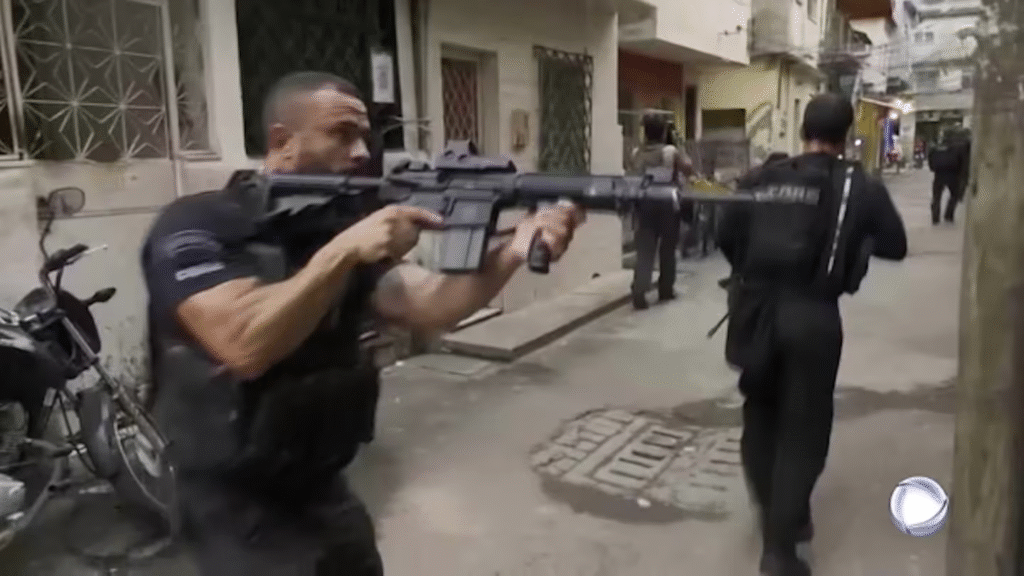
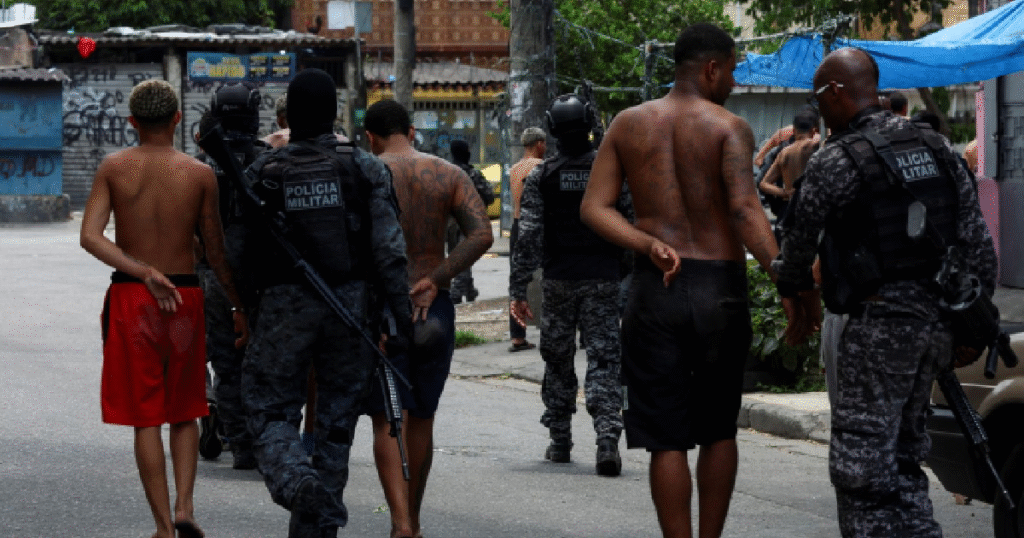
Brazil’s deadliest police operation has taken a new and unsettling turn after five military police officers were arrested on accusations of attempting to resell rifle seized during the October 28 raid in Rio de Janeiro. The operation, which left 122 people dead, has already been the focus of intense national and international scrutiny.
With allegations now emerging that officers diverted a confiscated weapon for criminal resale, the episode has deepened concerns about corruption within Brazil’s law enforcement forces and raised new questions about oversight, accountability and the broader implications for public trust. This arrest marks a significant development in a case already steeped in controversy, violence and political tension, and it offers renewed insight into the complex relationship between policing practices and organized crime in the region.
Escalating Fallout from Brazil’s Deadliest Police Operation
The October 28 raid has been described as the deadliest in Brazil’s history, resulting in the deaths of 117 alleged gang members and five police officers, four of whom were killed during the operation itself and another who died weeks later from sustained injuries. The operation was launched in response to what authorities said was a coordinated effort by criminal groups to move heavily armed members through the state, prompting a sweeping intervention in several communities.
Nearly 100 rifles were seized, alongside ammunition and tactical equipment believed to belong to organized factions operating in the region. However, the scale of violence quickly became the subject of criticism. Human rights organizations questioned the proportionality of force used and raised concerns about potential extrajudicial killings.
Communities affected by the operation also expressed fear over what they perceived as indiscriminate and overwhelming police action. As public pressure intensified, attention shifted toward the conduct of officers involved in the operation, particularly after images from body cameras were reviewed by investigators.
Read : 20-Year-Old Gunman Who Fired at Trump Was Rejected from School Rifle Team
It was through this footage that authorities detected irregularities involving the handling of seized weapons. The discovery suggested that not all confiscated rifles were properly documented or turned in, prompting internal investigations that eventually led to the arrest of the five officers. The fact that the weapon in question was allegedly intended for resale to organized crime has only fueled existing worries about collusion between certain segments of the police force and criminal networks.
The Alleged Diversion and Resale Scheme
According to a source familiar with the investigation, the officers are accused of diverting one of the rifles seized during the October operation with the intention of selling it to gang members. Body camera footage reportedly played a decisive role in uncovering the irregularity, allowing investigators to track discrepancies between the recorded seizures and the weapons officially logged after the raid.
While full details of the scheme have not yet been publicly disclosed, the case underscores a troubling dynamic: the possibility that officers assigned to combat organized crime may simultaneously be engaged in facilitating the very activities they are tasked with dismantling. The handling of seized weapons has long been a point of vulnerability in Brazil’s security infrastructure.
Read : 45 Arrested After Massive Dogfighting Ring Busted in San Antonio
Incidents involving missing evidence, unrecorded weapons and diversion of arms have been documented in several states over the years. In Rio de Janeiro in particular, where drug trafficking organizations maintain sophisticated arsenals and use firearms as symbols of power and territorial control, the illegal circulation of rifles and other high-caliber weapons represents a substantial threat to public safety.
Weapons seized during police operations are meant to be catalogued and transferred into secure custody, often for forensic analysis or court proceedings. Any deviation from this protocol jeopardizes investigations and undermines institutional integrity. In this case, the potential resale of a high-powered rifle to organized crime not only represents a serious criminal offense but also raises broad questions about the reliability of the policing structures intended to counter violent groups.
The allegations that officers themselves attempted to profit from the sale of a confiscated weapon is especially damaging given the backdrop of the deadly raid. Public discourse around police operations in Brazil often pits the need for force against concerns for human rights, and corruption allegations within the police ranks further complicate an already fraught debate. The arrested officers now face internal disciplinary proceedings as well as criminal charges, with the military police stressing that it intends to apply rigorous punishment should the allegations be proven.
Implications for Public Trust and Institutional Accountability
The arrest of the five officers adds a new dimension to ongoing conversations about policing standards and accountability in Brazil. Public trust in the police has long been unstable, particularly in communities affected by frequent operations against organized crime factions. Allegations of misconduct, excessive force and corruption routinely surface, leading sectors of society to question the legitimacy and transparency of law enforcement actions.
In the aftermath of the October 28 raid, these concerns have reached a heightened level, and the revelation of an attempted weapons resale has deepened skepticism over how operations are conducted and monitored. The military police in Rio de Janeiro have stated that they do not condone misconduct or criminal acts by their members and that they will rigorously punish those involved when wrongdoing is confirmed.
Read : Leslie Blake Sues ‘The Beast Haunted House’ After Falling from Second-Story Window
While this assertion aligns with institutional expectations, the broader challenge lies in ensuring consistent enforcement of protocols, improving internal oversight mechanisms and establishing more robust safeguards to prevent corruption. The use of body cameras, which played a critical role in uncovering the alleged diversion, reflects an important step toward transparency, but isolated technological measures cannot fully address systemic issues.
Institutional reforms aimed at strengthening the integrity of the police force have been repeatedly proposed over the years, yet implementation often encounters political, logistical and cultural obstacles. Training programs, psychological evaluations, stronger supervisory practices and clearer accountability structures are all components frequently discussed by experts but inconsistently applied across different units and states. The current case may serve as a catalyst for renewed debate, though whether it will lead to substantive changes remains uncertain.
The case also highlights the complex relationship between police forces and organized crime in Rio de Janeiro. While the majority of officers serve with professionalism, instances of corruption risk reinforcing a narrative that suggests criminal groups can infiltrate public institutions or benefit from illicit cooperation. This narrative not only damages public confidence but also emboldens criminal organizations that thrive on the perception of weakened or compromised law enforcement.
In a broader context, the allegations arrive at a time when Brazil continues to grapple with high levels of violence, structural inequality and political tensions over security policy. Debates concerning how to effectively combat organized crime while respecting human rights remain deeply polarized. The deadly raid and the subsequent arrests will likely intensify these debates, particularly as further details emerge from ongoing investigations.
The next phase of the legal process will involve determining whether the officers acted independently, as part of a larger scheme, or under implicit influence from criminal organizations. Regardless of the outcome, the case underscores the importance of prioritizing transparency and accountability within Brazil’s law enforcement institutions. As the investigation unfolds, both the public and international observers will be watching closely, assessing not only the handling of this specific incident but also the broader institutional response and its implications for future operations.
The deadly operation and the alleged attempt to profit from one of its seized weapons have combined to create a moment of reckoning for Rio’s military police. Addressing the layers of violence, corruption and public mistrust will require coordinated and sustained efforts across government branches, civil society and law enforcement leadership. The events surrounding the October raid have already reshaped discussions about security in Brazil, and the arrest of the five officers adds another critical element to a narrative still developing with significant consequences for the state and its citizens.
Just downloaded wc99gamedownload and I’m pleasantly surprised! Quick download, easy installation, and the games are actually fun! Thumbs up from me! wc99gamedownload
Ưu đãi hoàn trả không giới hạn tại 188V lên đến 1.5% mỗi ngày. Chơi càng nhiều, nhận hoàn trả càng lớn, không lo cạn vốn. TONY03-09