

Ohio University’s decision to dismiss head football coach Brian Smith for cause has sent shockwaves through the Mid-American Conference and the wider college football community. The abrupt termination, announced through a brief institutional statement, cited “serious professional misconduct and participating in activities that reflect unfavorably on the University,” yet stopped short of providing any specific details.
Smith’s firing comes at a pivotal moment in the Bobcats’ season, just weeks before a scheduled bowl appearance, and less than a year after he was officially appointed to the role on a permanent basis. The timing, lack of transparency, and potential implications for the football programme have raised questions about governance, accountability, and stability within Ohio University athletics. Smith, 45, had been nearing the end of his first full season as head coach after transitioning from an interim role in 2024.
His dismissal follows an administrative review that culminated in his placement on indefinite leave on 1 December, a move that at the time was unexplained publicly. The university’s latest statement confirms that the review resulted in termination for cause, underscoring the seriousness of the allegations while offering no insight into their nature. As the Bobcats prepare to compete without the coach who guided them through a winning season, the situation presents a complex intersection of competitive success, institutional standards, and unresolved uncertainty.
Brian Smith’s Tenure at Ohio University and the Road to Dismissal
Brian Smith’s rise to the head coaching position at Ohio University was shaped by years of experience in collegiate football, largely in assistant and coordinator roles. Prior to his appointment, Smith had built a reputation as an offensive-minded coach, holding positions as an offensive coordinator or offensive position coach across multiple programmes. Notably, he had three separate stints at the University of Hawaii, contributing to offensive schemes and player development over different periods of his career. Despite this extensive background, Smith’s elevation to head coach marked his first opportunity to lead a programme at the top level.
Smith’s association with Ohio intensified following the departure of head coach Tim Albin, after which Smith was named interim head coach for the 2024 season. During that interim spell, he delivered a notable achievement by leading the Bobcats to victory in the Cure Bowl, a result that strengthened his candidacy for the permanent role. The bowl win was viewed as a positive indicator of leadership and tactical competence, and it played a significant role in Ohio University’s decision to appoint him as the full-time head coach for the 2025 season.
Under Smith’s leadership during his first full season, Ohio compiled an 8–4 regular-season record. The performance was competitive within the conference and sufficient to secure a bowl berth against UNLV, scheduled for 23 December. From a purely sporting perspective, the season suggested continuity and progress, particularly following the success of the interim period. However, behind the scenes, events were unfolding that would abruptly derail Smith’s tenure.
On 1 December, Ohio University placed Smith on indefinite leave. The announcement was brief and offered no explanation for the decision, immediately prompting speculation among fans, media, and observers of college football. At the same time, defensive coordinator John Hauser was appointed interim head coach, tasked with guiding the team through the remainder of the season and into its bowl preparation. The absence of detail at that stage indicated that the matter was sensitive and under review, but the lack of clarity also contributed to uncertainty within the programme.
Read : 19-Year-Old Ohio Influencer Noah Thomas Charged After Jumping Into Pittsburgh Zoo Elephant Enclosure
The university’s subsequent statement confirmed that an administrative review had been conducted and that the findings justified dismissal for cause. The phrasing used by Ohio University emphasised the seriousness of the situation, referencing misconduct that not only breached professional standards but also reflected unfavourably on the institution. By terminating Smith for cause, the university effectively signalled that the issues identified were substantial enough to override contractual protections and competitive considerations.
Administrative Review, Misconduct Allegations, and Institutional Silence
Central to the unfolding situation is the administrative review referenced by Ohio University, the details of which remain undisclosed. The university has not elaborated on the nature of the “serious professional misconduct” cited, nor has it clarified whether the activities in question involved internal policy violations, external conduct, or matters related directly to the football programme. This silence has left a vacuum of information, fuelling speculation while limiting public understanding of the circumstances that led to Smith’s dismissal.
Universities often face a delicate balance when addressing misconduct allegations involving high-profile staff. Legal considerations, employment law, privacy obligations, and potential investigations can all restrict what institutions are willing or able to disclose. In this case, Ohio University’s decision to provide only a general description suggests an effort to protect the integrity of the review process or to limit legal exposure. However, the lack of transparency also raises questions about accountability and the extent to which stakeholders deserve clarity when leadership figures are removed so abruptly.
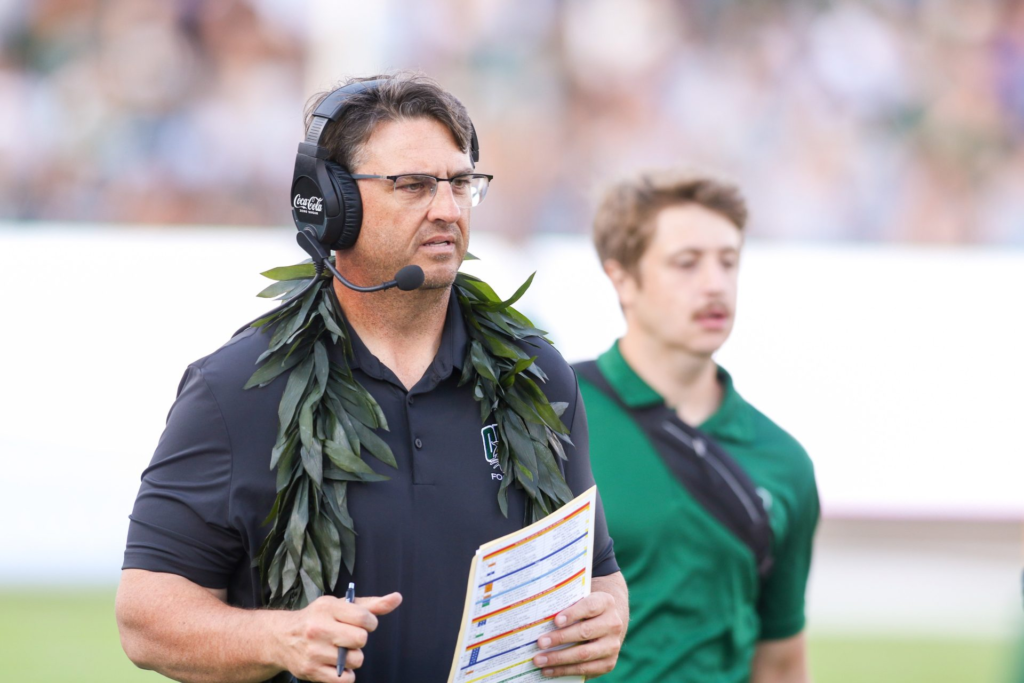
The decision to place Smith on indefinite leave before terminating him indicates that the university took time to assess the situation rather than acting impulsively. This sequence suggests that the administrative review was likely thorough, involving internal procedures designed to establish whether Smith’s conduct met the threshold for dismissal for cause. Such a determination is significant, as termination for cause can have implications for contractual obligations, severance, and future employment prospects.
Despite these considerations, Ohio University has stated that it has not indicated whether further information about the misconduct allegations will be released. This position may change depending on legal developments or public pressure, but for now, the institution appears committed to limiting its public commentary. From an external perspective, this approach may protect the university in the short term, yet it also places the football programme and its players in a position of uncertainty, particularly as they prepare for a nationally visible bowl game.
The absence of detail also affects Smith’s professional reputation. Without specific allegations being made public, it is difficult for observers to assess the severity or context of the misconduct. At the same time, the university’s unequivocal language underscores that it viewed the behaviour as incompatible with its standards. This tension between institutional authority and public accountability is a recurring challenge in collegiate athletics, where high-profile roles intersect with broader educational missions.
Impact on the Bobcats, Coaching Search, and Programme Stability
Smith’s dismissal has immediate and longer-term implications for Ohio University’s football programme. In the short term, the team must navigate the remainder of the season without the coach who guided it to an 8–4 record. The bowl game against UNLV, scheduled for 23 December, will now be overseen by interim head coach John Hauser. While interim appointments are not uncommon in college football, the timing presents challenges in terms of preparation, morale, and continuity.
Read : Employee Fired Over ‘Racist’s Fav Drink’ Message on Ohio Woman’s Starbucks Cup Honoring Charlie Kirk
Players are often affected by sudden coaching changes, particularly when they occur during a competitive phase of the season. Adjustments in leadership style, communication, and decision-making can influence performance, even if the broader coaching staff remains intact. Hauser’s role as defensive coordinator prior to his interim appointment may provide some continuity, yet the absence of the head coach inevitably alters dynamics within the programme.

Beyond the immediate contest, Ohio University has confirmed that its search for a new head coach “will begin immediately.” This announcement signals a desire to move swiftly in restoring permanent leadership, but it also introduces a period of uncertainty. Coaching searches are complex processes that involve evaluating candidates’ experience, philosophy, recruiting ability, and alignment with institutional values. The circumstances surrounding Smith’s dismissal may also shape the criteria used in selecting his successor, with an increased emphasis on conduct and professionalism.
The timing of the search, coming late in the season, places Ohio University in competition with other programmes seeking coaching changes. This competitive landscape can influence the pool of available candidates and the speed with which decisions are made. At the same time, the university must consider the message it sends to recruits, alumni, and supporters. Stability and clarity are crucial in maintaining confidence, particularly after a high-profile dismissal for misconduct.
From a broader perspective, the situation highlights the challenges universities face in balancing athletic success with institutional integrity. Smith’s tenure included tangible on-field achievements, including a winning season and a bowl victory as interim coach. Nevertheless, Ohio University’s decision underscores that performance alone is not sufficient to outweigh concerns about conduct. This stance reinforces the principle that head coaches, as representatives of their institutions, are held to standards that extend beyond wins and losses.
As the Bobcats move forward, the focus will inevitably shift to how the programme responds to this period of upheaval. The outcome of the bowl game, the appointment of a new head coach, and any future disclosures regarding the misconduct allegations will all shape perceptions of Ohio University football in the months ahead. For now, the dismissal of Brian Smith stands as a reminder of the fragility of coaching tenures and the far-reaching consequences that can arise when professional standards are called into question.