
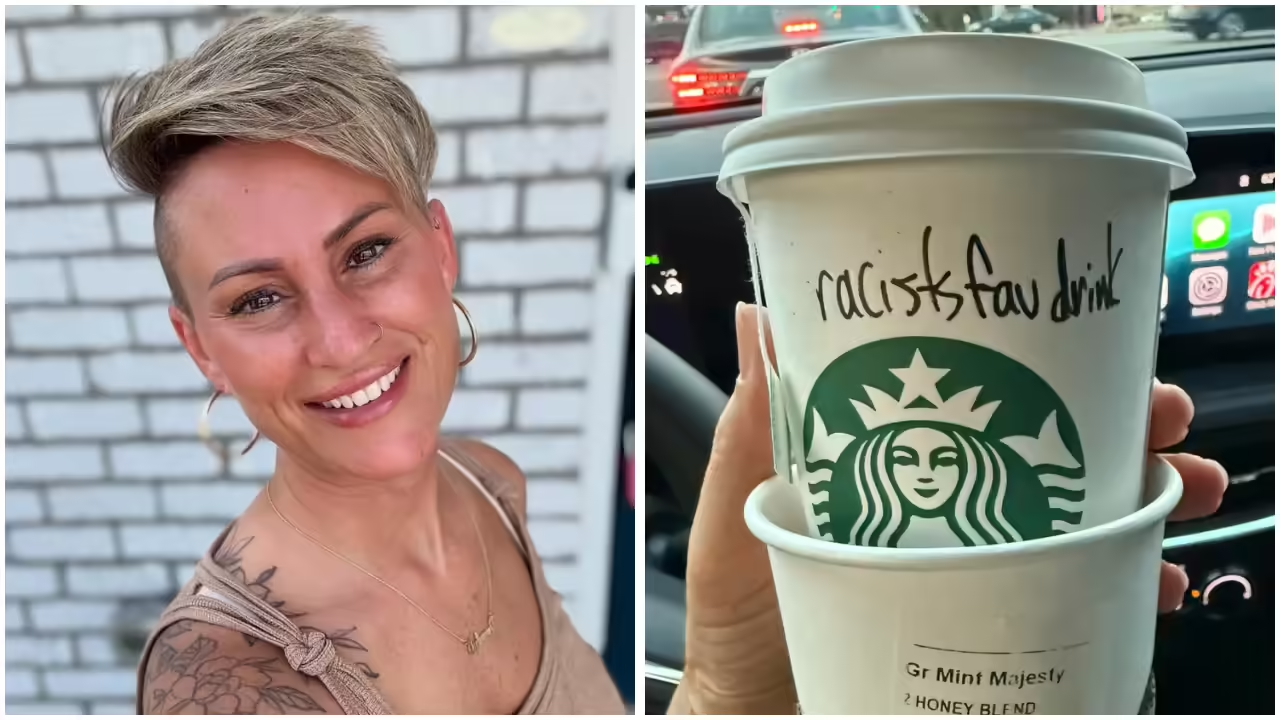
In the wake of a national tragedy that has gripped conservative circles and beyond, a seemingly simple act of tribute turned into a flashpoint of controversy at a suburban Ohio Starbucks. On September 21, 2025, Autumn Perkins, a resident of Middletown, Ohio, visited a Starbucks kiosk inside a local Kroger supermarket to order a drink in honor of Charlie Kirk, the late founder of Turning Point USA. What she received instead was not just her beverage but a scrawled insult that has ignited debates about workplace conduct, political bias, and corporate accountability.
The message—”racist’s fav drink”—appeared on the side of her cup, prompting swift action from the company and a viral outcry from Perkins herself. This incident, unfolding just days after Kirk’s shocking death, underscores the raw emotions still simmering in the aftermath of his loss and the polarized reactions it has provoked across the country. Charlie Kirk’s assassination on September 10, 2025, during a speaking engagement at Utah Valley University, sent shockwaves through political and cultural landscapes.
The 31-year-old activist, known for his fiery conservative commentary and leadership in mobilizing young voters, was gunned down in what authorities quickly deemed a targeted attack. Tributes poured in from high-profile figures, including former President Donald Trump, Vice President JD Vance, and FBI Director Kash Patel, who eulogized Kirk as a beacon of principled conservatism. In the days following, fans and supporters began a grassroots ritual: ordering Kirk’s signature Starbucks drink—a Mint Majesty herbal tea with two pumps of honey—as a quiet nod to his memory.
Social media lit up with photos of these cups, each one a small act of defiance and remembrance amid widespread mourning. Perkins, a self-described Kirk supporter who already harbored reservations about the coffee giant, decided to join in this trend despite her qualms. “I don’t even support Starbucks because of everything they stand for, starting with their satanic logo,” she later wrote on Facebook, “but I support Charlie Kirk so I thought, you know what, I’ll get his drink.”
Read : “You Cannot Become a CEO in America If You Are Not Indian”: US Envoy Eric Garcetti
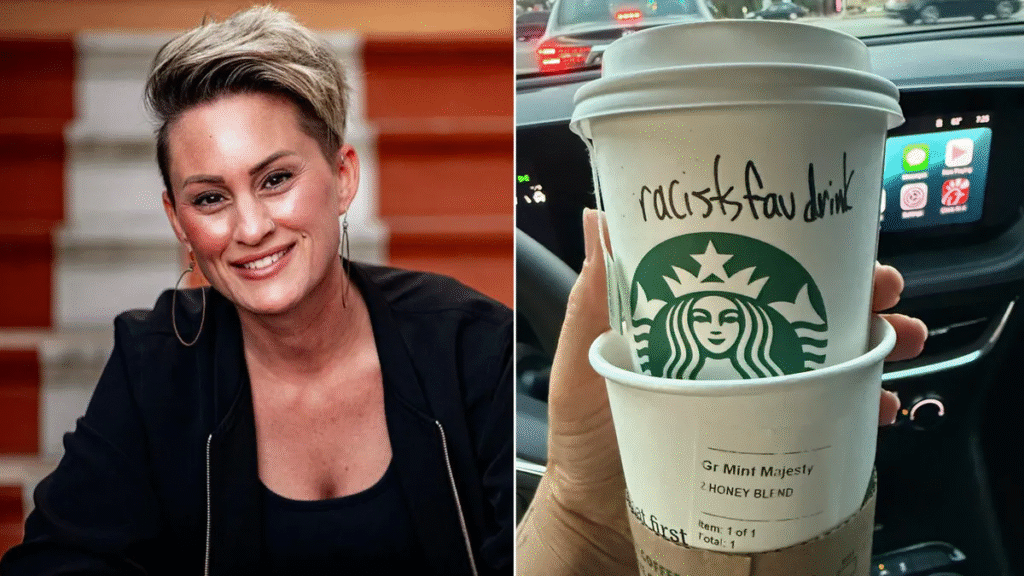
The evening unfolded ordinarily at first. Perkins placed her order at the licensed Starbucks counter within the Kroger store, specifying the drink and requesting Kirk’s name be written on the cup as part of the tribute. What should have been a moment of solace quickly soured when she picked up her order. There, in bold marker on the white paper sleeve, were the words “racist’s fav drink.”
Stunned, Perkins snapped a photo and confronted the store manager on the spot. The response was immediate and unequivocal: the employee responsible admitted to penning the message, and termination followed without delay. “I was shocked,” Perkins recounted to reporters. “It’s time for people to stop this nonsense.” Her voice, steady but laced with disbelief, captured the betrayal felt by many who saw the act not just as personal rudeness but as a desecration of a grieving ritual.
Swift Corporate Response and Employee Termination
Kroger, which operates the Starbucks location as a licensed partner, wasted no time addressing the breach. In a statement emailed to media outlets the following day, a company representative emphasized that the behavior “does not reflect Kroger’s values.” The employee—a barista whose identity has not been disclosed—was fired on the spot, with the manager confirming the admission during Perkins’ conversation. This rapid escalation aligns with broader corporate protocols designed to mitigate public relations fallout, especially in an era where social media can amplify minor infractions into national stories overnight.
Starbucks, distancing itself slightly due to the licensed nature of the outlet, issued its own condemnation. “Writing this on a cup is unacceptable, and we have clear policies that prohibit negative messages to help preserve a welcoming environment,” a spokesperson told Fox News Digital.
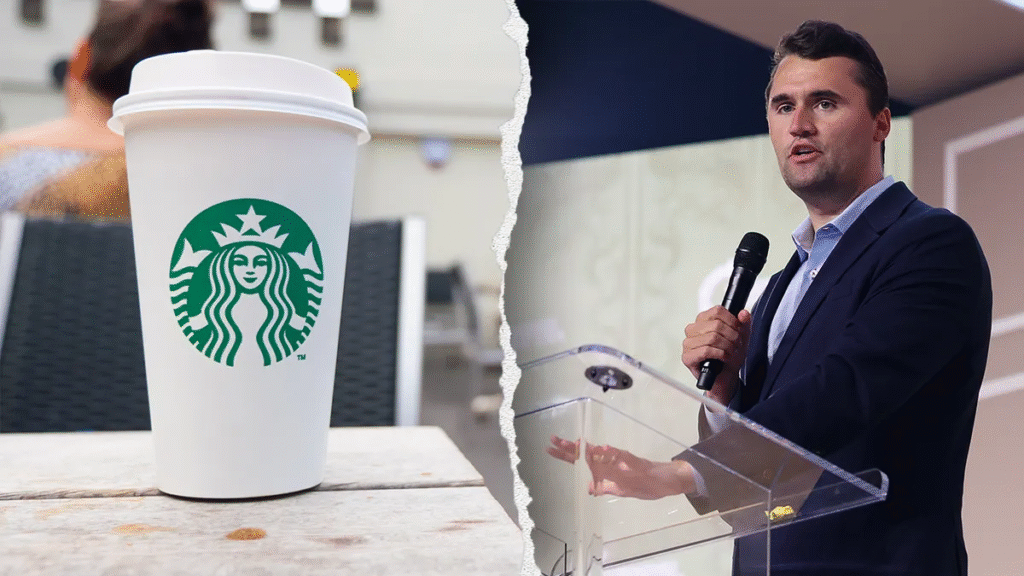
The company reiterated its commitment to inclusivity, noting that while baristas are trained to accommodate name requests—including those like “Charlie Kirk”—they are strictly barred from adding political slogans, explicit content, or derogatory remarks. This policy, Starbucks clarified, applies universally, regardless of the customer’s intent or the figure being honored. In Perkins’ case, the violation was blatant: no name was written, only an inflammatory label that smeared both the order and, by extension, Kirk’s legacy.
The termination has been hailed by some as a model of accountability. Perkins herself endorsed the decision, stating, “I would agree that people should be fired if they’re doing something like this. Actions have repercussions.” Yet, the incident raises questions about enforcement. How does a multinational chain ensure consistency across thousands of locations, many operated by third parties like Kroger? Internal training modules at Starbucks emphasize “third-place” hospitality—a neutral space for all—but real-world pressures, including political tensions, can erode these ideals.
The barista’s choice to weaponize the cup suggests a deeper undercurrent of resentment, possibly fueled by Kirk’s polarizing public persona. Critics of the firing argue it was overly punitive, framing the message as “edgy humor” in a divided society. Supporters, however, view it as a necessary line in the sand, protecting vulnerable customers from targeted hostility.
Broader Backlash and Echoes of National Mourning
Perkins’ Facebook post, shared on September 21, exploded across platforms, garnering thousands of shares and comments within hours. The image of the defaced cup became a symbol of perceived liberal intolerance, with users decrying Starbucks as a hotbed of “woke” aggression. “Boycotting forever,” one commenter wrote, echoing Perkins’ own vow: “I don’t intend to spend another penny at Starbucks—and as far as I’m concerned, neither will my children or anybody else in my family who will listen to me.”
The ripple effects extended beyond Ohio; hashtags like #BoycottStarbucks and #HonorCharlie trended briefly, blending grief with consumer activism. Local news outlets in Cincinnati and beyond picked up the story, framing it as a microcosm of America’s cultural fractures. This wasn’t an isolated flare-up. Since Kirk’s death, similar skirmishes have dotted the Starbucks landscape, highlighting the chain’s unintended role as a battleground for political expression. In California, a viral TikTok captured a barista refusing to write “Charlie Kirk” on a customer’s cup, citing a blanket ban on “political names.”
The employee suggested “Charlie” as a workaround, but the patron walked away empty-handed, accusing the chain of injecting bias into everyday service. Starbucks later clarified that names alone are permissible, provided they don’t veer into slogans or offensiveness—a nuance lost in the heat of the moment. Another episode in Chicago saw a location temporarily shutter after claims that baristas scribbled “Loser” on Kirk tribute orders. Upon review, the company determined the messages were added post-handover, via timestamped CCTV footage, underscoring the challenges of verifying viral allegations.
These incidents compound the emotional weight of Kirk’s passing. His wife, Erika Kirk, delivered a poignant message of forgiveness toward the shooter, urging national healing even as investigations into the attack continue. Perkins invoked this spirit in her reflections, saying, “I feel like Charlie stood for respect—we don’t have to agree on everything. We can disagree on a lot of things, but we respect each other. We can’t communicate and grow if we’re disrespecting each other.”
Her words resonate amid a mourning period marked by vigils, policy debates on campus safety, and soul-searching within conservative youth movements. Turning Point USA, the organization Kirk built into a powerhouse, has seen membership surges posthumously, with chapters hosting memorial drink drives that deliberately steer clear of corporate coffee chains.
The backlash has tangible stakes for Starbucks. Already navigating boycotts from both progressive and conservative flanks over issues like pricing and DEI initiatives, the company faces renewed scrutiny. Analysts predict short-term dips in foot traffic at licensed locations, though the brand’s loyalty programs may buffer long-term damage. For Kroger, the incident is a stark reminder of the perils of co-branding in polarized times—its family-friendly image now tinged with this ugly episode.
Reflections on Respect, Repercussions, and Healing in a Divided Era
At its core, the “racist’s fav drink” saga is less about one cup and more about the fragility of civility in grief-stricken times. Autumn Perkins’ experience lays bare how personal tributes can collide with individual prejudices, turning a neutral transaction into a referendum on ideology. The employee’s firing, while decisive, doesn’t erase the sting for Perkins or the broader Kirk community, who see it as yet another indignity heaped on a fallen leader often maligned in life and now in death.
“Charlie was about empowering the next generation,” Perkins noted, “not tearing people down.” Her decision to publicize the slight, rather than let it fester privately, amplified voices calling for workplaces free from such vitriol—regardless of political leanings.
Yet, this story also invites introspection on all sides. Kirk, a lightning rod for criticism over his stances on immigration, election integrity, and cultural issues, elicited strong reactions that the barista’s message cruelly echoed. In a nation still reeling from his loss, such echoes risk deepening divides rather than bridging them. Starbucks’ policies, intended as safeguards, reveal gaps when emotions run high; perhaps enhanced training on handling tribute orders could prevent future missteps. For consumers like Perkins, the incident reinforces a growing wariness of big-box hospitality, pushing toward independent alternatives that promise unfiltered service.
As the dust settles, the episode serves as a cautionary tale: in honoring the dead, we confront the living’s unresolved tensions. Perkins’ boycott pledge may fade for some, but the memory of that marked cup lingers as a call to better. Respect, as she aptly put it, isn’t optional—it’s the foundation for dialogue in a world quick to label and slow to listen. Charlie Kirk’s legacy, complicated as it was, now includes these small battles over beverages, reminding us that even in mourning, the fight for decency persists. Whether this leads to lasting change or just another fleeting outrage remains to be seen, but one thing is clear: actions, indeed, have repercussions.
Normally I do not learn article on blogs, but I would like to say that this write-up very pressured me to check out and do it! Your writing style has been surprised me. Thank you, very great article.
Hi, just required you to know I he added your site to my Google bookmarks due to your layout. But seriously, I believe your internet site has 1 in the freshest theme I??ve came across. It extremely helps make reading your blog significantly easier.
You are my aspiration, I have few web logs and occasionally run out from post :). “Never mistake motion for action.” by Ernest Hemingway.