
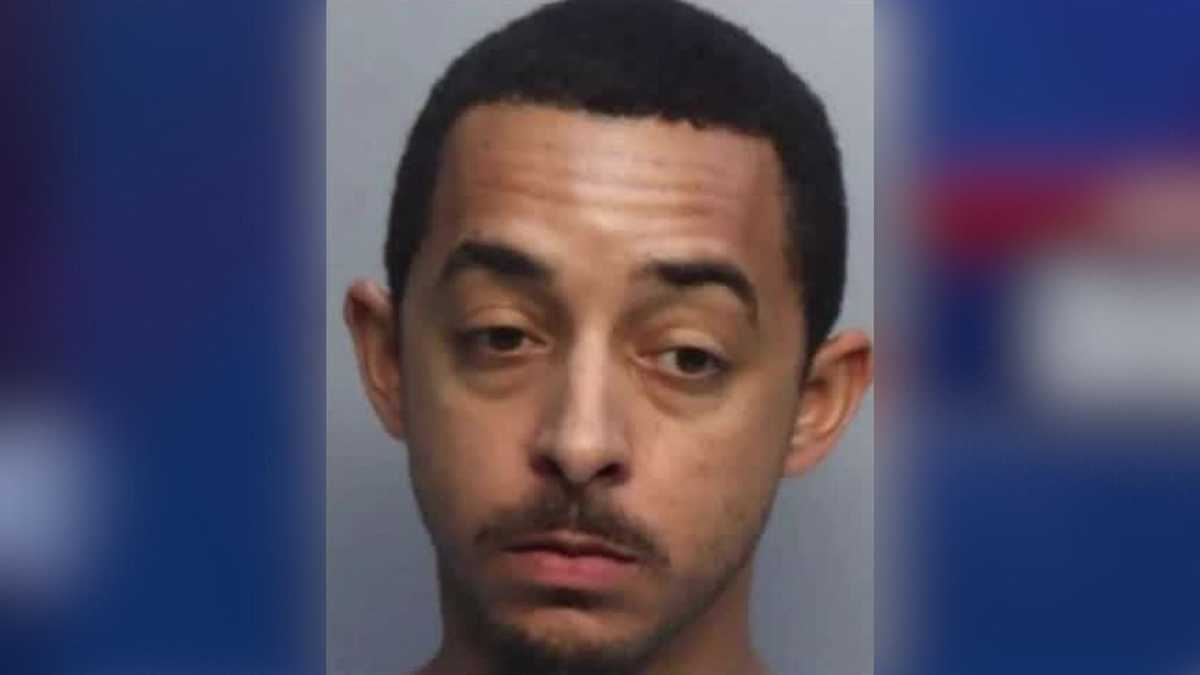
A bachelor party in Miami Beach took a violent turn in the early hours of Sunday morning when a disagreement between two friends escalated into a stabbing incident that left both men injured. What began as a night of celebration quickly unraveled into chaos, with police later describing how tensions over attention from women triggered the altercation. The incident has since drawn attention not only for its unusual circumstances but also for the serious charges filed against one of the individuals involved. At the center of the case is Olajuwon Dickerson, a 32-year-old man from Massachusetts, who now faces legal consequences following the confrontation that left both men hospitalized.
Night of Celebration Turns Violent
According to police reports, the two men were part of a group staying together at an Airbnb in Miami Beach for a bachelor party. The group had spent the evening visiting nearby bars, enjoying what was meant to be a festive occasion. However, as the night progressed, underlying tensions began to surface between the two friends, particularly over interactions with women they encountered during the outing.
Authorities stated that one of the men became increasingly agitated as he perceived that women were paying more attention to Dickerson. This frustration reportedly continued to build throughout the night. Eventually, the situation escalated when the group decided to leave and arranged for a hired car to pick them up. The unnamed friend stepped outside to call the vehicle, seemingly attempting to remove himself from the environment that had been causing his irritation.
When the car arrived, the situation worsened rather than calming down. Police allege that the friend became even more upset when the same women attempted to join them in the vehicle. This moment appears to have acted as the tipping point, turning what had been simmering frustration into open confrontation. Witnesses later described how the argument between the two men intensified rapidly, drawing attention from others present.
The disagreement soon escalated beyond verbal exchanges. As tensions boiled over, Dickerson allegedly approached his friend and told him to get out of the vehicle. The demand was reportedly met with resistance, as the friend insisted he had also paid for the ride and had no intention of leaving. Within moments of this interaction, the situation turned violent, with witnesses reporting the sudden appearance of blood and signs of a physical struggle.
Conflicting Accounts and Police Findings
The aftermath of the altercation revealed a chaotic and violent scene. When Miami-Dade police officers arrived in response to reports of a stabbing, they found both men injured. Dickerson had sustained a wound to his arm, while his friend suffered a more serious injury to the abdomen. Both were in need of medical attention and were transported for treatment. Witness statements collected at the scene played a significant role in shaping the police account of events.
According to the affidavit, multiple individuals reported seeing Dickerson approach the victim and then noticing blood almost immediately afterward. These accounts suggest that the stabbing occurred quickly, with little time for bystanders to react or intervene. Authorities also noted that Dickerson was seen walking away from the vehicle holding his arm and a folding knife that appeared to have blood on it. The presence of the weapon at the scene, along with witness testimony, formed a key part of the evidence against him. Police later recovered the knife, further strengthening their case.
The injured friend provided his own account to investigators, stating that he realized he had been stabbed only after the altercation had already begun. Fearing further harm, he said he acted in self-defense against Dickerson. This detail has added a layer of complexity to the case, as it suggests that both men may have engaged in physical violence during the confrontation.
Another significant detail emerged during the investigation regarding the knife itself. The victim reportedly told police that he was aware Dickerson had been carrying a knife throughout the night. According to his statement, security personnel at various clubs had confiscated the weapon during entry checks but returned it to Dickerson afterward. This claim, if accurate, raises questions about how the weapon remained in circulation despite multiple opportunities for it to be permanently removed.
Read : Erin Hogston Mauled by Otter While Watching Friends Compete in Marathon
Dickerson, however, denied these allegations when questioned by police. He stated that he had not been carrying a knife and denied being involved in any altercation. According to the police report, he claimed that he remembered leaving the bar but had no recollection of the events that followed. This denial stands in contrast to the accounts provided by witnesses and the physical evidence collected at the scene.
Read : Top Ten Most Powerful Leaders in the World and Their Educational Qualifications
The conflicting narratives between Dickerson and the victim highlight the challenges investigators face in reconstructing the exact sequence of events. While witness statements and physical evidence point toward Dickerson’s involvement, his claims of memory loss and denial of wrongdoing introduce uncertainty that may become a focal point in legal proceedings.
Legal Consequences and Ongoing Case
Following the incident, Olajuwon Dickerson was arrested and charged with aggravated battery with a deadly weapon. The severity of the charge reflects the seriousness of the injuries inflicted and the use of a knife during the altercation. The case quickly moved to court, where Dickerson appeared via video link from the hospital as he continued to receive medical treatment for his own injuries. During the hearing, the court reviewed the circumstances of the case, including the police affidavit and the evidence collected at the scene.
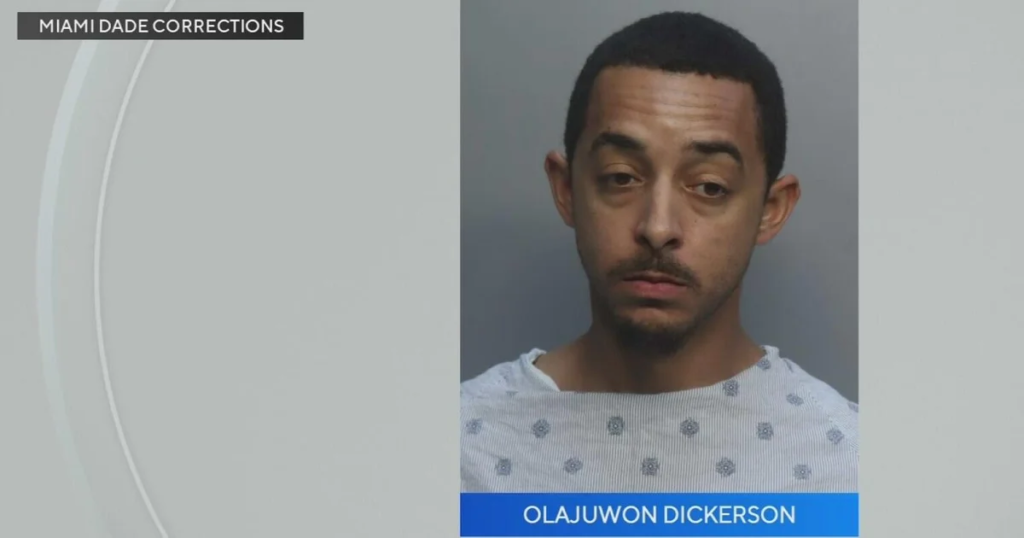
Given the violent nature of the incident and the presence of a weapon, the judge imposed strict conditions on Dickerson. He was ordered to have no contact with the friend involved in the altercation, a measure intended to prevent further conflict between the two individuals. In addition to the no-contact order, Dickerson was held without bond, indicating that the court considers him a potential risk if released. This decision underscores the seriousness with which authorities are treating the case, as well as the potential consequences Dickerson faces if convicted.
The unnamed friend, who also sustained injuries during the incident, has not been publicly charged in connection with the altercation based on the information currently available. His role in the confrontation, particularly his claim of acting in self-defense, may be evaluated further as the investigation continues. Legal experts note that cases involving mutual violence can be complex, often requiring careful examination of intent, sequence of events, and the credibility of witness statements.
The broader implications of the incident extend beyond the individuals involved. What was meant to be a celebratory gathering ended in violence, highlighting how quickly situations fueled by alcohol, emotions, and interpersonal tensions can escalate. The presence of a weapon further intensified the outcome, turning a dispute into a life-threatening situation.
As the case moves forward, additional details may emerge that shed more light on what occurred during those early morning hours. For now, the focus remains on the legal proceedings against Olajuwon Dickerson and the recovery of both men from their injuries. The incident serves as a stark reminder of how rapidly conflicts can spiral out of control, particularly in high-energy social settings where emotions run high and judgment may be impaired.
555LuckyNumber, feeling lucky already playing here! I’ve noticed more frequent payouts than on similar sites. Maybe this is my new spot! Thanks for the fair play!555luckynumber
Alright, 9kbossgamedownload – the ‘boss’ part is making me feel powerful already! Wonder if the games are actually boss-level good, time to download and find out… Download now at 9kbossgamedownload
Clubpkr, alright! If you’re a poker player, this is your spot. Good tables, decent competition. Grind time! clubpkr