

The Old State Saloon in Eagle, Idaho, generated intense national attention after announcing an unusual and politically charged promotion: a month of free beer for any patron who assists Immigration and Customs Enforcement in identifying and ultimately facilitating the deportation of undocumented immigrants. The post, which quickly circulated across social media, drew a mixture of enthusiastic support, sharp criticism, and widespread debate about the ethics, legality, and cultural implications of incentivizing the public to participate in immigration enforcement efforts.
Situated in a suburb of Boise, the bar has embraced controversy before, but this particular campaign arrives at a moment of heightened tension surrounding immigration policy and enforcement as the Trump administration continues efforts to significantly expand deportation operations across the country. The saloon’s promotion and the reaction it sparked offer insights into national divisions, the role of private businesses in political discourse, and the shifting public perception of immigration enforcement.
Public Reaction to the Bar’s Offer and Its Online Promotion
The saloon’s announcement was delivered through a direct and provocative social media post stating that “anyone who helps ICE identify and ultimately deport an Illegal from Idaho gets FREE BEER FOR ONE MONTH at Old State Saloon!” The message also invited customers to document their involvement by sending detailed evidence directly to the bar’s email, including photos, videos, and summaries of their actions. This call for public participation in immigration enforcement immediately drew responses from across the ideological spectrum.
Many right-leaning commentators praised the initiative, framing it as patriotic, supportive of law enforcement, and aligned with the Trump administration’s escalating focus on deportations. Some individuals even expressed willingness to contribute financially toward the cost of providing free drinks to those who participate, turning the promotion into what they saw as a community effort in support of immigration control. On the opposite end, critics described the offer as unethical, discriminatory, and a dangerous encouragement of vigilantism.
Online commenters invoked historical comparisons, noting that incentivizing citizens to report individuals from marginalized groups echoes practices used in periods of persecution and totalitarian oversight. Comments such as “You would have turned in Anne Frank” spread across the saloon’s social media pages, framing the establishment’s campaign as morally reprehensible. Others condemned the promotion as a cheap attempt at gaining attention by exploiting fear and resentment toward immigrants. Despite the backlash, the bar continued to share screenshots of negative reviews and mocked opponents by referring to them as members of the “loser LEFT.”
.@SpoonForIdaho is our first big winner of the month of free BEER. Check out the story here of a hero who helped get a dangerous illegal deported. pic.twitter.com/kYsOUNa0Sr
— Old State Saloon (@OldStateSaloon) December 1, 2025
This back-and-forth exchange intensified when the bar doubled down on its controversial tone by offering one free beer to any undocumented immigrant who wished to “self-deport,” adding that ICE would respond to the saloon to take the individual into custody. Such statements heightened the dispute by blending provocation with policies that carry serious personal and legal consequences for undocumented individuals. The saloon’s willingness to provoke critics reflects a broader strategy seen among some politically outspoken businesses that treat controversy as a branding opportunity capable of attracting customers aligned with particular ideological views.
Contextualizing the Promotion Within National Immigration Enforcement Trends
The timing of the saloon’s offer coincides with an immigration environment shaped by an escalation in federal enforcement efforts. The Trump administration has repeatedly emphasized the importance of accelerating removals, deploying additional ICE personnel, and broadening the scope of deportation campaigns. Officials recently reported that more than 515,000 people have been deported since President Trump took office, and an additional 1.6 million individuals have reportedly self-deported this year.
Combined, these numbers are presented by the administration as evidence of policy success and an indicator of renewed institutional capacity after years of what officials describe as restricted enforcement. This national push is also accompanied by a decline in public support for ICE, according to certain polls that show shifting perceptions influenced by reports of widespread raids and distressing accounts of families separated or individuals detained under harsh conditions.
Critics of federal enforcement argue that heavy-handed operations create fear across immigrant communities, disrupt families, and undermine trust in law enforcement. Supporters contend that firm action is necessary to maintain border security, uphold the rule of law, and discourage illegal immigration. Against this backdrop, a private business openly encouraging patrons to assist in deportation efforts stands out for its willingness to blend social engagement with political allegiance.
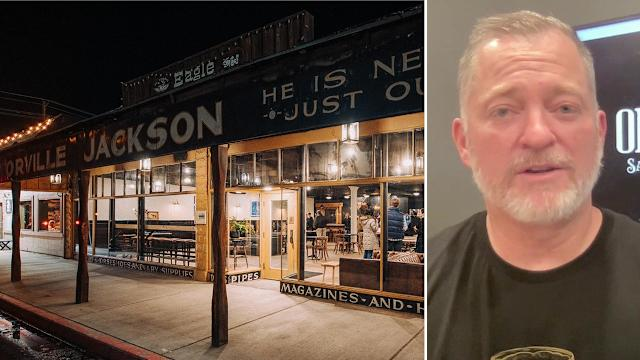
The saloon’s promotion functioned not only as an offer of free drinks but also as an endorsement of federal immigration policy. This dynamic underscores how immigration has become a cultural symbol as much as a political issue, shaping how communities, businesses, and individuals position themselves publicly.
The Department of Homeland Security’s decision to reshare the saloon’s post further elevated the visibility of the promotion and effectively signaled approval from a federal agency. This move also sparked concern among critics who interpreted it as a troubling sign of cooperation between a government body and a local business encouraging public reporting for rewards.
For supporters, DHS’s response reinforced the idea that ordinary citizens play an important role in national enforcement efforts. The exchange highlighted the broader debate over how far private entities should go in aligning themselves with government policies and whether such relationships risk fueling ideological conflict within local communities.
The Saloon’s History of Controversial Promotions and Its Role in Public Discourse
The Old State Saloon is no stranger to public attention. In 2024, its owner, Mark Fitzpatrick, introduced a promotion called “Heterosexual Awesomeness Month,” which offered discounts and free beer to heterosexual men and women during Pride Month. That promotion sparked its own wave of condemnation and support, establishing the saloon as a business willing to embrace controversial cultural issues to attract a particular demographic.
Read : Twice-Deported Albanian National Emirjon Gjuta Jailed for Illegally Re-Entering UK Third Time
For some, these promotions reflect a deliberate marketing strategy intended to align the bar with conservative, traditionalist values in contrast to progressive social movements. For others, such events appear designed to provoke, divide, or gain attention through shock value rather than community-building.

The latest offer involving ICE represents perhaps the most politically charged of the saloon’s promotions. Unlike previous initiatives focused on social identity or cultural commentary, this promotion directly intersects with law enforcement practices and federal immigration authority.
Encouraging patrons to identify undocumented immigrants extends beyond symbolic political expression and into the realm of real-world consequences for individuals who may be living in vulnerable circumstances. Critics argue that such incentives could encourage racial profiling, false reporting, or harassment of individuals perceived as foreign based on appearance or accent. Supporters, however, frame it as participation in the lawful process of identifying individuals without legal immigration status.
The saloon’s approach reflects a trend in which certain businesses adopt highly polarized stances as part of their brand identity. In doing so, they not only cater to customers who share similar beliefs but also amplify national divisions at the local level. Whether these strategies contribute constructively to public discourse or merely exploit controversy is a matter of perspective, but their visibility demonstrates how commercial spaces increasingly intersect with political conflicts.
The reaction to the saloon’s latest promotion indicates ongoing national tension over immigration, community responsibility, and the role of private businesses in political expression. As social media continues to serve as a megaphone for such announcements, local actions that might once have remained confined to a small town now attract nationwide attention. In this case, the saloon’s offer captured a moment when immigration remains a deeply contested issue, and public responses illustrate how sharply divided opinions remain on both the ethics and logistics of deportation-focused policies.
Alright gamers, I’ve been searching for a reliable h555gamedownload site. Found h555gamedownload.net. Gonna give it a spin! h555gamedownload