
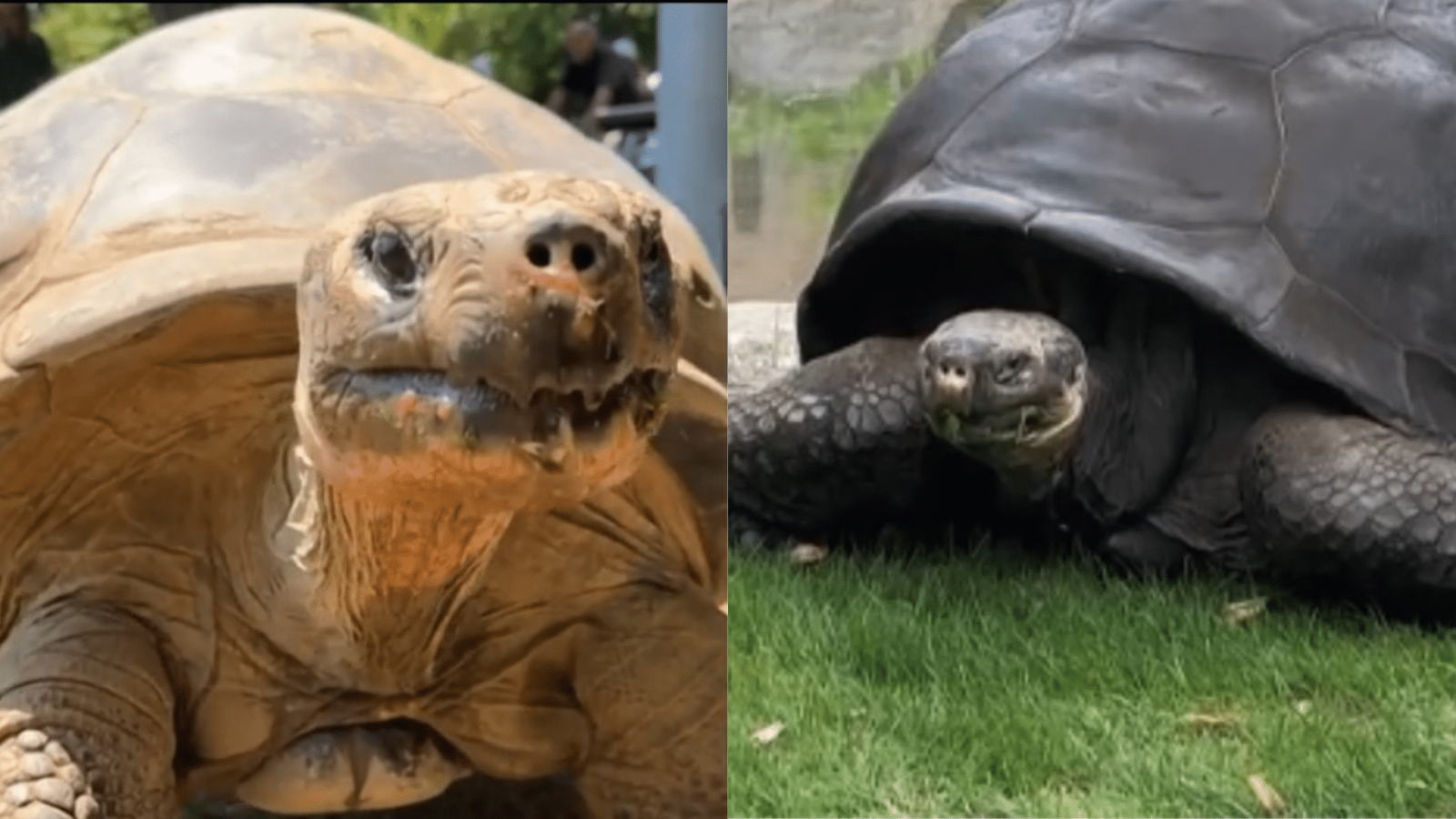
At the heart of the Philadelphia Zoo, a story nearly a century in the making has captured the hearts of animal lovers and conservationists around the world. Two elderly Galápagos tortoises, affectionately named Mommy and Abrazzo, have achieved a remarkable feat—becoming parents for the very first time in their late 90s.
Their story is not only endearing but also a beacon of hope for the survival of their critically endangered species. The Western Santa Cruz Galápagos tortoise, scientifically known as Chelonoidis niger porteri, is one of the rarest tortoise subspecies in the world.
Until recently, only 44 of these majestic creatures lived in U.S. zoos. Thanks to the extraordinary efforts of the Philadelphia Zoo and the patient perseverance of these elderly reptiles, that number has now grown, with the arrival of four healthy hatchlings and the promise of more on the way.
A Centennial Journey to Parenthood
Mommy, believed to be around 97 years old, has lived at the Philadelphia Zoo since April 23, 1932. She was brought to the United States from the Galápagos Islands by Milton W. Holden, weighing just 40 pounds at the time.
Today, she tips the scale at an impressive 284 pounds, a testament to the decades of care she has received. Despite being a long-time resident of the zoo, Mommy had never laid viable eggs—until now.
Her partner, Abrazzo, is believed to be about 96 years old. While his origins are less clear, records first mention him at the Gladys Porter Zoo in Texas in 1929. More recently, he was transferred from the Riverbanks Zoo and Garden in South Carolina to Philadelphia in December 2020.
Initially, his courtship with Mommy was less than promising. According to zoo officials, he was unsure of how to mate properly—“He was backward,” they observed—but with time and patience, nature took its course.
Their first mating attempt in 2022 did not yield success, as Mommy laid three clutches of eggs, none of which hatched. But in November 2024, everything changed. Mommy laid another clutch, and this time, the zoo’s caretakers were ready.
Read : Peruvian Fisherman Maximo Napa Survived 95 Days Lost in the Pacific Ocean by Eating Turtles
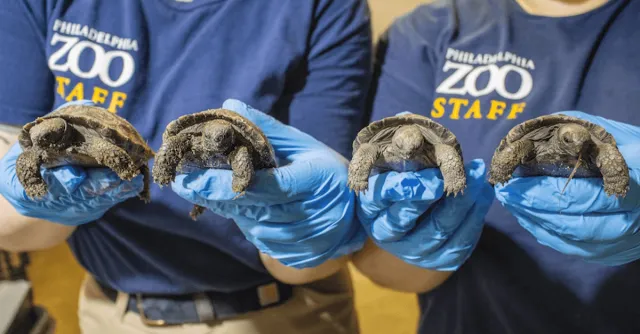
They collected 16 eggs, each about the size of a billiard ball, and placed them in incubators at carefully controlled temperatures. Since the sex of tortoise hatchlings depends on the incubation temperature, half of the eggs were kept below 82.4°F to encourage males, while the others were incubated above 85.1°F to produce females.
Read : More Than 10,000 Sea Turtle Eggs Rescued from Mexico’s Beach Ahead of Hurricane Beryl
On February 27, 2025, the first egg hatched. Three more followed shortly after, all females, each weighing about as much as a chicken egg. The remaining eggs are still being monitored, with the hope that more hatchlings will arrive in the coming weeks.
A Critical Moment for Conservation
The successful hatching of these four tortoises is not just a heartwarming moment—it is a vital development in the conservation of the Western Santa Cruz Galápagos tortoise. These tortoises are classified as critically endangered by the International Union for Conservation of Nature (IUCN), with only about 3,400 individuals surviving in the wild, primarily on the southwestern tip of Santa Cruz Island in the Galápagos.
Galápagos tortoises are known for their remarkable longevity, with lifespans that can exceed 150 years—and in some cases, they may live up to 200 years. Despite their resilience, these creatures have been severely impacted by human activity.
During the 18th and 19th centuries, thousands were hunted by sailors for food and oil. Invasive species such as rats, pigs, and ants now pose a significant threat by preying on eggs and hatchlings. Additionally, non-native herbivores like goats and cattle have altered their habitat, making it harder for young tortoises to survive.
Breeding programs such as the one coordinated by the Association of Zoos and Aquariums (AZA), of which Philadelphia Zoo is a part, are crucial for the species’ future. According to Ashley Ortega, the program coordinator, Mommy is considered one of the most genetically valuable tortoises in the AZA system. Her successful reproduction marks a rare and precious addition to the genetic diversity of the captive population.
The last time Western Santa Cruz Galápagos tortoises hatched at an AZA-accredited facility was in 2019, at Riverbanks Zoo. That makes the new hatchlings at Philadelphia the first of their kind in six years. This breakthrough has reignited hope for the program’s long-term success and sets an inspiring example for other institutions housing these animals.
Looking Toward a Hopeful Future
For now, the baby tortoises are being kept in a protected, behind-the-scenes area at the zoo’s Reptile and Amphibian House. There, they are carefully monitored by the zoo’s animal care team to ensure their health and development.
Zoo officials have announced that the hatchlings will make their public debut on April 23, 2025—fittingly, on the 93rd anniversary of Mommy’s arrival at the Philadelphia Zoo.
The plan is for the young tortoises to remain at the zoo for at least five years before decisions are made about their future. They may one day become part of other breeding programs or potentially even contribute to efforts to reintroduce tortoises into their natural habitat, should conservation conditions allow.
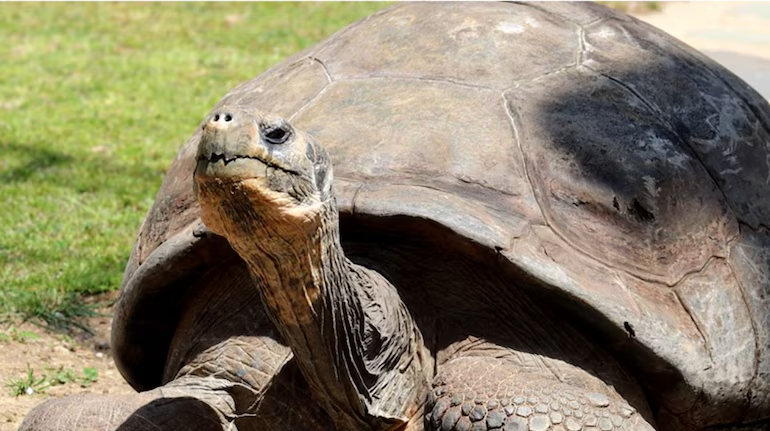
In addition to Mommy and Abrazzo, the Philadelphia Zoo houses another adult female Galápagos tortoise named Little Girl, as well as two Aldabra giant tortoises named Wilma and Betty. The zoo’s commitment to tortoise conservation is part of a broader strategy to protect endangered reptiles through research, breeding, education, and international collaboration.
As for Mommy and Abrazzo, this may only be the beginning of their legacy. If these ancient reptiles continue to thrive, they could potentially produce more offspring in the coming years. With lifespans that could extend into their second century, these two elderly pioneers may yet have more surprises in store.
The significance of this event extends far beyond the walls of the Philadelphia Zoo. It is a symbol of resilience, patience, and the extraordinary potential that exists when humans and animals work together toward a common cause.
In a world where extinction too often feels inevitable, stories like Mommy and Abrazzo’s remind us that with dedication and hope, even the rarest lives can continue to flourish.