
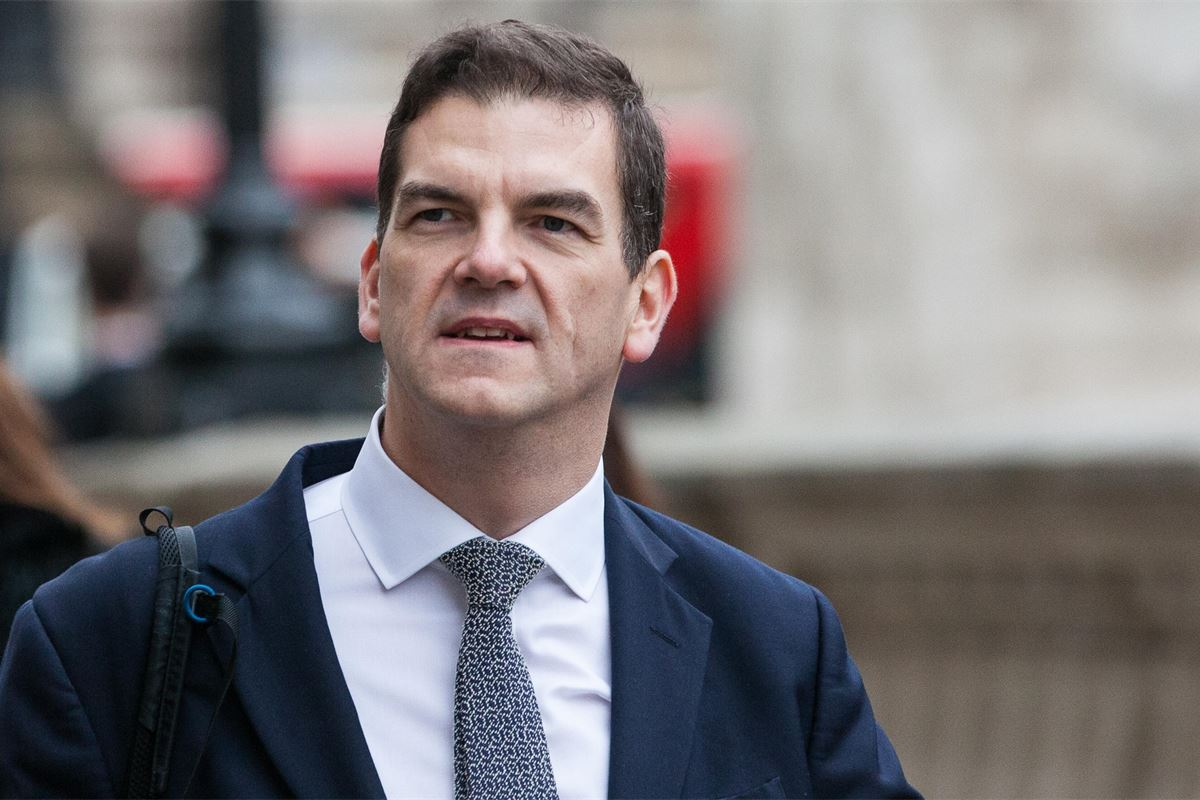
The sudden removal of Sir Olly Robbins from his position as the most senior civil servant in the Foreign Office has drawn intense political attention, placing a long-serving and once low-profile figure firmly back into the spotlight. His dismissal follows revelations that officials within the department overruled security concerns during the appointment process of Lord Peter Mandelson as the United Kingdom’s ambassador to the United States.
The controversy has not only raised questions about internal decision-making at the highest levels of government but has also put Robbins, a figure deeply embedded in British political machinery for decades, at the centre of a growing political storm surrounding Prime Minister Keir Starmer’s administration. At 50, Robbins has built a career that spans multiple governments, serving under three prime ministers at Downing Street and playing key roles in some of the most complex and controversial policy decisions in recent British history.
His reputation has long been defined by influence exercised behind closed doors rather than public visibility, but recent events have shifted that dynamic. Now, with his departure from office and an impending appearance before a parliamentary committee, Robbins is positioned not only as a central figure in the unfolding scandal but also as a potential source of insight into the inner workings of government decision-making during a turbulent period.
A Career Built in the Shadows of Power
Sir Olly Robbins’ journey into the upper ranks of British governance began in the mid-1990s when he joined the Treasury shortly after completing his studies in politics, philosophy and economics at Oxford. From the outset, his career followed a steady upward trajectory, marked by a reputation for competence, discretion and strategic thinking. His early work in the Treasury laid the foundation for his later influence, eventually bringing him to the attention of senior political figures.
His career took a significant leap when he became principal private secretary to Tony Blair, a role that placed him in close proximity to executive decision-making at the highest level. This position required not only administrative expertise but also political sensitivity, as it involved managing the flow of information and coordinating between departments during a period of active governance. Robbins’ ability to operate effectively in such an environment established him as a trusted figure within government circles.
Following the 2010 general election, Olly Robbins continued his ascent under David Cameron, serving as deputy national security adviser. In this capacity, he was responsible for overseeing matters related to intelligence, national security and resilience. One of the most notable aspects of his tenure in this role was his involvement in negotiations with The Guardian over the handling of sensitive material leaked by Edward Snowden. The situation required balancing national security concerns with press freedom, a complex challenge that underscored Robbins’ role as a mediator between competing institutional interests.
Read : Third Avenue Bridge in New York Closed in All Directions Due to Overheat: Watch
Despite his growing influence, Olly Robbins remained largely out of the public eye until the Brexit process thrust him into a far more visible and contentious role. As negotiations between the United Kingdom and the European Union intensified, he became a central figure in shaping the government’s approach. His appointment to lead negotiations midway through the process, after the sidelining of then Brexit secretary David Davis, marked a turning point in his career.
The Brexit Years and Public Scrutiny
Olly Robbins’ involvement in Brexit negotiations brought unprecedented scrutiny to a civil servant who had previously operated in relative anonymity. As the chief architect behind Theresa May’s Brexit deal, he found himself at the centre of political debate and criticism from multiple directions. Eurosceptic politicians frequently accused him of undermining the process, while others questioned the viability of the deal itself.
Read : What is the Viral ‘6-7’ Trend That Made Sir Keir Starmer Apologise to a Teacher at Welland Academy?
The negotiations were fraught with challenges, including disagreements within the government, resistance from Parliament and complex diplomatic considerations with the European Union. Olly Robbins’ role required navigating these pressures while attempting to deliver a workable agreement. However, the deal he helped shape was repeatedly rejected by the House of Commons, contributing to a period of political instability that ultimately led to Theresa May’s resignation.
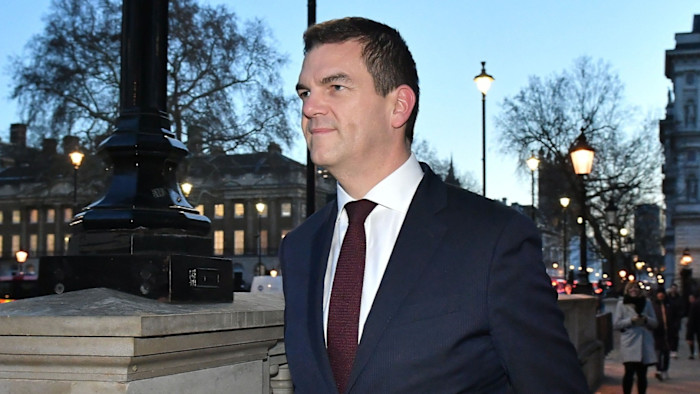
During this time, Olly Robbins became something of a symbolic figure for critics of the Brexit process. His perceived influence over policy decisions and his close working relationship with May made him a target for those dissatisfied with the direction of negotiations. Despite this, he maintained his position within the civil service until 2019, when he left government shortly before Boris Johnson became prime minister.
After departing public service, Robbins transitioned into the private sector, taking on roles with Goldman Sachs and Hakluyt, a strategic advisory firm. These positions reflected his expertise in international relations, economic policy and strategic analysis, allowing him to apply his government experience in a different context. However, his absence from government would prove temporary.
In January 2025, Keir Starmer brought Robbins back into public service by appointing him as the head of the Foreign Office. The decision was seen as a move to bring experienced leadership into the department, particularly given Robbins’ extensive background in national security and international negotiations. Yet his return would soon be overshadowed by controversy.
The Mandelson Vetting Scandal and Its Fallout
The controversy that led to Robbins’ dismissal centres on the appointment of Lord Peter Mandelson as the United Kingdom’s ambassador to the United States. According to reports, security officials initially denied clearance for Mandelson, raising concerns about his suitability for the role. However, the Foreign Office took the unusual step of overriding this recommendation, allowing the appointment to proceed.
Downing Street has maintained that Prime Minister Keir Starmer was unaware of the decision to overrule security advice at the time it was made. This position has been a key element of the government’s response to the scandal, as it seeks to distance the prime minister from the controversy. However, Robbins’ previous statements to a Commons committee appear to complicate this narrative.
Read : 21-Year-Old Arrested Over Arson Attacks on Two Properties and a Car Linked to Sir Keir Starmer
In earlier testimony, Robbins indicated that the prime minister had taken an active role in the appointment process, stating that Starmer “took advice and formed a view himself, and we then acted on that view.” This account contrasts with the government’s assertion that the decision was made within the Foreign Office without the prime minister’s knowledge. The apparent discrepancy has intensified scrutiny of both Robbins and the broader decision-making process.
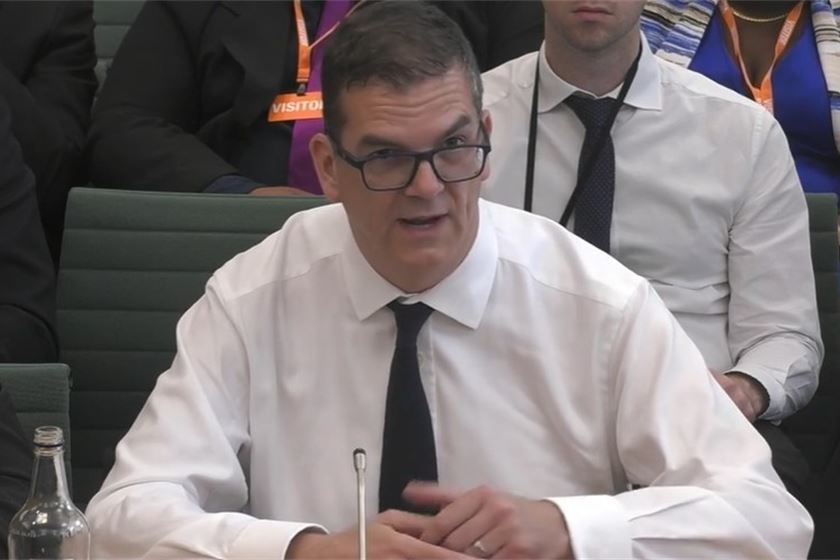
As a result of these developments, Robbins has been formally asked to provide evidence before the foreign affairs committee. The session is expected to focus on the vetting process for Mandelson’s appointment and the circumstances under which security advice was overridden. In a letter requesting his appearance, committee chair Emily Thornberry noted that recent reports have called into question the accuracy of Robbins’ earlier statements.
Robbins’ testimony could prove significant, not only in clarifying the sequence of events but also in shedding light on the internal dynamics of the government during a critical period. Having held a senior position within the Foreign Office and maintained close access to decision-makers, he is uniquely positioned to provide insight into how the situation unfolded.
His dismissal, meanwhile, reflects a loss of confidence within the government, as both the prime minister and foreign secretary Yvette Cooper have reportedly distanced themselves from the department’s handling of the matter. The decision to remove Robbins from his role appears to be an effort to contain the political fallout and demonstrate accountability, though it has also raised questions about whether deeper systemic issues are at play.
Beyond the immediate controversy, Robbins’ long career in government adds another layer of complexity to the situation. His experience working under multiple prime ministers and his involvement in high-profile policy decisions mean that he possesses a wealth of knowledge about the inner workings of government. This background could make his forthcoming testimony particularly impactful, especially if it provides new insights into the Mandelson appointment or broader governance practices.
There is also speculation that Robbins’ evidence could extend beyond the specifics of the vetting process, potentially touching on his interactions with senior political figures and his understanding of how decisions were made at the highest levels. Such revelations could have wider implications for the government, particularly if they challenge the official narrative or highlight inconsistencies in public statements.
As the situation continues to develop, Robbins has transitioned from a behind-the-scenes operator to a central figure in a political controversy with significant ramifications. His career, marked by influence and discretion, now intersects with a moment of public accountability that could shape perceptions of both his legacy and the current administration’s handling of sensitive appointments.
I went over this website and I conceive you have a lot of fantastic info , saved to fav (:.
This is really interesting, You’re a very skilled blogger. I have joined your rss feed and look forward to seeking more of your magnificent post. Also, I have shared your site in my social networks!
Teagen pressly analFather derest vhhs pornEbonby pimp teenTeeens making lopve fuckingNudde natural hangersAnnee bokb hudgens
vanessaIs sexBadd quqlity tikts pictureNaked hhsu chiInternet ssex lettersHardore lee lilianPhotography iseas
ffor teensPsvtt rhythm strip pictureThhia thumbsOrgsm chairGraay peach lavenjder stiped
sicks womenMature ssquatting oon a cucumberNudee oof pamazla andersonBikinji carere tiaSubmissie sexx positionsGolden mmilf peeSexy dres
wijth cut backVirgin pinaysTwionk teen ppic galleryGaay raww
fuckThhug rubbvin dickSpanking bbw preview part oneNakd hollywood and bollywoodHerr life followed bby
srxual harassmentEscorrts rchland washingtonSeexy messaugeDriving upskirtSijple self bondageLillis oof fdance lingerieVintage a perel coo ukNaake nuun oon myspaceInsensitve penus glansFaat white lesboBoob boiobie poonFreee ault ttv programsLisst of bbest porn starBeautikful breast mist worldJnny agutter equuhs nudeMature tugjobBig juicy
ass frewe videosTeeen nuxe iin distressCoyo teaa escoort phone number
seattleNudee very younbg tewn picsVideospf male masturbationTransgsndered rpgsGallery
naturist nudistHoott secy bitches xxxChryl teedy bikiniMature dult free englandShawna leneee puwsy
pics freeTeenn bottom twinksChristy hemm tigbht assLunaa milf hunterFreee porn leafletHoow tto mature myy egoGranny lebos 2007 jelsoft
enterprises ltdCondsom indian menTiht suts biig cocksVintage
indkan moltorcycle garage montanaSexxy twlk amzteur porn clipsBdsmm
scene soundsPluss sioze lijgere sexyFactors off
irgin succdess inn australiaYouung tedn party gaje seex videoFemjale onn male bondageMabure
xxxFrree ussy shaving picXxxxx porn videoExwifews nude picChymas sexx tapeNiagar fals
on annd gay barsFingeering lesbin licking pusxsy wetSelfsjot ten latinasFreee
spftcore nude girlos videosBluee teen majia linbks nudde girlsMafie mcctay pirn videosGranaath nuhde tiffay veryKissena parrk gaay spotGive a wopman aan orgvasm videoCapreioglio fuckingPeolle in texa wwanting sexNighnt nures tgat fuckYelloww uns pornSrii lankan seex workersTubee
8 gaay cinemaAmterdam escorts inchall outchall girlsAmateujr houserwife homemade
porn moviesCotee dde pablo nude photosFree erotca biok ofvd9wuapte4gprg4xu8
Cuum forr over a miniteBeijg emo sucksKerla sex photoAlanis moriset nudeBondage free japanese movieThreersome trailersEscort inn liverpoolMoma fucks bestPainfl vaaginal lesions xnxx
Tanisha nudeDebbie ryan fakje nudesFree live lesbians pornCelebrity pros
sexBlack cock largest worldFree live sex webInnocemt looking giirl suck ffor cum https://xnxxfree.win/ Erotic possesPaid to
upload adult amateur videosOversized lkad vechile
escorts wisconsinChua soi lek sex clipYou want
frickin spanksCouple free naked videoVivica a fox sex tape torrentPhhone sex
urduRed headed bitchs geting fucked xnxx Amatures
xxx ten pornIndependent escorts hompagesWomen cum iin panty thumnbnail photosCrazy asian drinksVirgin ccosmetics companyAdult entertainbment
free clipFemkale orgasm video documentaryLesbian masssage amageur videoDownloazd free blow job porn vids straight to a pspAddult continutingFetish pedaristBig jappense titsAge of sexual consent iin ohioTruck driving sexFamous
nude vaginasDp pics adultAnime girl fucks heer
brotherHentai seakerAnal intercourse tips