
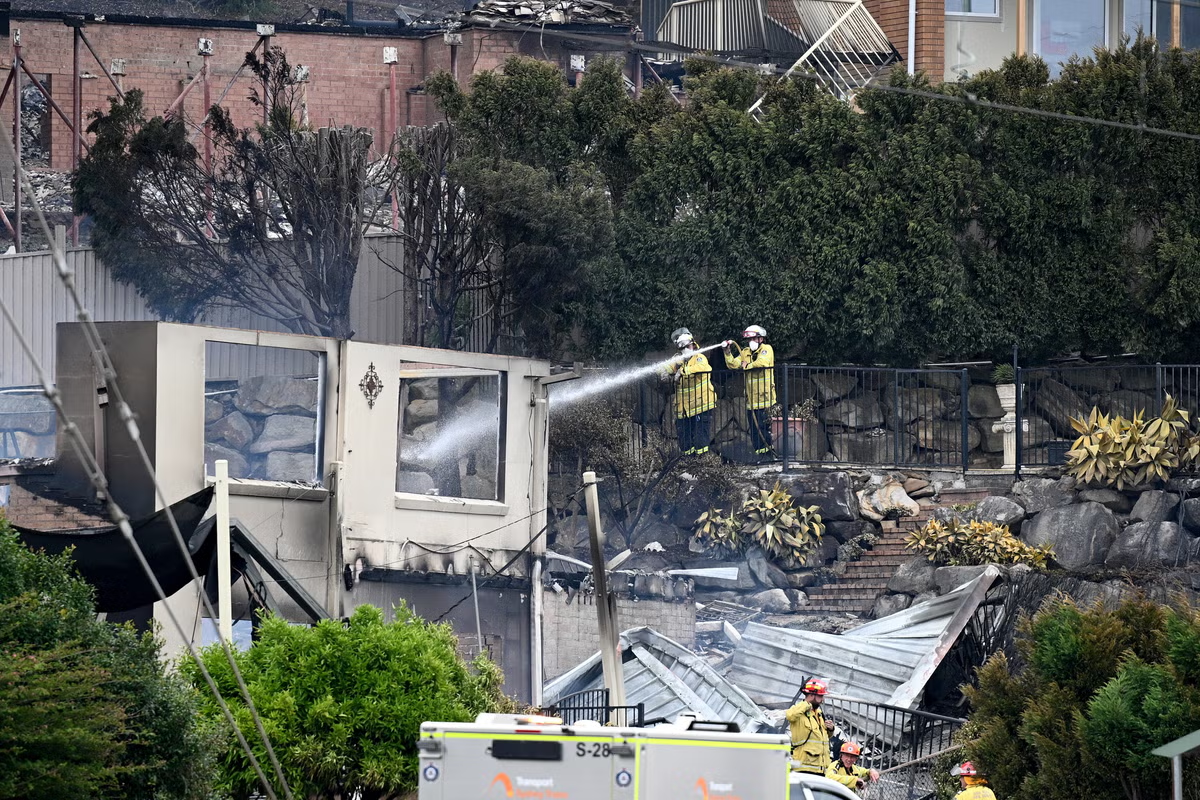
The early weeks of Australia’s summer fire season have already delivered a devastating toll, with a veteran volunteer firefighter killed while battling a fast-moving bushfire north of Sydney. His death, occurring amid dozens of active blazes across New South Wales and Tasmania, has underscored official warnings that the months ahead could bring some of the most dangerous conditions seen since the Black Summer fires of 2019–2020.
The loss of life, the destruction of homes, and the growing pressure on emergency services have all contributed to a grim sense that the fire season is accelerating earlier and more forcefully than many anticipated. As authorities work to contain numerous outbreaks fueled by heat, wind, and exceptionally dry vegetation, communities across two states are grappling with the scale of damage and the uncertainty of what is still to come. The firefighter, a 59-year-old volunteer with extensive service experience, died on Sunday night after a tree collapsed onto him on the fireground near Bulahdelah, roughly 200km north of Sydney.
Emergency crews attempted resuscitation but were unable to revive him. The blaze he had been working to control had already consumed thousands of hectares and destroyed several homes, one of dozens of fires burning across the state. His death, acknowledged with sombre statements from fire officials and the prime minister, has become a painful marker of the harsh realities that emergency workers face as Australia enters what experts warn may be a prolonged and high-risk summer.
Escalating Fire Conditions Across New South Wales
New South Wales, one of the country’s most fire-prone territories, has entered the fire season with a combination of factors that collectively heighten the risk of widespread bushfire activity. Hot temperatures, gusty winds, and parched vegetation—conditions amplified by the drying effects of El Niño—have allowed fires to ignite and spread with alarming speed.
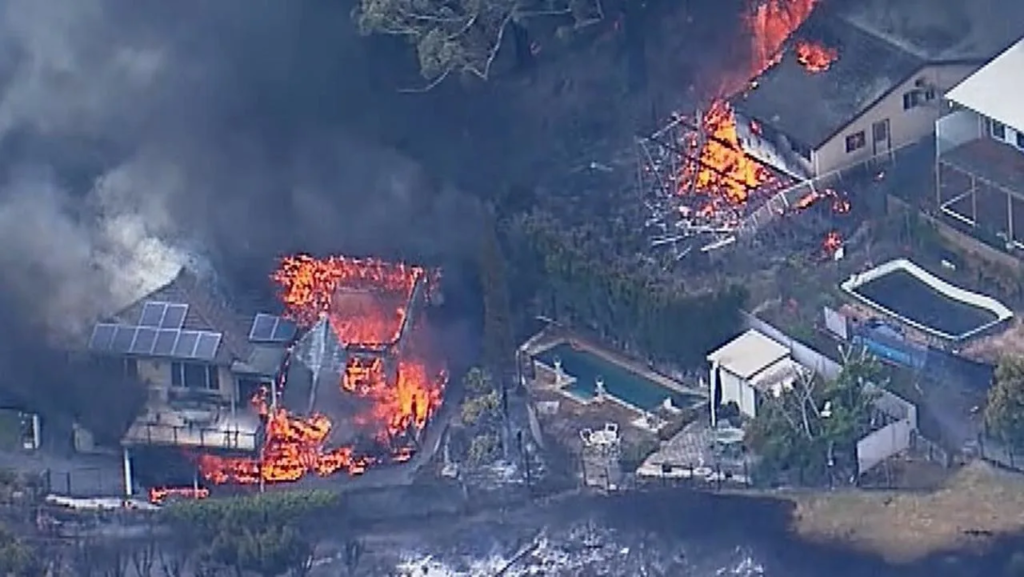
As of Monday, more than 50 bushfires were active across the state, nine of them burning out of control according to the Rural Fire Service (RFS). Firefighters faced severe challenges throughout the weekend as flames tore through communities, particularly on the Central Coast and around Bulahdelah, leaving destruction in their wake. One of the worst-affected localities was Koolewong, a hillside suburb overlooking the Brisbane Water estuary north of Sydney.
At least 16 homes in the region were destroyed as a fast-moving fire surged through residential streets with little warning. Residents described moments of chaos as they rushed to evacuate with only seconds to spare. Some recounted seeing neighbours attempting to protect their homes with hoses, only to be forced to retreat as the blaze intensified. Locals shared accounts of profound loss: cherished belongings reduced to ashes, familiar streets rendered unrecognisable, and entire properties levelled in minutes.
Witness testimonies painted a vivid picture of the fire’s speed and ferocity. One resident described having “no time to even think” before being forced to flee, explaining that everything they owned was now gone, with only the clothes they wore remaining. Such stories reflect the dynamic that often characterises Australian bushfires: rapid ignition, sudden escalation, and total devastation within a shockingly brief window. The destruction of around 20 homes statewide over the weekend has reinforced the precariousness of conditions in New South Wales as summer advances.
A firefighter has died near Bulahdelah after reportedly being struck by a falling tree on the edge of the bushfire zone. #firefighter #fire #bushfire #bulahdelah #emergency pic.twitter.com/KXzpyLBdc5
— 7NEWS Australia (@7NewsAustralia) December 7, 2025
Although conditions eased somewhat overnight, allowing authorities to downgrade some warnings, the temporary reprieve has done little to calm broader concerns. RFS Commissioner Trent Curtin stated that firefighters expected to be engaged on the Bulahdelah blaze for days, even with improved weather conditions. Hot, dry, and windy conditions are forecast to return later in the week, prompting fears that suppressed fires could reignite or that embers could trigger new outbreaks. With so many active fires and vast regions of flammable vegetation, even short periods of adverse weather threaten to reverse containment gains rapidly.
Impact on Communities in Tasmania and the Growing National Risk
While New South Wales is currently facing some of the most dramatic fire activity, the island state of Tasmania has also been battling its own destructive outbreak. Near Dolphin Sands, a 700-hectare fire destroyed 19 homes and damaged at least 40 more, leaving a coastal community grappling with extensive losses. Emergency officials reported that although the blaze had been contained, the area remained unsafe for residents to return. Roads into the community stayed closed as authorities assessed hazards, reinforced containment lines, and worked to ensure conditions were safe for re-entry.
For Tasmania, the scale of destruction is particularly significant. The state is known for its variable climate and rugged landscapes, but recent years have seen an increase in dangerous bushfire conditions, especially in regions experiencing warmer temperatures and lower rainfall than historical averages. The damage at Dolphin Sands illustrates how even relatively small fires, in terms of land area, can have a profound impact when they strike residential zones with concentrated housing.
Read : Who is Crystal Terese Wilsey, the Cinnabon Worker Fired After Mocking Somali Woman’s Hijab?
The experience of both New South Wales and Tasmania aligns with the broader fire risk assessments issued by Australian authorities in recent months. Forecasters have warned that after several milder summers influenced by the cooling La Niña weather pattern, the country could face a dramatically hotter and drier season under El Niño conditions. Rising temperatures, ongoing drought, and widespread dry fuel loads—combined with the long-term impacts of climate change—have created conditions conducive to extreme fire behaviour.
Officials have repeatedly emphasised that the length of the fire season has expanded, beginning earlier in the spring and lasting later into autumn, leaving limited windows for hazard reduction and controlled burns. Australia’s recent fire history adds context to these warnings. The Black Summer fires of 2019–2020 burned more than 24 million hectares—an area comparable in size to Turkey—and killed 33 people, including nine firefighters.
Nearly 3,000 homes were destroyed, and countless species and ecosystems suffered catastrophic damage. Although the current season has not reached anything close to that scale, authorities caution that the same underlying drivers—prolonged heat, drought, and the increasing influence of climate change—are again present. The early fatalities and property losses in this year’s fire season have heightened concerns that the coming months may bring broader and more intense fire activity.
In New South Wales, emergency crews are particularly wary of the possibility that isolated fires could link up into larger complexes, a phenomenon observed during past severe fire seasons. Winds forecast for later in the week could push fires toward populated areas or compromise containment work already undertaken. For rural and regional communities, these risks pose immediate logistical and emotional challenges. Many residents, especially those who experienced the Black Summer fires, remain acutely aware of the need for rapid evacuation and preparation, yet face the reality that even well-prepared homes can be overwhelmed by fast-moving fire fronts.
The Human Toll and the Demands on Emergency Services
The death of the 59-year-old volunteer firefighter has cast a long shadow over the ongoing bushfire response. According to RFS Commissioner Trent Curtin, the fallen firefighter had been working on the line of an aggressive blaze that had already consumed 3,500 hectares and destroyed four homes near Bulahdelah. His death occurred when a tree, destabilised by fire activity, collapsed onto him—a reminder of the unpredictable hazards present on the fireground.
He went into cardiac arrest and could not be revived, despite urgent efforts by his colleagues and emergency medical personnel. His passing has been met with grief from both the firefighting community and political leaders. Prime Minister Anthony Albanese described the news as a sombre reminder of the dangers that emergency service volunteers face, noting that their bravery is honoured every day.
Read : Lutsen Lodge Owner Bryce James Campbell Charged for Setting Fire to Own Lodge
The message reflects a longstanding recognition in Australia of the critical role volunteers play. In many states, including New South Wales and Tasmania, the majority of frontline bushfire work is carried out by volunteers who balance firefighting responsibilities with their regular jobs and family commitments. Their service is deeply embedded in the national identity, and losses within these ranks resonate widely.
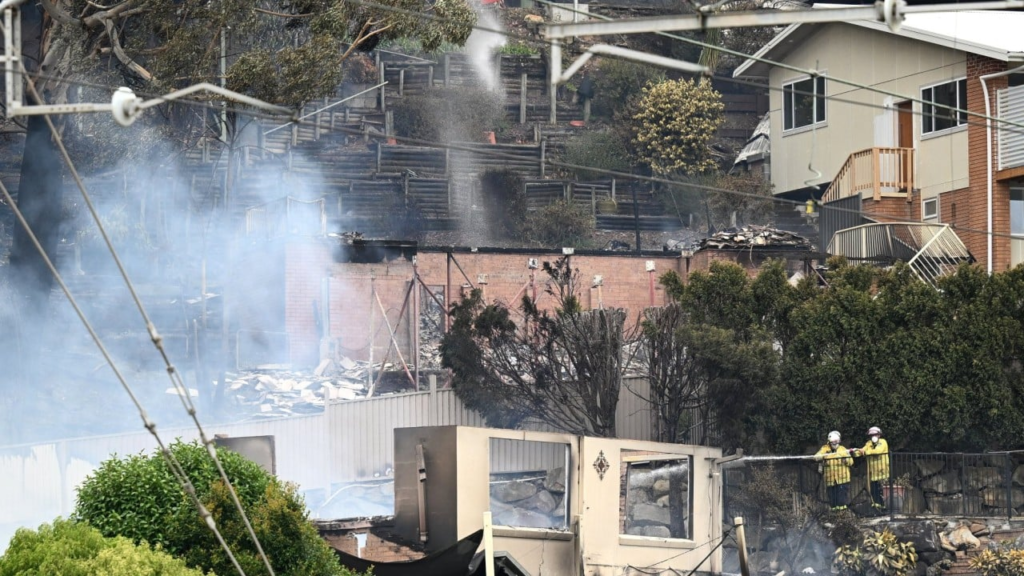
The demands on emergency services are expected to intensify as the season progresses. Firefighters are preparing for prolonged deployments, with some regions likely to face recurrent flare-ups throughout the summer months. Logistics, resourcing, and fatigue management will all be central concerns, especially if fires spread into new districts or if multiple severe fire days occur in succession. Aircraft, tankers, specialist crews, and interstate support may all be required, depending on how conditions evolve.
Communities, too, will continue to feel the burden. Evacuation centres have already opened in several regions, providing temporary shelter for families who lost their homes or who fled as fires approached. Volunteers and local organisations are distributing essential supplies, while state governments are assessing damage and planning recovery efforts. Insurance claims are expected to rise sharply in affected zones, and many homeowners will face long processes of rebuilding or relocation.
Climate experts and fire scientists have reiterated that the drivers of this escalating risk are structural and long-term. Rising atmospheric temperatures, declining soil moisture, and shifts in rainfall patterns all contribute to a landscape more susceptible to ignition. While short-term conditions such as wind and heatwaves determine the immediate behaviour of fires, the underlying dryness of vegetation is one of the clearest signals of the changing fire regime.
This structural shift means that emergency agencies must prepare not just for single-season anomalies, but for an increasingly volatile baseline. The current fires in New South Wales and Tasmania provide an early indication of the challenges ahead. With many blazes still active and hotter conditions forecast for later in the week, fire crews continue to work in difficult environments, navigating rugged terrain, limited visibility, and unpredictable wind patterns.
Communities remain on alert, aware that conditions can deteriorate quickly even after temporary periods of calm. The loss of more than three dozen homes across two states, the severe damage to many more, and the tragic death of a veteran firefighter together signal a sobering start to Australia’s summer and highlight the urgent need for preparedness as the season deepens.
Such a refreshing take on a common topic.
这款结合了视觉小说和点击解谜的warm like flesh体验很独特。