

The unexpected deportation of Jeson Nelon Presilla Flores, one of the accused suspects in what federal prosecutors have described as the largest jewelry heist in United States history, has ignited widespread anger among victims, legal observers, and industry stakeholders. The case, centered on a daring 2022 robbery of a Brinks armored truck in Southern California that resulted in the theft of an estimated $100 million in jewels, gold, and luxury watches, was already complex and sprawling.
Flores’s removal from the country before standing trial has now introduced serious questions about coordination between federal criminal prosecutors and immigration authorities, as well as concerns about accountability, transparency, and justice for victims whose losses remain largely unrecovered.
According to court documents and reporting by The Los Angeles Times, Flores was deported to Ecuador in late December after being taken into the custody of Immigration and Customs Enforcement months earlier. His departure appears to have occurred without the knowledge of either his defense attorney or the federal prosecutors pursuing the case. For jewelers whose merchandise vanished during the heist, and for investigators who spent years unraveling an international robbery ring, the development has been described as both shocking and deeply frustrating.
A High-Stakes Heist and a Case Years in the Making
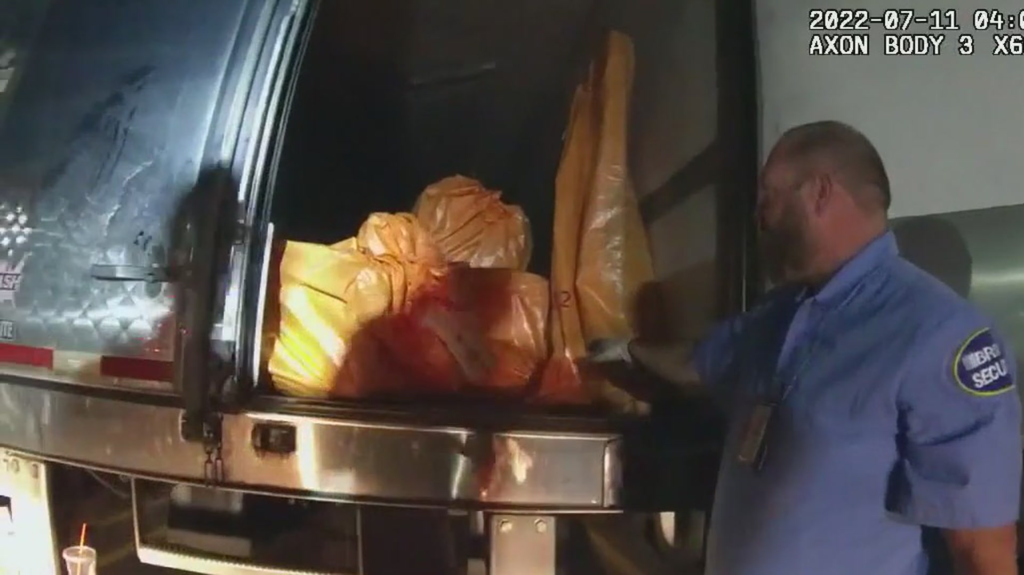
The Brinks truck robbery at the heart of the case took place in the early hours of July 11, 2022, at a rest stop in Lebec, California. Prosecutors allege that the theft was the culmination of a carefully planned operation that began the previous day at a jewelry show in San Mateo. Members of the robbery ring are said to have followed the armored truck for nearly 300 miles as it traveled south, waiting for the right moment to strike.
When the truck stopped in Lebec, the opportunity allegedly presented itself. One guard was reportedly asleep inside the vehicle, while another had gone into the rest stop to buy food. Investigators say the thieves managed to break into the truck without violence or confrontation, making off with 24 bags filled with diamonds, rubies, emeralds, gold, and high-end watches. The operation was executed quietly and efficiently, with the suspects later deactivating the burner phones they had used to coordinate the crime.
The scale of the theft stunned both law enforcement and the jewelry industry. Valued at approximately $100 million, the haul eclipsed previous armored truck robberies and was quickly labeled by prosecutors as the largest jewelry heist in U.S. history. For many jewelers, the loss represented not just merchandise, but years or decades of work, investment, and trust placed in the security of armored transport.
Read : Who is Fedora Man, the 15-Year-Old French Teen Who Went Viral in the Louvre Heist Photo?
The investigation that followed was lengthy and complex. A key break reportedly came when one of the alleged robbers contacted police to report a car accident the night before the heist, providing a burner phone number that investigators later linked to cell tower data near the robbery site. Over time, federal authorities connected the Brinks theft to a broader pattern of high-value robberies across 2022.
Read : Shirakawa-go: The Most Beautiful Japanese Village
In June, the Justice Department indicted seven individuals in connection with the heist and related crimes, with arrests spanning multiple states and even extending to Panama. Jeson Nelon Presilla Flores was among those charged. He pleaded not guilty to theft and conspiracy counts and was awaiting trial when immigration authorities intervened.
A Deportation That Caught Everyone Off Guard
The revelation that Flores had been deported emerged in January court filings, when his attorney, John D. Robertson, moved to dismiss the case after learning that his client was no longer in the United States. Robertson wrote that he had “just learned” of the deportation and emphasized that Flores had been a lawful permanent resident who had lived in the region for roughly 25 years.
Prosecutors were equally surprised. In their own filings, federal attorneys stated that Flores had been taken into immigration custody “unbeknownst” to them and that they played “no role” in ICE’s decision-making. They maintained that they remain eager to prosecute Flores should he ever return to the United States, but acknowledged that his absence leaves the case in a deeply unsatisfying limbo.
According to the Department of Homeland Security, Flores appeared at an immigration hearing on December 16, where he represented himself. During that hearing, officials say he admitted to allegations related to his immigration status and requested voluntary departure. A final order of removal was issued that same day, and Flores was deported to Ecuador on December 28.
DHS officials have characterized Flores as a “criminal illegal alien,” citing a criminal history that includes convictions for sexual battery, robbery, burglary, vandalism, and making threats with intent to terrorize. While acknowledging that he entered the U.S. legally as a permanent resident in 2001, the department said those convictions rendered him removable under immigration law.
What has drawn particular criticism is not the legality of the removal itself, but the apparent lack of coordination between agencies handling parallel legal processes. Flores was an active defendant in a major federal criminal case, one involving enormous financial losses and significant public interest. Yet his deportation proceeded without notice to the prosecutors or the victims, effectively removing him from the reach of the U.S. criminal justice system before a verdict could be reached.
Victims, Accountability, and a System Under Scrutiny
For the jewelry companies impacted by the heist, Flores’s deportation has been described as a devastating blow. Jerry Kroll, an attorney representing some of the victimized jewelers, has publicly criticized the outcome, arguing that it leaves victims without answers, accountability, or closure. Many of his clients lost inventory that constituted the core of their businesses, with much of the stolen merchandise still missing more than two years later.
Read : Who Are the Peraire-Bueno Brothers Accused of Stealing $25 Million in a Cryptocurrency Heist?
From their perspective, the criminal trial was not merely about punishment, but about establishing responsibility, uncovering the full scope of the conspiracy, and potentially recovering stolen assets. Flores’s absence complicates those goals and raises fears that other defendants could exploit similar gaps in the system.

Legal experts note that while immigration enforcement and criminal prosecution are both federal functions, they operate under different authorities and priorities. In theory, coordination mechanisms exist to prevent precisely this type of outcome, particularly in high-profile cases. The fact that neither the defense nor the prosecution was aware of Flores’s impending deportation has fueled calls for greater transparency and clearer safeguards.
The case also highlights a broader tension between immigration enforcement and criminal justice objectives. Allowing a defendant to request voluntary departure while facing serious federal charges can undermine public confidence in the legal process, critics argue, especially when victims are left bearing the consequences. At the same time, DHS officials have defended their actions as consistent with immigration law and judicial orders, emphasizing Flores’s criminal history and final removal order.
For prosecutors, the path forward is uncertain. While they have stated their intention to pursue Flores if he returns to the United States, extradition is unlikely given the circumstances of his voluntary departure and the complexities of international law. The remaining defendants will still face trial, but Flores’s absence may limit the government’s ability to present a complete picture of the alleged robbery ring.
As the case continues to unfold, it has become a flashpoint for discussions about interagency coordination, victims’ rights, and the balance between immigration policy and criminal accountability. For now, the deportation of Jeson Nelon Presilla Flores stands as a rare and controversial twist in an already extraordinary crime, one that has left an indelible mark on the jewelry industry and raised enduring questions about how justice is administered in cases that cross legal and bureaucratic boundaries.
**mitolyn official**
Mitolyn is a carefully developed, plant-based formula created to help support metabolic efficiency and encourage healthy, lasting weight management.