

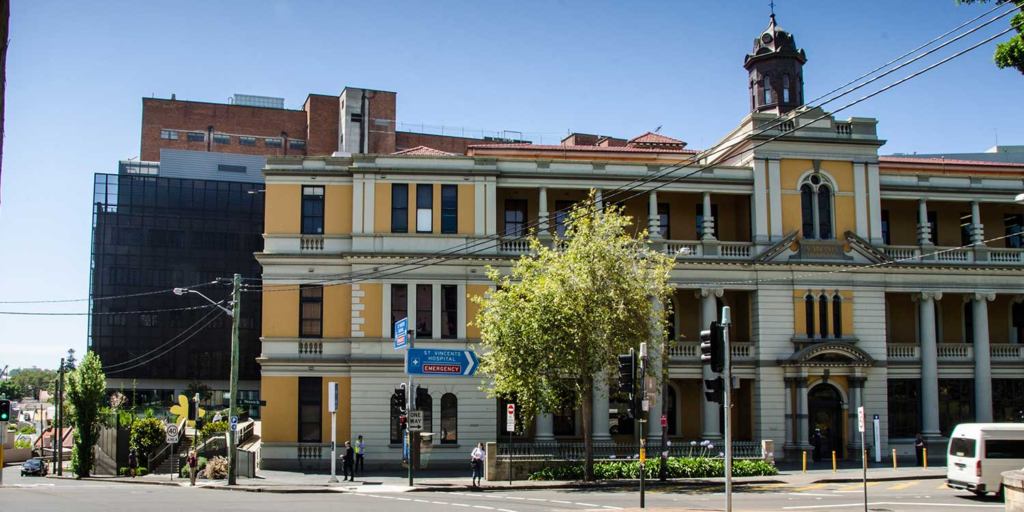
A groundbreaking medical achievement has taken place in Australia, where a man has become the first person in the world to survive for over 100 days with an artificial titanium heart. This revolutionary medical feat was carried out at St Vincent’s Hospital in Sydney, marking a significant milestone in the field of cardiology and organ transplantation.
The patient, a man in his 40s from New South Wales, was the first Australian and only the sixth person worldwide to be fitted with the BiVACOR total artificial heart.
After living with the device for more than three months without any major complications, he successfully received a donor heart transplant earlier this month. The procedure has been hailed as a major success, offering hope for thousands of patients suffering from severe heart failure.
A Life-Saving Breakthrough in Cardiac Medicine
The patient was suffering from advanced heart failure, a condition that severely affects the heart’s ability to pump blood throughout the body. Traditional treatments such as medication and ventricular assist devices (VADs) were no longer effective in his case, making him a candidate for an artificial heart.
The six-hour surgery to implant the BiVACOR artificial heart was led by renowned cardiothoracic and transplant surgeon Paul Jansz at St Vincent’s Hospital. The surgical team worked meticulously to ensure the successful placement of the device, which would serve as a bridge until a suitable donor heart became available.
Dr. Jansz expressed his pride and excitement over the successful implantation, emphasizing that the breakthrough was years in the making. “We’ve worked towards this moment for years, and we’re enormously proud to have been the first team in Australia to carry out this procedure,” he said.
The procedure was part of an ongoing effort to improve treatment options for patients with end-stage heart failure who may not have immediate access to donor organs.
Unlike traditional artificial hearts that rely on multiple moving parts and complex mechanisms, the BiVACOR device utilizes a single magnetically suspended rotor, which propels blood through the body in a continuous flow.
Read : 61% of US Adults Will Have Some Type of Heart Disease by 2050
This innovative design reduces the risk of mechanical wear and tear, making it a more reliable option for patients who require long-term circulatory support.
The Science Behind the BiVACOR Artificial Titanium Heart
The BiVACOR artificial heart is a revolutionary total heart replacement device developed by Queensland-born biomedical engineer Dr. Daniel Timms. The device is designed to function as a bridge to transplantation, keeping patients alive while they await a suitable donor heart.
Unlike conventional artificial heart devices that attempt to mimic the natural beating of the heart, BiVACOR operates as a continuous pump, maintaining steady blood circulation throughout the body.
One of the key innovations of the BiVACOR heart is its single moving part—a magnetically levitated rotor. This rotor is responsible for propelling blood in carefully controlled pulses, ensuring adequate circulation without the complications associated with mechanical failure. The use of titanium as the primary material for the device further enhances its durability, biocompatibility, and resistance to corrosion.
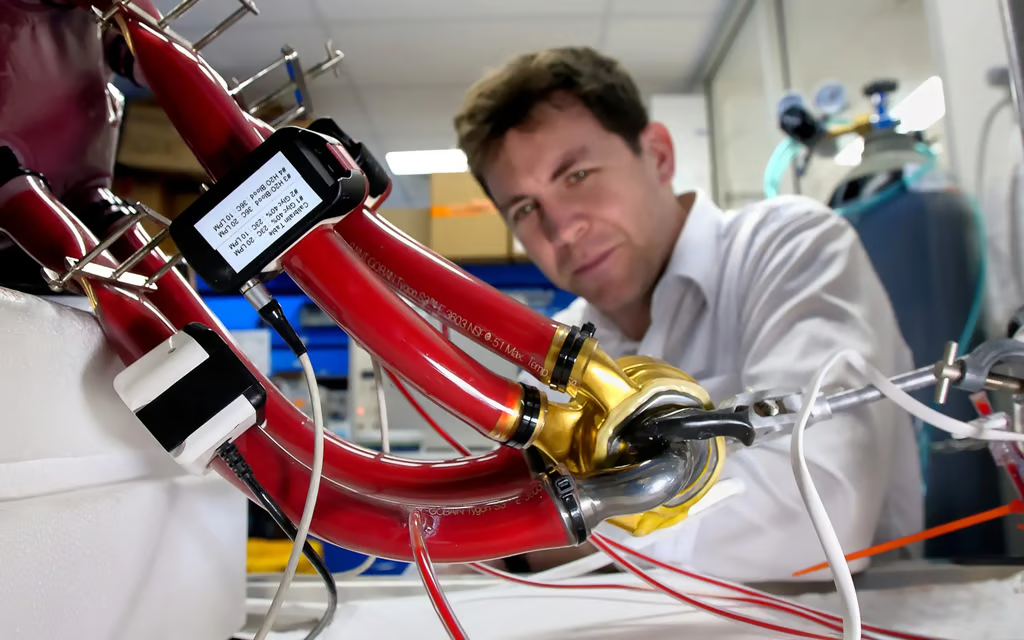
The device is powered externally, with a cord running under the skin connecting the artificial heart to a portable controller. During the day, the controller runs on battery power, allowing the patient to move freely.
At night, it can be plugged into a power source, ensuring continuous operation. The ability to sustain life with a single moving part significantly reduces the risk of complications, making BiVACOR a promising alternative to traditional artificial heart technologies.
Currently, the BiVACOR device is used as a temporary measure until a donor heart becomes available. However, researchers and cardiologists believe that with further testing and trials, it could eventually become a permanent solution for patients who are ineligible for transplants due to age or other medical conditions.
Future Implications and Challenges in Artificial Heart Technology
The successful implantation of the BiVACOR artificial heart and the patient’s survival for over 100 days highlight the immense potential of artificial heart technology. However, challenges still remain in making artificial hearts a long-term or permanent solution.
While the BiVACOR device has proven to be highly effective as a bridge to transplantation, the lifespan of artificial hearts is still significantly shorter than that of donor hearts. A transplanted human heart can function for over 10 years, whereas the long-term durability of artificial hearts remains an area of ongoing research.
Despite these challenges, the development of artificial hearts like BiVACOR is a game-changer in the field of cardiology. The ability to provide patients with a functional, life-sustaining heart while they await a transplant could drastically reduce mortality rates associated with heart failure.
Furthermore, as technology advances, artificial hearts may one day become a viable alternative to human organ transplants, eliminating the need for long waiting lists and reducing dependence on donor organs.
The success of the BiVACOR artificial heart also raises important questions about accessibility and affordability. Advanced medical technologies often come with high costs, making them inaccessible to many patients.
Future efforts will need to focus on making artificial heart technology more affordable and widely available, ensuring that more patients can benefit from life-saving treatments.
Additionally, further clinical trials and studies are necessary to assess the long-term effects of artificial heart implantation. Researchers must continue to investigate the impact of continuous blood flow on organ function, tissue health, and overall patient well-being. While the BiVACOR device represents a major leap forward, ongoing research will be essential in refining and improving artificial heart technology.
As artificial heart technology progresses, collaborations between medical institutions, researchers, and biotech companies will be crucial in advancing the field. Investment in research and development, combined with clinical trials and real-world applications, will help pave the way for even more sophisticated and reliable artificial heart solutions.
The Australian man’s survival with the BiVACOR artificial heart marks a historic milestone in cardiac medicine. His case demonstrates the incredible potential of artificial hearts in extending life and improving patient outcomes.
While there are still challenges to overcome, the progress made in this field offers new hope for individuals suffering from severe heart conditions.
With continued innovation and medical breakthroughs, artificial hearts could one day become a standard treatment for heart failure, transforming the landscape of cardiovascular care.
The success of the BiVACOR device at St Vincent’s Hospital serves as a testament to the dedication and ingenuity of the medical community, pushing the boundaries of what is possible in the field of heart transplantation and artificial organ development.