
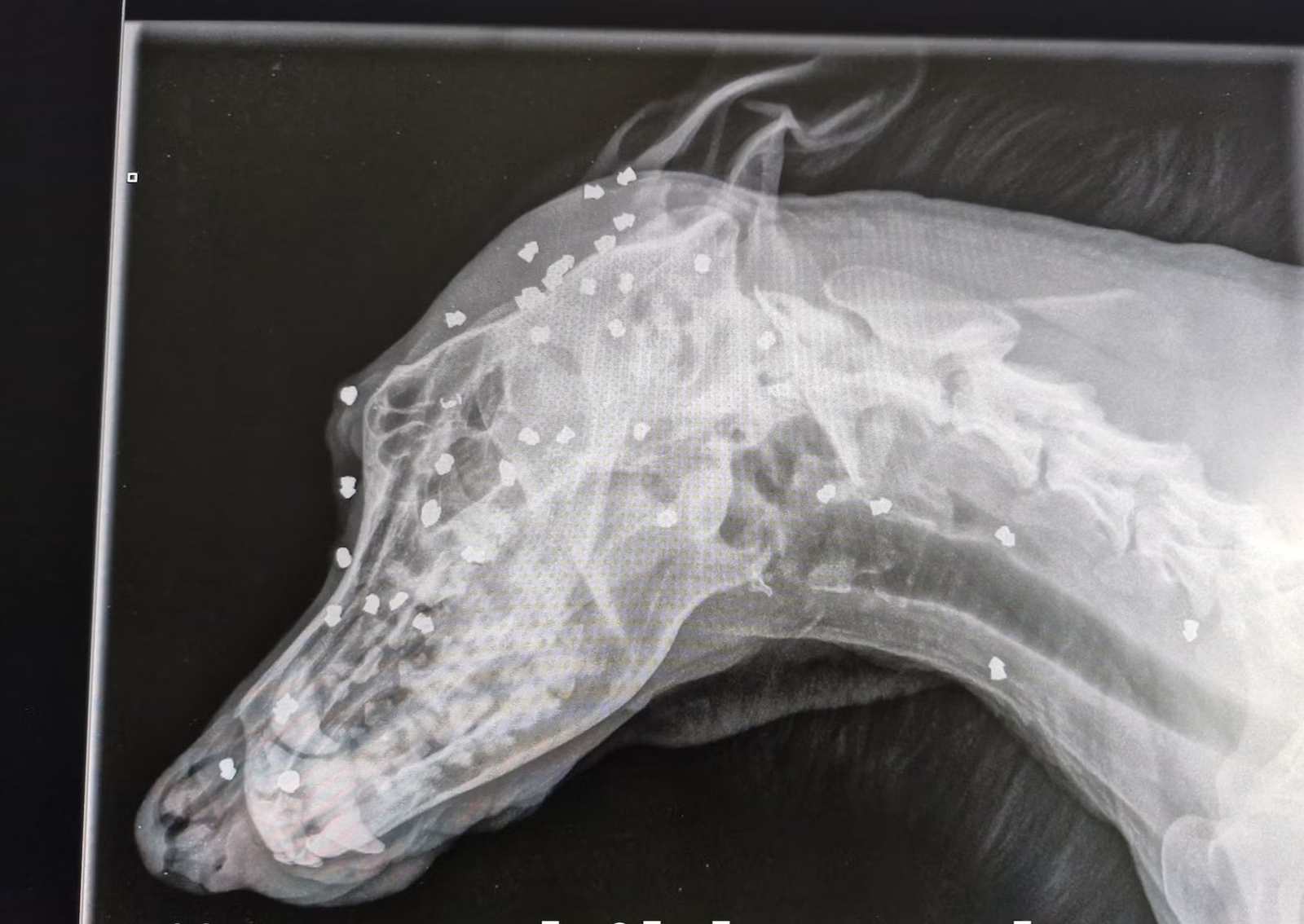
In a shocking case of animal cruelty that has sparked outrage across Germany and beyond, a 48-year-old man was arrested in mid-August 2025 for Shooting Dog in Head, a German Shepherd mix named Keks, more than 40 times with an air rifle. The incident, which took place earlier this year in the small village of Bloaschütz, located in the municipality of Bautzen, Germany, has drawn significant attention due to the sheer brutality of the act and the miraculous survival of the dog.
Keks, whose name means “cookie” in German, was discovered by a passerby and taken to an animal shelter for treatment. The case has raised important questions about animal welfare laws, the responsibilities of pet owners, and the need for stricter enforcement to prevent such acts of cruelty.
The Horrific Incident and Keks’ Miraculous Survival
The incident came to light in March 2025 when a concerned passerby found Keks, a German Shepherd mix, in a severely injured state in Bloaschütz. The dog was bleeding and visibly in pain, prompting the individual to rush him to a local animal shelter, Tierheim Bautzen, for immediate medical attention.
Upon examination, veterinarians were stunned to discover the extent of Keks’ injuries. An X-ray revealed between 40 and 50 air rifle pellets lodged in the dog’s head, neck, and body, embedded deep in his bones and muscles. The body scan image, later shared by the shelter, showed pellets scattered throughout Keks’ forehead and neck, painting a grim picture of the brutality he endured.
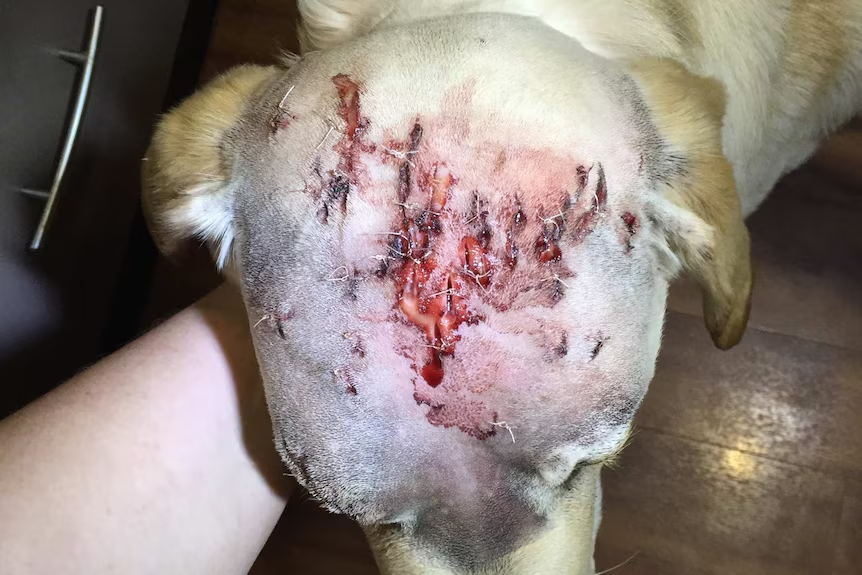
Despite the severity of his injuries, Keks displayed remarkable resilience. The veterinary team at Tierheim Bautzen worked tirelessly to stabilize him, providing surgical intervention and ongoing care to address the damage caused by the pellets. Miraculously, Keks survived the ordeal and began his journey to recovery.
The shelter later shared updates on social media, including images of Keks in bandages, highlighting his progress. In a heartwarming turn of events, a staff member at the shelter adopted Keks, giving him a new home where he is reportedly thriving. The shelter’s updates emphasized Keks’ strength and spirit, noting that he is doing well despite the trauma he endured.
Read : The Hilarious Fight Between Stray Dog and Robot Dog At IIT Kanpur
The discovery of Keks’ injuries prompted an immediate investigation by the Bautzen Criminal Investigation Department. Authorities traced the dog back to his 48-year-old owner, who was subsequently arrested after a search of his apartment in mid-August. The air rifle used in the attack was confiscated, and the suspect now faces charges under Germany’s Animal Welfare Act. If convicted, he could face up to three years in prison for his actions. The case has left the community in shock, with many expressing disbelief that a pet owner could inflict such harm on their own animal.
The Legal and Ethical Implications
The arrest of Keks’ owner has brought renewed attention to the enforcement of animal welfare laws in Germany. The country’s Animal Welfare Act, which prohibits the mistreatment of animals, serves as the legal framework for prosecuting cases of cruelty. The law stipulates that animals must be treated with care and respect, and violations can result in significant penalties, including fines and imprisonment.
In this case, the sheer number of pellets fired at Keks—between 40 and 50—indicates a deliberate and prolonged act of violence, raising questions about the intent and mental state of the perpetrator. Ethically, the case underscores the responsibilities of pet ownership. Dogs, like Keks, rely on their owners for care, protection, and safety.

The betrayal of this trust through an act of extreme cruelty has sparked outrage among animal lovers and advocates. Many have taken to social media to express their horror and demand justice for Keks, with some calling for harsher penalties for animal cruelty offenses. The case also highlights the importance of community vigilance, as it was a passerby’s quick action that saved Keks’ life and brought the incident to the attention of authorities.
The investigation into the incident is ongoing, with authorities working to determine the full circumstances surrounding the attack. Questions remain about why the owner resorted to such extreme measures and whether there were prior signs of abuse or neglect. Animal welfare organizations have pointed to this case as an example of the need for better education and resources for pet owners, as well as stronger mechanisms to identify and intervene in cases of potential cruelty before they escalate to this level of violence.
Broader Implications for Animal Welfare
The case of Keks is not an isolated incident but part of a broader conversation about animal welfare and the treatment of pets in society. Across the world, cases of animal cruelty continue to surface, ranging from neglect and abandonment to violent acts like the one inflicted on Keks. These incidents highlight the need for systemic changes to protect vulnerable animals and hold perpetrators accountable.
One key area of focus is the strengthening of animal welfare laws. While Germany’s Animal Welfare Act provides a framework for prosecuting cruelty, advocates argue that penalties must be severe enough to deter future offenses. In some countries, animal cruelty is treated as a minor offense, with offenders facing only fines or short sentences. High-profile cases like Keks’ can serve as a catalyst for pushing for stricter laws and greater enforcement, ensuring that those who harm animals face consequences commensurate with the severity of their actions.
Education and awareness are also critical components of preventing animal cruelty. Many cases of abuse stem from a lack of understanding about proper pet care or from frustration with behavioral issues. Programs that educate owners on training, socialization, and the responsibilities of pet ownership can help reduce instances of cruelty. Additionally, providing accessible resources, such as low-cost veterinary care and behavioral support, can prevent situations where owners feel overwhelmed and resort to harmful actions.
The role of animal shelters and rescue organizations is also vital in addressing animal cruelty. Shelters like Tierheim Bautzen not only provide immediate care for animals like Keks but also work to find them loving homes and advocate for their well-being. The adoption of Keks by a shelter staff member is a testament to the dedication of these organizations, which often operate on limited resources. Supporting such organizations through donations, volunteering, or advocacy can make a significant difference in their ability to rescue and rehabilitate animals.
Finally, the case of Keks underscores the importance of community action. The passerby who found Keks and took him to the shelter played a crucial role in saving his life and bringing the perpetrator to justice. Encouraging communities to report suspected cases of animal cruelty and providing safe channels for doing so can help ensure that animals in distress receive help before it’s too late. Public awareness campaigns can also foster a culture of compassion and responsibility toward animals, emphasizing that they are sentient beings deserving of respect and care.
The story of Keks is a heartbreaking reminder of the capacity for cruelty but also a testament to the resilience of animals and the power of human compassion. As Keks continues to recover in his new home, his story serves as a call to action for individuals, communities, and policymakers to work together to protect animals and prevent future acts of cruelty. By strengthening laws, promoting education, and supporting rescue efforts, society can ensure that animals like Keks are given the chance to live safe, happy lives.