
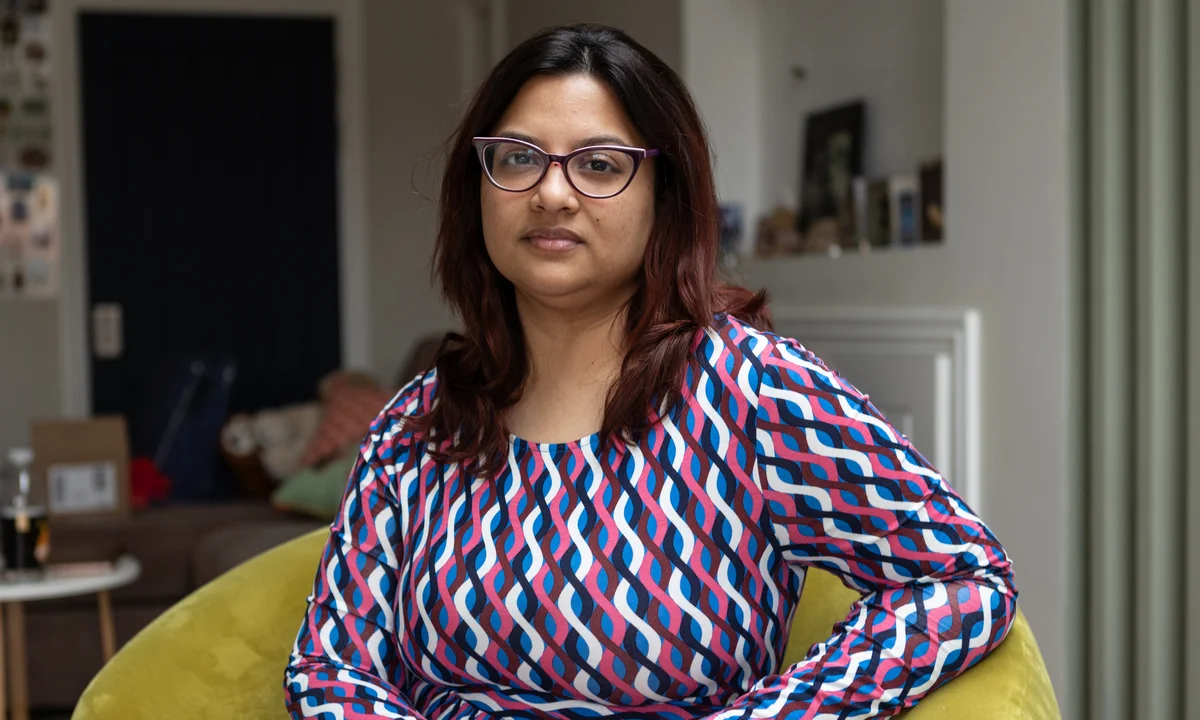
Manikarnika Dutta, a historian with an impressive academic background, has been living in the UK for over a decade, contributing to the field of history through research and teaching.
However, she now faces an uncertain future as the Home Office has rejected her application for indefinite leave to remain (ILR) due to the time she spent outside the country conducting research in India.
Dutta’s case has sparked discussions about the UK’s immigration policies, particularly regarding academics whose work requires international travel.
The Immigration Rules and the Researcher’s Dilemma
Manikarnika Dutta first arrived in the UK in 2012 to pursue her master’s degree at the University of Oxford. Over the years, she built a strong academic career, conducting research at prestigious institutions such as Oxford, Bristol, and University College Dublin. Her work required her to travel extensively, especially to India, where she accessed historical archives essential for her research.
Under the UK Home Office’s immigration rules, individuals applying for ILR based on long residency must not have spent more than 548 days outside the UK in the past ten years.
Dutta exceeded this limit, having spent 691 days abroad. Despite the academic nature of her travels, the Home Office ruled against her, stating that she had spent too much time outside the country, thereby disqualifying her from ILR.
Read : Indian Student At Columbia University Gets Visa Revoked For Allegedly Supporting Hamas
The decision has raised concerns among academics who frequently conduct research abroad. The nature of historical research often demands access to primary sources that are located outside the UK.
Read : “You Cannot Become a CEO in America If You Are Not Indian”: US Envoy Eric Garcetti
For Dutta, her research trips were not a matter of choice but a necessity to fulfill her academic responsibilities. Without these visits, she would not have been able to complete her work, which in turn could have affected her ability to secure academic positions in the UK.
The Impact of the Home Office’s Decision
Dutta and her husband, Dr. Souvik Naha, a senior lecturer at the University of Glasgow, have been living in the UK for over a decade. Despite being married for more than ten years and sharing a home in south London, the Home Office rejected Dutta’s ILR application, citing that she does not have a family life in Britain.
This aspect of the decision has added to the distress faced by the couple, who now fear being separated due to bureaucratic regulations. The case has also taken an emotional toll on Dutta, who was shocked when she received an email instructing her to leave the country.

She expressed disbelief that such an outcome could happen to someone who has contributed so much to academia in the UK. Having lived in the country for 12 years, she considers the UK her home, making the prospect of deportation even more difficult to accept.
Her lawyer, Naga Kandiah, has emphasized that Dutta’s research trips were not optional but integral to her academic obligations. He argues that the strict application of immigration rules in cases like hers undermines the UK’s reputation as a hub for global academic talent. While Dutta’s husband’s application for ILR was approved, hers was denied, leaving the couple in a state of uncertainty.
Broader Implications for Academia and Immigration Policies
Dutta’s situation is not unique. Many academics who work in fields that require international research have encountered similar issues with UK immigration policies. These policies, which do not always account for the specific needs of researchers, risk discouraging global talent from pursuing careers in the UK.
In response to the rejection, Dutta has launched a legal challenge against the Home Office. The department has stated that it will reconsider her case within the next three months, but there is no guarantee that the decision will be overturned. Until then, she remains in limbo, uncertain about her future.
Legal experts and academic colleagues have pointed out that the UK must adopt a more flexible approach to immigration rules for researchers.
If the country seeks to maintain its status as a leading center for higher education and research, it must recognize that global mobility is an essential part of academic work. Otherwise, UK universities risk losing highly skilled professionals who contribute to their institutions and the broader academic community.
Dutta’s case serves as a stark reminder of the challenges faced by international academics in navigating immigration rules. It also highlights the need for policies that acknowledge the realities of research-based professions.
Whether the Home Office reconsiders its decision or not, the outcome of this case will have significant implications for scholars and researchers working in the UK.