

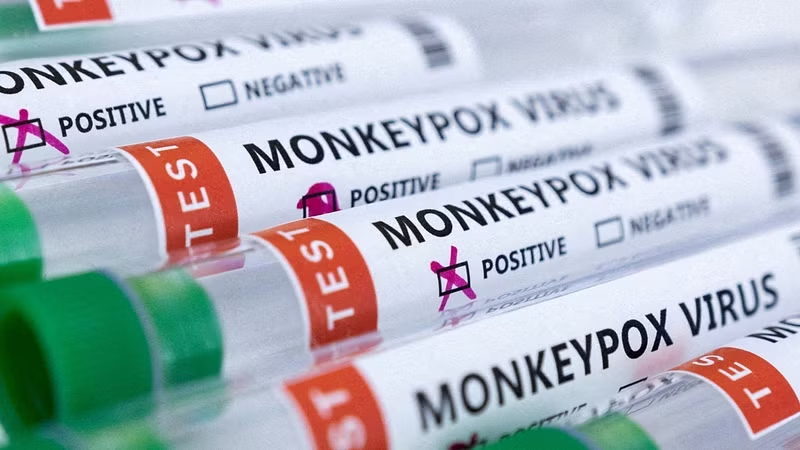
Pakistan has reported its first Mpox case of 2025 at Peshawar’s Bacha Khan International Airport. The case was identified during routine screening by the Border Health Services team.
The patient, a 35-year-old individual with a travel history linked to Gulf countries, tested positive for the virus. This incident has raised concerns among health authorities, who have emphasized the need for vigilance and strict adherence to preventive measures.
Mpox Detection at Peshawar Airport: A Timely Response
The case was detected as part of the Border Health Services’ ongoing efforts to screen international travelers entering Pakistan. Health authorities, led by the Ministry of Health and provincial health departments, have been on high alert, particularly for individuals arriving from regions with a known prevalence of the virus.
The patient, who had recently returned from Dubai, underwent screening upon arrival. Once Mpox was suspected, the individual was promptly transferred to Police Services Hospital in Peshawar, where samples were collected and sent to the Public Health Reference Lab. Test results confirmed the presence of Mpox, marking it as the first case of 2025 in Pakistan.
Read : Polio is Back in Pakistan and Afghanistan: 73 New Cases Recorded
Health officials acted swiftly to initiate containment measures. A letter was sent to the Peshawar Airport Manager, requesting details of passengers who had been in proximity to the infected individual. This information will aid in contact tracing, with respective District Health Officers (DHOs) tasked with following up on potential cases.
Health Measures and National Response
The detection of this case highlights the importance of Pakistan’s airport screening systems, which have been bolstered since the country’s first Mpox case was reported in August 2023.
Over the past two years, health authorities have implemented rigorous protocols to curb the spread of the virus. These measures include thermal scanning, mandatory health declarations, and isolation facilities at major entry points, including airports and border crossings.
Read : once-deadliest diseases that have been completely eradicated
Dr. Mukhtar Bharth, Health Coordinator, reassured the public about the government’s commitment to combating Mpox. He emphasized that all airports are equipped with robust screening systems, and the country is fully compliant with International Health Regulations. Federal and provincial governments are working together to monitor and contain the virus.
Khyber-Pakhtunkhwa Health Advisor Ehtesham Ali confirmed that the provincial health team had acted immediately upon detecting the case. He outlined the steps taken to isolate the patient and prevent the spread of the virus. He also highlighted the importance of contact tracing to identify and monitor individuals who may have been exposed to Mpox.
In light of this case, authorities have urged the public to practice social distancing, maintain good hygiene, and remain vigilant. Educational campaigns are being launched to raise awareness about Mpox, its symptoms, and preventive measures.
Mpox in Pakistan: Past Cases and Future Challenges
The Mpox virus, also known as monkeypox, has posed a growing health challenge globally. In Pakistan, a total of 10 cases have been reported since 2023. Two cases were detected in 2023, seven in 2024, and now the first case of 2025 has been confirmed.
Mpox is a viral zoonotic disease that typically spreads through close contact with an infected person or animal, or with contaminated materials.
Symptoms include fever, headache, muscle aches, fatigue, and a rash that progresses through various stages. While most cases are mild and self-limiting, severe cases can occur, especially in individuals with weakened immune systems.
Pakistan’s health authorities have successfully managed to prevent a large-scale outbreak by implementing strict screening protocols and isolation measures. However, challenges remain, particularly in ensuring that all entry points are adequately monitored and that the public is educated about the disease.

The global context also adds complexity to the situation. A mutated strain of Mpox, Clade I, has emerged in recent years, prompting the World Health Organization (WHO) to declare a global health emergency.
This strain, first identified in the Democratic Republic of Congo, has higher transmissibility and severity. Fortunately, Pakistan has not yet reported any cases of this variant.
To address these challenges, Pakistan’s health authorities are focusing on several key areas. These include enhancing laboratory testing capabilities, increasing public awareness, and strengthening collaboration with international health organizations. Vaccination efforts may also be considered if the situation escalates.
The detection of the first Mpox case of 2025 serves as a reminder of the importance of maintaining vigilance and preparedness in the face of emerging health threats.
By acting swiftly and decisively, Pakistan’s health authorities have demonstrated their commitment to protecting public health. However, continued efforts will be needed to ensure that the country remains resilient against this and other infectious diseases.