
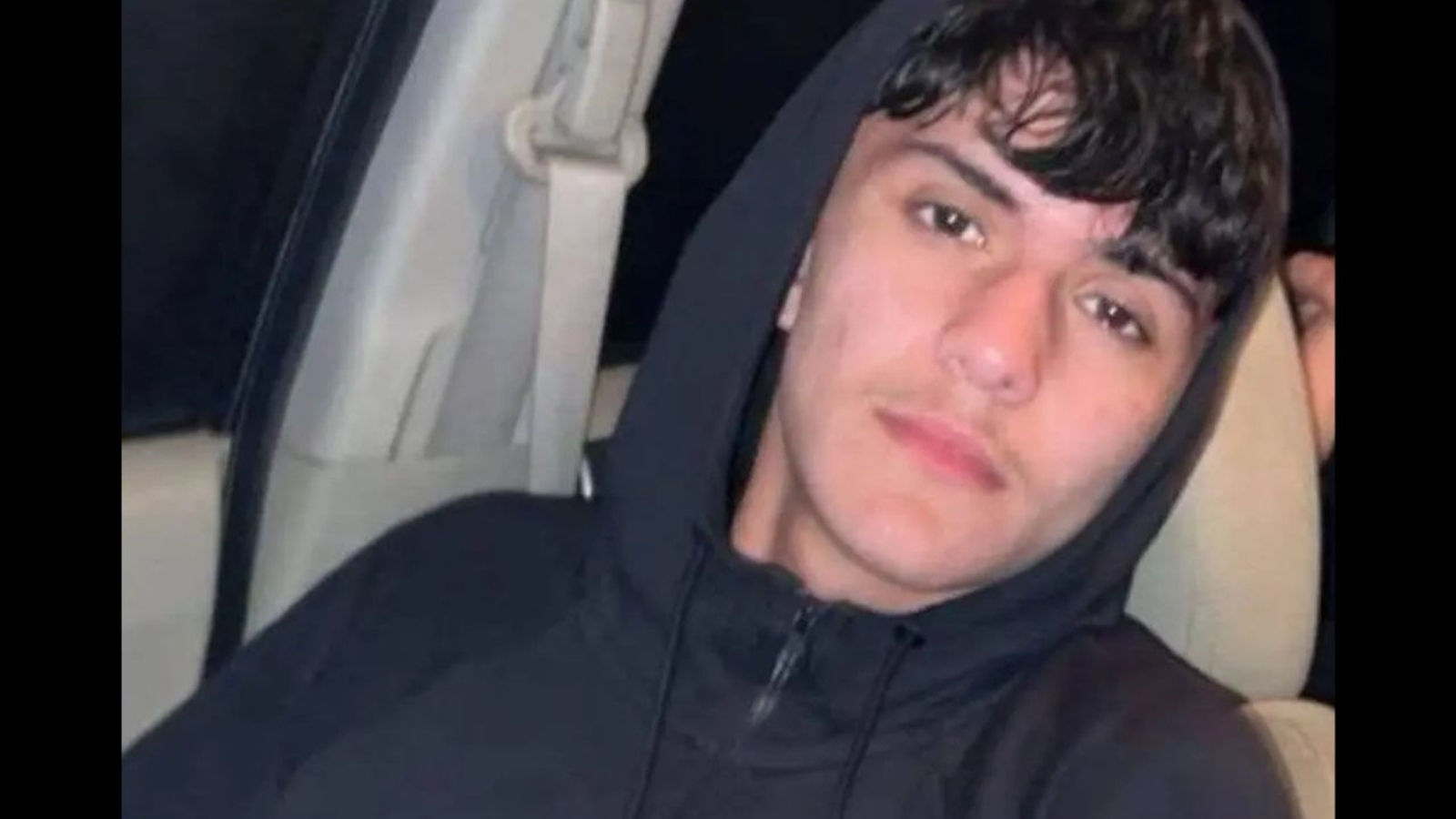
A tragic incident unfolded in the Israeli-occupied West Bank on Sunday, April 7, 2025, when a 14-year-old boy, Amer Mohamad Saada Rabee, was fatally shot by Israeli forces in the village of Turmus Ayya.
Amer, a dual Palestinian-American citizen, was reportedly struck by 11 bullets, according to statements released by the Palestinian American Community Center (PACC) and the Palestinian Ministry of Health. The death of this young boy has once again ignited grief, outrage, and renewed concern over the safety of civilians—especially children—living under occupation in one of the world’s most volatile regions.
The incident took place near the Turmus Ayya area, where Israeli forces claimed they had identified “three terrorists who hurled rocks toward the highway, thus endangering civilians driving.” This accusation, issued through an official statement by the Israel Defense Forces (IDF), was used as a justification for the use of live ammunition.
The IDF stated that soldiers opened fire, killing one person and injuring two others, though they did not provide names or further identifying information. Meanwhile, the Palestinian Ministry of Health confirmed that Amer was the individual killed, and that two others—also under 18—were wounded in the same incident.
Conflicting Accounts and Lack of Transparency
As in many similar cases involving civilian casualties in the West Bank, the official narrative remains highly contested. The IDF released a video that they claimed shows the rock-throwing incident that led to the shooting, but they have so far refused to confirm whether an investigation is underway or whether the video conclusively shows the individuals involved.
When ABC News requested clarification, the IDF declined to comment on whether they were conducting a formal investigation into the incident.
This lack of transparency has alarmed human rights advocates and international observers, especially considering that Amer was an American citizen. The U.S. State Department confirmed the death and acknowledged the IDF’s initial statement, saying that they were aware of the incident and recognized Israel’s claim that it occurred during a “counter-terrorism operation.”
Read : Palestinian Journalist Ahmed Mansour Burned Alive After Israeli Strike Hits Media Camp in Gaza
However, beyond this brief acknowledgment, there has been no indication of active diplomatic engagement to demand accountability or further inquiry into the killing of a U.S. minor abroad.
The Palestinian American Community Center (PACC), based in New Jersey, where Amer had family connections, released a statement condemning the shooting as a “horrific killing” and a devastating loss for the Palestinian-American community.

The organization stated that Amer and two other 15-year-old boys were shot by Israeli military officers. Amer’s death has stirred deep grief not only in his home village of Turmus Ayya but also among the Palestinian diaspora in the United States.
A Life Cut Short and a Community in Mourning
In the village of Turmus Ayya, mourners gathered to pay their last respects to Amer Mohamad Saada Rabee, carrying his body through the streets in a somber funeral procession. The grief extended across continents, reaching the United States where funeral prayers were also held at the Palestinian American Community Center in Clifton, New Jersey.
Family, friends, and community members gathered to remember a boy who, like so many other Palestinian children, lived in a world marked by checkpoints, military patrols, and the constant threat of violence.
Reports from the ground say that Amer was not armed and posed no immediate threat when he was shot. Eyewitness accounts suggest that he was a bystander, caught in the wrong place at the wrong time. Even if the IDF’s claim of rock-throwing is accurate, questions remain about the proportionality of the response.

Human rights organizations have long criticized Israel’s military policy of using live ammunition against teenagers and children in the West Bank, arguing that such actions violate international law and often result in unnecessary deaths.
Amer’s case is particularly heartbreaking because he held American citizenship, a fact that many hoped would bring greater scrutiny and possibly justice. However, history has shown that even U.S. passports offer little protection to Palestinians in conflict zones.
Amer’s killing adds to a growing list of Palestinian Americans who have died under similar circumstances in the region, including journalist Shireen Abu Akleh, who was shot and killed during an Israeli raid in 2022.
The Larger Context: Ongoing Conflict and Civilian Casualties
The killing of Amer Mohamad Saada Rabee occurred against the backdrop of intensifying violence and deepening tensions in the region. In recent months, the West Bank has seen an increase in military raids, settler violence, and armed confrontations. As the conflict between Israel and Hamas in Gaza rages on, the West Bank has experienced what many are calling a “second front” of military operations and unrest.
According to United Nations data, 2023 was already one of the deadliest years for Palestinians in the West Bank in decades, with hundreds killed in operations and confrontations. This trend has continued into 2024 and now 2025, with children frequently caught in the crossfire.
The international community, including the United Nations, the European Union, and various NGOs, have issued repeated calls for de-escalation and adherence to international humanitarian law—calls that too often fall on deaf ears.
For Palestinian families, particularly those in towns like Turmus Ayya, the constant presence of the Israeli military, combined with settler activity and road closures, creates a daily atmosphere of fear and unpredictability.
Children grow up navigating checkpoints instead of playgrounds, and parents live with the constant worry that a wrong turn or a misunderstood gesture could result in deadly consequences.
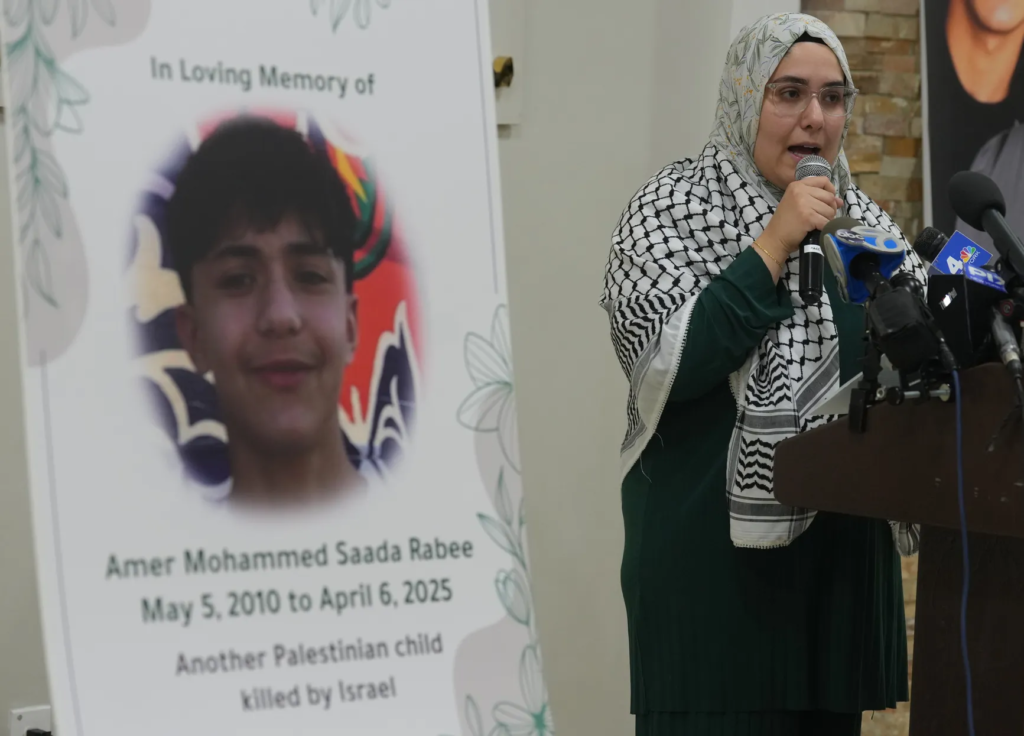
Amer’s death has reignited calls for the U.S. government to reassess its role in the conflict and to more actively hold its allies accountable for the treatment of civilians, especially when American citizens are involved.
Yet many activists and observers are skeptical that any real pressure will be applied, citing a long history of U.S. political and military support for Israel despite documented human rights violations.
In Amer Mohamad Saada Rabee’s case, his young age, his American citizenship, and the brutal nature of his death have come together to form a painful symbol of the broader crisis. He represents the vulnerability of Palestinian children, the complex realities of dual national identity in a war zone, and the urgent need for accountability in the face of state violence.
As Amer’s family grieves the loss of their beloved son, they are joined by a wider community—both in Palestine and abroad—who continue to demand justice and ask a haunting question: How many more children must die before the world truly takes notice?
Amer Mohamad Saada Rabee’s story is not just a statistic or a passing news item. It is a life full of potential, extinguished too soon. It is also a call to the world to act with conscience, to uphold international law, and to remember that behind every headline is a child, a family, a future lost.