
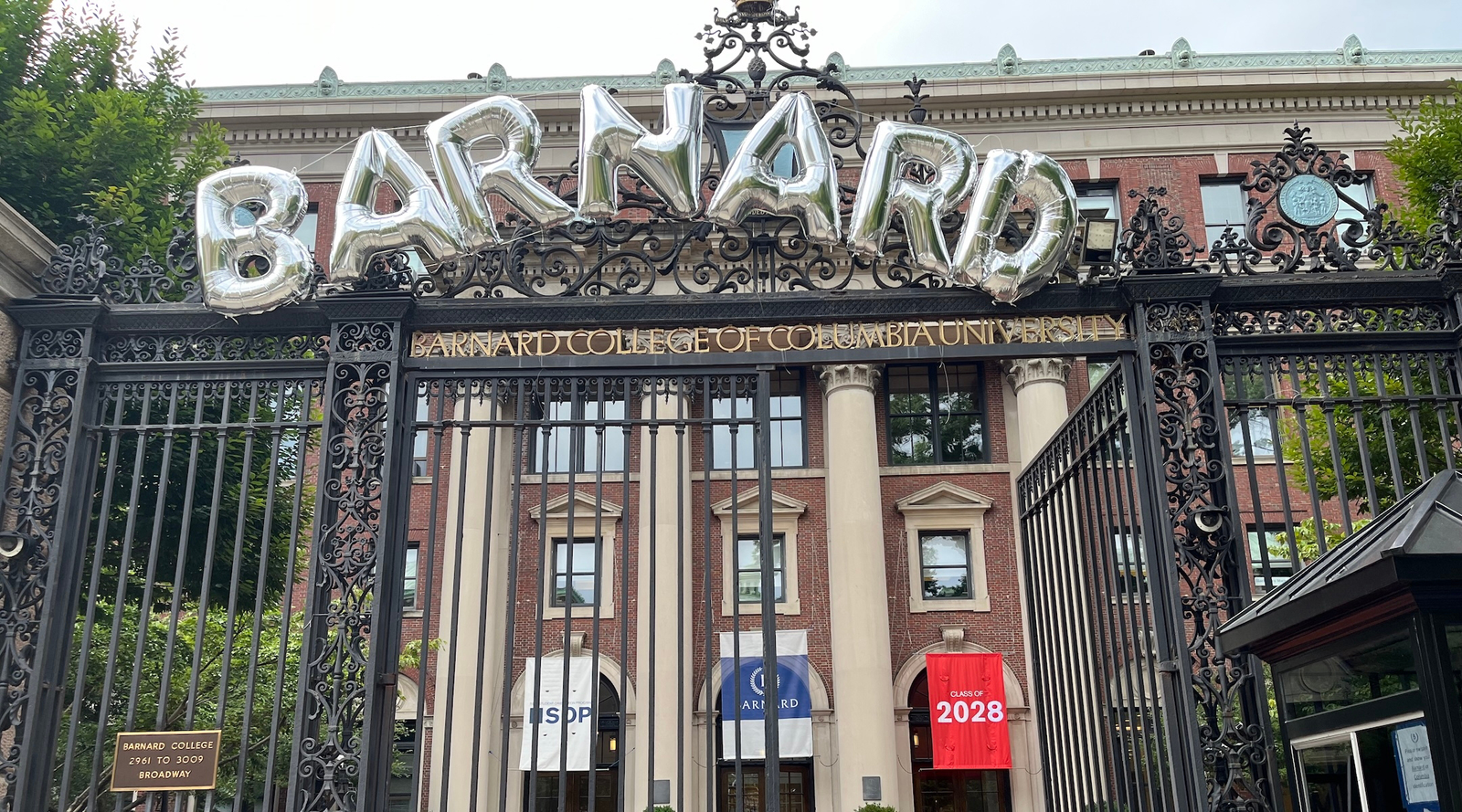
On Wednesday evening, a pro-Palestinian demonstration at Manhattan’s Barnard College escalated into a chaotic event, ultimately leading to the physical assault of a school employee and the takeover of Milbank Hall.
The protesters, many wearing kaffiyeh scarves and masks, gathered in significant numbers to demand institutional accountability regarding Palestine-related issues. Their actions have drawn both support and criticism, with tensions spilling over into continued protests the following day.
The Escalation of Protests at Barnard College
The protest at Barnard College, affiliated with Columbia University, began as a demonstration in solidarity with the Palestinian cause. The demonstrators gathered on campus, chanting slogans, holding Palestinian flags, and displaying banners that read “Barnard funds genocide” and “Free Palestine.” Videos posted on social media captured the energy of the protesters as they chanted, beat drums, and used megaphones to amplify their voices.
However, as the protest intensified, some demonstrators forcefully entered Milbank Hall, an academic building at Barnard College. This intrusion, according to college officials, led to a school employee being physically assaulted. The injured employee was subsequently taken to a hospital for medical attention.
Barnard College Vice President for Strategic Communications, Robin Levine, released a statement confirming the incident but provided limited details on the extent of the injuries or the identity of the victim. The college administration condemned the violence, calling it an unacceptable disruption of campus safety.
Read : Nottingham College Introduces Course for Gen Z Who Have Phone Call Phobia
Barnard President Laura Rosenbury also responded with a strongly worded statement, emphasizing that while the college supports freedom of expression, the methods used by these demonstrators—especially those that endangered members of the campus community—were unacceptable. “Their disregard for the safety of our community remains completely unacceptable,” Rosenbury stated.
Pro Palestinian students at New Yorks Barnard College protested while banging on drums and blocking some students from attending classes.
— Girl patriot (@Girlpatriot1974) February 27, 2025
Stop federal funding and revoke student visas from all involved. pic.twitter.com/OTUsrIoPDG
Despite these warnings, the demonstrators did not immediately vacate Milbank Hall. The school issued a deadline, stating that if the students did not leave by 9:30 p.m., additional measures would be taken to restore order. The protesters ultimately left the building, but their message continued to resonate across the campus.
Protesters’ Demands and the College’s Response
The pro-Palestinian protesters at Barnard College presented a list of demands to the administration. Their primary requests included amnesty for all students disciplined for pro-Palestinian activism, a meeting with President Rosenbury and Dean Leslie Grinage, and the reversal of expulsions of two students involved in prior protests.
These demands underscored a broader concern among student activists who feel that their voices are being suppressed in discussions regarding the Palestinian cause.
One of the leading student organizations behind the demonstration, Columbia Students for Justice in Palestine, posted a defiant message on social media, stating, “WE WILL NOT STOP UNTIL OUR DEMANDS ARE MET. FREE PALESTINE.” The post reflected the determination of the protesters to continue pressing the college for changes in its policies and disciplinary actions.
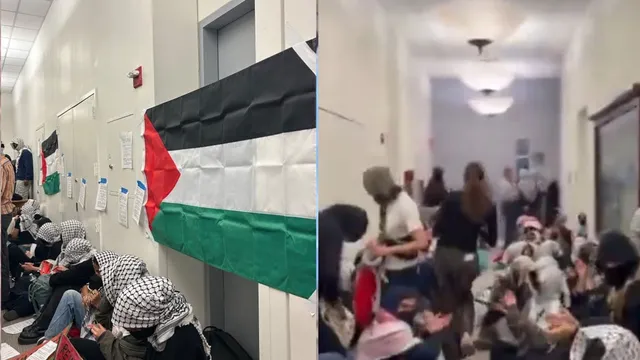
The administration, however, expressed its willingness to engage with students only under certain conditions. Robin Levine stated that school officials had invited the protesters to a discussion but required them to remove their masks before the meeting. According to Levine, the demonstrators refused this condition, which complicated any potential dialogue.
In response, the administration also offered mediation as a possible resolution to the standoff. However, with the protesters maintaining their demands and refusing to comply with the college’s conditions, the path to a mutually acceptable solution remained uncertain.
On Thursday, following the dramatic events of the previous evening, additional protests broke out at Barnard College’s Upper West Side campus. Demonstrators and counter-protesters continued to voice their opinions, further polarizing the campus community. The administration scheduled a meeting for 1 p.m. on Thursday to discuss the situation, but the outcome of these discussions remains unclear.
The Broader Implications of Campus Protests
The events at Barnard College reflect a growing trend of student activism surrounding the Israeli-Palestinian conflict. Over the past few years, pro-Palestinian movements have gained momentum on college campuses across the United States, with students demanding institutional divestment from companies linked to Israel and increased awareness of Palestinian struggles.
This wave of activism has often been met with resistance from university administrations, which must balance free speech with campus safety and institutional policies. The incident at Barnard College is just one example of how these tensions can escalate into confrontations that lead to disciplinary action, security concerns, and heightened campus divisions.
The presence of masks and kaffiyeh scarves among the protesters also raises questions about anonymity in activism. While protesters argue that such attire is necessary for their safety and to avoid repercussions, institutions and law enforcement agencies often view it as a security risk. This debate has played out in various protest movements, from Black Lives Matter demonstrations to climate activism and now, pro-Palestinian advocacy.
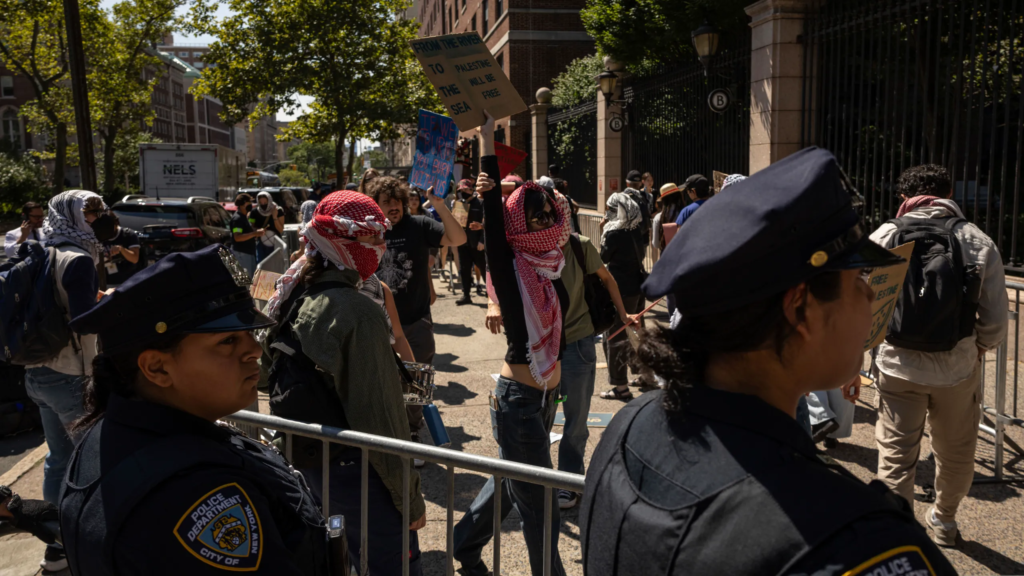
As the protests at Barnard College continue to unfold, the college administration faces mounting pressure to address both the concerns of pro-Palestinian students and the safety of the broader campus community. The balancing act between supporting student activism and enforcing institutional rules remains a challenging task for universities nationwide.
The incident also raises broader questions about the role of higher education institutions in geopolitical issues. While some argue that universities should take a stand on international human rights matters, others believe that academic institutions should remain neutral, focusing instead on fostering dialogue and education rather than political activism.
In the coming days, the response of Barnard College to the protesters’ demands and any potential disciplinary actions against those involved in the demonstration will likely shape the future of student activism on campus.
Whether the administration decides to negotiate, impose stricter policies, or take legal action against those responsible for the violence remains to be seen.
For now, the pro-Palestinian movement at Barnard College continues to gather momentum, with students determined to keep pushing their demands until they achieve what they see as justice for their cause.
The broader debate over campus activism, free speech, and the role of universities in political discourse is far from over, ensuring that incidents like these will continue to spark discussions and controversies in the academic world.