
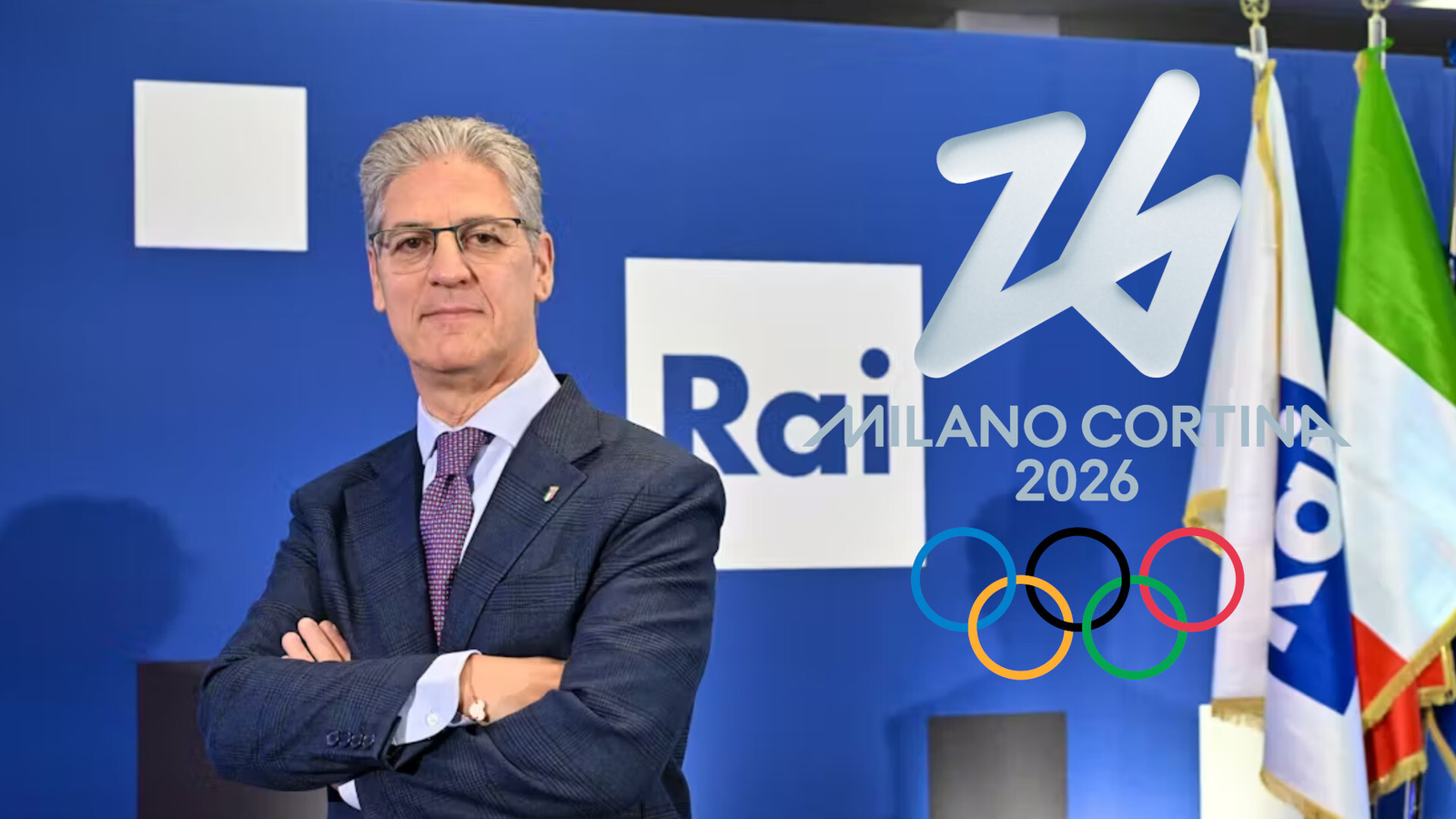
The opening ceremony of the Milan–Cortina 2026 Winter Olympics was intended to mark a moment of national pride for Italy and a carefully choreographed introduction to one of the country’s most anticipated international sporting events in decades. Instead, the broadcast became the focus of widespread criticism after a series of on-air errors by Paolo Petrecca, the director of Rai Sport, Italy’s public broadcaster’s sports division.
The mistakes, made during live commentary, quickly went viral and triggered a rare and public backlash from within Rai itself. As journalists announced protests and opposition politicians revived long-standing accusations of political influence at the broadcaster, attention has turned to Petrecca’s background, his rise within Rai, and the broader implications of the controversy for Italy’s public service media.
Paolo Petrecca’s career and rise within Rai
Paolo Petrecca was appointed director of Rai Sport in 2025, taking charge of one of the most visible and influential divisions of Italy’s state broadcaster. Rai Sport plays a central role in covering national and international sporting events, from Serie A football and cycling to the Olympic Games, making its leadership particularly sensitive to public scrutiny. Petrecca’s appointment came at a time when Rai was already under pressure, both politically and institutionally, as debates intensified over the broadcaster’s independence, governance, and editorial direction.
Before assuming the directorship, Petrecca built his career within Rai’s news and sports structures, gaining experience as a journalist and editor. Supporters of his appointment pointed to his familiarity with the broadcaster’s internal operations and his long-standing involvement in sports journalism. Critics, however, argued that his rise coincided with a broader reshuffling of senior positions following the consolidation of power by Prime Minister Giorgia Meloni’s rightwing government, which took office in October 2022.
Petrecca has been described by critics as being close to the current administration, an allegation that has sharpened perceptions of his role since the Olympic ceremony incident. While such claims are contested and Petrecca himself has not publicly framed his career in political terms, the context of his appointment matters in understanding the reaction to his errors. Rai, funded by a mandatory licence fee, occupies a unique position in Italian public life, and its senior figures are often viewed through a political lens, whether fairly or not.
Read : Man Orders McDonald’s Burger With “Everything Removed,” Gets Empty Box With $19.81 Bill
The director of Rai Sport is not merely an administrative figure but a symbolic representative of the broadcaster’s credibility in moments of national visibility. The Winter Olympics, hosted on home soil, amplified that symbolism. For many within Rai, the opening ceremony was not just another broadcast but a defining test of professionalism and competence. Against this backdrop, Petrecca’s on-air presence and the subsequent mistakes took on significance beyond their immediate factual inaccuracies.
The opening ceremony gaffes and their public impact
During the live broadcast of the Milan–Cortina 2026 opening ceremony, Petrecca made a series of errors that quickly became the subject of ridicule and anger. He initially welcomed viewers to Rome’s Stadio Olimpico, a stadium synonymous with football and athletics, rather than Milan’s San Siro, where the ceremony was actually being held. The mistake was immediately noticeable to viewers and set the tone for what followed.
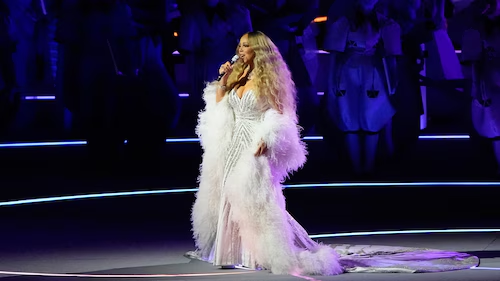
As the ceremony continued, Petrecca misidentified the Italian actor Matilda De Angelis as the American singer Mariah Carey, a confusion that spread rapidly across social media platforms. De Angelis herself responded with irony, joking that she and Carey were “apparently the same person.” The errors did not end there. Petrecca also confused Kirsty Coventry, the president of the International Olympic Committee, with Laura Mattarella, the daughter of Italy’s president. Each mistake compounded the perception of a lack of preparation and attention to detail during a broadcast watched by millions.
The reaction from viewers was swift. Clips and screenshots circulated widely online, with commentary ranging from mockery to indignation. For many, the blunders were embarrassing not only for Rai Sport but for Italy as a host nation. The fact that the errors occurred during the opening ceremony, a highly scripted and symbolic event, intensified the sense that the broadcaster had failed in its public service role.
The controversy soon moved beyond social media. Opposition politicians seized on the incident as evidence of what they described as declining standards and politicisation within Rai. Sandro Ruotolo of the Democratic party referred to the broadcaster as “TeleMeloni,” reviving a term used by critics to suggest excessive government influence. According to this view, Petrecca’s mistakes were not isolated mishaps but symptomatic of deeper structural problems at Rai.
Within the broadcaster, the response was even more consequential. The CDR, Rai’s internal journalists’ committee, issued a strongly worded statement describing the coverage as “disastrous” and expressing collective embarrassment. The committee announced unprecedented protest measures, including withholding bylines from Olympic coverage and planning a three-day strike once the Games conclude. For Rai journalists, the issue was framed not as a political dispute but as a matter of professional dignity and respect for the public service mission.
Protests, political tensions, and the broader significance for Rai
The protests announced by Rai journalists highlight the depth of discontent generated by the opening ceremony commentary. The decision to withhold bylines is a symbolic act, signalling a refusal to be personally associated with coverage overseen by a leadership they believe has undermined their credibility. The planned strike, to take place after the Olympics, underscores the seriousness of the internal crisis and the extent to which Paolo Petrecca’s errors have resonated within the organisation.
Read : Frank Murphy Voices Support for Fairness in Women’s Sports at Supreme Court Trans Athlete Hearing
Usigrai, the journalists’ union, described the commentary as “inadequate,” adding institutional weight to the criticism. In its statement, the CDR emphasised that journalists had been embarrassed “through no fault of our own” and argued that the flawed broadcast damaged not only Rai’s reputation but also the trust of licence fee payers. The insistence that the dispute is not political reflects a desire to focus on standards and professionalism, even as the surrounding debate remains deeply politicised.
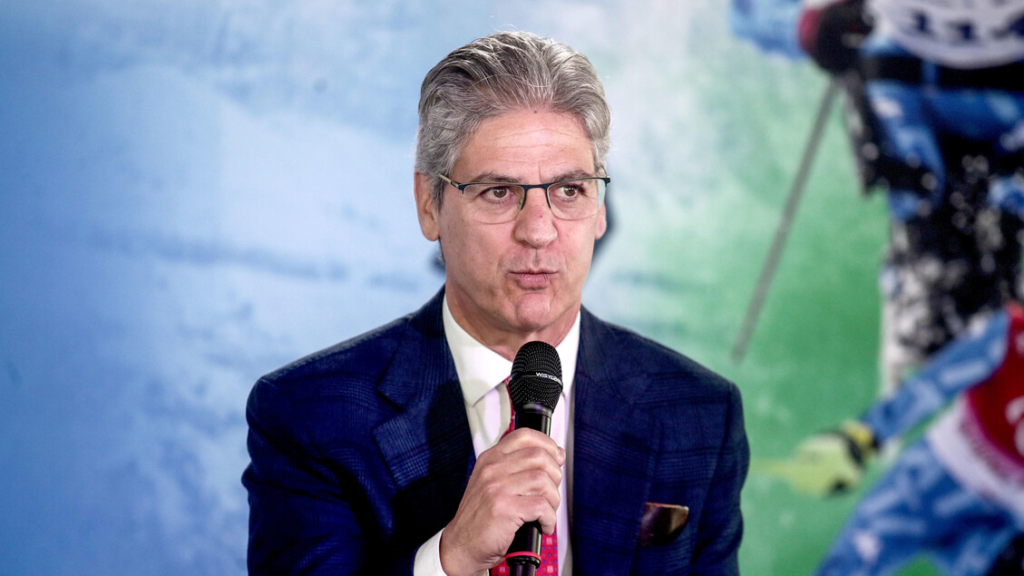
This episode also fits into a longer history of tension between Rai’s journalists and Italy’s political leadership. In 2024, news anchors on Rai’s three main television channels took the highly unusual step of reading a statement on air condemning Meloni’s administration for “turning Rai into a government megaphone.” That protest marked a rare public confrontation and demonstrated the depth of concern within the newsroom about editorial independence. Meloni, for her part, had previously accused Rai of leftwing bias before coming to power, illustrating how the broadcaster has long been caught between competing political narratives.
In this context, Paolo Petrecca’s position has become emblematic of wider anxieties about governance and accountability at Rai. While the immediate cause of the controversy lies in factual errors during a live broadcast, the reaction reflects accumulated frustrations over leadership, appointments, and the perceived erosion of professional standards. For critics, the opening ceremony mistakes are a visible manifestation of those issues. For supporters of Petrecca or the current administration, the backlash may appear disproportionate or politically motivated.
Rai Sport has been approached for comment, but regardless of any official response, the incident has already left a mark on the Milan–Cortina 2026 Games and on Rai’s internal dynamics. Paolo Petrecca, until recently a relatively low-profile executive, has become a central figure in a national debate about public service broadcasting, competence, and credibility. Whether the protests lead to structural changes or fade once the Olympics conclude, the episode underscores how, in Italy, sport, media, and politics remain closely intertwined.