
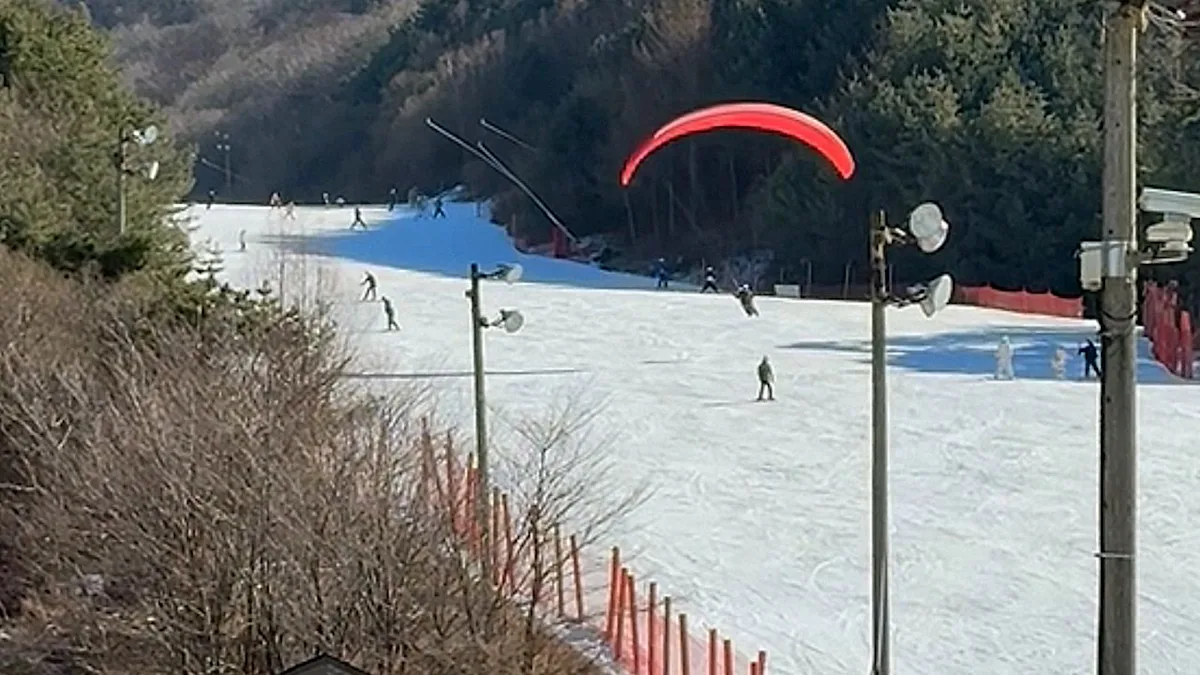
A routine winter day at one of South Korea’s most popular ski destinations took an unexpected turn when a paraglider descended onto a crowded intermediate slope after reportedly flying for nearly two hours. The dramatic landing unfolded in full view of skiers and snowboarders at Muju Deogyusan Resort, startling onlookers but ultimately ending without injuries.
Captured on video by a bystander and later circulated online, the incident quickly drew attention for both its tension-filled moments and the remarkable absence of harm despite the challenging circumstances. As winter tourism continues to draw large crowds to alpine resorts, the episode has sparked discussion about airspace safety, emergency landings, and the coordination required to prevent disaster in busy recreational areas.
Unexpected Descent Over a Crowded Slope
The incident occurred on Thursday, Feb. 19, at Muju Deogyusan Resort, a well-known winter sports destination in South Korea. The ski area was reportedly packed with visitors enjoying favorable snow conditions, particularly along the intermediate Silk Road Slope. Skiers and snowboarders were steadily making their way down the mountain when the red canopy of a paraglider began to appear overhead.
Video footage shows the paraglider gradually descending toward the slope, initially drawing curious glances from those below. At first, the presence of a glider above a mountain resort may not have seemed unusual, as paragliding is a common sight in alpine regions. However, as the wing dropped lower and aligned directly over the active ski run, concern began to spread among guests. One skier was seen lifting a ski pole to point toward the approaching glider, alerting others to the developing situation.
As the canopy drifted closer to the ground, it became clear that the pilot was not merely passing overhead but attempting to land. The red wing nearly touched down at one point before abruptly ascending again, likely due to a thermal lift or a last-minute maneuver to avoid a collision. During these tense seconds, snowboarders zig-zagged around the descending glider, instinctively adjusting their routes to create space.
The slope, designed for intermediate riders, was busy but not chaotic. Even so, introducing an airborne craft into such an environment carries significant risk. A paraglider landing requires forward motion and a relatively open space to run out the descent safely. With dozens of skiers navigating the terrain, the pilot’s margin for error was narrow.
Read : Tesla Drives onto Train Tracks as Autopilot Mistakes Them for Road in California
Eventually, the paraglider hovered just above the snow before the pilot’s feet made contact with the slope. The individual ran several steps to dissipate momentum and bring the wing under control. Remarkably, no collisions occurred, and no one was reported injured. What could have escalated into a serious accident concluded with a controlled stop amid a crowd that had quickly cleared a path.
Why the Paraglider Was Forced to Land
According to the bystander who filmed the event, the pilot had been airborne for approximately two hours before descending onto the ski slope. Extended flight times in paragliding are not uncommon, particularly when pilots use thermals—rising columns of warm air—to stay aloft. However, such flights require careful planning, including identifying safe landing zones well in advance.
Read : Bravo! Deputies Christopher Matkin and Sevak Grigoryan Dive Into Ocean to Rescue Paragliders
In this case, the pilot reportedly struggled to locate a suitable area to land. Winter terrain can complicate descent options. Snow-covered fields may conceal obstacles such as fences, rocks, or uneven ground. Forested mountainsides, common in the region surrounding Deogyusan Mountain, offer few open clearings large enough for a safe touchdown. Strong winds, shifting air currents, or unexpected weather changes may also have contributed to the difficulty.
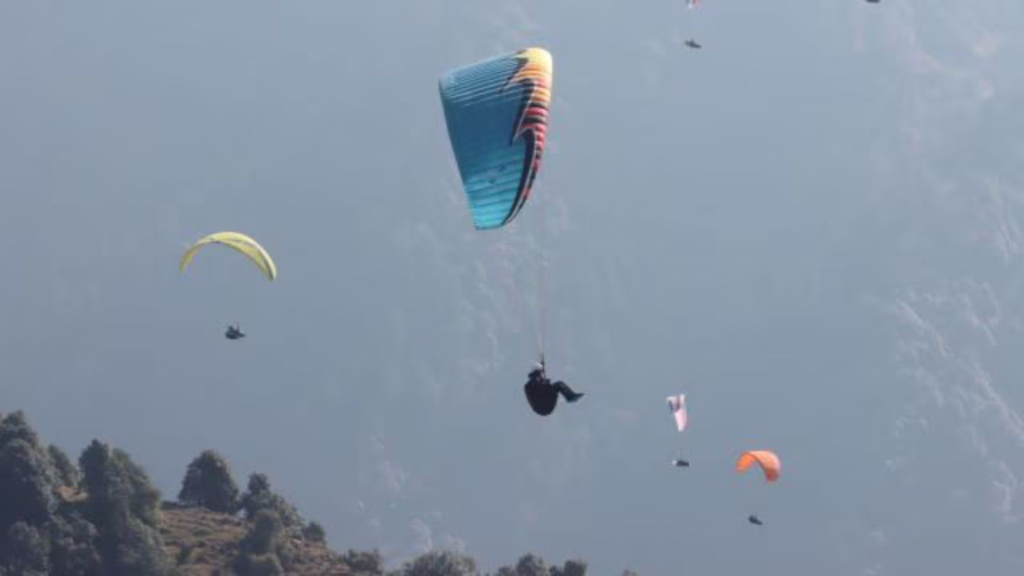
Paragliders rely on wind direction and speed to execute controlled landings. If headwinds are too strong or gusts are unpredictable, descending into a confined area becomes more challenging. After two hours in the air, fatigue may also factor into decision-making, potentially increasing urgency to land before conditions deteriorate further.
Ski resorts, while expansive, are not designed as aviation landing zones. Slopes are lined with lift towers, snowmaking equipment, fencing, and moving guests. Nevertheless, from above, a wide ski run might appear to be one of the few open, obstacle-free spaces in an otherwise mountainous landscape. Faced with limited options, the pilot appears to have chosen the slope as the safest available alternative under the circumstances.
Importantly, there has been no immediate public indication of mechanical failure. The emergency nature of the landing seems linked primarily to the inability to find a designated or safer landing area rather than a midair equipment malfunction. Still, authorities later responded to investigate the cause and determine whether any aviation regulations were breached.
Resort and Police Response
Witnesses reported that ski resort patrol staff reacted quickly once the paraglider touched down. Controlling a crowded slope requires swift coordination, and patrol teams are trained to respond to medical emergencies, collisions, and other incidents on snow. In this situation, their priority was to secure the landing area and prevent secondary accidents.
Video shows skiers already adjusting their routes moments before touchdown, suggesting that those on the slope acted cautiously once they recognized what was happening. After the pilot came to a stop, patrol staff moved in to manage the situation and ensure that the canopy and lines did not entangle passing guests. Loose paraglider lines can pose tripping hazards, particularly on a slick surface.
Read : Motorized Paraglider Drops Bombs on Thadingyut Festival Protest Against Myanmar’s Military Junta
Police officers later arrived at the resort to investigate. Authorities typically assess whether the pilot complied with local aviation and recreational flight regulations, including designated launch and landing zones. Paragliding activities in mountainous tourist regions are often subject to specific guidelines to ensure they do not interfere with other recreational users or endanger public safety.
While the bystander described the incident as surprising, they emphasized that no collisions or injuries occurred. This outcome was significant given the number of people present. In high-traffic winter resorts, even minor disruptions can quickly escalate. The coordinated response from both the public and resort staff likely played a crucial role in preventing harm.
The event also highlights the importance of communication and preparedness in multi-use mountain environments. Ski resorts operate within airspace that may also be used by paragliders, helicopters, and occasionally drones. Clear regulations and situational awareness are essential to minimize conflict between aerial and ground activities.
In the aftermath, attention has turned toward reviewing flight planning procedures and ensuring that paragliders operating near tourist-heavy areas have clearly identified alternative landing zones. For ski resorts, the incident serves as a reminder to maintain protocols not only for snow-based emergencies but also for unexpected aerial intrusions.
Despite the tension captured in the footage, the day concluded without tragedy. The pilot’s final approach, though dramatic, was controlled enough to avoid direct contact with skiers and snowboarders. Guests who witnessed the descent were left with a story few would expect from a day on the slopes.
As winter tourism continues to draw large crowds to alpine destinations, this episode underscores the delicate balance between adventure sports sharing the same mountainous landscapes. Paragliding and skiing both depend on favorable weather, open terrain, and personal judgment. When circumstances shift unexpectedly, quick thinking and coordinated responses can make the difference between chaos and a narrowly avoided disaster.
**backbiome**
Backbiome is a naturally crafted, research-backed daily supplement formulated to gently relieve back tension and soothe sciatic discomfort.