
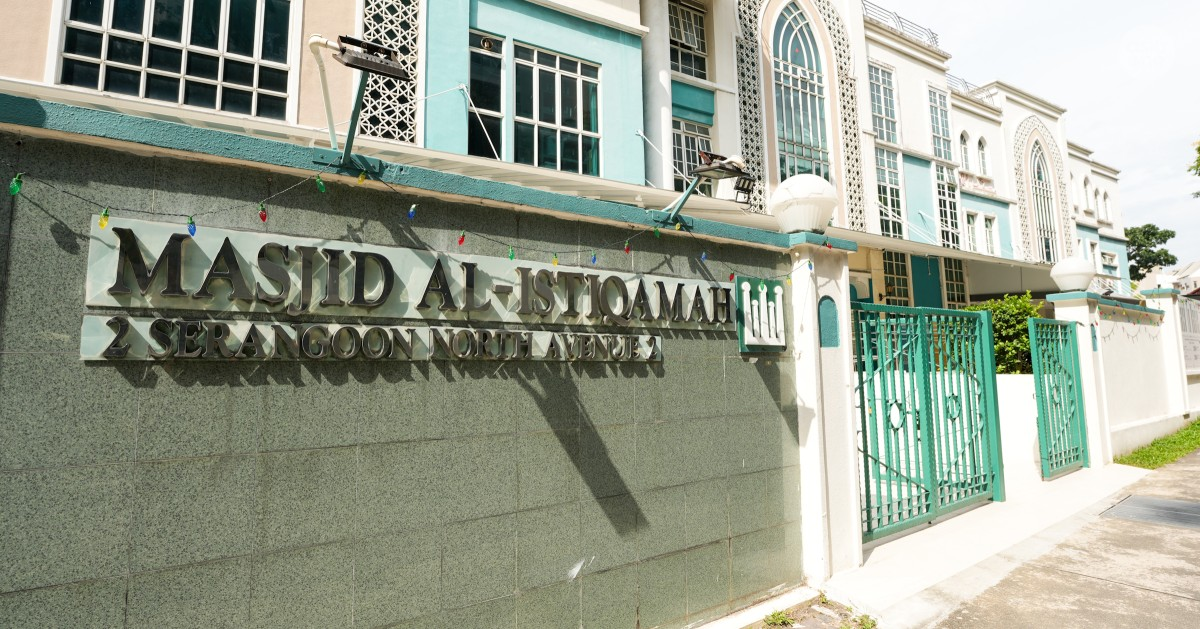
In a city-state renowned for its harmonious multicultural fabric, Singapore has once again been confronted with an unsettling breach of that tranquility. On September 24, 2025, Al-Istiqamah Mosque in Serangoon North received a suspicious parcel that triggered an immediate evacuation and ignited widespread concern.
The package, upon initial inspection, contained a piece of meat that authorities described as appearing to be pork—a substance deeply offensive to the Muslim community due to religious prohibitions. This incident, unfolding in the heart of a diverse neighborhood, underscores the fragility of social cohesion in the face of provocative acts. As investigations unfold, the event serves as a stark reminder of the vigilance required to safeguard places of worship in a nation that prides itself on unity amid diversity.
The discovery of the parcel came amid routine operations at the mosque, located at 2 Serangoon North Avenue 2, a modern facility completed in 1999 under the Mosque Building Fund and capable of accommodating up to 3,300 worshippers. At approximately 5:20 p.m., mosque staff reported the arrival of an unmarked package, which they opened only to experience symptoms including dizziness and nausea. This prompted a swift alert to the authorities. The Singapore Police Force (SPF) and the Singapore Civil Defence Force (SCDF) responded promptly, evacuating the premises as a precautionary measure to rule out any hazardous materials.
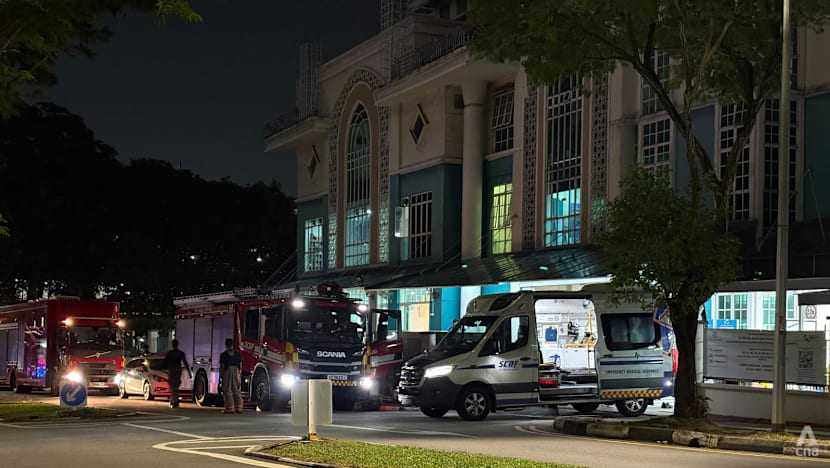
SCDF hazardous materials specialists conducted thorough checks, confirming the absence of harmful substances. Despite the lack of immediate danger, the evacuation was necessary to ensure the safety of all present. One individual was assessed for breathlessness and transported to a hospital for further observation, though no serious injuries were reported. The area surrounding the mosque was cordoned off, with traffic police establishing temporary roadblocks on Serangoon North Avenue 1 and Yio Chu Kang Road to manage the influx of emergency vehicles, including SCDF investigation cars, hazmat units, an ambulance, and a fire engine. By around 9 p.m., the scene had stabilized, but the mosque remained closed for the evening as investigations continued.
Eyewitness accounts from the vicinity painted a picture of controlled chaos. Mosque-goers, many en route to evening prayers, were redirected calmly by officers, while curious residents gathered at a safe distance. The Islamic Religious Council of Singapore (Muis) issued a statement on Facebook around 9 p.m., acknowledging awareness of the incident and assuring the public of close collaboration with authorities.
Read : Five ISIS Bombs Discovered Hidden Inside the Iconic al-Nuri Mosque in Iraq
This quick communication helped mitigate panic, emphasizing that the mosque’s safety was paramount. For the congregants of Al-Istiqamah, a vibrant community hub serving the local Malay-Muslim population in Serangoon North—a bustling residential enclave with a mix of housing estates and amenities—the event disrupted not just the day’s schedule but a sense of security in their sacred space.
Official Response and Revelation of the Parcel’s Contents
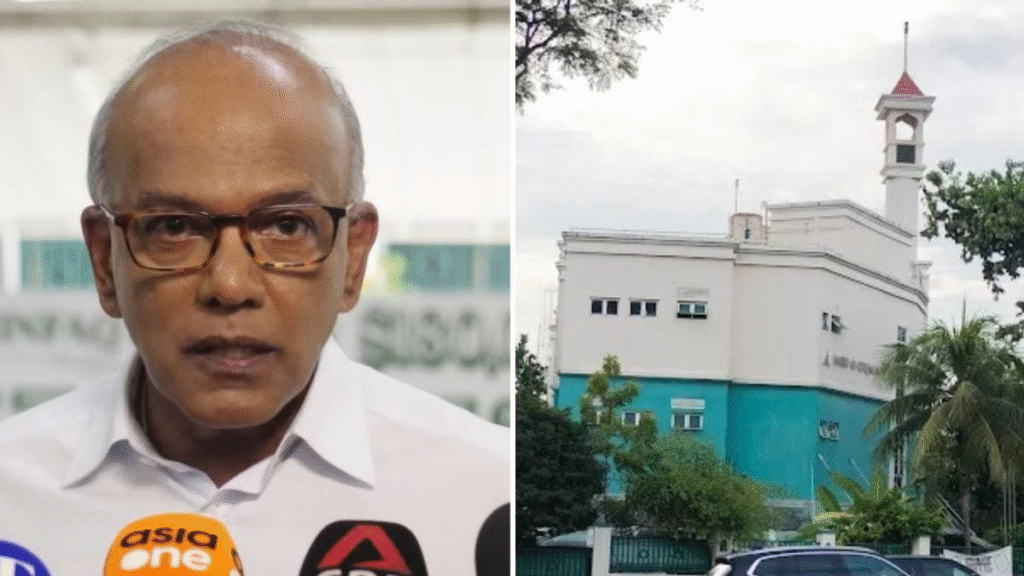
The following day, September 25, brought clarity—and condemnation—from high-level officials. Coordinating Minister for National Security and Minister for Home Affairs K. Shanmugam visited the mosque for a media doorstop, where he disclosed the parcel’s disturbing contents: a single piece of meat that, at first sight, appeared to be pork. While forensic confirmation was ongoing, the minister’s revelation amplified the incident’s gravity, given pork’s status as haram (forbidden) in Islam. “We have not confirmed what it is… but at first sight, it appears to be pork,” Shanmugam stated, underscoring the potential for escalation in a multi-religious society.
Shanmugam did not mince words in labeling the act “obviously inflammatory” and “playing with fire.” He emphasized Singapore’s zero-tolerance policy toward targeting places of worship, vowing firm action against those responsible. “Whatever the motive, this is playing with fire. We are treating this matter very seriously, and we will deal firmly with anyone found responsible,” he affirmed. The minister highlighted the broader context, revealing that this was not an isolated event.
Similar suspicious parcels containing meat had been sent to other mosques across Singapore in recent weeks, all under active police investigation. Though he refrained from confirming linkages, the pattern suggested a deliberate campaign aimed exclusively at Muslim institutions, raising alarms about rising tensions. Complementing Shanmugam’s address, Acting Minister-in-charge of Muslim Affairs Muhammad Faishal Ibrahim also spoke to reporters at the site.
He reassured the community that Singapore’s mosques remain safe havens for worship, with Al-Istiqamah set to resume normal operations, including predawn prayers (Subuh) on Thursday morning. Faishal’s presence symbolized governmental solidarity, reinforcing that the state stands resolutely with its minority communities. Police, in tandem, announced stepped-up patrols and visits to mosques nationwide, committing to enhanced security protocols to prevent recurrence. “We will do whatever we can to ensure that our places of worship remain safe,” Shanmugam added, signaling a proactive shift in protective measures.
This official response was methodical and multifaceted, blending transparency with resolve. By publicly naming the meat’s apparent nature, authorities aimed to address speculation head-on, while their assurances of safety helped restore confidence. The minister’s visit itself, amid a peaceful resumption of prayers—where congregants gathered without disruption—projected normalcy and strength. Yet, beneath the composed facade lay a deeper worry: in a nation where interfaith harmony is not just policy but ethos, such provocations threaten to unravel years of careful nurturing.
Community Reactions and the Imperative for Unity
The incident at Al-Istiqamah Mosque elicited a chorus of condemnation from across Singapore’s diverse tapestry, exemplifying the “Singapore way” of collective solidarity. Mosque leadership, led by its management committee, swiftly called for calm among worshippers. On September 25, prayers proceeded as usual, with the atmosphere described as serene despite the prior day’s upheaval. This resilience spoke volumes about the community’s fortitude, rooted in faith and a commitment to non-escalation. “We urge everyone to remain calm and continue with our ibadah (worship) as normal,” a mosque spokesperson conveyed, echoing Muis’s guidance.
Beyond the immediate circle, voices from other faiths amplified the outrage. Leaders and members of Hindu, Christian, Buddhist, and secular communities expressed profound concern, decrying the act as an assault on shared values. Adviser to Aljunied grassroots organizations, Chan Hui Yuh, posted on Facebook around 10:20 p.m. on September 24, voicing deep worry for the congregation’s safety and advising residents to steer clear of the area. “This act, if intentional, is unacceptable in multi-religious Singapore,” she declared, a sentiment echoed in online forums and community chats. Social media buzzed with hashtags like #StandWithAlIstiqamah and #UnityInDiversity, where netizens shared messages of support, from virtual prayers to pledges of vigilance.
This outpouring was no mere formality; it reflected Singapore’s deliberate cultivation of interfaith bonds through initiatives like the Inter-Religious Organisation and annual harmony circles. The incident, however, exposed vulnerabilities in an era of global polarization, where online echo chambers can embolden offline mischief. Shanmugam noted the positive ripple: “I understand leaders and members of other faiths have also spoken out to express their concerns about the incident. That shows the solidarity, and that’s the Singapore way.” Yet, he cautioned against complacency, warning that such provocations could inflame divisions if left unchecked.
In the broader narrative, this event prompts reflection on preventive strategies. Community watch groups in Serangoon North, already active in neighborhood policing, have volunteered for joint patrols with authorities. Educational forums on religious sensitivity, often hosted by mosques like Al-Istiqamah, may see renewed vigor, fostering dialogue to bridge misunderstandings. For the Muslim community, comprising about 15% of Singapore’s population, the parcel’s pork-like contents evoke painful historical parallels—incidents of desecration that tested resilience but ultimately strengthened resolve. As one congregant remarked anonymously, “We pray for peace, but we also pray for justice. This is our home too.”
Implications for Security and Social Cohesion in Singapore
Looking ahead, the Al-Istiqamah incident casts a long shadow over Singapore’s security landscape, demanding both immediate and structural responses. With investigations into this and parallel cases ongoing, the SPF’s enhanced mosque surveillance is a critical stopgap. Yet, experts suggest deeper layers: bolstering digital forensics to trace parcel origins and origins of any online incitement. In a tech-savvy nation, anonymous deliveries via ride-hailing or postal services pose challenges, but Singapore’s robust CCTV network and data analytics could yield breakthroughs.
Socially, the event reinforces the need for redoubling harmony efforts. Government programs like the Community Engagement Programme, which promotes neighborly ties, could expand to include targeted workshops on hate crime recognition. Schools in Serangoon North, home to a multicultural student body, might integrate modules on religious respect, ensuring the next generation views diversity as a strength, not a spark for conflict. Economically, too, there’s ripple: tourism to cultural sites like mosques could waver if perceptions of safety dip, though Singapore’s reputation for swift justice often rebounds trust.
Ultimately, this parcel—seemingly innocuous yet laden with malice—serves as a clarion call. It reminds us that harmony is not passive but an active pursuit, woven through daily acts of empathy and institutional safeguards. As Al-Istiqamah reopens its doors, its minaret calling the faithful to prayer symbolizes not just endurance but defiance against division. In Singapore’s mosaic, every piece matters; dislodging one risks the whole. By uniting in condemnation and action, the nation can ensure such shadows pass, leaving a legacy of unbreakable bonds. The road forward is clear: vigilance, dialogue, and unyielding commitment to the shared Singapore story.