
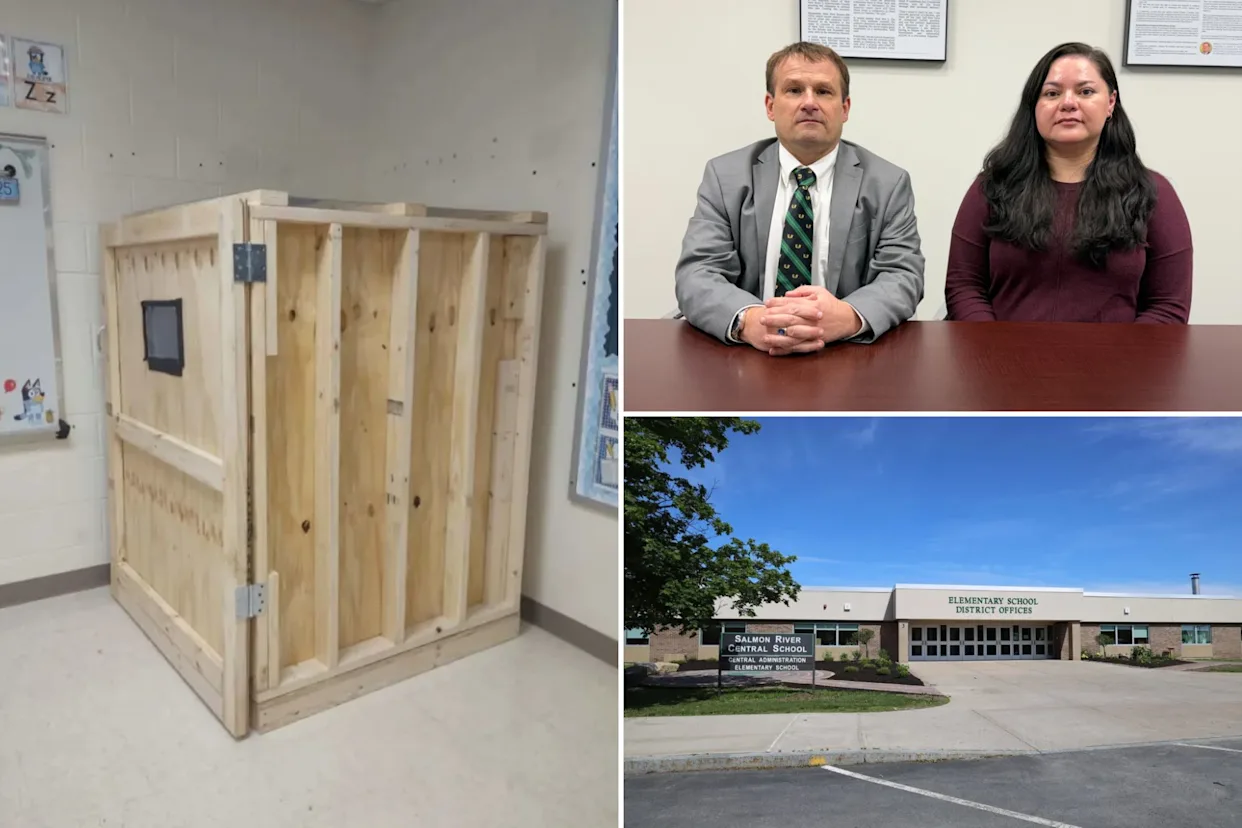
The parents of an eight-year-old autistic boy are preparing legal action against the Salmon River Central School District, alleging that their son was subjected to inappropriate and harmful treatment through the existence of a wooden box used for confinement within his school environment. The allegations, outlined in a formal notice of claim, have raised serious questions about special education practices, transparency with parents, and the responsibilities of school administrators toward vulnerable students.
While the district has acknowledged the presence of such wooden structures, it disputes their use as confinement devices, setting the stage for a contentious legal and public debate. The notice of claim was filed on behalf of Rhonda Garrow and Jacob Sunday, parents of the child, who is autistic and non-verbal.
The document names the school district, the board of education, former superintendent Stanley Harper, and school board president Jason Brockway as respondents. According to the parents, they were unaware of the box’s existence until December, months after it was allegedly constructed and placed in their son’s educational setting. Their discovery has since triggered a police investigation, internal district inquiries, and administrative changes within the school system.
Allegations Surrounding the Wooden Box and Parental Discovery
At the center of the dispute is what Garrow has described as a “box-shaped wooden dog cage,” which she and Sunday allege was designed specifically for their son. According to the notice of claim, Sunday met with Mohawk School Principal Alison Benedict after learning of the structure. During that meeting, Benedict reportedly confirmed the box existed and stated that it was intended for the child, though she denied that it had ever been used to confine him.
The parents contend that this explanation does little to mitigate their concerns. They argue that the mere presence of such a structure, particularly one allegedly tailored for a specific student with disabilities, represents a serious lapse in judgment and a violation of trust. The claim further states that the district later acknowledged the existence of three or four similar boxes across Salmon River and Mohawk School facilities.
District officials, according to the filing, asserted that these boxes were not used or that parents were aware of and had approved their existence. Garrow and Sunday dispute this assertion, maintaining that they were never informed about the box at either school or in their son’s classroom.
Read : School Bus Aide Kiarra Jones Pleads Guilty to Assaulting 3 Nonverbal Autistic Students
After the meeting with school officials, the parents reported the matter to the St. Regis Mohawk Tribal Police. Law enforcement subsequently launched an investigation to determine whether any laws or regulations had been violated. The involvement of tribal police underscores the seriousness with which the allegations are being treated and reflects the broader community concern surrounding the treatment of children with special needs.
Read : Hotter Than Hot: Discover April’s Top 10 Hottest Cities Worldwide
The parents’ attorney, Greg Rinckey, has emphasized that the child’s condition makes the allegations particularly troubling. The boy is non-verbal and cannot independently articulate his experiences at school. According to Rinckey, when shown photographs of the box, the child exhibits negative reactions, which the family interprets as signs of distress or fear. The attorney has also stated that the boy has indicated, through non-verbal cues, that he does not want to attend school, a change that his parents find alarming given his previous behavior.
Legal Claims, Emotional Impact, and Alleged Pattern of Conduct
The notice of claim outlines a range of damages that the family says they have suffered as a result of the alleged conduct. These include economic losses and emotional distress, some of which are described as potentially permanent. While the specific financial damages have not yet been detailed publicly, such claims often encompass costs related to therapy, specialized care, and potential future educational needs arising from emotional or psychological harm.
One aspect of the claim that has drawn particular attention is the allegation that the wooden box followed the child when he changed schools within the district. According to Rinckey, when the boy was transferred from one school to another, the box was moved along with him. The parents view this as evidence that the structure was intended for ongoing use with their son, rather than being an unused or incidental piece of equipment.
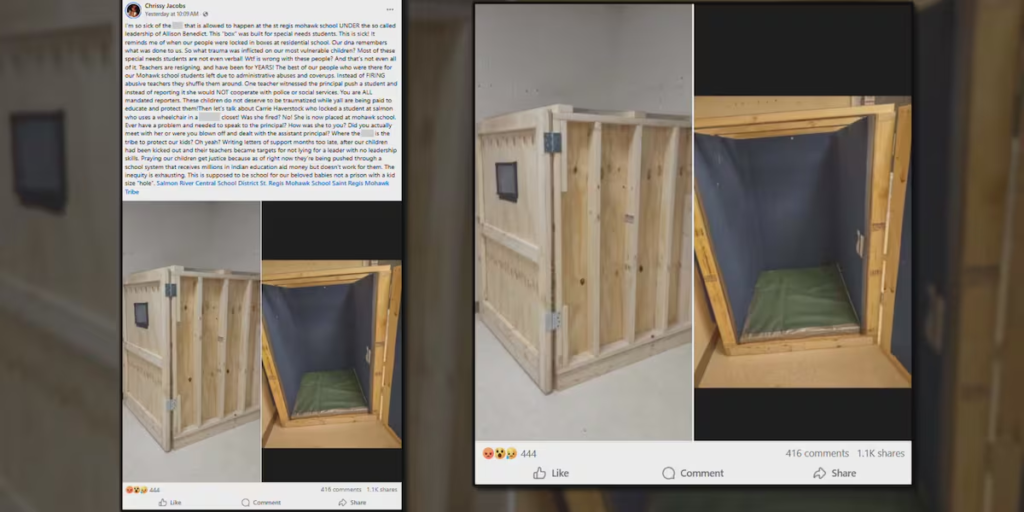
The family’s legal position centers on the argument that confining or preparing to confine a child with disabilities in such a manner, without parental knowledge or consent, violates established standards for special education and student welfare. Federal and state laws governing the education of students with disabilities place strict limits on the use of restraint or seclusion, typically allowing such measures only under narrowly defined circumstances and with extensive documentation and parental notification. The parents’ claim suggests that these standards were ignored or circumvented.
Beyond the legal arguments, the case highlights the profound emotional toll the situation has taken on the family. Garrow and Sunday have expressed distress over the possibility that their son may have been frightened or traumatized in an environment that was supposed to support his development. For parents of children with special needs, trust in educators and administrators is especially critical, given the reliance on schools to provide safe and appropriate accommodations. The alleged secrecy surrounding the box has therefore become a central grievance in their complaint.
School District Response, Administrative Actions, and Ongoing Investigations
In response to the allegations, the Salmon River Central School District’s board of education initiated its own investigation. The district has stated that it takes the matter seriously and is cooperating with authorities. As part of its internal response, then-superintendent Stanley Harper was assigned to home duties, while Principal Alison Benedict and other staff members were placed on administrative leave. These actions, while not admissions of wrongdoing, indicate that the district recognized the need to remove key personnel from their roles while the allegations are reviewed.
A new acting superintendent has since been appointed to oversee district operations during this period. The leadership change is intended to provide stability and ensure that daily school functions continue while investigations proceed. District officials have not released detailed findings, citing the ongoing nature of both internal and external inquiries.
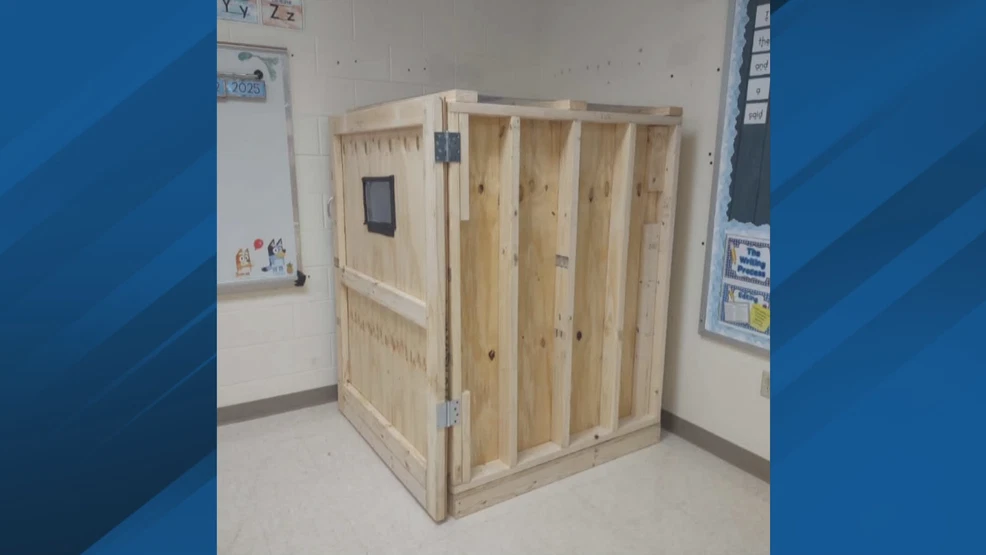
The district has acknowledged the existence of wooden boxes at its facilities but has consistently denied that they were used to confine students. According to statements referenced in the notice of claim, officials have suggested that the structures were either unused or known to parents. This position directly contradicts the parents’ account and is likely to be a focal point of any future litigation.
The case has broader implications beyond the immediate parties involved. It has sparked discussion among educators, parents, and disability advocates about the safeguards in place for students with special needs and the importance of transparency in educational settings. Questions have been raised about how such structures were approved, constructed, and placed in classrooms without apparent oversight or parental notification.
As the parents move forward with plans to sue, the legal process will likely involve extensive fact-finding, including testimony from school staff, administrators, and experts in special education. The outcome may hinge on whether the box was ever used, how it was intended to be used, and whether its existence alone constitutes a violation of the child’s rights.
For now, the case remains under investigation, with no final determinations made regarding liability or wrongdoing. What is clear is that the allegations have shaken confidence in the district and highlighted the vulnerabilities of non-verbal students who rely entirely on adults to advocate for their safety and dignity. The eventual resolution, whether through court proceedings or settlement, is expected to have lasting consequences for district policies and the broader conversation about appropriate practices in special education.\