
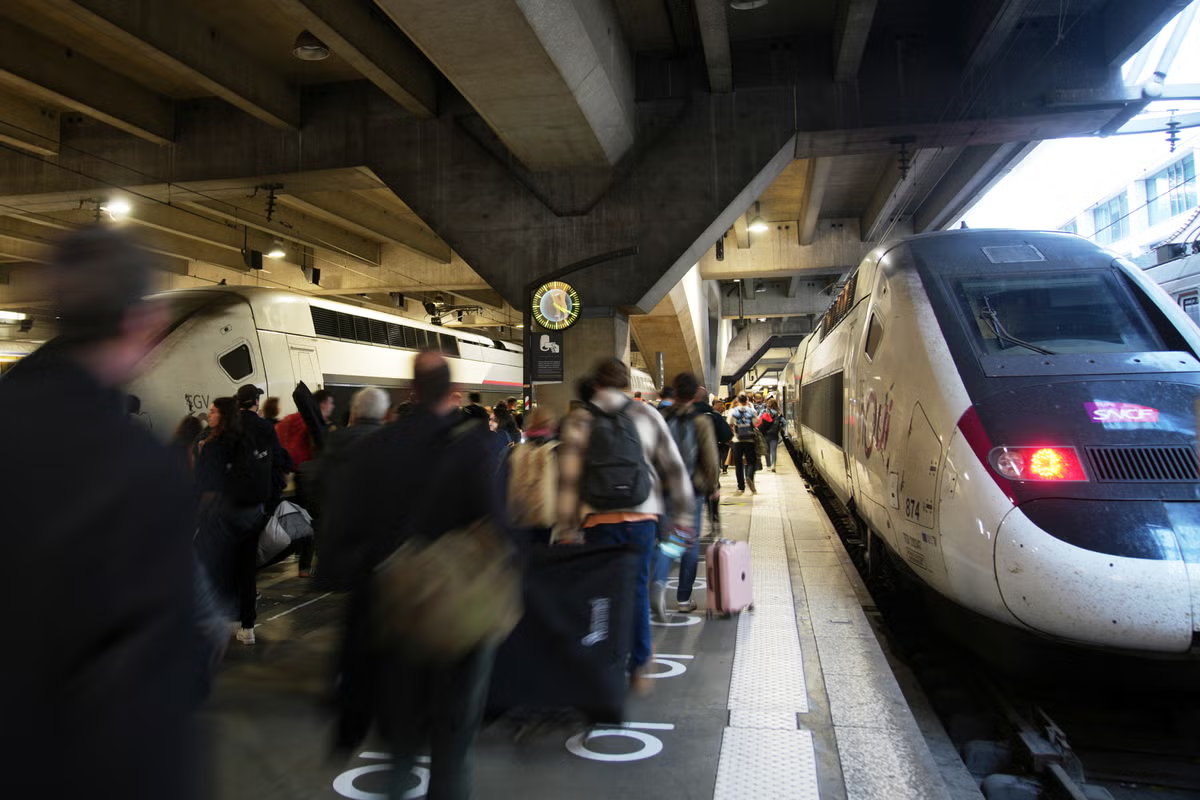
Paris was thrust into turmoil when police shot and wounded a knife-wielding man at Montparnasse station, one of the French capital’s busiest rail hubs. The incident unfolded rapidly, sending crowds fleeing in panic as officers confronted a suspect already known to authorities for domestic violence.
What followed was a tense confrontation that left the man wounded, the station evacuated, and hundreds of passengers shaken. The event again raised questions about emergency response measures in crowded public transport spaces, the growing pressures on law enforcement, and the unpredictable nature of incidents involving individuals in crisis.
Police Intervention at Montparnasse
The events began earlier in the day, when police received reports that the man had threatened his wife and children in a Paris suburb before boarding a train headed for Montparnasse. According to information provided by the prosecutor’s office and police sources quoted by Reuters, officers were already positioned at the station when the train arrived, indicating that authorities had anticipated the need for an immediate intervention.
When confronted by officers, the man brandished a knife and threatened to kill himself. Police issued commands for him to stop, but he continued to pose a threat, prompting officers to open fire. The man was shot in the legs, bringing him to the ground. Despite the injuries, he then inflicted knife wounds on himself, further escalating the medical emergency and adding complexity to the police response.
At least one gunshot was confirmed by the prosecutor’s office, though witnesses on site reported hearing several shots. In the chaos that followed, French firefighters and emergency medical teams rushed into the station concourse to provide aid. The swift arrival of first responders was critical in securing the area and beginning immediate medical care for the wounded man, who was transported to a hospital for treatment.
Read : Jaden Smith Faces Backlash for Red Face Paint and Visible Underwear at Paris Fashion Week
One of the most striking elements of the incident was the sudden acceleration from a police surveillance situation to an armed confrontation requiring the use of force. The context of the domestic violence threat heightened police urgency, yet the public setting of Montparnasse added immense risk for bystanders. The actions taken by officers appeared aimed at preventing self-harm by the suspect while also safeguarding the crowd around him, a balance that becomes increasingly difficult in volatile, open environments.
Crowd Panic and Evacuation of the Station
The shooting triggered immediate panic across the station. Montparnasse serves both suburban commuter trains and high-speed services linking Paris to western and southwestern regions of France, meaning large numbers of passengers move through the concourse at most hours of the day. When shots rang out, people scrambled in all directions, many unaware of the source of the noise or the nature of the threat.
A Reuters photographer who was present described a “crowd surge” as passengers rushed to exit the building. This reaction was reinforced by witness accounts, one of whom told BFM TV that a loud bang sent people running before they fully understood what was happening. The witness recalled hearing passengers shouting to one another that they needed to flee quickly, triggering a collective rush toward the exits.
🇫🇷 Paris . Police shot a man who threatened passersby with a knife at the Montparnasse train station.
— Dennis jacob (@12431djm) November 14, 2025
Oh my dear France , what is happening inside you #France #montparnasse pic.twitter.com/oiUxyU9lke
In spaces like major train stations, where thousands pass through tight corridors and busy platforms, even a moment of confusion can lead to dangerous crush situations. That such injuries were avoided in this case was in large part due to rapid communication by security staff and firefighters, who moved swiftly to establish control of the area.
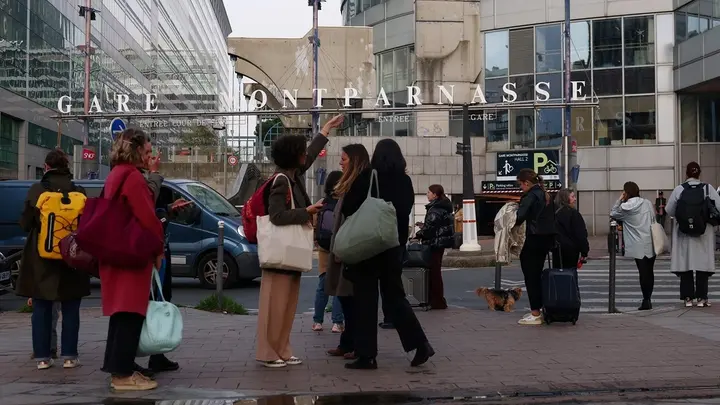
Authorities ordered a full evacuation of Montparnasse station. Images from the scene showed firefighters sprinting through the hall and passengers congregating outside as trains were halted. Transport disruptions rippled outward, affecting both local commuters and long-distance travelers.
The disruption also had psychological repercussions. For many present, the noise of gunshots or the sight of emergency responders racing across the concourse revived fears rooted in past acts of violence in public French spaces. Even when an incident is quickly contained, the emotional imprint on witnesses can be lasting, especially when the event unfolds in an environment as familiar and public as a railway station.
Background of the Suspect and Ongoing Investigation
Information from the prosecutor’s office indicated that the man involved in the incident was “known for domestic violence,” a detail that public prosecutors rarely release unless it is relevant to assessing the individual’s level of risk or the motivations behind their behavior. The reports that he had threatened his family shortly before boarding the train suggested that police intervention was not random but part of an urgent operation to prevent further harm.
As officers attempted to apprehend him, his threats to take his own life intensified the difficulty of the situation. Incidents involving armed individuals in emotional crisis often leave little room for negotiation. When situated in a public place, the danger to both the individual and others escalates rapidly. This dynamic frequently shapes law-enforcement decisions around the use of force, particularly when the person refuses to comply with orders and poses an imminent threat.
In the aftermath of the confrontation, the man’s condition was stabilized by emergency medical teams, and he remained under guard while receiving treatment. Prosecutors announced the opening of an investigation into the incident, a standard procedure whenever police use a firearm. Such investigations aim to determine whether force was applied proportionally and whether any procedural requirements were overlooked.
Authorities will also examine the timeline of events leading up to the confrontation, including the initial domestic-violence report, the man’s journey by train, and the decisions made by police units dispatched to intercept him. Domestic violence cases in France have increasingly received heightened attention, with law enforcement under pressure to respond more assertively to threats. The suspect’s known history may therefore have influenced how authorities assessed the level of danger he posed.
At the same time, questions remain about the presence of a knife on public transportation and whether security measures at stations could have intercepted him earlier. France has spent years reinforcing security protocols at high-traffic transport hubs, but knives remain difficult to detect and are not prohibited in the same way as firearms. The nature of the threat—domestic in origin but unfolding in a public setting—complicates the broader prevention landscape.
The incident also highlights ongoing challenges in addressing individuals who pose both domestic and public-safety risks. French prosecutors have repeatedly emphasized that domestic violence cases require urgent attention, as they can spiral into broader crises when individuals experiencing emotional volatility enter public environments carrying weapons.
Investigators will now piece together the suspect’s recent behavior, his mental and emotional state at the time of the confrontation, and any signs of escalation that might have been observed before he entered the station. The combination of self-harm, armed resistance, and threats toward family members will likely prompt a comprehensive forensic and psychological evaluation.
As Montparnasse gradually returned to normal operations, the incident served as a reminder of the unpredictable nature of public-safety threats and the critical role of rapid police action in minimizing harm. It also underscored the delicate balance officers must maintain when confronting individuals in crisis while protecting the thousands of people who rely daily on major transportation hubs.