
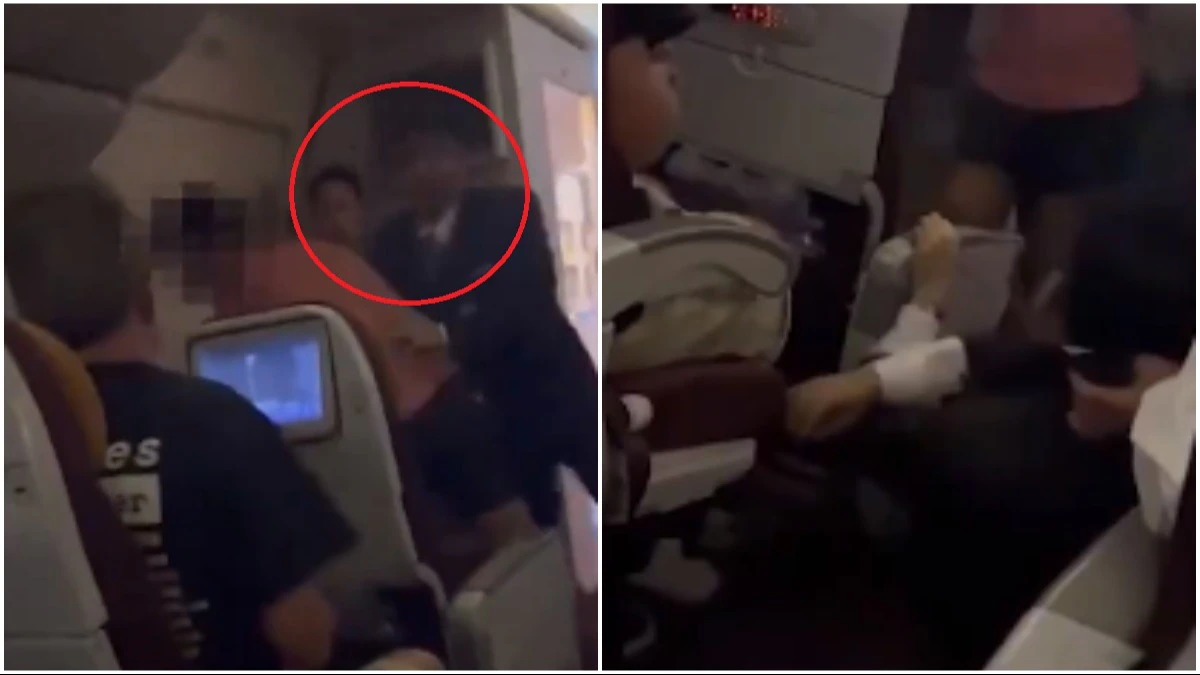
On Thursday, August 28, 2025, a Saudia Airlines flight from Jeddah to London Heathrow Airport became the scene of a dramatic and alarming incident. A 33-year-old male passenger was arrested after allegedly assaulting a flight attendant and attempting to open an aircraft door as the plane taxied to its stand at Terminal 4.
The disruption, which occurred on Flight SV119, a Boeing 787 Dreamliner, prompted a swift response from emergency services, including police, firefighters, and ambulances. The incident, described as chaotic and frightening for passengers, has raised concerns about aviation safety and the handling of disruptive passengers.
The Incident: Chaos on Flight SV119
The Saudia Airlines flight, registered as HZ-AR27, had just landed at London Heathrow Airport shortly before 1:00 p.m. local time after a routine journey from Jeddah, Saudi Arabia. As the Boeing 787 taxied toward Terminal 4, a male passenger reportedly became agitated and engaged in a heated argument with a male flight attendant. According to witness accounts, the situation escalated quickly when the passenger struck the crew member and then attempted to open one of the aircraft’s doors while the plane was still moving on the taxiway.
The attempt to open the aircraft door during the landing phase is considered a severe breach of aviation safety protocols. While it is physically impossible to open an aircraft door at cruising altitude due to cabin pressure, tampering with doors during taxiing or landing poses significant risks, including potential damage to the aircraft and danger to passengers and crew. Witnesses described the scene as chaotic, with families on board expressing fear and distress as the passenger’s actions disrupted the final moments of the flight.
Read : Wheel Falls Off United Airlines Flight Moments After Takeoff in U.S.
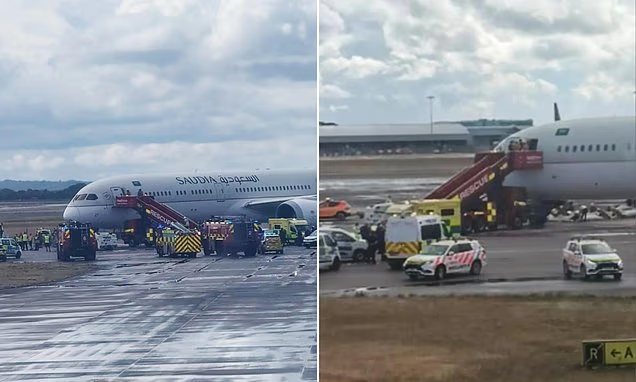
The pilots, recognizing the severity of the situation, brought the plane to a sharp stop on the taxiway and immediately called for emergency assistance. Airport staff quickly erected mobile stairs to allow authorities to board the aircraft. The rapid response ensured that the situation was contained before further escalation, but the incident left passengers shaken and highlighted the challenges of managing disruptive behavior in the confined space of an aircraft.
Emergency Response and Arrest
The response to the incident was swift and robust. Within minutes of the plane’s abrupt stop, emergency services descended on the tarmac at Heathrow’s Terminal 4. At least four fire trucks, six police cars, and several ambulances were observed at the scene, along with the airport’s own response teams. The Metropolitan Police, responsible for security at Heathrow, boarded the aircraft and arrested the 33-year-old suspect at 12:57 p.m. on Thursday, August 28, 2025.
The passenger was detained on multiple charges, including suspicion of endangering an aircraft, two counts of assault by beating, behaving in a threatening, abusive, or disorderly manner toward a member of the aircraft crew, and damaging an aircraft. A spokesperson for the Metropolitan Police confirmed the arrest, stating, “Officers at London Heathrow Airport were called to an aircraft, which had recently landed at 12:57hrs on Thursday, 28 August following reports of a disturbance.” The suspect has since been released under investigation as authorities continue their inquiries.

Saudi Arabia’s National Transport Safety Center also issued a statement on Saturday, August 30, 2025, noting that the passenger may have been dealing with a health condition that contributed to his behavior. The flight crew’s quick actions were credited with preventing further harm, as they physically intervened to stop the passenger from tampering with the door. The center emphasized that authorities from both Saudi Airlines and the United Kingdom are coordinating to investigate the circumstances of the incident thoroughly.
Despite the severity of the event, Heathrow Airport reported that the incident caused minimal disruption to its broader operations. The airport’s ability to maintain normal functioning while emergency services addressed the situation underscores its robust infrastructure and preparedness for such events. However, the scale of the emergency response, with multiple vehicles and personnel, reflected the seriousness with which aviation authorities treat attempts to interfere with aircraft operations.
Implications for Aviation Safety and Passenger Behavior
This incident at Heathrow is part of a broader pattern of disruptive passenger behavior, often referred to as “air rage,” which has become a growing concern for airlines and aviation authorities worldwide. The term encompasses a range of violent or disruptive actions, from verbal abuse to physical assaults and attempts to interfere with aircraft operations. Such incidents not only endanger the safety of passengers and crew but also pose significant operational and financial challenges for airlines, including potential flight delays or diversions.
The Heathrow incident highlights the critical role of flight crews in managing passenger conflicts. Crew members are trained to de-escalate tense situations, but when passengers become physically aggressive, their options are limited. The quick response of the Saudia Airlines crew in restraining the passenger and alerting authorities likely prevented a more dangerous outcome. However, the event also raises questions about the adequacy of current protocols for identifying and managing passengers who may pose a risk before or during a flight.
One potential factor in such incidents is the mental or physical health of the passenger involved. The statement from Saudi Arabia’s National Transport Safety Center suggesting a possible health condition underscores the complexity of addressing disruptive behavior. Airlines and airports must balance the need to ensure safety with the recognition that some passengers may require medical or psychological support rather than punitive measures. This incident may prompt further discussions about screening processes, crew training, and the availability of onboard resources to handle such situations.
Moreover, the event draws attention to the legal consequences of air rage. The charges against the passenger—endangering an aircraft, assault, and disorderly behavior—carry significant penalties. In the United Kingdom, disrupting a flight or interfering with crew members can result in fines, jail time, or bans from flying with specific airlines. For example, past cases have seen passengers sentenced to prison terms of up to several years for similar offenses. The ongoing investigation into this incident will likely determine whether the passenger faces such consequences or if mitigating factors, such as a health condition, influence the outcome.
The psychological impact on other passengers cannot be overlooked. Witnesses described the incident as “frightening,” particularly for families on board. The confined environment of an aircraft can amplify feelings of fear and vulnerability during such disruptions, and airlines must consider how to support passengers in the aftermath of such events. Providing clear communication, ensuring rapid resolution, and offering assistance to affected passengers are critical steps in maintaining trust and confidence in air travel.
From an industry perspective, incidents like this one may prompt airlines to review their safety protocols and crew training programs. Heathrow Airport, one of the world’s busiest aviation hubs, maintains rapid-response units to address onboard disturbances, but the increasing frequency of air rage incidents globally suggests a need for broader strategies.
These could include enhanced pre-flight screening, increased monitoring of passenger behavior, and collaboration between airlines and mental health professionals to identify at-risk individuals. Additionally, public awareness campaigns about the consequences of disruptive behavior may help deter such incidents in the future.
The incident also underscores the importance of international cooperation in aviation safety. The coordination between Saudi Airlines and UK authorities in investigating the event demonstrates the global nature of air travel and the need for standardized protocols to address security threats. As air travel continues to recover and grow post-pandemic, ensuring the safety and comfort of passengers remains a top priority for the industry.
In conclusion, the arrest of a passenger at Heathrow Airport on August 28, 2025, after assaulting a flight attendant and attempting to open an aircraft door serves as a stark reminder of the challenges facing the aviation industry. The swift response from the flight crew and emergency services prevented a potentially catastrophic outcome, but the incident highlights the need for ongoing vigilance and adaptation in managing passenger behavior.
As investigations continue, the focus will likely shift to understanding the underlying causes of the passenger’s actions and identifying ways to prevent similar events in the future. For now, the event stands as a sobering example of the importance of maintaining safety and professionalism in the high-stakes environment of air travel.