
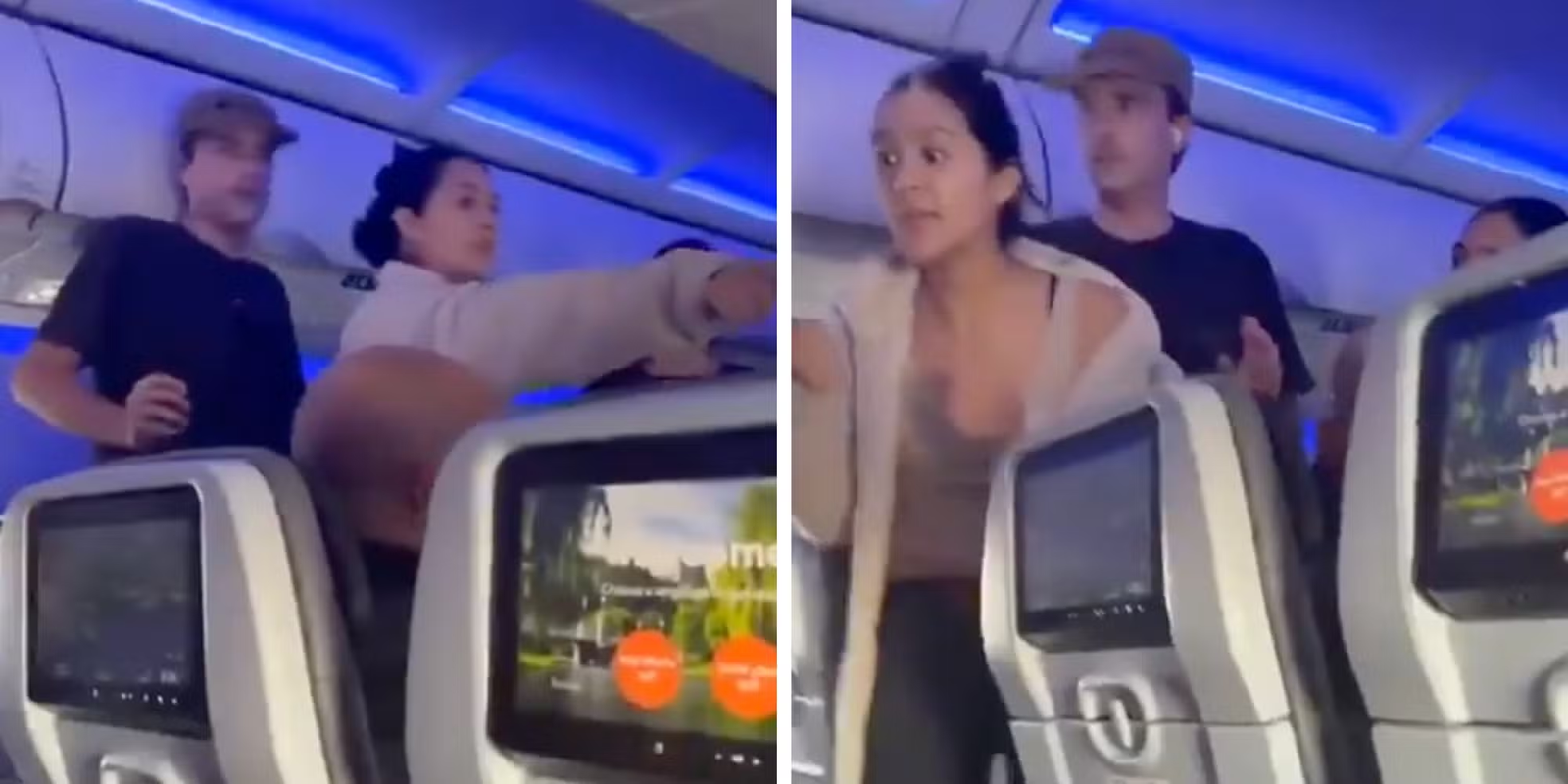
A recent incident aboard a JetBlue Airways flight has sparked widespread conversation online after a video showed a visibly distressed passenger attempting to open the emergency exit door of an Airbus A320 aircraft. The woman, who reportedly panicked upon hearing what she believed to be a mechanical failure, was later identified as having mistaken a normal operational sound — commonly referred to by aviation enthusiasts as the “barking dog” noise — for a sign of engine trouble.
The situation, though alarming for fellow passengers, was handled calmly by JetBlue crew members who managed to de-escalate the situation before any real danger occurred. The viral video has since reignited discussions about passenger awareness, flight safety, and the psychology of nervous flyers. The incident unfolded while the aircraft was still on the ground, just moments before takeoff. Witnesses described how the woman became increasingly anxious after the unusual noise filled the cabin, insisting something was wrong with the plane.
She reportedly claimed her boyfriend was a pilot and began arguing with other passengers who tried to reassure her that the sound was normal. Moments later, she attempted to move toward an over-wing emergency exit, triggering alarm among those seated nearby. Fortunately, a flight attendant swiftly intervened, speaking to her calmly and guiding her back to her seat before the situation could escalate further. The exchange was captured on video by other passengers and quickly circulated across social media platforms, attracting millions of views within hours.
Understanding the “Barking Dog” Noise in Airbus A320 Aircraft
The confusion that led to the dramatic incident can be traced back to one of the most characteristic sounds of the Airbus A320 family — the rhythmic, barking-like noise emitted by the Power Transfer Unit (PTU). To those unfamiliar with aircraft systems, the sound can indeed be unsettling, especially when heard from inside the cabin during moments of relative quiet such as boarding, taxiing, or after landing. However, aviation experts and engineers emphasize that this sound is not only harmless but also essential to the plane’s proper functioning.
The PTU serves as a crucial component of the aircraft’s hydraulic system. On an Airbus A320, there are two independent hydraulic systems — one powered by each engine. When one engine is running and the other is not, such as during single-engine taxiing or engine start-up, the PTU activates to equalize hydraulic pressure between the two systems. It achieves this by transferring energy mechanically, which produces the distinctive barking or growling noise that often surprises unseasoned travelers.
Though it might sound like a malfunction to the untrained ear, the noise is a sign that the system is working exactly as designed. Aviation maintenance professionals frequently describe the PTU as “the dog that barks but never bites,” underscoring its benign nature. Despite being standard on thousands of Airbus A320 aircraft worldwide, the sound continues to puzzle or frighten some passengers who associate any unusual mechanical noise with danger.
A JetBlue passenger attempts to open an emergency exit after mistaking the A320's “barking dog” noise for a mechanical failure.
— Breaking Aviation News & Videos (@aviationbrk) October 15, 2025
The woman, who claimed her boyfriend was a pilot, panicked after hearing the Airbus A320’s distinctive “barking dog” noise, a normal sound produced by… pic.twitter.com/Qf0TSkUfXh
Flight attendants are often trained to reassure passengers when such sounds occur, though in most cases, they are overshadowed by normal cabin activity or ignored entirely by regular fliers. In this case, however, the combination of anxiety, misunderstanding, and heightened awareness appears to have triggered a moment of panic.
Crew Response and Social Media Reaction
The professionalism displayed by the JetBlue flight crew has been widely praised online. In the video, the flight attendant can be seen maintaining a calm demeanor, gently engaging with the distressed passenger rather than reacting with confrontation or alarm. This response, according to aviation psychologists, is critical in de-escalating potential in-flight disturbances. By validating the passenger’s fear while simultaneously reassuring her of the aircraft’s safety, the crew managed to prevent what could have been a serious security concern.
After the video surfaced, social media users offered a mix of empathy and humor. Some suggested that the woman might have been a nervous flyer experiencing a severe anxiety attack, while others commented on the importance of better public education about common aircraft sounds. “If you notice, the cabin crew understood it was anxiety and helped her understand,” one user wrote, commending the attendants’ patience. Another humorously added, “Next time, maybe she should bring earplugs instead of a pilot boyfriend. Less drama, more peace.”
Read : JetBlue Pilot Jeremy Gudorf Arrested at Boston Airport for Sexual Exploitation of Minor
Others shared personal stories of flying with friends or relatives who feared air travel. One commenter recounted how it took numerous flights explaining every sound and phase of flight before a companion finally felt comfortable traveling alone. “With that experience, I believe that explaining this stuff calmly is the best way forward,” they wrote, echoing the sentiment that communication and reassurance are key in managing such moments.

This incident has also sparked a renewed conversation among aviation enthusiasts and frequent flyers about the need for airlines to provide better pre-flight information to passengers. While safety demonstrations focus on procedures and equipment, little attention is given to explaining the mechanical sounds and sensations of flight that can trigger anxiety. Some suggest that short educational videos or pamphlets could be incorporated into boarding screens or inflight magazines to address this gap.
For many travelers, even minor turbulence or mechanical noises can elicit fear due to the lack of visibility and control inherent to air travel. In such cases, the mind often fills the gap with worst-case scenarios. This is why crew training in recognizing and managing passenger anxiety has become increasingly important. The JetBlue team’s composed and compassionate handling of the situation exemplified best practices in dealing with distressed passengers, preventing potential chaos and ensuring safety for everyone onboard.
Similar Incidents and Broader Aviation Context
While rare, incidents involving passengers attempting to open emergency exits are not unheard of. In August, a Ryanair flight from the United Kingdom to Morocco was diverted to Manchester Airport after a woman allegedly tried to open a door mid-air. Fellow passengers intervened, alerting the crew and helping restrain the individual until the plane landed safely. Once on the ground, police escorted the woman off the aircraft, and engineers conducted a detailed inspection before allowing the flight to continue.
Such events, though alarming, serve as reminders of the delicate balance between passenger psychology and aviation safety. Modern commercial aircraft are equipped with multiple safeguards to prevent doors from being opened during flight — cabin pressure alone makes it physically impossible at cruising altitude. However, attempts on the ground or during taxiing still pose potential risks to both passengers and crew, making swift intervention crucial.
Experts also note that post-pandemic trends have seen a slight increase in disruptive passenger behavior, often linked to heightened stress, anxiety, or frustration with travel logistics. Airlines worldwide have responded by enhancing staff training programs focused on conflict resolution, de-escalation, and mental health awareness. The goal is to ensure that crew members can recognize early signs of distress and respond with empathy rather than enforcement whenever possible.
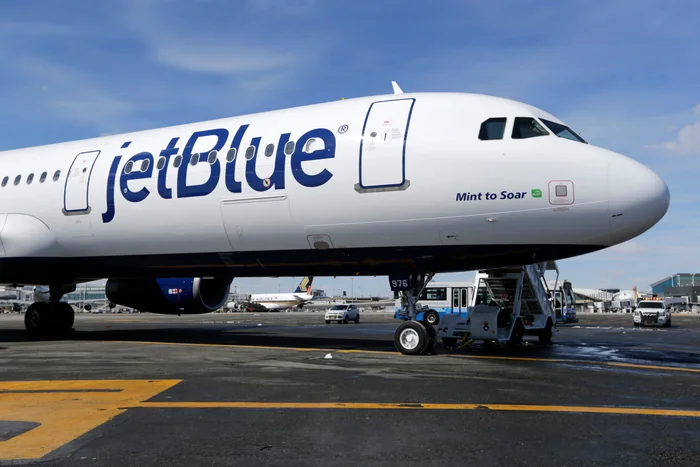
In the context of the JetBlue incident, the outcome was fortunate — no one was injured, no property was damaged, and the flight proceeded safely. Yet it underscores the importance of understanding human behavior within high-stress environments like air travel. A simple misunderstanding of an unfamiliar sound cascaded into a moment of panic, but it was contained through quick thinking and professional conduct.
Aviation educators have since seized the opportunity to explain the technical aspects behind the “barking dog” sound, using the viral video as a teaching moment. Pilots and engineers have shared diagrams and recordings to illustrate how the Power Transfer Unit functions, emphasizing that it is a routine and essential part of the aircraft’s operation. These educational efforts not only demystify aviation for the public but also contribute to a safer and more informed passenger experience.
Ultimately, the incident highlights how crucial communication and awareness are in maintaining safety and calm in flight. As commercial aviation continues to carry millions of passengers each day, ensuring that travelers understand the basics of how aircraft operate can make a significant difference in preventing panic or misunderstanding. The JetBlue crew’s composed response serves as a testament to effective training and the importance of empathy in customer service.
In an age where every moment can be captured and shared online, such viral episodes remind the world that air travel — though heavily automated and statistically safe — still relies on human judgment, professionalism, and compassion. Whether it is the sound of a hydraulic pump or the hum of an engine, the key to passenger confidence often lies in knowledge. For those prone to nervousness while flying, taking the time to learn about the noises, sensations, and processes of an aircraft can transform fear into understanding — and panic into calm.
房中秘术、泡妞把妹、丰胸美体、奇淫巧技!价值十万电子书下载网址:https://www.1199.pw/
**mitolyn official**
Mitolyn is a carefully developed, plant-based formula created to help support metabolic efficiency and encourage healthy, lasting weight management.