
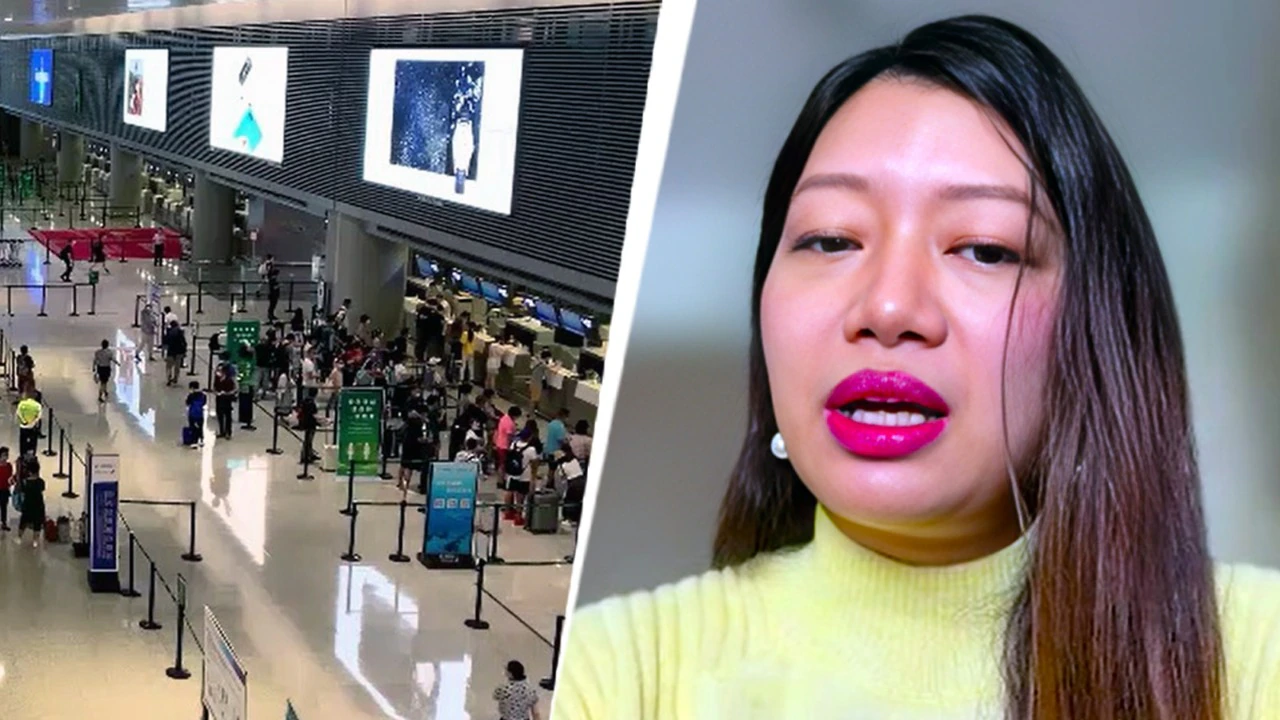
Pem Wang Thongdok’s account of being detained for more than eighteen hours at Shanghai Pudong International Airport has sparked a surge of concern across India and abroad, drawing attention once again to the longstanding geopolitical dispute between India and China over Arunachal Pradesh. Her experience, described across multiple posts on X, has raised questions about airport procedures, diplomatic conduct, and the consequences faced by Indian citizens from the northeastern state when travelling through Chinese territory.
The incident occurred on November 21, 2025, during her journey from London to Japan, and her narrative of events has rapidly circulated through media outlets and officials who were tagged directly in her appeals for help. Her claim that Chinese officials labelled her Indian passport “invalid” solely due to her Arunachal Pradesh birthplace adds a striking new dimension to the tensions that have long shaped the region’s political identity.
As Thongdok described, she was initially processed through immigration, but the issue arose while she awaited her security check. She alleges that officials singled her out, called her name, and escorted her back to the immigration desk, where she was told that her passport could not be recognised because “Arunachal is a part of China.” The incident prevented her from boarding her connecting flight to Japan and, according to her posts and media reports, placed her under pressure to purchase a new flight ticket exclusively on China Eastern Airlines.
Her claims have prompted intervention from the Indian Consulate in Shanghai, which assisted her in eventually departing China later that night. The case highlights the broader complexities faced by individuals from Arunachal Pradesh, which India firmly maintains is an integral part of its sovereign territory while China continues to claim it as “South Tibet.” Thongdok’s experience provides a vivid example of how these diplomatic fissures can manifest directly in the lives of ordinary citizens.
Identity Challenged Over Arunachal Pradesh Birthplace
At the core of Pem Wang Thongdok’s account is her assertion that Chinese authorities refused to recognise the legitimacy of her Indian passport because her birthplace was listed as Arunachal Pradesh. According to her posts, officials insisted that the region belongs to China and therefore her documentation could not be processed as valid.
This claim struck a deep chord online, particularly among people familiar with the recurring complications that residents of Arunachal Pradesh face in China, including the long-standing practice of issuing stapled visas instead of stamped ones. The idea that an Indian passport could be considered “invalid” based on birthplace alone highlights a more extraordinary form of administrative challenge that surpasses even the previously reported travel difficulties.
Thongdok stated she was first cleared through immigration, suggesting that her entry had initially been considered admissible. The situation escalated only when security officials called out her nationality and name before escorting her back to the immigration desk. In her account to media outlets, she described how an officer reportedly declared, “Arunachal, not a valid passport,” before informing her that the region is Chinese territory.
This sequence indicates a deliberate re-evaluation based not on technical documentation but on territorial claims. Thongdok further said she felt humiliated and isolated as she waited in the transit area, unable to board her onward flight and unsure of when her passport would be returned. Her follow-up posts emphasised the emotional weight of having her national identity questioned merely because of where she was born.
🚨 𝗕𝗥𝗘𝗔𝗞𝗜𝗡𝗚: 𝗛𝘂𝗺𝗶𝗹𝗶𝗮𝘁𝗶𝗼𝗻 𝗮𝗻𝗱 𝗛𝗮𝗿𝗮𝘀𝘀𝗺𝗲𝗻𝘁 𝗮𝘁 𝗦𝗵𝗮𝗻𝗴𝗵𝗮𝗶 𝗔𝗶𝗿𝗽𝗼𝗿𝘁 𝗦𝗽𝗮𝗿𝗸𝘀 𝗢𝘂𝘁𝗿𝗮𝗴𝗲
— Resonant News🌍 (@Resonant_News) November 24, 2025
🇮🇳🇨🇳 || Pema Wangjom Thongdok, hailing from Arunachal Pradesh, was detained for 18 hours after Chinese immigration refused to accept her… pic.twitter.com/ZDBPD9HSUj
For many residents of Arunachal Pradesh, this experience resonates beyond an individual inconvenience. It touches on an identity shaped by decades of diplomatic tension, allegations of cross-border claims, and the insistence by the Indian government that the state is an inseparable part of the national fabric. Thongdok’s account has also prompted wider discussions on what safeguards exist for Indian travellers transiting through adversarial or disputed zones and what protocols should apply when such situations arise.
Detention, Pressure, and Diplomatic Intervention
Thongdok alleged that during her detention she was pressured to purchase a new ticket exclusively on China Eastern Airlines, suggesting that officials implied her passport would only be returned after doing so. Such a claim raises questions about the conduct of airport personnel and whether procedural norms were replaced with coercive tactics. According to media reports, she spent more than eighteen hours in the transit area, confined and unable to board her connecting flight, until she reached out to her contacts in the United Kingdom who in turn contacted the Indian Consulate in Shanghai.
Read: 22-Year-Old Indian Student Ajit Singh Chaudhary Found Dead in Dam After 19 Days Missing in Russia
The involvement of Indian officials appeared to be a turning point. Representatives from the consulate reportedly escorted her to a late-night departure out of Shanghai, allowing her to finally leave the country after a day-long ordeal. This response reflects the seriousness with which Indian diplomatic offices tend to handle cases involving Arunachal Pradesh citizens, especially given China’s consistent stance on the region.
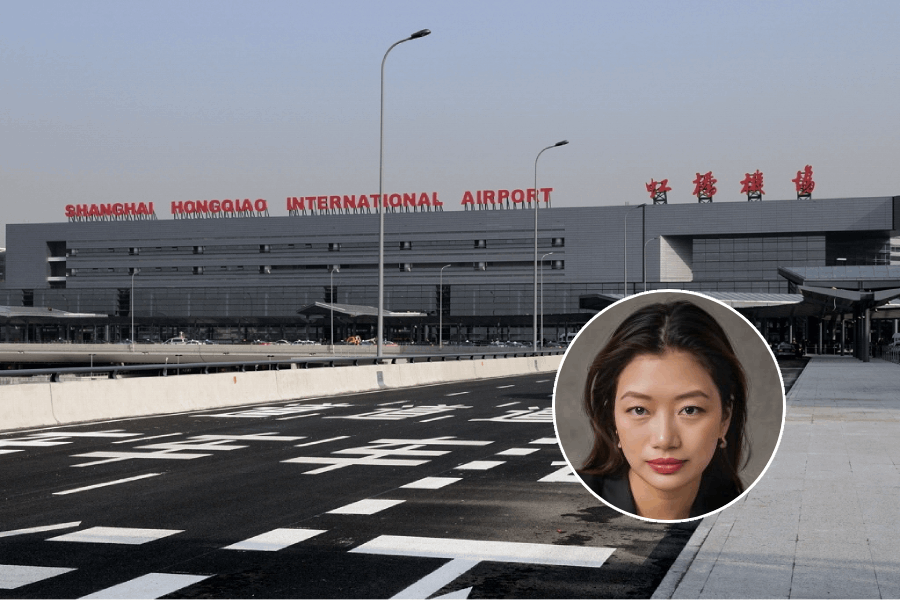
While no formal statement has yet addressed the specifics of airport procedures in this case, the involvement of consular authorities underscores the recurring need for diplomatic mediation when geopolitical disputes intersect with individual travel. Thongdok’s decision to publicly escalate the matter by tagging senior Indian leaders—including Arunachal Pradesh Chief Minister Pema Khandu, Union Minister Kiren Rijiju, and even the Prime Minister’s Office—amplified the visibility of her experience.
Her pointed question, “Is Arunachal Pradesh part of China?” directly confronted the broader political narrative. In doing so, she highlighted not only the distressing personal impact of the incident but also the wider implications for the global mobility of citizens from disputed regions. Many observers noted that her experience raises fundamental questions about how political boundaries are enforced in international hubs like airports and what rights travellers have when such disputes are invoked during routine formalities.
A New Flashpoint in a Longstanding Geopolitical Dispute
The controversy over Thongdok’s detention cannot be viewed in isolation. It fits into a broader pattern of China’s resistance to recognising Arunachal Pradesh as part of India. China refers to the region as “South Tibet” and frequently reiterates its claim over the territory, leading to diplomatic protests whenever Indian leaders visit the state or when Indian infrastructure projects are announced there.
Read : Intoxicated Canadian Assaults Indian-Origin Man at Toronto McDonald’s
The dispute has been a recurring source of tension for decades, spanning military standoffs, border negotiations, and symbolic actions such as the issuance of stapled visas to Indian citizens from the state instead of conventional visa stamps. These symbolic acts serve as a visible reminder of the geopolitical contest playing out across international forums. India, for its part, has consistently asserted that Arunachal Pradesh is not only part of the country but an integral and inalienable component of its territory.
New Delhi has repeatedly rejected China’s territorial claims, emphasising that the state elects its own representatives, participates fully in Indian democracy, and has long-standing cultural, historical, and administrative connections to the nation. Against this backdrop, the treatment experienced by Thongdok appears to be a manifestation of the diplomatic dispute at a more personal and bureaucratic level, where policies shaped at the geopolitical scale intersect with the lived realities of individuals navigating international travel routes.
For many observers, her experience underscores the risks Indian citizens from Arunachal Pradesh may face when transiting through Chinese territory. It raises renewed questions about what protective measures can be implemented by Indian authorities, how consular services can pre-emptively assist travellers from sensitive regions, and whether international aviation or immigration protocols provide any safeguards against the politicisation of document verification.
In the days following Thongdok’s posts, conversations online and in media outlets have examined how such incidents impact not only diplomatic relations but also people-to-people interactions, academic exchanges, and mobility rights. While the event may be a single case, its implications are broad, especially at a time when India-China relations remain strained across multiple fronts. Thongdok’s narrative provides a detailed, human-focused perspective on the tensions that are often discussed in abstract geopolitical terms, revealing how territorial disputes can directly influence personal security, dignity, and international movement.