
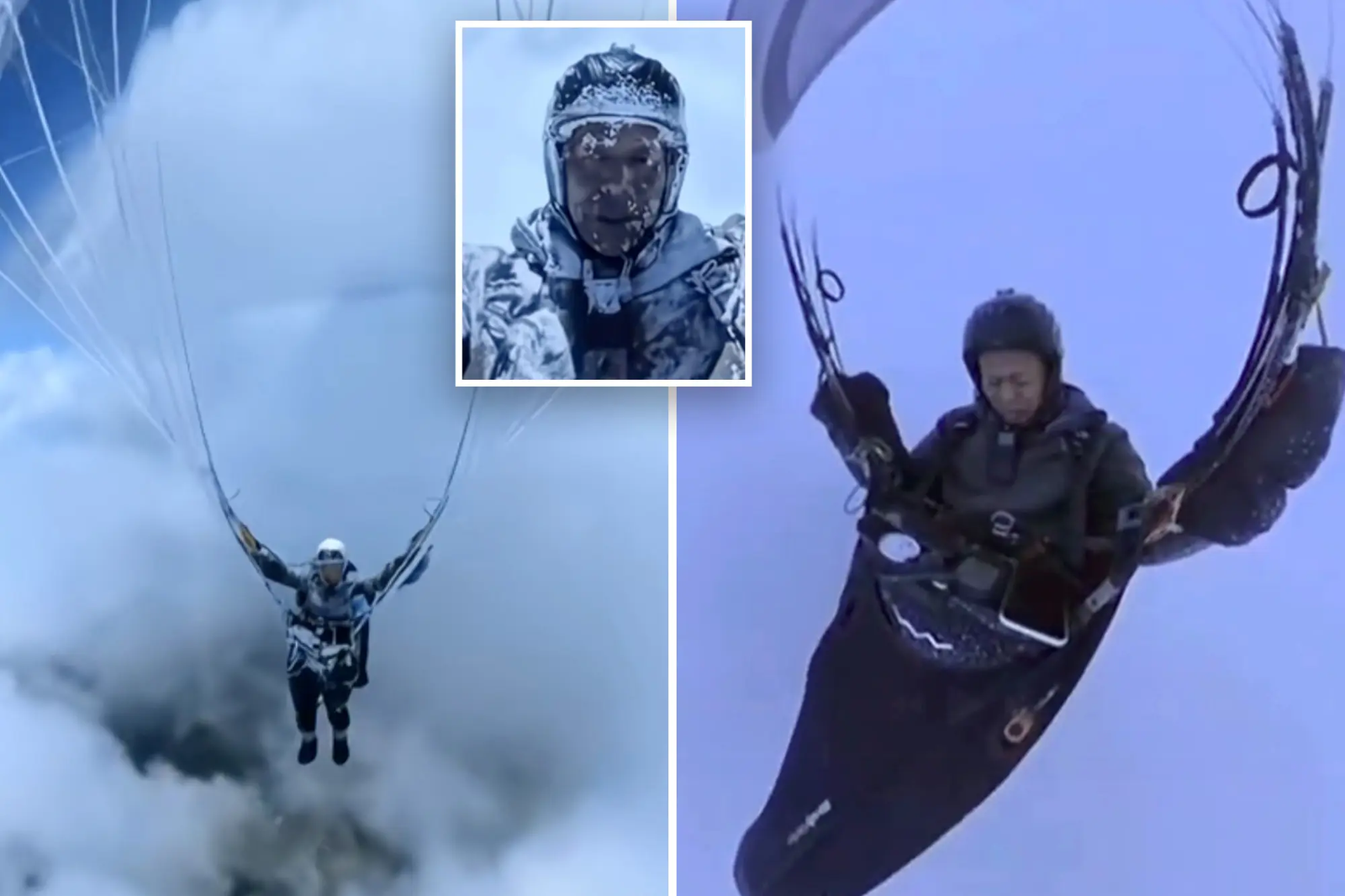
Peng Yujiang was banned from paragliding for six months because his flight on May 24, 2025, in the Qilian Mountains was unauthorized. He was testing second-hand equipment at 3,000 meters when a “cloud suck” updraft lifted him to 8,598 meters. Chinese regulations require prior approval for flights, and Peng failed to register his flight plan or obtain airspace clearance.
The Gansu Provincial Aviation Sports Association issued the ban, citing the lack of prior approval and the significant negative impact caused by the viral video of the incident, despite classifying it as an accident. His friend, who shared the video without permission, was also banned for six months.
A Near-Death Flight into the Unknown
Peng Yujiang’s paragliding experience started like any routine flight. At 12:19 p.m. on May 24, he launched from the slopes of the Qilian Mountains, located on the northeastern edge of the Qinghai-Tibetan Plateau. His goal was simple: to test a second-hand paragliding harness. But what unfolded next was anything but ordinary. Moments after taking off, a powerful updraft pulled him into the sky at a staggering rate.
This rare and dangerous phenomenon, later identified as “cloud suck,” thrust him into a life-threatening ordeal. Cloud suck is triggered by strong thermals associated with cumulonimbus clouds, which rapidly pull anything in their path upward, including unsuspecting paragliders.
Peng recalled how the winds suddenly intensified and lifted him higher and higher. Despite efforts to descend, he found himself spiraling out of control, trapped within a giant white void of cloud and ice. According to screenshots from Peng’s GPS tracker, he rose from approximately 3,000 meters to a terrifying 8,598 meters in a matter of minutes—an altitude higher than many commercial flights.
The dangers escalated with every meter. Temperatures dropped to -40 degrees Celsius. Oxygen levels thinned drastically, causing Peng to suffer from hypoxia. The cold air crystallized around him, and frostbite set in. “I found myself surrounded by cumulonimbus clouds and trapped inside. It was terrifying—everything around me was white,” he later told CCTV in an interview. “I thought I was flying straight, but in reality, I was spinning.”
A freak updraft over the Qinghai-Tibetan Plateau lifted Chinese Paraglider Peng Yujiang nearly nine kilometers in minutes — and the entire flight was caught on camera.
— Sixth Tone (@SixthTone) May 28, 2025
Screenshots from Peng’s GPS flight tracker show he took off at 12:19 p.m. from the Qilian Mountains, an area… pic.twitter.com/ov4Ld5ARx1
Peng remained in the air for several hours. Relying on a compass and sheer willpower, he eventually managed to guide himself out of the clouds, flying northeast until he found clearer skies. When he finally landed, he was physically and emotionally drained—covered in ice and clearly shaken. The dramatic video, captured by a camera mounted to his gear and later shared by his friend on Douyin (China’s TikTok), quickly went viral.
Understanding Cloud Suck and Its Dangers
The term “cloud suck” may sound odd, even fictional, but it is a well-documented phenomenon in the world of aviation and extreme sports. It refers to the rapid ascent of lightweight objects, including paragliders, into the upper atmosphere due to powerful updrafts generated beneath large storm clouds—typically cumulonimbus clouds. These clouds, towering up to 12 kilometers into the atmosphere, are hotbeds of instability. The rising columns of warm air inside them act like invisible vacuums, drawing in anything from birds to gliders.
Aviation expert Wang Yanan, speaking to China Media Group CGTN, emphasized the lethal nature of such events. “Once inside the cloud, the pilot may encounter severe cold, lack of oxygen, turbulence, and even lightning,” Wang explained. “At very high altitudes, these threats become even more severe, making cloud suck potentially life-threatening.”
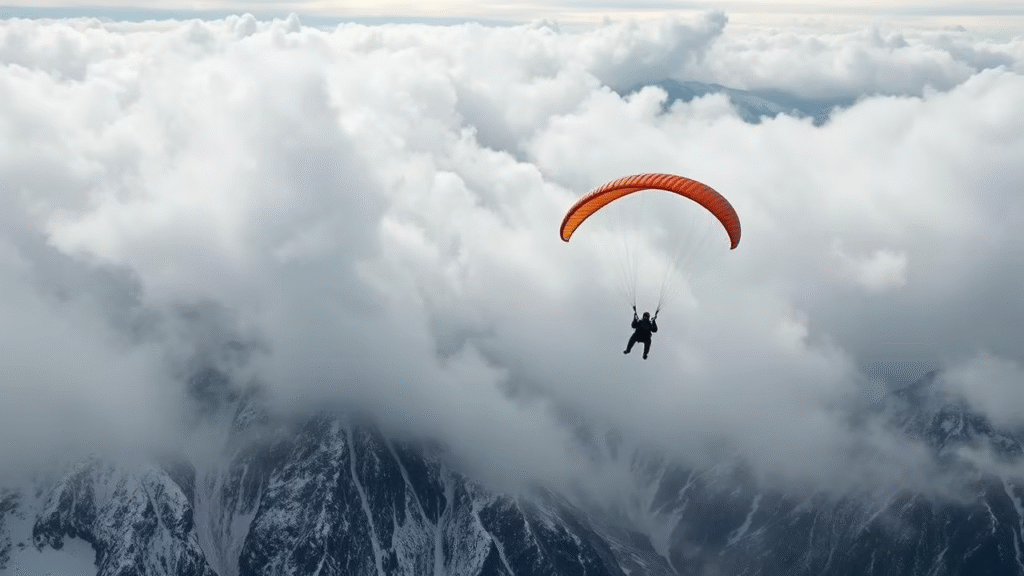
Wang further highlighted another significant risk: proximity to commercial flight paths. At over 8,000 meters, Peng was within the cruising altitude zone of commercial aircraft. While there is no confirmed instance of a collision in Peng’s case, the risk of interference with air traffic was real and serious. Unauthorized flights at such altitudes can endanger not just the paraglider, but also passengers aboard commercial planes flying nearby.
Peng’s incident wasn’t the first time cloud suck caused headlines. In 2007, German paraglider Ewa Wiśnierska was sucked into a thunderstorm in Australia, where she was lifted to nearly 10,000 meters before regaining control and surviving against all odds. Such stories underline how even experienced pilots are vulnerable to this force of nature.
Regulatory Consequences and the Viral Fallout
While Peng Yujiang’s survival was celebrated as miraculous, the Chinese authorities were quick to address the regulatory breaches involved. The Gansu Provincial Aviation Sports Association determined that Peng’s flight was conducted without prior approval, a clear violation of national aviation rules. In China, any recreational flight requires a detailed registration process, including submitting a flight plan and acquiring airspace clearance from aviation authorities.
By failing to do this, Peng violated safety protocols designed to protect both pilots and the broader airspace. The association classified the event as an accident but stressed that the unauthorized nature of the flight and its wide online circulation warranted disciplinary action. Both Peng and his friend who shared the video were handed six-month bans from participating in any paragliding activity.
While some in the public expressed admiration for Peng’s courage and resilience, others raised concerns about the potential consequences of such stunts going viral. Aviation officials were particularly displeased by the “negative impact” caused by the online video, which attracted millions of views and sparked debates about paragliding safety, personal responsibility, and risk-taking behavior.
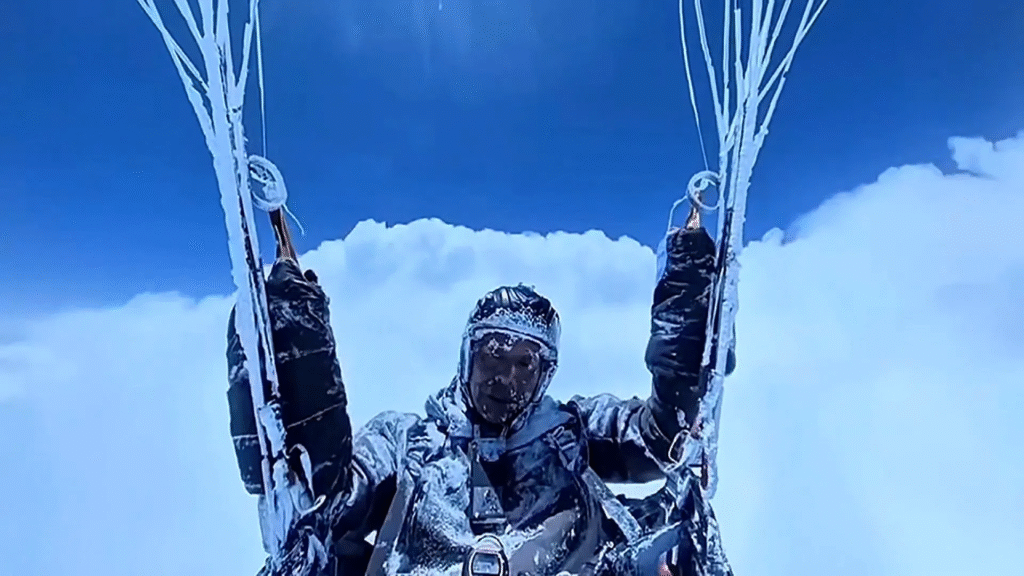
On Douyin, where the video first appeared, comments ranged from praise for Peng’s survival instinct to criticism over his lack of preparation and disregard for safety protocols. The viral spread of the video only intensified scrutiny on the sport and prompted renewed discussions among paragliding enthusiasts and professionals about the need for stricter oversight.
Aviation communities across China echoed the sentiment. Several local clubs issued statements reminding members of the importance of flight registration and equipment checks. Some even began offering new training modules focused specifically on understanding atmospheric conditions and emergency responses to phenomena like cloud suck.
Peng, for his part, seemed humbled by the experience. In his interview, he admitted to underestimating the weather and the risks involved. “I didn’t expect the wind to pick up so quickly. It all happened too fast. I’m lucky to be alive,” he said.
As the six-month ban takes effect, Peng has vowed to use the time to recover and reflect. It remains uncertain whether he will return to the skies after his suspension, but one thing is clear: his story has left a deep impression not just on China’s aviation circles, but on audiences around the world who watched his extraordinary ordeal unfold in real-time.
Lessons from the Sky: Preparedness Over Bravado
Peng’s harrowing flight has served as a wake-up call for amateur and seasoned paragliders alike. Beyond the dramatic visuals and the emotional interviews, his experience offers critical lessons. One of the most important is the need for meticulous preparation. Testing second-hand gear without full safety inspection or registering the flight plan is a serious oversight. When combined with unpredictable weather conditions, such negligence can be fatal.
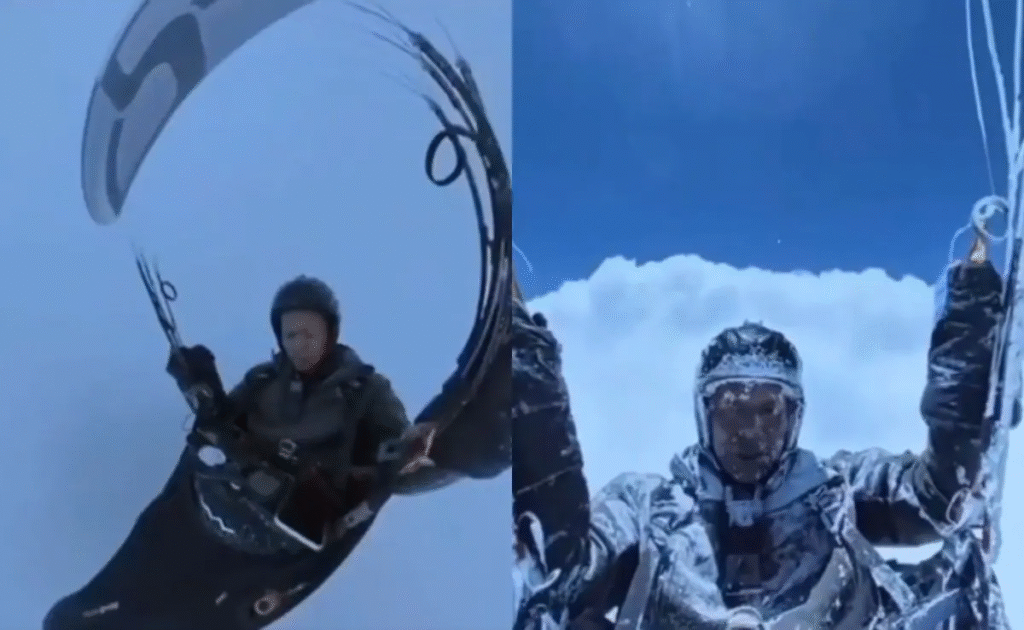
Another key takeaway is the importance of atmospheric knowledge. While most pilots are trained to recognize thermals and cloud formations, few are prepared to deal with a full-blown cloud suck situation. Training institutions and paragliding schools are now being urged to include specialized modules that teach pilots how to identify early signs of dangerous cloud activity and how to respond effectively if caught.
Furthermore, the incident underscores the significance of regulations—not as bureaucratic hurdles but as essential safety nets. In a world where viral content often glamorizes extreme experiences, it’s crucial to remember that aviation is a highly regulated field for good reason. Peng’s altitude put him within a few thousand feet of commercial flight routes—a chilling thought that reinforces the importance of controlled airspace management.
Finally, this event illustrates the double-edged sword of social media. While the video brought attention to an astonishing survival story, it also spread misinformation and may have inspired others to attempt similar stunts. Responsible content sharing, particularly in extreme sports, remains an ongoing challenge.
Peng’s story is extraordinary. His survival against the odds is inspiring. But it is also a cautionary tale—a reminder that in the world of paragliding, nature often has the final say. And when you fly too close to the clouds, you must always be prepared for the unexpected.