
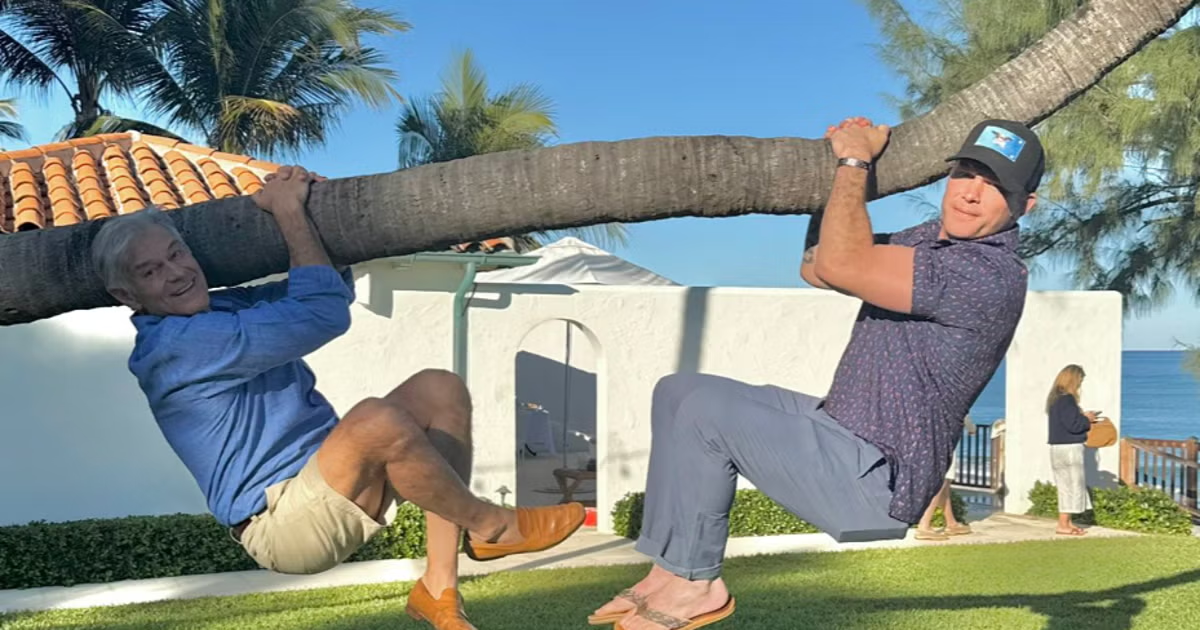
Public reaction to images of U.S. Defense Secretary Pete Hegseth and Centers for Medicare & Medicaid Services administrator Dr. Mehmet Oz enjoying a beachside brunch has revealed how quickly political optics can ignite controversy, particularly during moments of international uncertainty. The photographs, which showed the two men engaging in leisure activities such as swinging from trees, testing cold plunges, and posing beside an elaborate Mediterranean-style spread, circulated widely across social media platforms.
While the images were initially framed as a relaxed and health-focused gathering, critics rapidly reinterpreted them as evidence of misplaced priorities at a time of geopolitical strain. The reaction was shaped not simply by what the images depicted but by when they appeared. With mounting rhetoric surrounding possible confrontation involving the United States and Iran, public scrutiny of defense leadership has intensified.
For many observers, the juxtaposition of high-ranking officials engaging in recreational wellness routines while military personnel remain deployed abroad symbolized a troubling disconnect between political leadership and national security responsibilities. This perception quickly spread across partisan and nonpartisan commentary alike, turning a seemingly ordinary social media post into a focal point of broader anxieties about governance, accountability, and leadership image.
The controversy illustrates how modern political life is increasingly shaped by visual narratives rather than policy statements alone. Images of public officials rarely exist in isolation; they are interpreted through existing tensions, ideological divisions, and expectations of leadership conduct. In this case, the combination of leisure imagery, high office, and global uncertainty created a powerful symbolic contrast that critics seized upon immediately. What might once have passed as a private or routine social interaction instead became a widely debated moment reflecting public expectations about seriousness, duty, and timing.
Public Perception and the Power of Political Optics
Political authority is closely tied to perception, and visual representation plays an increasingly decisive role in shaping public opinion. Leaders are expected not only to make decisions but also to embody vigilance and responsibility at all times, especially when their roles involve national defense or public welfare. The images of Pete Hegseth and Dr. Mehmet Oz participating in wellness activities were therefore evaluated less as personal moments and more as symbolic representations of institutional priorities.
This dynamic explains why criticism emerged quickly and sharply. Former congressman Adam Kinzinger questioned whether the defense secretary should instead be focused on military responsibilities, a remark that captured a widespread sentiment among critics. The comment resonated because it framed the issue in stark terms: leisure versus duty. The simplicity of that contrast made it highly shareable and amplified the perception that the activities shown in the photographs were inappropriate given the circumstances.
Similarly, Representative Sydney Kamlager-Dove criticized both officials in blunt terms, suggesting that their presence in such a setting reflected broader concerns about competence and accountability. Such reactions illustrate how images of public officials are rarely neutral. Instead, they become raw material for political interpretation, often filtered through existing skepticism or opposition.
Visual cues within the photographs further reinforced the perception of informality. Summer clothing, casual footwear, physical fitness demonstrations, and the celebratory tone of the gathering contributed to an atmosphere that appeared distant from the seriousness typically associated with defense leadership. Even the description of the event as a lively or extravagant brunch encouraged interpretations that emphasized indulgence rather than discipline.
Read : Who Is Viraansh Bhanushali, the Viral Oxford Student Who Slammed Pakistan in a Fiery Debate?
In contemporary media culture, symbolism often outweighs context. A single image can shape public perception more powerfully than detailed explanations of scheduling, delegation, or administrative procedure. Critics rarely need to prove that officials neglected their responsibilities; they only need to show that the imagery allows such an interpretation. In this sense, the controversy reflects broader transformations in political communication, where visual storytelling has become central to reputational legitimacy.
Read : Zambian Elephant Kills American Tourist During Safari Drive : Watch Video
The response also demonstrates how digital platforms accelerate judgment. Social media compresses reaction time, allowing interpretations to solidify before official explanations emerge. Once the narrative of “leisure during crisis” took hold, it became difficult to displace, regardless of whether the event occupied only a brief moment within a much larger professional schedule. The speed of online discourse ensures that optics often become reality in the public mind.
Timing, Geopolitical Tensions, and Leadership Expectations
The timing of the images was perhaps the most decisive factor shaping their reception. In periods of perceived international instability, public expectations of leadership intensify dramatically. Defense officials, in particular, are expected to project vigilance, strategic focus, and readiness. Any sign of relaxation can be interpreted as symbolic inattentiveness, even when no operational negligence exists.
This heightened scrutiny is closely linked to the broader political environment. President Donald Trump has repeatedly issued strong rhetoric regarding potential military action abroad, contributing to an atmosphere in which conflict appears plausible rather than theoretical. In such an environment, even routine personal activities by senior officials can acquire amplified symbolic meaning.
Commentators emphasized the contrast between the imagery of leisure and the reality of military deployment. Journalists and analysts pointed to service members stationed across multiple regions, suggesting that leadership behavior should reflect the gravity of their situation. The argument did not depend on evidence that the defense secretary had neglected operational duties; instead, it relied on the expectation that visible conduct should align with national security seriousness at all times.
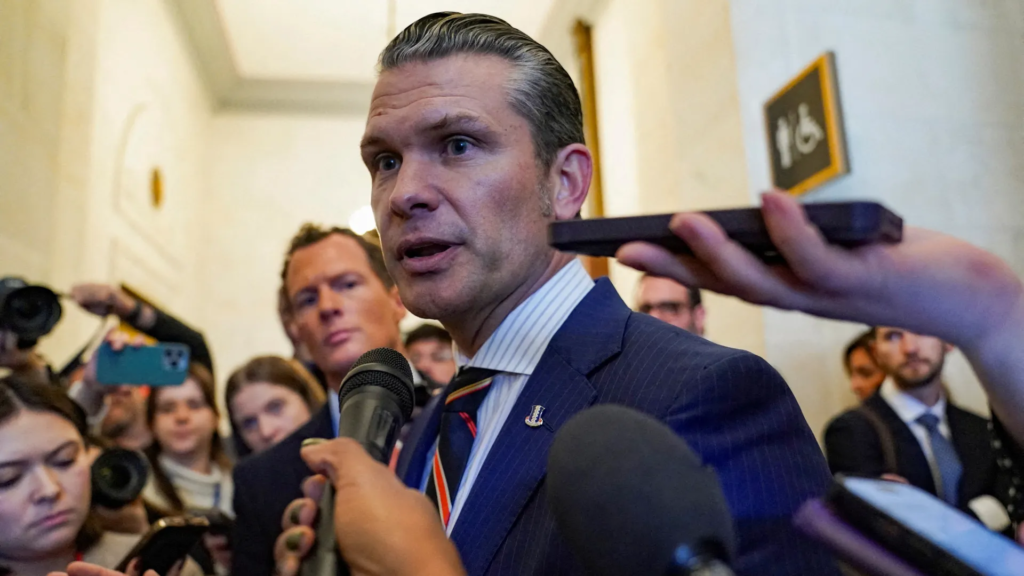
The criticism also drew on historical memory. References to past large-scale conflicts, including comparisons to major military operations of previous decades, heightened the sense that the United States might be approaching a significant turning point. Within that narrative, images of brunch and cold plunges appeared incongruous, reinforcing the perception that leadership priorities were misaligned with geopolitical realities.
Strategic communication is central to defense leadership, and symbolic gestures often carry meaning beyond their immediate context. When public anxiety is elevated, even ordinary activities can be interpreted as signals of complacency or detachment. This phenomenon reflects a broader principle: leadership is judged not only by actions but also by the emotional tone conveyed through public visibility.
Moreover, the presence of another high-profile federal official in the images expanded the scope of interpretation. Because Oz oversees a major public health agency, the gathering was not framed merely as a personal meeting but as an intersection of multiple spheres of federal authority. This broadened the symbolic implications, allowing critics to question not only defense leadership but also administrative priorities more generally.
In essence, the controversy reveals how timing transforms meaning. The same images, released during a period of relative international calm, might have been interpreted as routine or even positively, reflecting personal health or collegial interaction. Released amid heightened geopolitical rhetoric, however, they became emblematic of perceived institutional disconnect.
Broader Criticism of Leadership Style and Institutional Focus
The reaction to the photographs cannot be understood fully without considering existing debates about leadership performance. For some critics, the images served less as a standalone issue and more as confirmation of prior concerns about administrative priorities. The controversy therefore became an extension of broader arguments regarding how senior officials allocate time and attention.
Policy analyst commentary reinforced this perspective. Observers associated with organizations such as the American Enterprise Institute have previously suggested that the defense secretary has devoted attention to matters considered below the strategic level expected of the role. Such critiques emphasize the distinction between operational detail and high-level decision-making, arguing that senior leadership should focus on uniquely strategic responsibilities.
Media commentary has echoed similar concerns. Analysts speaking in outlets including The Atlantic have framed leadership performance in terms of institutional effectiveness rather than individual personality. Within that framework, visible leisure activities become symbolically linked to broader debates about administrative focus, even when no direct connection exists.
Past controversies have also shaped public interpretation. Allegations and disputes connected to military operations, though denied by those involved, remain part of the surrounding political narrative. When new images emerge, they are evaluated against this existing backdrop, allowing critics to interpret them as further evidence supporting earlier claims about leadership judgment.
Professional background can likewise influence perception. Pete Hegseth’s visibility as a television personality on Fox & Friends prior to entering government has long been a point of commentary among critics who question the relationship between media prominence and policy expertise. Images emphasizing informality or performative physical activity can therefore reinforce narratives that portray leadership as image-driven rather than strategically focused.
This layering of past criticism onto present imagery explains why the reaction was so swift and intense. The photographs did not create skepticism from nothing; they activated preexisting frameworks of interpretation. For supporters, the images may have represented ordinary personal time. For critics, they confirmed long-held concerns about priorities, competence, and seriousness.
The episode also reflects the broader transformation of governance into a highly visible performance space. Officials operate under continuous observation, and every publicly shared image contributes to an evolving narrative about institutional character. Leisure, once considered private or incidental, now becomes politically meaningful because it is publicly documented and widely disseminated.
Ultimately, the backlash surrounding the brunch images illustrates how leadership is evaluated through a combination of symbolism, timing, and prior reputation. The photographs became controversial not merely because they depicted relaxation but because they intersected with geopolitical tension, political rivalry, and ongoing debates about administrative focus. In contemporary political culture, visual moments rarely remain isolated events; they become catalysts for broader discussions about responsibility, authority, and public trust.
Mango777casino has a vibrant feel, you know Totally fun. The payouts seem fair so far. I’ll definitely be back for more. Find them here: mango777casino
Local777 is a cool spot for some local fun. It’s got a real community vibe, which makes it stand out. Worth checking out if you’re looking for something different. Here’s the link: local777
Pgbetcasino has a good selection of slots. I’m always on the lookout for new games, and they seem to keep things fresh. Solid choice for some casual gaming. Check it out: pgbetcasino