

The pet food industry is undergoing a groundbreaking transformation with the introduction of lab-grown meat-based dog treats. A UK retailer, Pets at Home, has launched Chick Bites, a dog snack made with cultivated meat.
This marks a significant milestone, as it is the first instance of lab-grown meat being used in pet food available for commercial sale. Manufactured by Meatly, this innovation aims to provide a sustainable and cruelty-free alternative to traditional pet treats.
A Revolutionary Step in Pet Nutrition
Lab-grown meat, also known as cultivated meat, is produced by growing animal cells in a controlled environment. Unlike conventional meat, this method eliminates the need for raising and slaughtering animals.
Meatly’s chicken-based treat is derived from a single sample of cells taken from a chicken egg, which has the potential to generate an unlimited supply of cultivated meat. This scientific breakthrough not only presents an ethical alternative but also ensures that pets receive the necessary nutrients found in traditional meat-based products.
The UK government has played a pivotal role in supporting this innovation. In July, the country became the first in Europe to approve cultivated meat for pet food.
Read : Namibia Plans to Kill Elephants for Meat Amid Crippling Drought: Report
This approval by the Department for Environment, Food and Rural Affairs (Defra) and the Animal and Plant Health Agency signifies an encouraging step toward integrating lab-grown meat into the broader pet food industry.
Read : 8-Year-Old Pekingese Wild Thang Wins 2024 World’s Ugliest Dog Contest
As the demand for sustainable food alternatives grows, cultivated meat is expected to become a mainstream component of pet nutrition.
Sustainability and Ethical Advantages of Cultivated Meat
One of the most compelling reasons for the shift toward lab-grown meat is its positive impact on the environment. Traditional meat production is known to be resource-intensive, requiring vast amounts of land, water, and energy.
It is also a major contributor to greenhouse gas emissions. By contrast, cultivated meat significantly reduces environmental damage, as it does not rely on large-scale animal farming.
Meatly’s Chick Bites align with the growing global movement toward sustainability. By eliminating the need for intensive animal agriculture, cultivated meat can help combat deforestation, reduce methane emissions from livestock, and lower water consumption. For pet owners concerned about the carbon footprint of their pets’ diets, lab-grown meat offers a promising alternative.

Additionally, ethical concerns surrounding factory farming have driven interest in cruelty-free food options. The pet food industry is a major consumer of animal byproducts, contributing to the demand for factory-farmed meat.
With cultivated meat, pet owners can now provide their dogs with nutritious treats without contributing to the suffering of farmed animals. This shift is in line with increasing consumer awareness and preference for humane food choices.
Pets at Home, recognizing the potential of this innovation, has invested in Meatly and introduced Chick Bites on a trial basis in its Brentford, west London store.
This initial rollout allows the company to gauge customer interest and set the stage for wider availability. Given the enthusiastic response from environmentalists and ethical consumers, the demand for cultivated pet food is expected to grow.
The Future of Cultivated Meat in the Pet Food Industry
The introduction of lab-grown meat in dog treats marks the beginning of a significant transformation in pet food. As cultivated meat technology advances, it is likely to become a common feature in pet nutrition, replacing conventional meat-based products.
Companies like Meatly are already planning to expand production in the coming years, making their lab-grown chicken more accessible to pet owners worldwide.
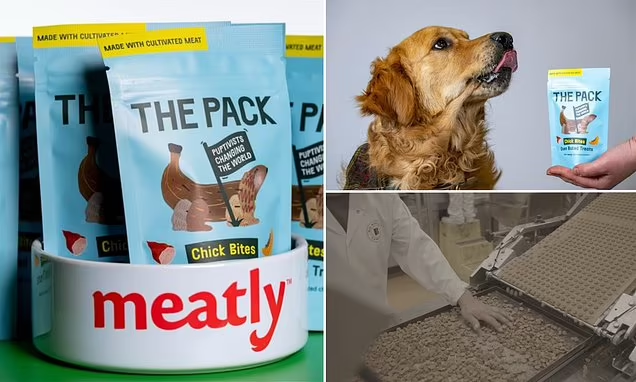
Beyond Chick Bites, further collaborations are underway to develop a broader range of cultivated meat-based pet foods. Meatly has partnered with The Pack, a company specializing in plant-based pet food, to integrate lab-grown meat into more products. This synergy between plant-based and cultivated meat options highlights a growing industry trend toward sustainable pet nutrition.
The future of pet food will likely see an increase in alternative protein sources, reducing reliance on traditional meat. As research continues to improve the efficiency and cost-effectiveness of cultivated meat production, prices are expected to decrease, making these products more affordable for the average consumer.
In the next decade, pet food aisles could feature a variety of cultivated meat-based options, catering to pet owners who prioritize sustainability and animal welfare.
The launch of Chick Bites at Pets at Home represents a milestone in both the pet food and cultivated meat industries. With companies like Meatly leading the charge, the shift toward lab-grown meat for pets is poised to reshape the market.
As awareness and demand continue to rise, cultivated meat could become a staple in pet nutrition, offering a sustainable, ethical, and nutritious alternative to conventional meat-based treats.