
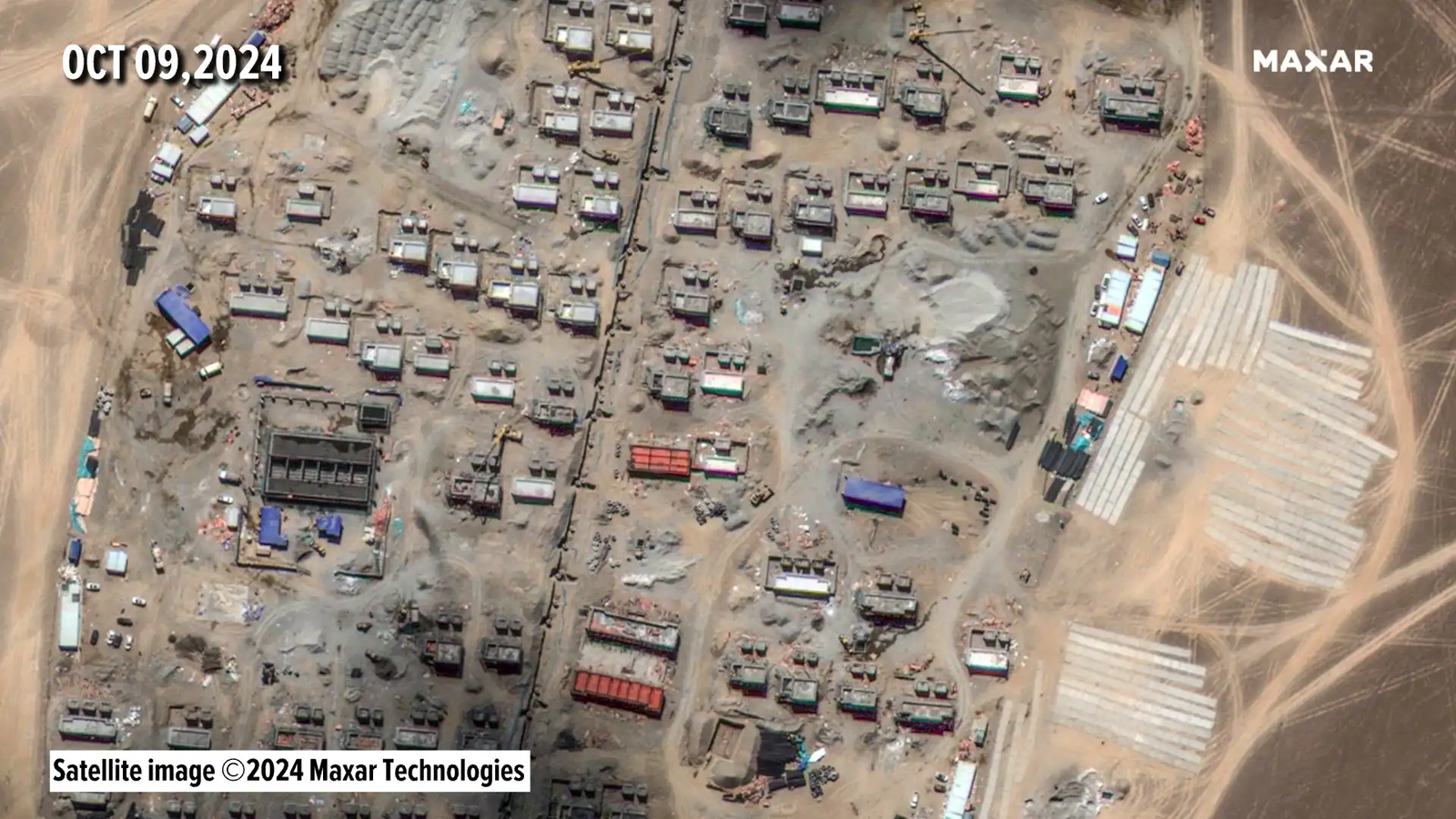
Recent satellite images have revealed the rapid construction of a new China’s new base on the north bank of Pangong Lake, located in the Ladakh region. The new site, which lies approximately 36 kilometers east of the Line of Actual Control (LAC), has sparked concern within Indian military circles, as it represents a significant shift in China’s activities near the disputed border.
This development is unlike any other site built on the Chinese side of the LAC, and it appears to serve both civilian and military purposes. Explore the strategic importance of this new base, the broader geopolitical implications, and how India is responding to this escalating situation.
Strategic Importance of the China’s New Base
The base, situated 15 kilometers east of a recently constructed bridge over Pangong Lake, marks an increase in China’s infrastructure development in the high-altitude region. The Pangong Lake area has been a site of heightened tensions between India and China since their 2020 border standoff, which saw both sides mobilize forces along the LAC.
This new base, which features over 70 permanent structures, appears to be a logistical hub that could serve both as a settlement for civilian workers and as a military outpost.
Military experts suggest that the base’s layout—spread over a wide area—was designed to minimize the risk of missile attacks, hinting at China’s awareness of potential conflicts in the region.
Read : Colleges in Singapore Are New Travel Hotspot for China’s Tiger Moms
Each structure at the base can house 6-8 soldiers or up to 10 tonnes of logistics, including ammunition and other military supplies. This dual-purpose infrastructure allows China to enhance its operational readiness while maintaining the appearance of civilian development.
Read : The List of Top 20 Countries in Debt to China
Damien Symon, a leading geospatial imagery expert, noted the extensive development underway, which includes double-storey buildings, village administrative offices, and town centers. The construction is supported by heavy machinery and supply depots, further suggesting that this is more than just a civilian settlement.
Symon also pointed out that electrification efforts and the construction of a water pumping station signal that this new settlement is being prepared for long-term habitation, regardless of the region’s harsh climate.
Geopolitical Implications of the New Chinese Base
China’s construction of this base near Pangong Lake can be seen as part of a broader strategy to strengthen its territorial claims in the region. The site not only reinforces China’s physical presence but also alters the facts on the ground, shifting the geopolitical landscape in its favor.
This tactic of building civilian-military infrastructure in disputed areas has been employed by China in other parts of the world, particularly in the South China Sea.
Retired Lt. General DS Hooda, a former Northern Army Commander, noted that this base has clear dual-use purposes. While China can claim that the development is for the civilian population, the military implications are undeniable. This kind of infrastructure could be used to support military operations during a conflict, providing a strategic advantage over India.
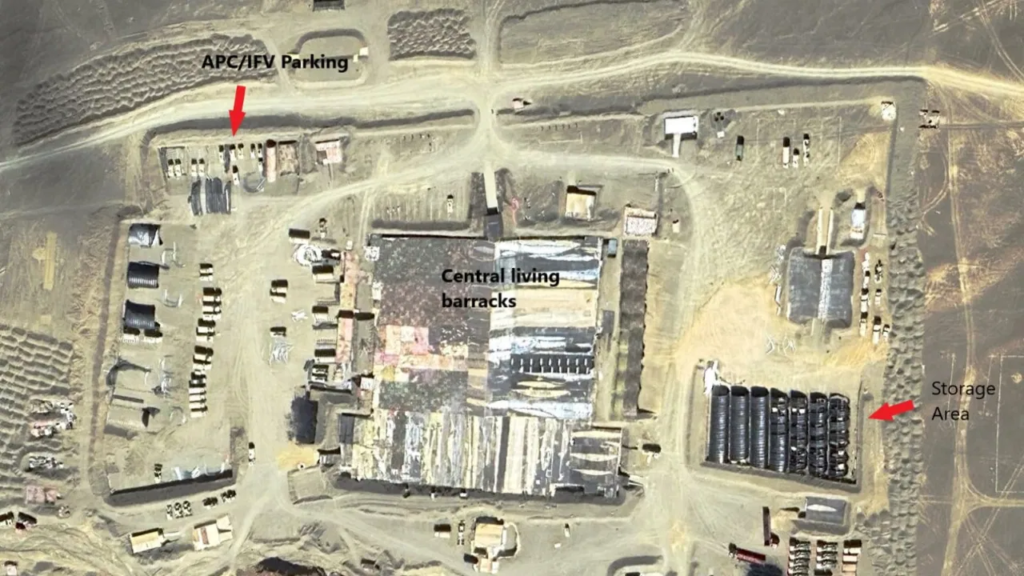
By creating settlements in areas where no population previously existed, China is attempting to strengthen its legal claims to these disputed territories, as outlined by Lt. General Hooda. This strategy complicates any future negotiations, as it weakens India’s bargaining position.
Moreover, this construction violates the spirit of the 2005 agreement between India and China, which called for both sides to respect the interests of the settled populations in border areas.
By establishing villages in uninhabited regions, China is undermining the agreements that were supposed to guide the settlement of the boundary question. This is part of a long-term game, as China consolidates its hold on strategically important areas along the LAC.
Lt. General Satish Dua (retired), a former Chief of the Integrated Defence Staff, expressed concern over the size and scale of the construction. The proximity of the base to the newly constructed bridge across Pangong Lake allows for the rapid movement of troops and supplies between the North and South banks, significantly enhancing China’s operational flexibility.
The fortified sites near the bridge, which are believed to house surface-to-air missile batteries, further underscore the military significance of this new development. These air defense systems could protect the base from aerial attacks, giving China a strategic upper hand in the region.
India’s Response and Strategic Preparations
India has been closely monitoring China’s activities in the Pangong Lake region, and the discovery of this new base has prompted increased vigilance. The Indian government has been ramping up its own infrastructure development along the border to ensure that its forces are well-prepared to respond to any provocations from the Chinese side.
This includes the construction of new roads, tunnels, and military facilities that allow for the rapid deployment of troops to sensitive areas along the LAC.
In addition to military preparations, India is also working on long-term strategies to maintain its presence in border areas. The Vibrant Villages program, launched in 2022, is aimed at developing villages along India’s northern frontier. With a budget of Rs 4,800 crore allocated from 2022 to 2026, this initiative focuses on building infrastructure, creating livelihood opportunities, and promoting cultural heritage in 2,967 villages.
While the primary goal of the program is to improve the quality of life for the local population, it also serves a strategic purpose by ensuring that Indian citizens remain in border areas, thereby deterring territorial encroachments by China.
Despite these efforts, the scale and speed of China’s construction activities near Pangong Lake have caught India’s attention. Military experts have highlighted the importance of staying vigilant and prepared for any escalation.
The dual-use nature of the new Chinese base means that it could be converted into a military outpost at short notice, giving China an operational advantage in the event of a conflict.
Furthermore, the new base is not an isolated development. Similar construction activities have been observed on the southern bank of Pangong Lake and near Spanggur Lake, where another sizeable settlement is being built.
This indicates a broader strategy by China to fortify its presence along the LAC, particularly in areas that saw intense clashes during the 2020 border standoff.

The Indian Ministry of External Affairs has yet to issue an official response to the satellite images showing China’s new base. However, it is clear that India is aware of the potential threats posed by these developments.
The government’s focus on infrastructure development along the border, coupled with the strategic deployment of military assets, suggests that India is preparing for all eventualities.
The discovery of a new Chinese base near Pangong Lake marks a significant escalation in the ongoing border tensions between India and China. The base, which serves both civilian and military purposes, represents a strategic move by China to strengthen its territorial claims and gain an operational advantage in the region.
While India is responding with its own infrastructure development and military preparations, the situation near Pangong Lake remains tense.
As both sides continue to build up their presence along the LAC, the risk of further confrontations cannot be ruled out. The new Chinese base, with its extensive infrastructure and dual-use capabilities, is likely to play a key role in shaping the future of the India-China border dispute. For now, the international community will be watching closely to see how this situation unfolds.