
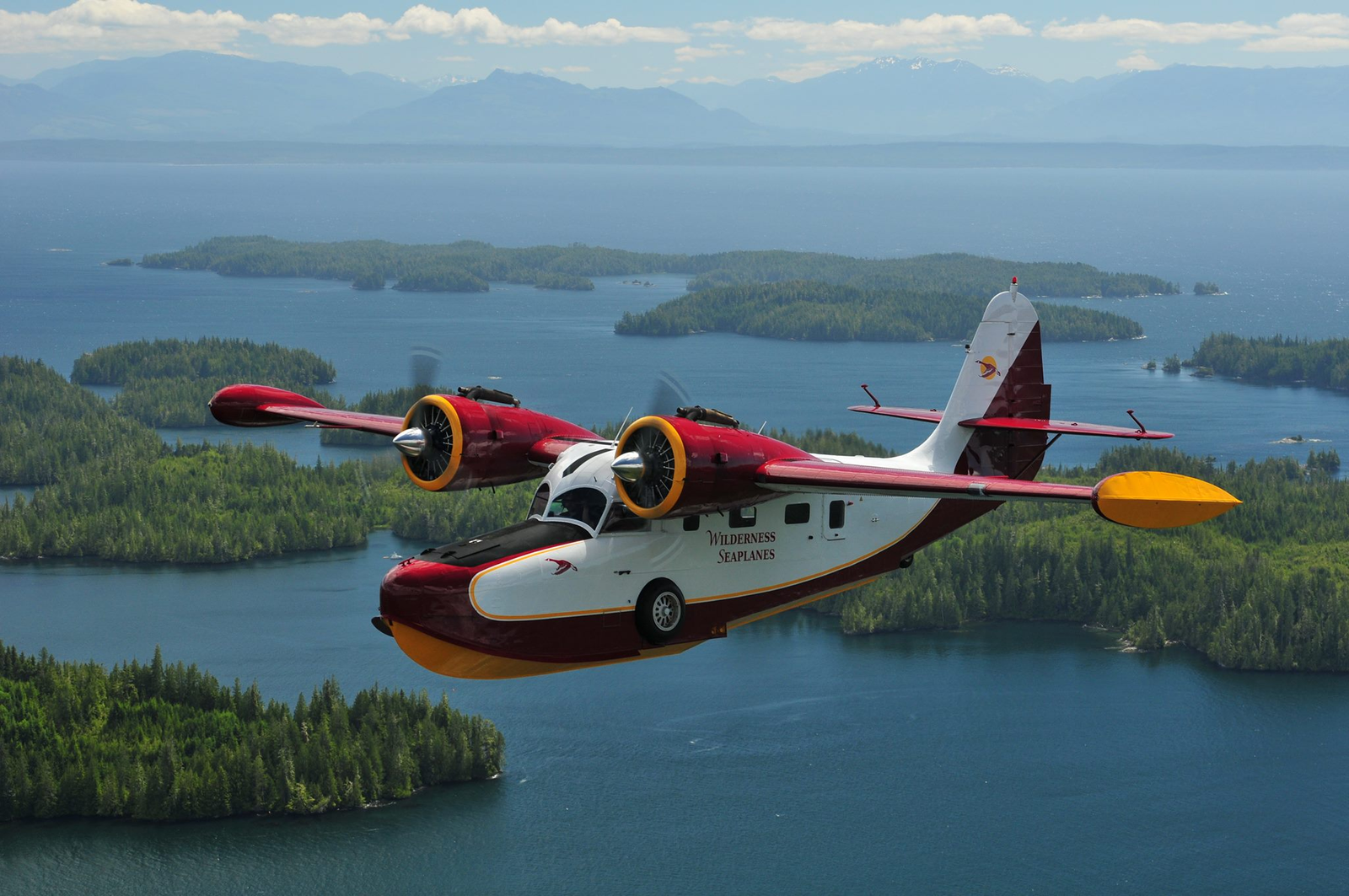
A December 2023 seaplane crash near Bella Bella, British Columbia, has evolved from a serious aviation incident into a complex legal dispute between a Port Hardy–based operator and its former chief pilot. Although all occupants survived the crash, the consequences have been far-reaching, involving regulatory scrutiny, allegations of negligence, business losses, and life-altering injuries.
With a Transportation Safety Board of Canada investigation now complete, two lawsuits filed days apart present sharply conflicting narratives about responsibility for the accident. At the centre of the dispute are questions about fuel safety, operational oversight, pilot decision-making, and the shared obligations of aviation companies and flight crew operating in remote environments.
The Crash and the Transportation Safety Board Findings
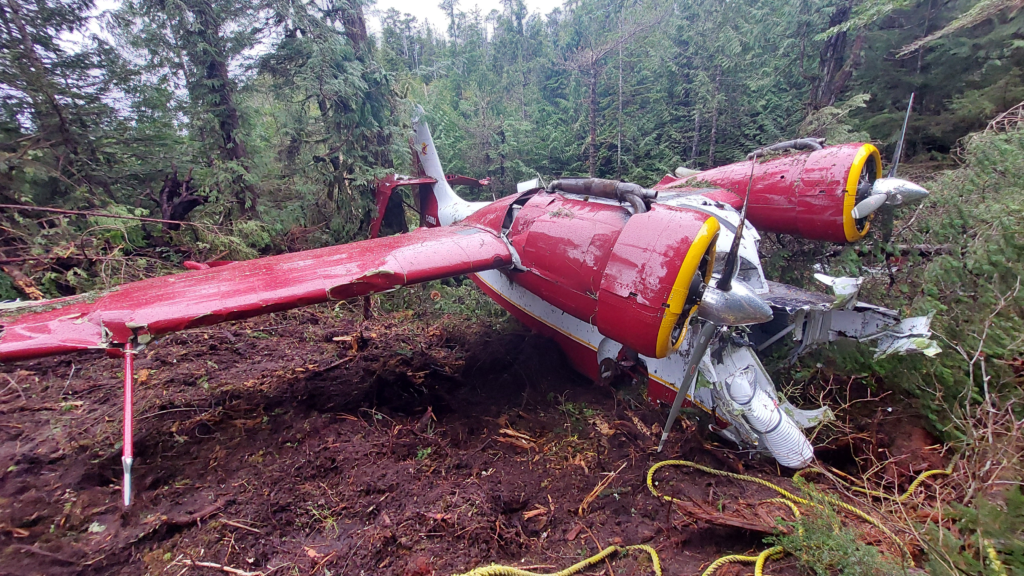
The crash occurred on Dec. 18, 2023, shortly after a twin-engine Grumman Goose amphibious aircraft departed from Bella Bella. Moments after takeoff, the aircraft experienced a sudden loss of power, first in one engine and then in the other, forcing the pilot to attempt an emergency landing. Unable to reach open water, the aircraft struck dense forest terrain. All four passengers and the pilot survived but sustained injuries of varying severity.
The Transportation Safety Board of Canada concluded its investigation in late 2024, determining that water-contaminated fuel was the primary cause of the power loss. According to the board, the fuel used to refuel the aircraft had been drawn from a drum that was improperly stored. Instead of being placed on its side, as recommended by Transport Canada to prevent moisture accumulation, the drum had been stored upright. This positioning likely allowed water to enter through the vent or plug, contaminating the fuel.
The use of fuel drums was a temporary measure. At the time of the crash, the fuel truck normally used at the Campbell Island Airport in Bella Bella was out of service for maintenance. As a result, aircraft were being refuelled manually from drums supplied and handled on site. The safety board noted that this method carried increased risk if not managed with strict procedures, including proper storage, filtration, and testing of fuel prior to use.
Read : Video Shows Tesla Car Flips 7 Times in Crash: Musk Says Safety is Primary as All Survive
The board’s findings focused on systemic and procedural issues rather than assigning legal fault. However, the conclusions provided a technical foundation that now underpins the civil litigation. While the contamination itself was established as the cause of the engine failures, the question of who bore responsibility for preventing contaminated fuel from reaching the aircraft remains central to both lawsuits.
Wilderness Seaplanes’ Allegations Against Its Former Chief Pilot
On Dec. 9, 2024, Wilderness Seaplanes Ltd. filed a lawsuit against Donald Fossum, alleging that his actions earlier on the day of the crash set the stage for the accident. The company claims Fossum failed to report a defect in the aircraft’s landing gear following a prior flight from a fish farm in Kid Bay to Bella Bella. According to the lawsuit, Fossum allegedly told some passengers that the landing gear was not functioning properly but did not notify company management as required by internal policy.
Wilderness Seaplanes argues that had the landing gear issue been formally reported, the Grumman Goose would have been grounded for maintenance, preventing it from being refuelled and flown later that day. The company asserts that its policies required pilots to report any mechanical irregularities immediately and to refrain from carrying passengers in an aircraft that might not be airworthy.
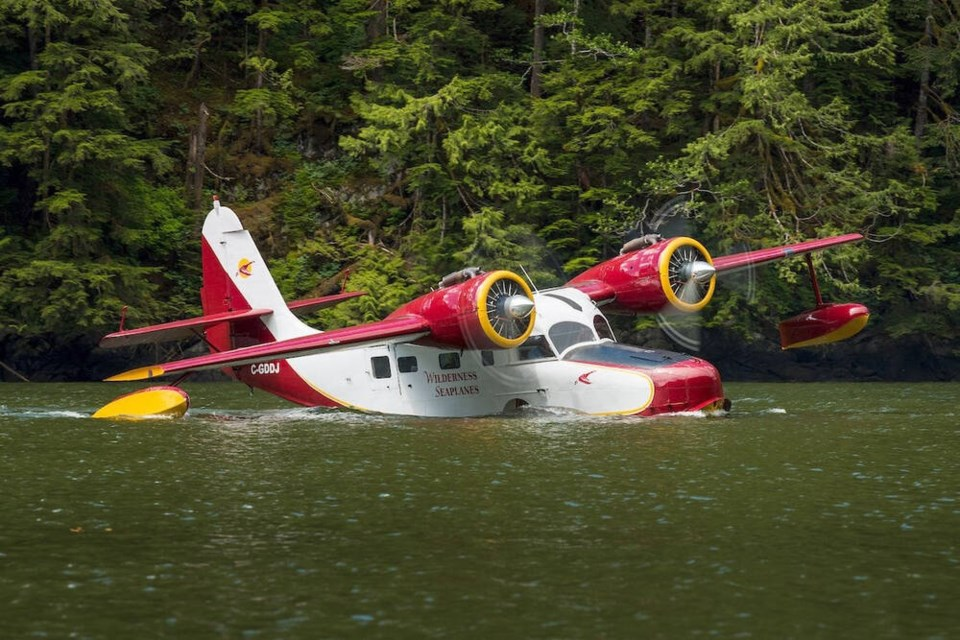
The lawsuit further alleges gross negligence on Fossum’s part, accusing him of failing to ensure the aircraft was safe for flight, failing to adequately test fuel drawn from what it characterizes as a suspect source, and failing to refuse dangerous work if he believed the conditions were unsafe. The company contends that as chief pilot, Fossum had heightened responsibility for operational safety and compliance with procedures.
Wilderness Seaplanes also outlines the financial impact of the crash. It claims to have lost approximately $260,000 in annual revenue after MOWI Canada West, whose employees were among the passengers, ceased doing business with the company. Additionally, the aircraft sustained damage that was not fully covered by insurance. On these grounds, the company is seeking damages for loss of business, breach of contract, and both general and special damages related to the crash and its aftermath.
From the company’s perspective, the lawsuit frames the incident as one that could have been avoided through adherence to internal reporting requirements and more cautious operational decision-making by the pilot in command. The filing positions Fossum not only as a participant in the accident but as a contributing cause whose omissions exposed the company to financial and reputational harm.
Donald Fossum’s Lawsuit and Claims of Systemic Negligence
One week later, on Dec. 16, Fossum filed his own lawsuit against Wilderness Seaplanes and Waglisla Fuel Services, the company responsible for aviation fuel services at the Campbell Island Airport. His claim presents a fundamentally different account, placing responsibility squarely on organizational failures related to fuel storage, handling, and supervision.
Fossum alleges that the procedures for refuelling from drums, including storage, handling, and operational safeguards, were the responsibility of Wilderness Seaplanes and Waglisla. Although Waglisla is a separate corporate entity, Fossum’s lawsuit asserts that its management, control, and staffing were effectively provided by Wilderness Seaplanes, making the seaplane operator responsible for fuel safety practices at the airport.
Read : Rescue Helicopter Crashes on Mount Kilimanjaro Killing All Five On Board
According to Fossum, no written guidance was issued to pilots about the increased risks associated with refuelling from drums, nor were there instructions about marking opened barrels to indicate potential contamination. He also claims the companies failed to provide adequate equipment to filter fuel, test for water contamination, or properly pump fuel from the drums into aircraft.
Fossum’s lawsuit provides a detailed account of the refuelling process on the day of the crash. He states that he and another Wilderness Seaplanes pilot were refuelling simultaneously, with assistance from a Waglisla representative. During the process, a verbal dispute arose between the Waglisla staffer and the other pilot, after which the staffer refused to continue assisting.
The other pilot tested a fuel sample and found no contamination before refuelling a De Havilland Beaver. The Beaver was fuelled first, followed by the Grumman Goose. Fossum says the other pilot managed fuel extraction from the drum while he inserted the nozzle into the aircraft’s tanks. When fuel flow stopped, Fossum stepped away to call a dispatcher, complying with safety rules prohibiting cellphone use near fuel sources. Upon returning, he found fuel flowing again, unaware that the pump pipe had been repositioned deeper into the drum, where contaminated fuel may have been present.
It was later determined that the barrel had been unsealed weeks earlier by another pilot and was not marked to indicate potential contamination. Fossum contends that this omission directly contributed to the accident. After takeoff, Fossum reports that engine performance was normal during taxi and initial climb. At approximately 50 feet above ground, the left engine failed, followed shortly by the right. He attempted to steer toward open water but ultimately guided the aircraft to what he believed would be the least injurious impact area.
While all occupants initially appeared able to walk away, more serious injuries emerged over time. Fossum sustained multiple broken ribs, a head injury requiring stitches, memory loss, and cognitive difficulties. Eight weeks later, he suffered a stroke that left him partially paralyzed on one side of his body. Transport Canada subsequently revoked his airline transport pilot licence, effectively ending his flying career. Fossum alleges that several occupants, including himself, were later diagnosed with post-traumatic stress disorder.
In his lawsuit, Fossum seeks damages for physical injury, pain and suffering, loss of mobility, emotional distress, medical expenses, lost wages, loss of future earning capacity, and the loss of his professional career. He maintains that the crash was the result of systemic negligence rather than individual pilot error. As of this week, neither Fossum nor Wilderness Seaplanes has filed a formal response to the other’s lawsuit, leaving the courts to eventually determine how responsibility is apportioned in a case that underscores the high stakes of aviation safety in remote operations.
Yo, VG70game is the place to be if you’re looking for some fun. I recently started playing there, and it’s got a few games that really pulled me in. You can find more about it here vg70game.
Merely a smiling visitor here to share the love (:, btw great layout. “Everything should be made as simple as possible, but not one bit simpler.” by Albert Einstein.
Hello There. I found your weblog the usage of msn. This is an extremely smartly written article. I will make sure to bookmark it and come back to learn more of your useful info. Thank you for the post. I’ll certainly return.