

The arrest of American playwright and actor Jeremy O. Harris in Japan has drawn international attention, not only because of his prominence in the arts world but also due to the strict drug laws and severe penalties associated with narcotics offenses in Japan. Harris, best known for his provocative and critically acclaimed work Slave Play, was taken into custody at Naha Airport in Okinawa after authorities allegedly discovered a small amount of MDMA in his belongings.
The incident has raised questions about legal ramifications, the circumstances of his travel, and the broader implications for foreign nationals navigating Japan’s stringent customs regulations. As the case progresses through the Japanese legal system, the situation continues to unfold with scrutiny from both the media and the arts community.
Details of the Arrest and Ongoing Investigation
According to officials at the Okinawa Regional Customs office, Harris was arrested on November 16 after arriving at Naha Airport following a trip that began in London and included a transit through Taiwan. Customs authorities say that 0.78 grams of MDMA, commonly known as ecstasy, were found inside a container packed within a tote bag he was carrying. Although the quantity was small and believed to be intended for personal use, Japanese law treats the importation of illegal drugs with exceptional seriousness, regardless of the amount involved.
After the alleged discovery, Harris was handed over to the Tomishiro police, who subsequently filed a criminal complaint with the Naha District Prosecutors’ Office. The filing indicates that authorities are pursuing formal charges as they continue their investigation. Officials have not disclosed whether Harris made any statements regarding the allegations, and police have declined to confirm further details about the case or the interrogation process.
Japanese investigators typically conduct extensive questioning before deciding whether to proceed with an indictment, and suspects can be held for prolonged periods during this phase. The initial discovery occurred during routine customs screening, a process that is known to be highly thorough in Japan. Even small quantities of controlled substances, whether carried intentionally or unknowingly, can trigger immediate detention and criminal proceedings.
Read : Rapper Travis Scott Arrested in Florida for Disorderly Intoxication and Trespassing
Authorities reported that no additional drugs were found in his luggage and that there is no indication of involvement in broader trafficking operations. Nonetheless, the possession and importation of MDMA fall under prohibitions that can result in substantial prison sentences if a conviction is reached. For foreign nationals, such convictions may also lead to deportation following completion of a prison term.
Harris’s Background and His Impact on Modern Theater
Jeremy O. Harris has been one of the most influential playwrights of his generation, with a reputation for bold, boundary-pushing storytelling that examines difficult themes involving race, sexuality, power dynamics, and social structures. His breakout play, Slave Play, first staged off-Broadway in 2018, sparked intense debate and discussion across the American theater community and beyond.
The play challenges audiences with its unflinching exploration of the legacy of slavery in the United States, blending satire, discomfort, and psychological insight in ways that led to both acclaim and controversy. It quickly became one of the most talked-about theatrical works of the decade. After making waves off-Broadway, the production transferred to Broadway in 2019, earning a nomination for the Tony Award for Best Play.
Read : Rapper Daniel Hernandez Arrested for Violating Supervised Release with Assault and Drug Possession
Although it did not win the award, its impact was undeniable. Harris’s voice as a playwright was heralded as urgent and transformative, with critics noting his ability to confront historical and contemporary issues with a mixture of intellectual sharpness and emotional intensity. The play’s reception included not only praise but also opposition, including a petition calling for its closure, reflecting the divisive reactions his work often elicits.
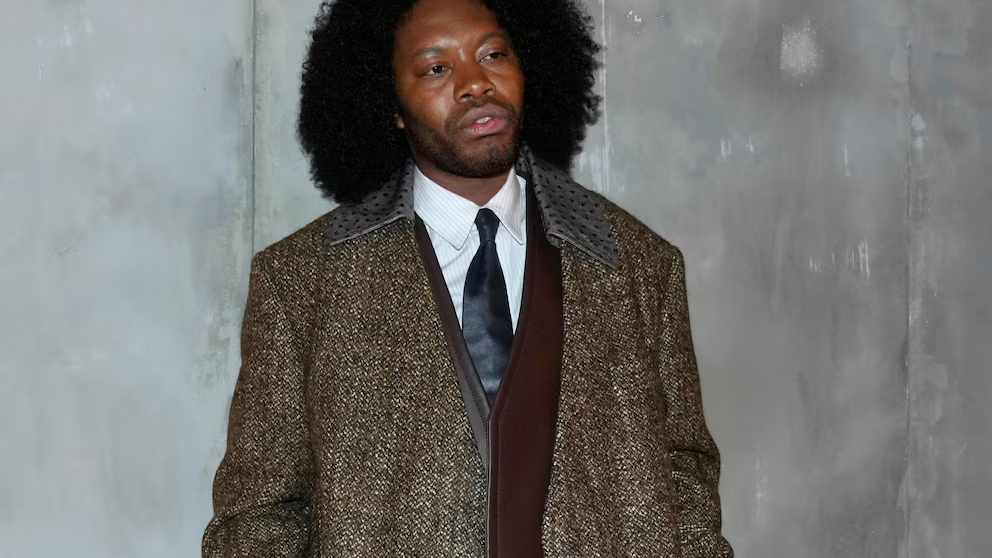
Beyond the stage, Harris has diversified his artistic contributions. He has taken on small acting roles in television and film, and he appeared as himself in the rebooted version of Gossip Girl. His presence in popular culture increased further through his work as a co-producer on several episodes of HBO’s acclaimed drama Euphoria, a series known for its portrayal of youth, trauma, addiction, and identity. In both his theater work and his screen collaborations, Harris has consistently aligned himself with storytelling that challenges norms and invites conversation about societal issues.
His arrest in Japan therefore comes at a moment when his influence in the arts remains substantial. For many observers, the situation is particularly striking due to the contrast between his public intellectual persona and the nature of the allegations. However, it also underscores the risks that artists and travelers face when navigating unfamiliar legal environments abroad, especially in countries where drug enforcement is rigorous and strictly applied.
Legal Ramifications and Broader International Context
Japan maintains some of the toughest drug laws in the world, with little tolerance for narcotics offenses, regardless of whether substances are intended for personal use. Even a small amount, such as the 0.78 grams allegedly found in Harris’s possession, can be enough to support prosecution on smuggling charges. The term “smuggling” in the Japanese context covers a wide range of activity involving the unauthorized importation of controlled substances. Unlike some Western jurisdictions where personal-use quantities may be treated more leniently, Japanese law applies strict penalties to discourage any form of drug-related behavior.
Read : Malaysian Rapper Namewee Arrested Over Alleged Murder of Taiwanese Influencer ‘Nurse Goddess’
If Harris is indicted and eventually convicted, he could face a multiyear prison sentence. Japan’s conviction rate once a suspect is indicted is extremely high, often cited at over 99 percent. This rate is influenced in part by the prosecutorial decision-making process: prosecutors typically bring forward only those cases they believe they can successfully prove. Thus, the decision by the Naha District Prosecutors’ Office to investigate further signals that they are examining the evidence closely before determining whether to proceed with formal charges.

Foreign nationals arrested in Japan often face unique challenges, including language barriers, unfamiliar legal procedures, and limited access to information during early stages of detention. Japan’s pre-indictment detention procedures allow authorities to hold suspects for extended periods while questioning them, which can surprise travelers who are used to different legal systems. Consular officials from the United States may become involved to ensure that Harris’s rights, as recognized under international agreements, are upheld, but they cannot intervene in the judicial process.
Cases involving public figures frequently draw additional media scrutiny, but Japanese authorities generally maintain strict confidentiality during investigations. Statements released thus far have been measured, with officials confirming only the arrest, the alleged discovery of MDMA, and the ongoing investigative process. The emphasis on privacy is reflective of standard Japanese protocol, which avoids public disclosures that could be seen as prejudicial during the investigative phase.
The incident may also spark renewed international discussion about travel awareness and compliance with customs regulations, particularly in nations with stringent drug enforcement practices. For travelers passing through multiple countries, unintentional carriage of prohibited items can occur, though such explanations may offer limited protection under strict legal frameworks. In Harris’s case, officials have stated that they believe the drug was intended for personal use, but that distinction has little impact on the severity of charges in Japan’s legal system.
For the global arts community, the arrest introduces a moment of uncertainty regarding Harris’s upcoming projects and professional engagements. His work spans theater, television, and academic involvement, including affiliations with institutions such as the Yale School of Drama. Any legal proceedings in Japan could potentially lead to delays or cancellations of planned creative endeavors, depending on the length and outcome of the legal process.
While the case continues to unfold, observers are watching closely to see how Japanese authorities proceed and whether Harris will face indictment. If prosecutors decide to move forward with charges, the case could extend for months, given the procedural stages of Japan’s judicial system. Conversely, prosecutors may decline to indict if they determine that evidence or circumstances do not warrant trial. Until such a decision is made, details are likely to remain limited, as Japan’s investigative processes are traditionally closed and confidential.
The arrest of Jeremy O. Harris highlights the complexities that arise when international travel intersects with strict national laws, particularly in countries where narcotics offenses are treated with zero tolerance. As one of the most influential voices in contemporary theater, Harris’s situation has captured the attention of audiences far beyond Japan. His case underscores the importance of understanding legal environments abroad and serves as a reminder of the serious consequences that can accompany even small violations of customs regulations in jurisdictions with rigid enforcement policies.
I’ve had some lucky streaks on 13winnner! The site is easy to use and it is easy to deposit. What more could you want!