

In a shocking development that has cast a shadow over one of the UK’s most scrutinized police investigations, staff members from the Independent Office for Police Conduct (IOPC) are now facing an internal probe. The allegations center on inappropriate comments made during interviews with officers linked to the tragic 2023 Nottingham stabbings carried out by Valdo Calocane.
These remarks, described as suggesting the ongoing inquiry into police failures was “politically motivated” and driven by the victims’ families, have ignited fresh outrage among bereaved relatives and raised serious questions about the impartiality of the watchdog body tasked with holding law enforcement accountable. As the nation prepares for a full public inquiry set to begin in February 2026, this scandal threatens to undermine public trust in the systems designed to prevent such preventable tragedies from recurring.
The Nottingham Stabbings: A Timeline of Tragedy and Missed Opportunities
The nightmare began in the early hours of June 13, 2023, when Valdo Calocane, a 32-year-old former biomedical science student plagued by severe schizophrenia, unleashed a brutal wave of violence on the streets of Nottingham. In a senseless rampage, he first fatally stabbed Barnaby Webber, a 19-year-old University of Nottingham student, as the young man walked home from a night out celebrating the end of his exams.
Mere minutes later, Valdo Calocane attacked Grace O’Malley-Kumar, also 19 and a fellow medical student at the same university, who heroically fought back in a desperate bid to protect a pedestrian before succumbing to her injuries. The attacks did not end there; Calocane then targeted Ian Coates, a 65-year-old school caretaker and devoted father, stealing his van and using it to mow down three others in a bid to continue his assault. The three bystanders—a 20-year-old man, a 40-year-old woman, and a 77-year-old man—survived but were left with life-altering injuries.
Valdo Calocane, originally from Chelsea and of Portuguese-Greek heritage, had a documented history of mental health issues dating back to 2019, including violent episodes that led to referrals to mental health services. Despite multiple encounters with authorities, he evaded proper intervention. Just a month prior to the stabbings, in May 2023, Calocane had assaulted two warehouse workers in Leicester, pinning one to the ground and attempting to strangle him in a frenzied attack.
An arrest warrant was issued, but Leicestershire Police officers failed to apprehend him, closing the case prematurely without a thorough review of his prior records or the warrant. This critical oversight allowed Calocane to slip through the cracks and travel to Nottingham, where he carried out the killings. Following his arrest later that morning, Valdo Calocane was charged with three counts of murder and three counts of attempted murder.
However, in a controversial courtroom decision at Nottingham Crown Court in November 2023, he pleaded guilty to manslaughter on the grounds of diminished responsibility due to his untreated psychosis. The judge imposed an indefinite hospital order, detaining him at Ashworth High Security Hospital, but the pleas were met with fury from the victims’ families, who argued that the charges did not reflect the premeditated horror of the acts. The case quickly ballooned into a national scandal, highlighting systemic failures in sharing information between police, NHS mental health trusts, and probation services.
A public inquiry has been announced into the Nottingham knife attack, when Barnaby Webber, Grace O'Malley-Kumar and Ian Coates were stabbed to death by Valdo Calocane in June 2023.
— Channel 5 News (@5_News) February 12, 2025
Grace and Barnaby's brothers, James O'Malley-Kumar and Charlie Webber, tell 5 News "it's been an… pic.twitter.com/eWDvwRJFdK
Public outcry led to the announcement of a judge-led statutory inquiry in February 2025, chaired by Dame Linda Dobbs, to examine the chronology of events leading up to the attacks and recommend safeguards against future lapses. As preparations intensify, with hearings slated to commence in just five months, the inquiry’s scope has expanded to scrutinize not only Valdo Calocane’s care pathway but also the broader interplay between criminal justice and mental health support in the UK.
Allegations of Bias: IOPC Staff’s Controversial Remarks
At the heart of the current uproar is a complaint lodged by the very Leicestershire Police officers under investigation for their handling of the May 2023 assault. According to reports, during initial interviews conducted by IOPC investigators, the officers were allegedly told that the disciplinary probe into their actions was “politically motivated” and primarily “being driven by the families of the victims.” These comments, purportedly made by IOPC staff, have been characterized as unprofessional and biased, prompting the officers to formally challenge the investigators’ conduct.
Read : Indian Techie Mohammed Nizamuddin Shot Dead by US Police After Allegedly Stabbing Roommate
The IOPC, established to ensure independent oversight of police complaints and serious incidents, now finds itself under scrutiny for potentially compromising its own standards of neutrality. The watchdog’s prior involvement in the case dates back to an early 2024 report, which unequivocally concluded that the officers had failed to properly investigate Calocane’s assault on the warehouse workers. The document detailed how vital leads were overlooked, including the opportunity to execute the arrest warrant, and posited that a more diligent response could have prevented the subsequent murders.
This finding fueled the push for deeper accountability, leading to gross misconduct referrals against at least five officers. In response to the complaint, the IOPC has launched an internal investigation into its own personnel, vowing to address any breaches of protocol. A spokesperson emphasized the organization’s commitment to transparency, stating that while specifics remain confidential to protect the process, the review will be thorough and independent. The timing of these allegations could not be more damaging. With the public inquiry looming, any perception of favoritism toward the accused officers risks eroding confidence in the IOPC’s role.
Critics argue that such remarks not only demean the victims’ pursuit of answers but also echo a troubling pattern of defensiveness within institutions when confronted with their shortcomings. The officers, meanwhile, maintain that their actions were in line with standard procedures at the time, hampered by incomplete information from mental health partners. As the internal probe unfolds, it serves as a stark reminder that accountability must extend to watchdogs themselves, lest the cycle of distrust perpetuate.
Victim Families’ Fury and the Road to the Public Inquiry
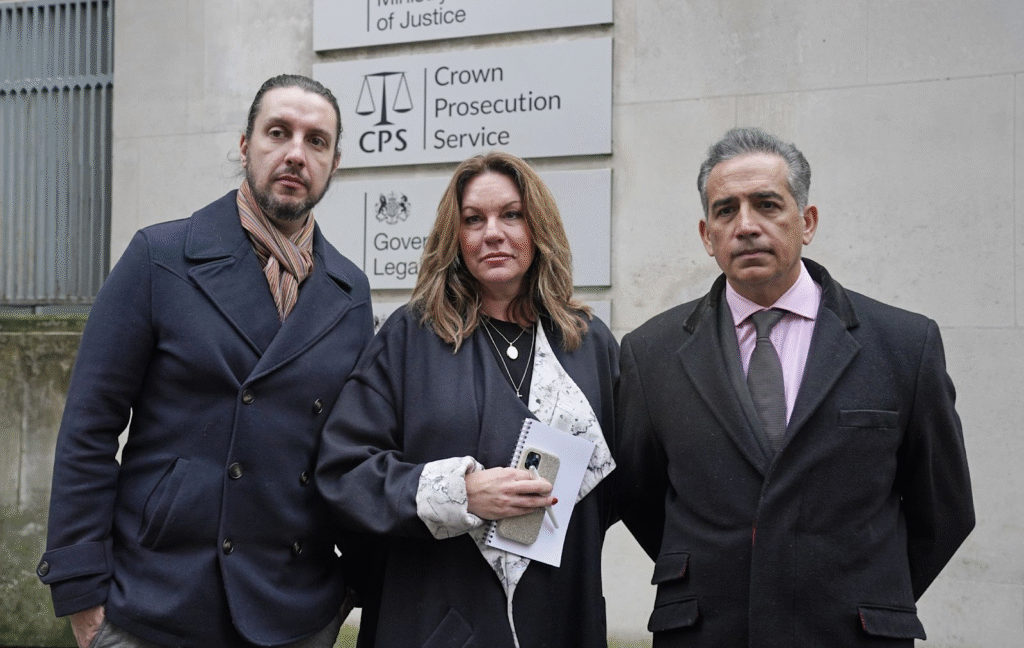
No one feels the sting of these developments more acutely than the families left shattered by Calocane’s actions. Dr. Sanjoy Kumar and Dr. Sinead O’Malley, parents of Grace O’Malley-Kumar, have been at the forefront of the fight for justice, channeling their unimaginable loss into advocacy for systemic change. In a recent press conference alongside James Coates, son of Ian Coates, and Emma Webber, mother of Barnaby Webber, Dr. Kumar described a meeting with IOPC representatives as “offensive,” accusing them of minimizing the gravity of police errors by attributing scrutiny to familial pressure rather than factual failings.
“Our pursuit of truth is not politics; it is the bare minimum owed to our children,” Dr. Kumar stated, his voice heavy with the weight of two years’ grief. Emma Webber echoed this sentiment, warning that dismissive attitudes from oversight bodies could sabotage the upcoming inquiry’s effectiveness. The families’ coalition, known as Notts Families Together, has been instrumental in securing the public inquiry’s mandate. Their relentless campaigning exposed how Calocane’s deteriorating mental state—marked by paranoia and auditory hallucinations—was repeatedly flagged but inadequately addressed.

Referrals to community mental health teams in Nottinghamshire and Lincolnshire went unheeded, and despite a section 136 detention under the Mental Health Act in 2021, follow-up care faltered. The inquiry, announced by Home Secretary Yvette Cooper in February 2025, aims to dissect these breakdowns, interviewing over 200 witnesses and reviewing thousands of documents. Dame Dobbs has promised a “no stone unturned” approach, focusing on information-sharing protocols and resource allocation in mental health crises.
Yet, as this latest scandal emerges, the families fear it could dilute the inquiry’s momentum. James Coates, speaking on behalf of his late father Ian—a man whose quiet dedication to his community was cut short—urged swift action against the IOPC staff involved. “My dad was stolen from us because systems failed. Now, the people meant to fix those systems are failing too,” he said. Support from across the political spectrum has poured in, with MPs from both Labour and Conservative benches calling for an expedited resolution to the internal probe.
Advocacy groups like the Mental Health Foundation and the Police Federation have weighed in, the former decrying any politicization of victim-led efforts, the latter defending officers while acknowledging the need for robust oversight. Looking ahead, this episode underscores the fragility of institutional trust in the wake of public tragedies. The Nottingham stabbings, much like the Sarah Everard case or the Grenfell inquiry, have become a litmus test for reform.
As the IOPC navigates its self-inflicted wound, the real imperative remains delivering justice for Barnaby, Grace, and Ian—not through excuses or deflections, but through concrete changes that honor their memories. With the inquiry’s February start date approaching, all eyes will be on whether this scandal galvanizes greater accountability or further entrenches division. For the families, the fight is far from over; it is a marathon born of profound loss, demanding nothing less than a transformed landscape for prevention and protection.