
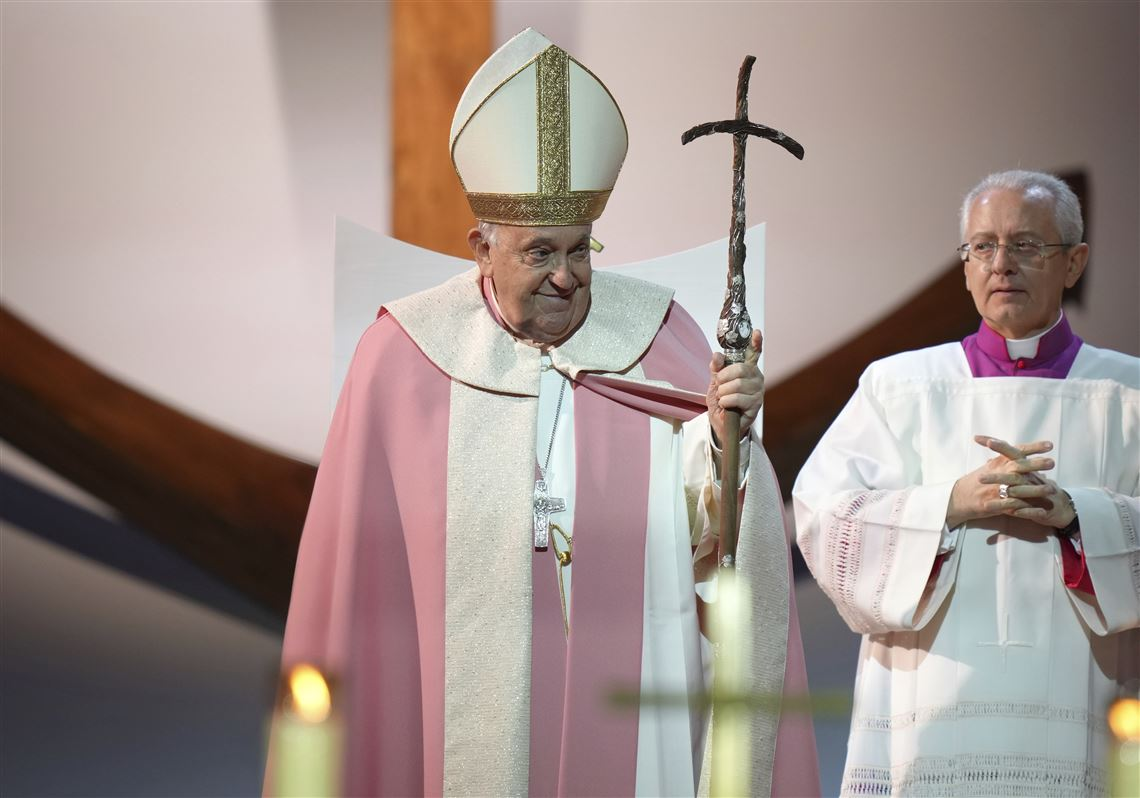
Pope Francis made history by becoming the first pontiff to visit the French Mediterranean island of Corsica on December 15, 2024. The visit, though brief, carried profound significance, blending the island’s rich traditions of popular piety with the Pope’s vision of a dynamic form of laicism.
This landmark event highlighted Corsica’s unique spiritual heritage, its blend of civic and ecclesiastical collaboration, and Pope Francis’s enduring focus on the “church of the peripheries.”
A Celebration of Popular Piety and Dynamic Laicism
Corsica, a French island with deep-rooted religious traditions, stands apart from the predominantly secularized culture of mainland France. During his visit, Pope Francis emphasized a dynamic and evolving concept of laicism, one that bridges civil and religious life.
Speaking at the close of a Mediterranean conference on popular piety in Ajaccio, the Pope championed expressions of faith such as processions and communal prayers, which nurture constructive citizenship while fostering spiritual growth.
Pope Francis cautioned against reducing these practices to mere folklore or superstition, stressing their potential to build a collaborative society.
His message resonated deeply with Corsicans, whose traditions include a strong devotion to the Virgin Mary, locally known as the “Madunnuccia.” This devotion dates back to 1656 when the islanders credited her with saving Corsica from a plague.
Read : Pope Francis Gets Electric ‘Popemobile’ from Mercedes
The island boasts 92 confraternities—lay associations engaged in charitable and spiritual activities—representing over 4,000 members.
📹HIGHLIGHTS | Pope Francis in Corsica celebrated Holy Mass with an estimated 7,000 faithful at Place d’Austerlitz. Before this, he spoke at a conference on popular piety and met with the clergy and religious of Corsica. pic.twitter.com/6ExdUXk6v6
— EWTN Vatican (@EWTNVatican) December 15, 2024
These confraternities embody the harmonious cooperation between civic authorities and the Church. This cooperation, often elusive in secular settings, was praised by the Pope as a model for fostering a more integrated society.
Corsica’s Unique Spiritual and Cultural Identity
Corsica’s spiritual vibrancy was on full display throughout Pope Francis’s visit. From his arrival at the Ajaccio airport, he was greeted by children in traditional attire, bands, and choirs singing Corsican hymns. Thousands of locals lined the streets, waving from windows and balconies, reflecting the deep connection between the islanders and their faith.
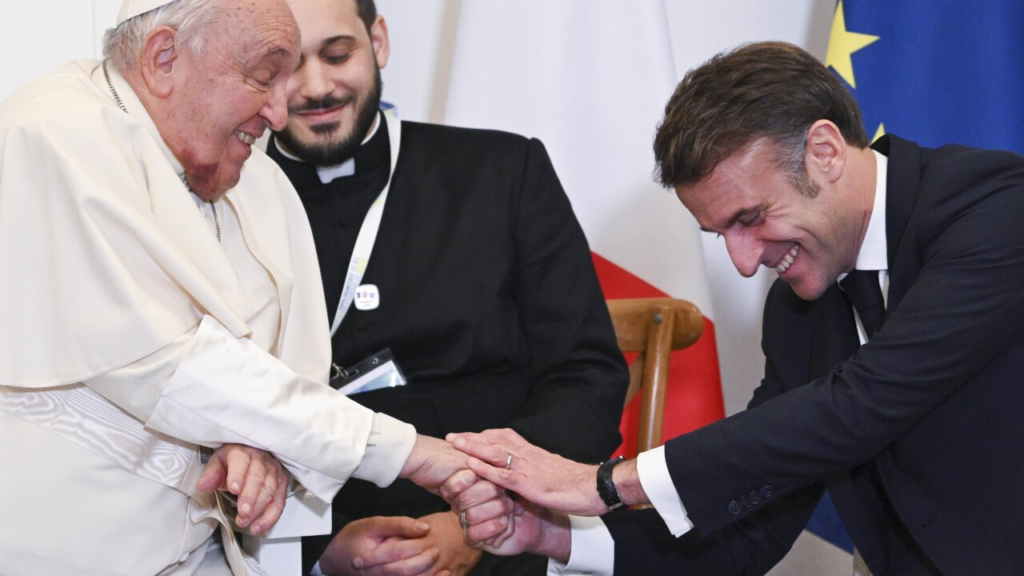
At the outdoor Mass held at La Place d’Austerlitz, beneath the towering statue of Napoleon Bonaparte, Pope Francis highlighted the vitality of Corsica’s youth.
Commenting on the large number of children present, he playfully compared it to East Timor, which he had recently visited. Encouraging families to embrace the joy of parenthood, he remarked, “Make children. They will be your joy and your consolation in the future.”
The Pope’s visit also included a stop at the statue of the Madunnuccia, where he lit a devotional candle before proceeding to the 17th-century Cathedral of Santa Maria Assunta to meet clergy. These moments underscored Corsica’s unique blend of faith and heritage, which remains distinct from mainland France’s secular culture.
A Strategic and Symbolic Visit
Pope Francis’s visit to Corsica was not just a spiritual gesture but also a strategic and symbolic act. Corsica, which has been part of France since 1768, is closer geographically to Italy than to France and has a history of nationalist movements. Despite its tumultuous past, including pro-independence violence, the island has maintained a strong Catholic identity.
During his visit, Pope Francis avoided Paris and its state protocols, as he has in previous trips to France. Instead, his itinerary reflected his commitment to marginalized and peripheral regions. The choice to visit Corsica aligned with his broader mission of emphasizing the role of local communities and fostering solidarity among Mediterranean nations.
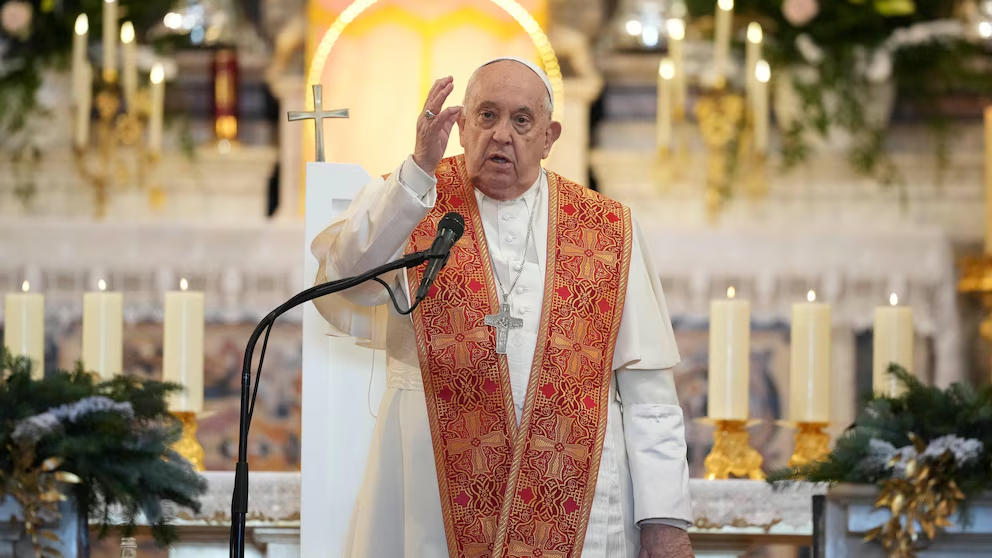
The pontiff’s brief meeting with French President Emmanuel Macron at the Ajaccio airport further highlighted the geopolitical and environmental crises facing the world, including conflicts in the Middle East and Ukraine.
The Pope’s focus on Corsica’s grassroots spirituality contrasted sharply with the grandeur of events like the reopening of Notre Dame Cathedral in Paris, which he notably did not attend earlier this month.
As he departed Corsica after nine impactful hours, Pope Francis left behind a legacy of hope, unity, and a call for collaboration between civic and religious institutions. His visit reaffirmed the island’s spiritual significance while underscoring the universal message of dynamic faith and constructive citizenship.