
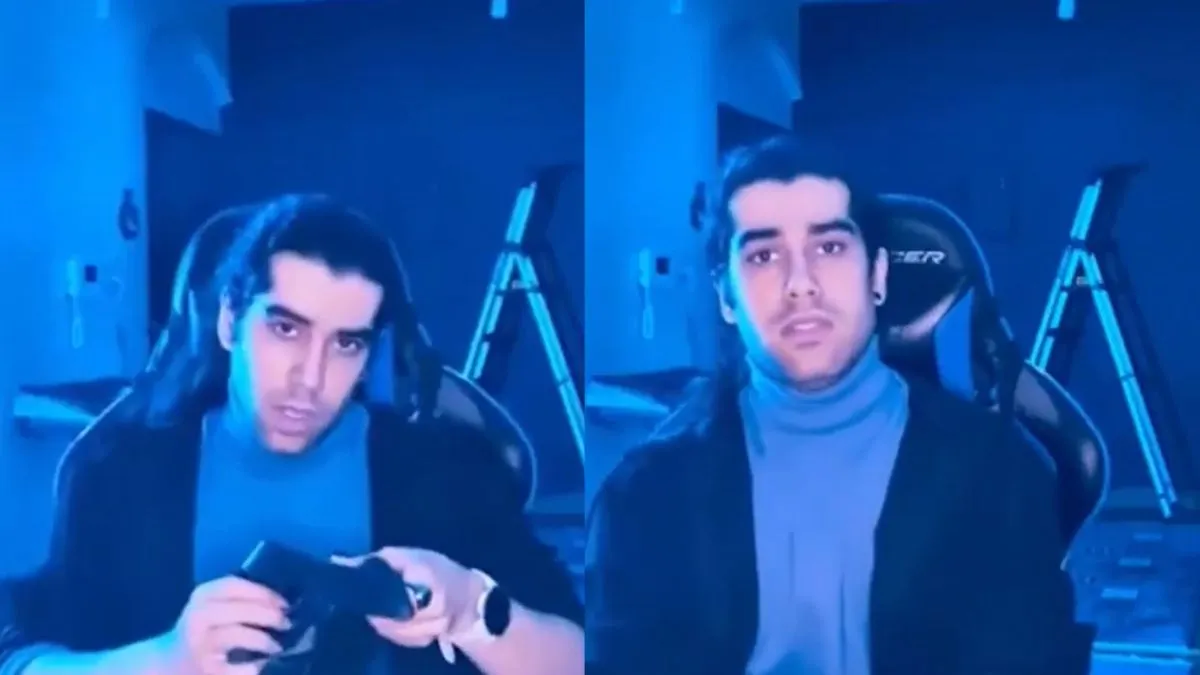
Pouria Hamidi, an Iranian national from the southern port city of Bushehr, emerged briefly into global attention after posting a lengthy and emotionally charged video message addressed to U.S. President Donald Trump and the American political leadership. Recorded in English and later shared widely on social media, the video was presented by Hamidi as a final appeal and a personal sacrifice aimed at drawing international attention to Iran’s political repression and the human cost of recent protests.
Shortly after the video circulated online, Iranian media reported that Hamidi had died by suicide, intensifying scrutiny of both his message and the broader political environment in Iran at the time. Hamidi’s death occurred amid heightened tensions inside Iran, following waves of protests that authorities moved quickly to suppress through mass arrests and prison sentences. At the same time, Tehran was signaling openness to renewed diplomatic engagement with Washington over its nuclear program, creating a sharp contrast between internal repression and external negotiation.
Pouria Hamidi’s video, framed as a plea against any deal with Iran’s current leadership, placed his personal despair within this wider geopolitical moment, linking domestic suffering to international policy decisions. His message, language, and ultimate fate have since been cited by activists and commentators as emblematic of the depth of frustration felt by some Iranians living under the Islamic Republic.
Background and Identity of Pouria Hamidi
Publicly available information about Pouria Hamidi remains limited, but Iranian media identified him as a resident of Bushehr, a strategically significant coastal city that hosts key infrastructure, including Iran’s only nuclear power plant. Hamidi appeared to have no formal political role or public profile prior to the release of his video. Instead, he presented himself as an ordinary Iranian citizen driven to extraordinary action by what he described as unbearable personal and national circumstances.
In the video, which ran for 10 minutes and 44 seconds, Hamidi spoke calmly but with visible strain, framing his message as a deliberate attempt to give meaning to his life. He stated early on, “If you’re watching this, then I’m not around anymore,” indicating that he expected the video to be viewed after his death. He claimed that his intent was not self-promotion, but rather to amplify what he characterized as a deadly and underreported crackdown on protesters across Iran.
Hamidi alleged that more than 40,000 people had been killed during recent unrest, a figure far exceeding publicly verified casualty counts and one that reflected the intensity of his perception rather than confirmed data. He compared the scale of the violence to major international conflicts, including the Russia-Ukraine war and the Israel-Palestine conflict, underscoring his belief that Iran’s internal situation constituted a humanitarian catastrophe deserving of urgent global attention.
“If you’re watching this, it means I’m not around anymore.”
— Open Source Intel (@Osint613) February 8, 2026
Pouria Hamidi, a young Iranian, died by suicide on Friday after learning that President Trump would pursue negotiations with the Iranian regime.
Before taking his own life, Hamidi recorded a final message:
“Making a… pic.twitter.com/ilDnbMCMe1
He also spoke openly about his personal suffering, describing an inability to eat or sleep and a pervasive sense of hopelessness. These remarks suggested that his political appeal was intertwined with profound psychological distress, shaped by both individual hardship and collective despair. By recording the video in English, Hamidi made clear that his intended audience was not domestic but international, particularly policymakers in the United States whom he believed held decisive influence over Iran’s future.
The Video Appeal to Trump and Call for Foreign Intervention
The core of Hamidi’s message was a direct appeal to U.S. President Donald Trump, urging him not to pursue any diplomatic agreement with Iran’s current leadership. Hamidi argued that negotiating with Supreme Leader Ayatollah Ali Khamenei’s regime would amount to a betrayal of those who, in his words, had been killed during protests. He framed diplomacy not as a path to reform or de-escalation, but as an act that would legitimize repression and entrench the ruling system.
Hamidi referenced earlier statements attributed to Trump encouraging Iranians to continue protesting, saying that many had trusted those words and taken personal risks as a result. He contended that unarmed civilians could not prevail against a heavily armed state without external assistance, concluding that foreign intervention was the only remaining option. In one of the video’s most striking statements, he said, “America attacking Iran is the only hope we have right now,” explicitly calling for military action as a means of ending clerical rule.
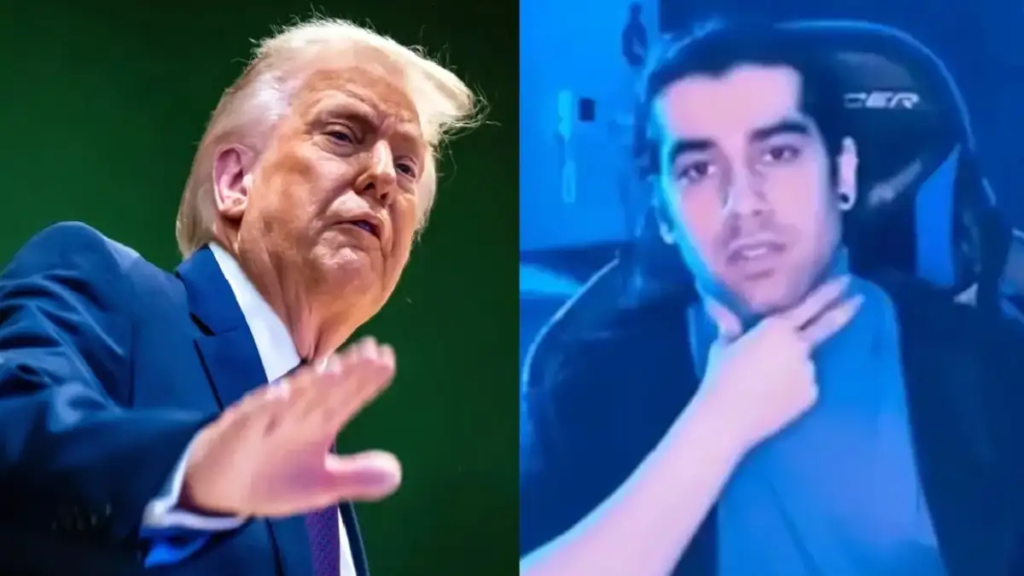
Alongside his call for intervention, Hamidi expressed support for Reza Pahlavi, the exiled son of Iran’s last monarch, describing him as the best option to lead a transitional government. He urged opposition groups abroad to set aside internal divisions and coordinate their efforts, arguing that fragmentation among exiles and activists only strengthened the current regime. This alignment placed Hamidi within a particular strand of Iranian opposition politics that favors regime change supported by external pressure rather than internal reform.
As the video concluded, Hamidi switched from English to Persian, addressing his fellow Iranians directly. He described Iranians as a lonely people with no one to rely on, and he appealed for mutual support and solidarity. His final words, “Long live Iran,” framed his actions as an expression of patriotism rather than despair alone. The video was captioned on his YouTube channel, “This Is My Sacrifice – Please, Free My Country,” reinforcing the notion that he viewed his death as a political act intended to provoke international response.
Political Context in Iran and Aftermath of His Death
Hamidi’s reported suicide came at a moment when Iran was pursuing what observers described as a two-track strategy. Domestically, authorities were intensifying their crackdown on dissent following recent protests that represented one of the most serious challenges to the Islamic Republic since its establishment in 1979. Internationally, Tehran was signaling openness to dialogue with Washington, particularly over its nuclear program, with talks held in Oman that both Iranian and U.S. officials characterized as constructive.
Read : Canadian Citizen Killed by Iranian Authorities Amid Brutal Crackdown on Anti-Regime Protests
In the days surrounding Hamidi’s death, Iranian authorities arrested several high-profile figures, including Javad Emam, a spokesperson for the country’s main reformist coalition. Nobel Peace Prize laureate Narges Mohammadi received additional prison sentences, and Hossein Karoubi, the son of prominent opposition leader Mehdi Karoubi, was also detained. These actions reinforced perceptions among critics that the government was tightening internal controls even as it sought diplomatic engagement abroad.
Hamidi’s video and death were widely circulated by opposition media and activists, who portrayed him as a symbol of desperation under authoritarian rule. Iranian state media coverage, by contrast, remained limited and cautious, focusing more on the broader security situation than on the substance of his claims. The incident did not prompt any official change in policy, but it contributed to ongoing debates within the Iranian diaspora and international policy circles about the ethics and effectiveness of negotiating with Tehran amid ongoing human rights concerns.
The episode also highlighted the risks of framing international intervention as a solution to domestic repression, a position that remains deeply contested both inside and outside Iran. While some opposition figures echoed Hamidi’s calls, others warned that external military action could exacerbate suffering rather than alleviate it. In this sense, Hamidi’s final message underscored not only the depth of his own despair, but also the profound divisions and unresolved questions surrounding Iran’s political future.
Woah! I’m really enjoying the template/theme of this blog. It’s simple,
yet effective. A lot of times it’s hard to get that “perfect balance” between user friendliness and appearance.
I must say that you’ve done a excellent job with this. In addition, the blog loads very fast for me on Opera.
Excellent Blog!
Look at my site; уроки хрумер и гса
Pretty nice post. I just stumbled upon your blog and wished to say that I have
truly enjoyed browsing your blog posts. In any case I will be subscribing to your rss feed and I hope you write again very soon!
Also visit my web-site – обучение хрумер и гса
I really like what you guys tend to be up too. This type of clever work and reporting!
Keep up the excellent works guys I’ve added you guys to my
blogroll.
Feel free to surf to my webpage купон винлаб
My brother suggested I may like this website.
He used to be entirely right. This post actually made my day.
You can not believe simply how a lot time I had spent for this info!
Thank you!
My web-site … винлаб первый заказ промокод
Great information. Lucky me I recently found your blog by chance (stumbleupon).
I have bookmarked it for later!
Also visit my website – уроки XRumer