
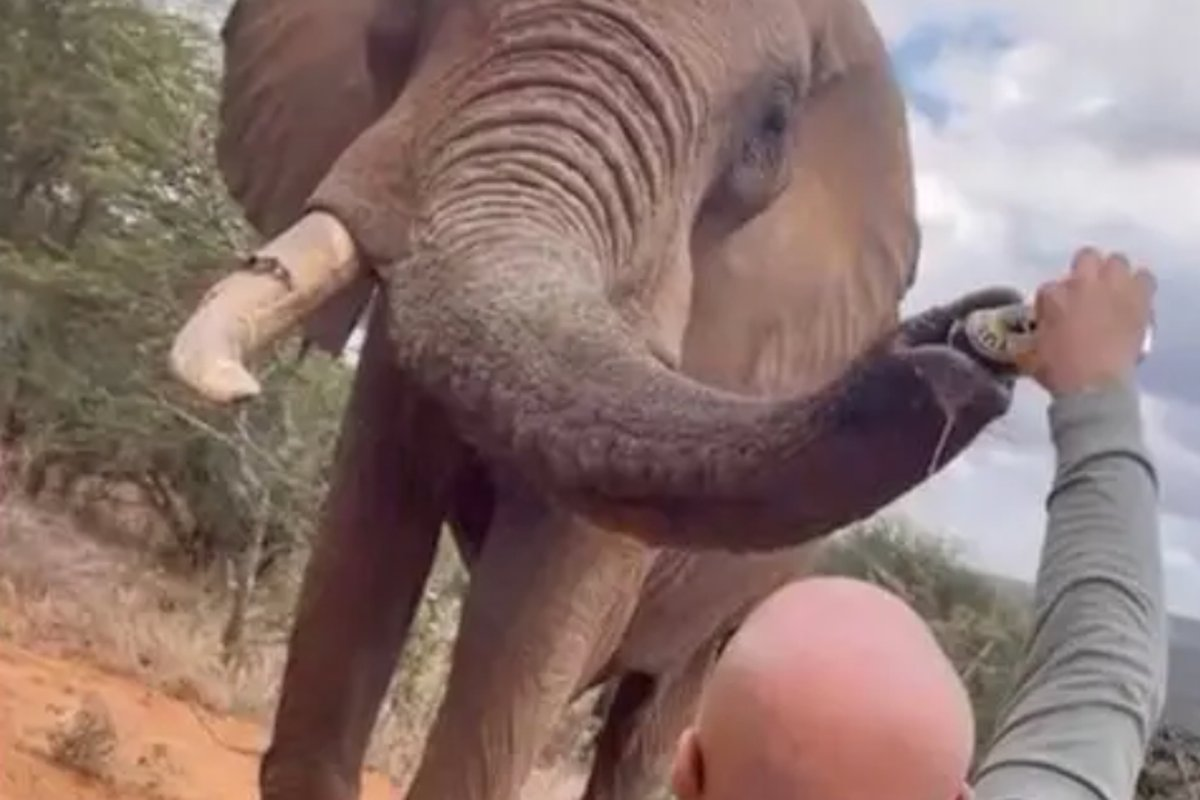
In a shocking display of reckless behavior, a Spanish tourist has sparked widespread outrage after a video surfaced showing him pouring beer down an elephant’s trunk at the Ol Jogi Conservancy in Laikipia County, Kenya. The incident, which occurred last year but recently gained attention after being posted on social media, has ignited a firestorm of criticism from conservationists, locals, and global audiences alike.
The tourist, whose identity remains undisclosed but is associated with the Instagram handle “Skydive_Kenya,” captioned the now-deleted video, “Just a tusker with a tusked friend,” referring to the popular Kenyan beer brand Tusker.
This act, described as “unacceptable, dangerous, and completely against our values” by Ol Jogi Conservancy staff, has prompted multiple investigations by Kenyan authorities and raised broader concerns about tourist conduct in wildlife sanctuaries. The elephant involved, a well-known male named Bupa, is a cherished resident of the conservancy, making the incident particularly distressing for those dedicated to its care and conservation.
The Incident: A Reckless Act at Ol Jogi Conservancy
The video that sparked global outrage showed the Spanish tourist drinking from a can of Tusker beer before pouring the remaining contents down the trunk of an elephant named Bupa at the Ol Jogi Conservancy. Bupa, a large bull elephant with distinctive long tusks—one of which is damaged—was rescued from a mass cull in Zimbabwe in 1989 and brought to the conservancy at the age of eight.
Known for his gentle demeanor, Bupa has become a beloved ambassador for conservation, often photographed by visitors. The tourist’s actions, however, violated the conservancy’s strict rules, which prohibit visitors from approaching elephants due to safety concerns for both humans and animals. In the now-deleted Instagram post, the tourist was seen casually drinking before offering the beer to Bupa, an act that conservationists have condemned as both dangerous and disrespectful.
The caption, “Just a tusker with a tusked friend,” made light of the incident, further fueling public anger. A second video posted by the same individual showed him feeding carrots to two elephants while joking, “We are on beer time,” adding to the perception of flippant disregard for the animals’ well-being. The videos, shared under variations of the handle “Skydive_Kenya,” were quickly flooded with critical comments from Kenyans and others, with some calling for the tourist’s deportation.
The backlash prompted the tourist to delete the posts, but not before they were widely circulated and analyzed. The BBC authenticated the footage, confirming it was filmed at the Ol Jogi Conservancy based on the landscape and Bupa’s distinctive features.
Kenyan authorities have launched an investigation after a Spanish tourist was filmed pouring Tusker beer down an elephant’s trunk at Ol Jogi Conservancy in Laikipia.#Kenya #Spain #Laikipia #OlJogiConservancy #OlPejeta #Viral #ViarlVideos #ViralVideosShort pic.twitter.com/hL5eyjXejp
— Barlaman Today (@BarlamanToday) August 30, 2025
A staff member named Frank expressed shock, stating, “This should never have happened. We’re a conservation and we can’t allow that to happen. We don’t even allow people to go near the elephants.” The conservancy, home to approximately 500 elephants, is a pioneer in rehabilitating orphaned animals and releasing them back into the wild. The incident, which occurred last year but resurfaced recently, has been described as a serious breach of the sanctuary’s values and protocols.
Conservation Concerns and Official Response
The act of pouring beer into an elephant’s trunk is not only disrespectful but also potentially harmful. Dr. Winnie Kiiru, a Kenyan biologist and elephant conservationist, highlighted the dangers, noting that approximately 95% of elephants in Kenya are wild, and such interactions can mislead the public into thinking close contact with these animals is safe.
“It is wrong to have social media posts that give the impression that you can get close to the elephants and feed them,” she said, emphasizing that the tourist’s behavior endangered both his life and Bupa’s. Elephants, despite their size, are sensitive creatures, and introducing foreign substances like alcohol into their system could have unpredictable health consequences.
The Kenya Wildlife Service (KWS) has launched an investigation to identify the tourist and address the incident. KWS spokesperson Paul Udoto confirmed that the agency is probing the matter, with the videos handed over to relevant authorities for further action.
Ol Jogi Conservancy issued a statement on July 29, 2025, acknowledging the resurfaced video and reaffirming their commitment to animal welfare. “Bupa, the elephant shown in the video, has lived at Ol Jogi for many years,” the statement read. “We take matters like this extremely seriously and remain committed to ensuring the well-being and dignity of the animals in our care.” The conservancy noted that the issue was addressed internally last year but has now gained renewed attention due to public outrage.
The incident has also drawn attention to broader issues of tourist misconduct in Kenyan wildlife reserves. Just a week prior, videos emerged of tourists at the Maasai Mara Reserve blocking wildebeests during their annual migration, forcing the animals into crocodile-infested waters.
Such actions underscore a troubling pattern of disregard for wildlife, prompting calls for stricter regulations and enforcement. Social media reactions have been fierce, with users demanding severe penalties for the tourist, including fines, deportation, or a lifetime ban from wildlife sanctuaries. One commenter wrote, “Every animal on this planet deserves to feel safe and respected!” while another demanded, “He should be fined and deported. End of holiday. And named.”
The Bigger Picture: Respecting Wildlife in Kenya
The incident at Ol Jogi Conservancy is not an isolated case but part of a broader issue concerning tourist behavior in Kenya’s protected areas. The country is renowned for its rich biodiversity, with sanctuaries like Ol Jogi and Ol Pejeta Conservancies playing critical roles in preserving species like elephants, rhinos, and Grevy’s zebras.
Ol Jogi, in particular, is a leader in rehabilitating orphaned animals, with a mission to release them back into the wild. Such efforts require strict adherence to protocols to ensure the safety and dignity of the animals, as well as the preservation of their natural behaviors.
The Spanish tourist’s actions extended beyond Ol Jogi. At the nearby Ol Pejeta Conservancy, he was filmed feeding carrots to a rhino, another violation of the sanctuary’s rules, which prohibit physical contact with animals. Dylan Habil from Ol Pejeta stated, “He has also broken our rules because he was not supposed to touch the rhinos because they are not pets.”

These repeated infractions highlight a lack of awareness or respect for the conservation principles that govern these spaces. The tourist, who describes himself as an “adrenaline junkie” on TikTok, appears to have treated the wildlife as props for social media content, a mindset that conservationists argue is deeply harmful.
Kenya’s wildlife tourism industry attracts thousands of visitors annually, drawn to spectacles like the Maasai Mara migration, often dubbed the “eighth wonder of the world.” However, incidents like these threaten to undermine the country’s conservation efforts and its global reputation as a leader in wildlife protection. Dr. Kiiru emphasized the need for better education and enforcement to prevent such behavior, noting that social media posts glorifying close encounters with wild animals can encourage others to act similarly, putting both animals and humans at risk.
The outrage over the beer incident reflects a growing global awareness of the need to respect wildlife. Social media has amplified calls for accountability, with users urging authorities to take decisive action. The Ol Jogi Conservancy’s swift response and the KWS investigation signal a commitment to addressing such violations, but the incident underscores the importance of proactive measures, such as stricter visitor guidelines, enhanced monitoring, and public awareness campaigns.
As Kenya continues to balance tourism with conservation, ensuring that visitors understand and respect the boundaries of wildlife interaction will be crucial to protecting its natural heritage. The Spanish tourist’s act of pouring beer down Bupa’s trunk at Ol Jogi Conservancy has rightly sparked outrage and prompted investigations.
This incident serves as a stark reminder of the responsibilities that come with visiting wildlife sanctuaries. It is not enough to marvel at the beauty of animals like Bupa; visitors must also respect their dignity and the conservation efforts dedicated to their survival. As the Kenya Wildlife Service and Ol Jogi Conservancy work to address this violation, the global community watches, hoping for justice and a renewed commitment to safeguarding Kenya’s wildlife for future generations.