
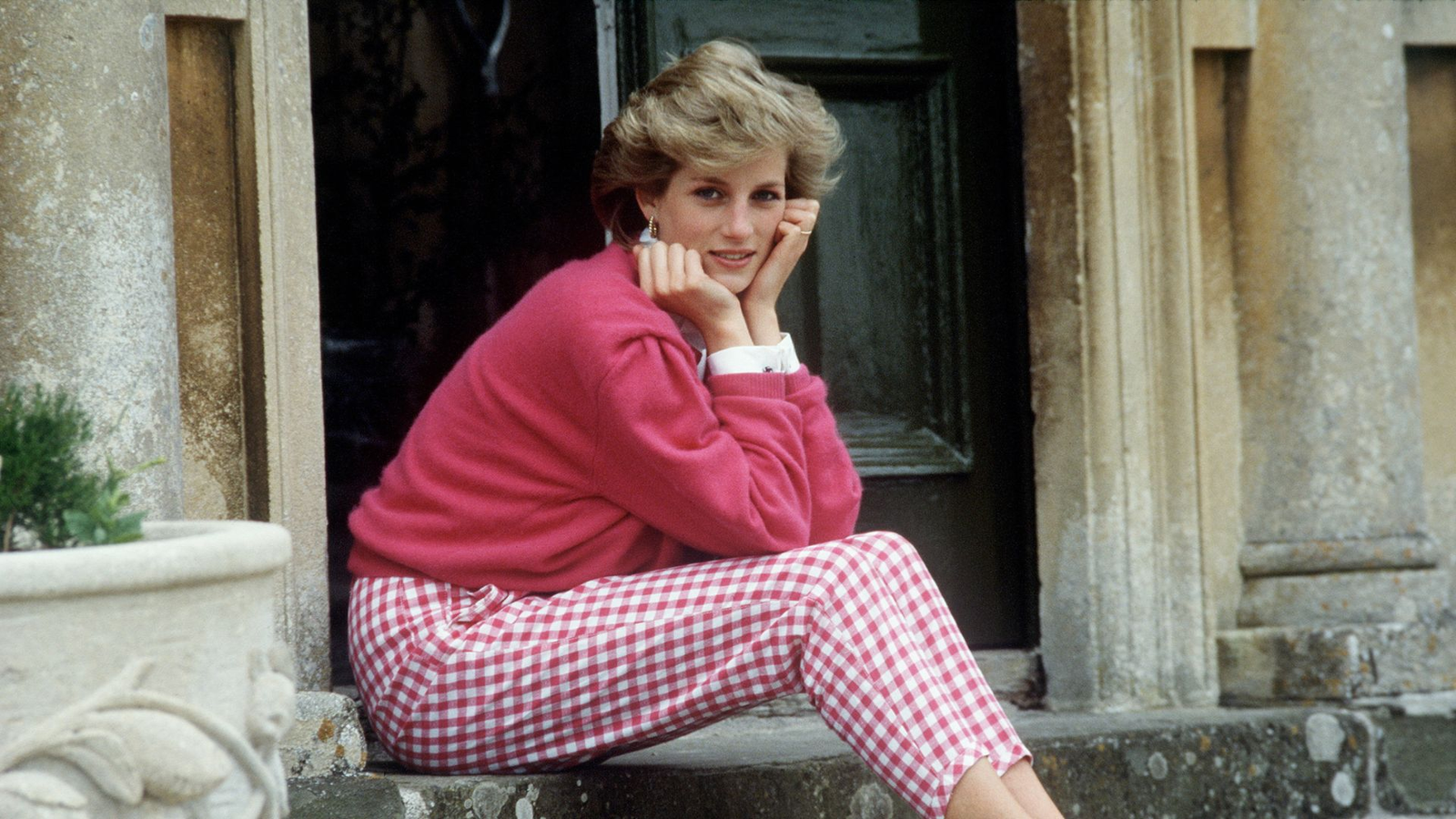
In a poignant moment that stirred memories of a bygone era, Princess Diana’s Time Capsule sealed in 1991 at Great Ormond Street Hospital (GOSH) in London was opened on August 27, 2025, just days before the 28th anniversary of her tragic death on August 31, 1997.
The lead-lined wooden box, buried to mark the laying of the foundation stone for the hospital’s Variety Club Building, was intended to remain sealed for centuries, offering future generations a glimpse into the early 1990s. However, construction of a new children’s cancer center necessitated its premature unearthing, revealing a treasure trove of artifacts that encapsulate the spirit of the time. The event, described as “really quite moving” by Jason Dawson, GOSH’s executive director of Space and Place, has sparked widespread nostalgia and renewed interest in Diana’s enduring legacy.
A Snapshot of the 1990s: What Was Inside Princess Diana’s Time Capsule?
The time capsule, carefully retrieved from the walls of GOSH, contained a collection of items chosen to represent life in the early 1990s. The artifacts were selected by two children, 11-year-old David Watson from Devon and 9-year-old Sylvia Foulkes from Norwich, who won a national competition hosted by the BBC’s popular children’s television show Blue Peter. Their choices, along with contributions from Princess Diana herself, offer a fascinating window into the cultural and technological landscape of the era.
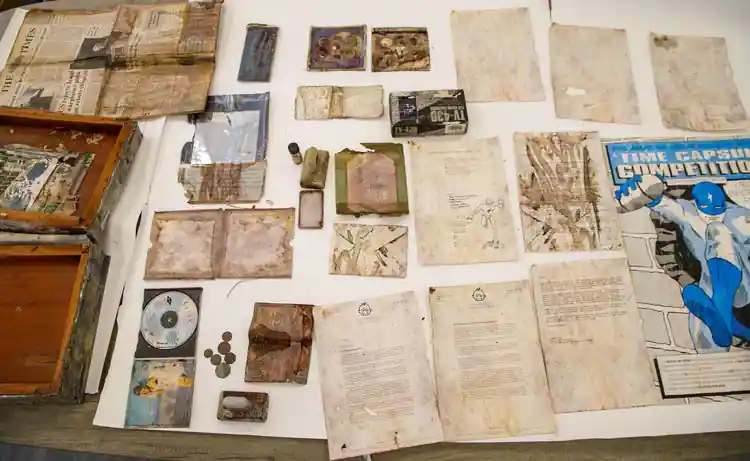
Among the items uncovered was a CD of Kylie Minogue’s 1990 album Rhythm of Love, featuring hits like “Better the Devil You Know” and “Step Back in Time.” The inclusion of the CD, chosen by David Watson, reflects the rising popularity of compact discs, which were overtaking cassettes and vinyl records as the dominant music format in 1991. Another standout item was a Casio pocket television, a cutting-edge gadget at the time with a 2-inch screen and a battery life of just a few hours.
Janet Holmes, a senior health play specialist who was working at GOSH in 1991, recalled the excitement around the device, noting that she had purchased one for her husband, a coach driver, for use during breaks. “They were very expensive then!” she said, highlighting how such technology, now quaint, was once a symbol of innovation.
The capsule also contained a solar-powered calculator, a testament to the era’s fascination with sustainable technology, and a snowflake hologram, a visually striking novelty that captivated imaginations in the pre-digital age. A collection of British coins, marking the 20th anniversary of decimalisation, and a vial of tree seeds from Kew Gardens, chosen by Sylvia Foulkes, underscored the environmental and economic themes of the time. A European passport, also selected by Watson, reflected the growing sense of European unity following the Maastricht Treaty’s signing in 1992.
Read : Café Diana at Risk of Closure Over Paying Employees in Only Food, Illegally Hiring Migrants
Additionally, a sheet of recycled paper highlighted early efforts toward sustainability. Princess Diana contributed a photograph of herself and a copy of The Times newspaper from March 1991, featuring headlines about the Gulf War, including “US rejects Iraqi warplanes plea as rebels close in” and “Cooked meats bring out Soviet voters in droves.”
Princess Diana's legacy stands the test of time. Find out what was in her unearthed Time Capsule. https://t.co/ILhcV4nd4g pic.twitter.com/1s90T4gHwA
— E! News (@enews) August 27, 2025
Letters from Watson and Foulkes were also included, though their contents have not been publicly detailed. While some items suffered minor water damage, archivists noted that most remained intact, preserving a vivid portrait of a pre-internet era. The artifacts, described by Dawson as “almost like toys” by today’s standards, evoke a sense of nostalgia for a time when pocket TVs and solar calculators were at the forefront of technological progress.
A Royal Tradition: Diana’s Role and the Historical Context
The burial of the time capsule in 1991 was a ceremonial act that echoed a similar event over a century earlier. In 1872, Alexandra, then Princess of Wales and later Queen Consort, laid the foundation stone for an older GOSH building and sealed a time capsule containing a photograph of Queen Victoria and a copy of The Times. That capsule, curiously, has never been found, adding an air of mystery to the hospital’s history. Diana’s participation in the 1991 ceremony, as president of GOSH from 1989 until her death in 1997, continued this royal tradition while showcasing her commitment to the hospital’s mission.
As president, Diana was deeply involved with GOSH, playing a central role in the Wishing Well Appeal, which raised £54 million—equivalent to roughly £200 million today—making it the largest charity appeal in the UK at the time. Her hands-on approach set her apart from traditional royal philanthropy.
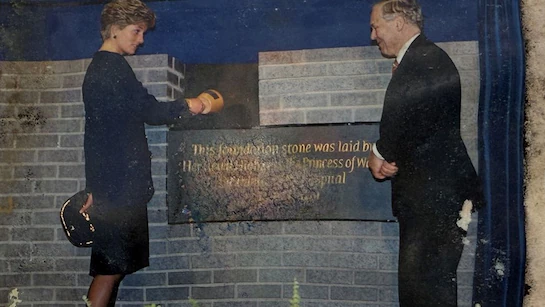
Diana was known for making regular ward visits, sitting on children’s beds, holding their hands, and offering comfort at a time when physical contact with seriously ill patients was often stigmatized. Her warmth and empathy left a lasting impression, as evidenced by a 1991 anecdote where she confided to a patient and her father her wish for a daughter, saying, “I would love a little girl. I am wondering whether the world is ready for another me.”
The capsule’s opening, prompted by the demolition of outdated facilities to make way for a new £300 million ($403 million) children’s cancer center, underscores the ongoing evolution of GOSH. Set to open in 2028, the new facility aims to increase patient capacity by 20% and focus on research and innovation, delivering “kinder, more effective treatments” in a child-friendly environment. The unearthing of the capsule, originally meant to remain sealed until the year 3000, serves as a poignant reminder of Diana’s contributions and the hospital’s enduring legacy of care.
Diana’s Legacy and the Nostalgic Resonance
The opening of the time capsule has reignited public fascination with Princess Diana, whose influence continues to shape modern royal philanthropy. Emma Hart, director of the McNeil Center for Early American Studies at the University of Pennsylvania, credits Diana with “forcing the British monarchy to move into the 21st century” through her personal and relatable approach.
Her advocacy for causes like AIDS research, landmine removal, and homelessness broke new ground, challenging royal norms and inspiring her sons, Prince William and Prince Harry, to pursue their own charitable endeavors. William’s work on homelessness and Harry’s advocacy for veterans, particularly through his continued support for The HALO Trust, reflect Diana’s “force for good.”
The capsule’s contents, while seemingly ordinary, carry profound cultural significance. They bridge the gap between Diana’s personal story and the broader social context of the early 1990s, a decade marked by rapid technological advancements and global shifts. The Rhythm of Love CD, for instance, connects to Diana’s engagement with pop culture, as Kylie Minogue was a prominent figure in the UK, known not only for her music but also for her role in the soap opera Neighbours.
The Gulf War headlines in The Times capture a moment of global tension, while the European passport hints at the optimism surrounding European integration. These items, chosen by children, reflect the innocence and curiosity of youth, curated under Diana’s guidance to preserve a moment in time.
For those who lived through the 1990s, the capsule’s contents evoke a powerful sense of nostalgia. The pocket TV and solar calculator, once symbols of cutting-edge technology, now seem charmingly outdated, reminding us of how far society has progressed. Rochana Redkar, a clinical fellow at GOSH who helped retrieve the capsule, expressed her excitement at being part of the event, noting that she was born in 1991, the year the capsule was buried. Her sentiment reflects a broader generational connection to the artifacts, which resonate with those who remember the era’s distinct cultural markers.
Historians view the capsule as a valuable cultural archive, offering insights into Diana’s era and the everyday concerns of the time. The items, though simple, underscore her role as a cultural figure who was deeply embedded in the public’s consciousness. The capsule’s rediscovery has also sparked discussions about the fleeting nature of time capsules, as many are lost, forgotten, or opened to disappointment.
Unlike the “most boring time capsule in history” unearthed in Southern California in 2022, Diana’s capsule has captivated audiences, proving that her presence remains extraordinary even decades after her passing. As GOSH prepares to plant a new time capsule during the completion of the cancer center, the legacy of Diana’s 1991 capsule endures.
It serves as a testament to her compassion, her connection to the public, and her ability to capture the imagination of generations. The artifacts, now carefully preserved, will continue to tell the story of a princess who reshaped the monarchy and left an indelible mark on the world. For now, the opening of this time capsule offers a moment to reflect on the 1990s, Diana’s contributions, and the enduring power of nostalgia to connect us to the past.