
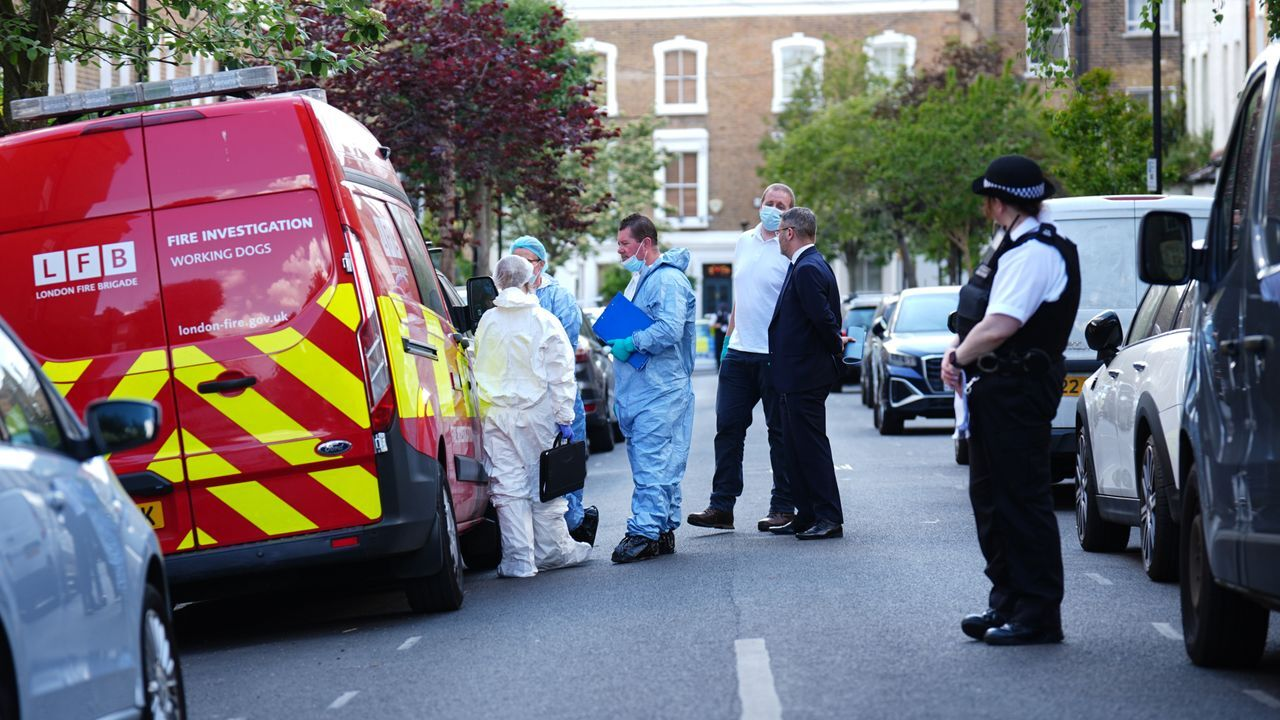
The tranquility of a North London neighborhood was shattered recently as arson attacks targeted properties and a vehicle linked to British Prime Minister Sir Keir Starmer. These attacks, all occurring in close succession, have prompted a wide-reaching investigation led by the Counter Terrorism Command.
The suspect, a 21-year-old man, was arrested in Sydenham, south-east London, and remains in custody. Authorities are treating the incidents as highly suspicious, with potential implications for the safety of public figures and political stability in the UK.
A Series of Coordinated Arson Attacks
The spate of incidents began last Thursday, when emergency services were called to a car fire just before 03:00 BST on the same street as Sir Keir Starmer’s property in Kentish Town. Though the vehicle was no longer in the prime minister’s possession, it was reportedly once owned by him.
The fire startled local residents, who reported seeing flames light up the street. One witness, Linda Perry, 80, said she was awakened by people shouting “fire, fire,” believed to be food delivery workers, and she saw flames through her window without even having to open it.
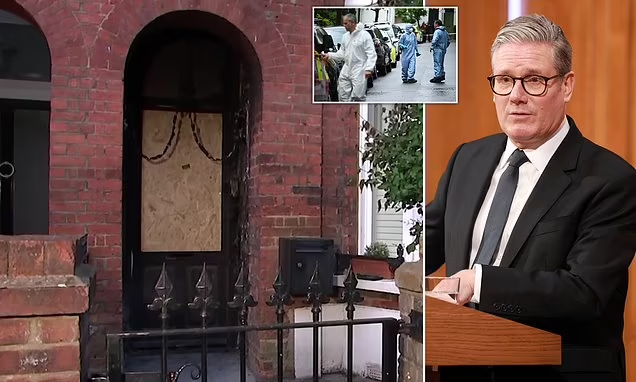
This event was soon followed by a second suspicious blaze early Sunday morning, this time at a converted flat in Islington — a location where Keir Starmer is understood to have lived during the 1990s. The fire was reported just after 03:00. Firefighters equipped with breathing apparatus assisted at least one person to safety.
The building suffered damage to the front door and internal carpet. Neighbours, previously unaware of the connection to Keir Starmer, expressed their concern about the incident and the potential threat to their safety. One resident recalled being awakened by police knocking on a neighbouring door at 05:00 and described the quiet residential street being disrupted by emergency service vehicles.
Read : Keir Starmer to Help Hunger Strike Mother to Secure Release of British-Egyptian Son
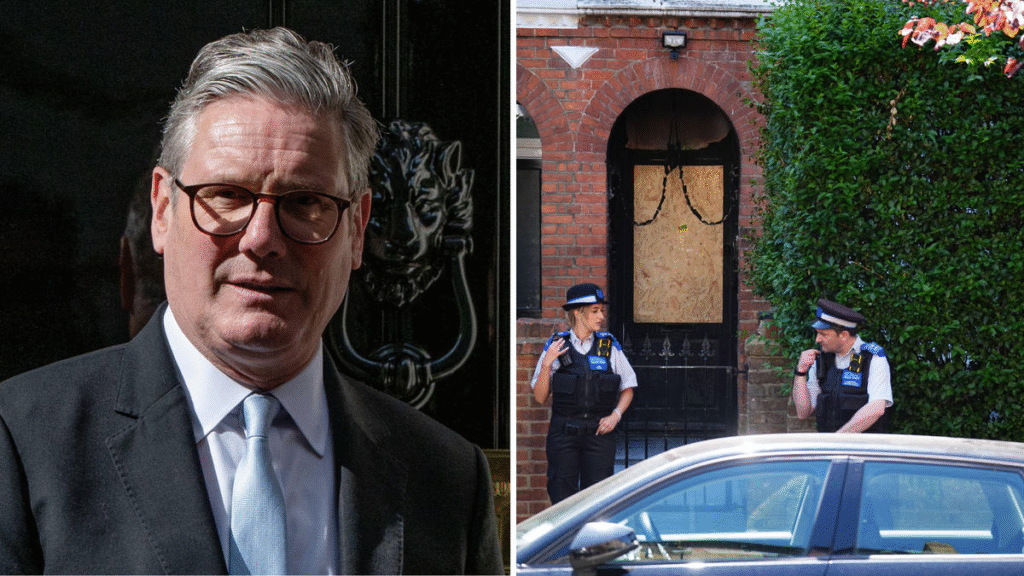
Then, at approximately 01:11 on Monday morning, the third and most direct incident occurred. A fire broke out at Starmer’s current private residence in Kentish Town, which he continues to own though he now resides at 10 Downing Street. This fire, too, was swiftly controlled, with damage limited to the entrance.
Read : Piano and Sofa Removed from Downing Street After Sunak’s Defeat in the General Election
No injuries were reported. Authorities arrived quickly, and local residents reported that officers conducted thorough searches, including of nearby gardens, in pursuit of evidence. One resident, Charles Grant, 66, confirmed police searched his garden looking for a potential projectile, though nothing was ultimately found.
Each of these attacks occurred at locations with ties to Sir Keir Starmer — past or present. While no one was hurt in any of the fires, the implication of targeting a high-profile public figure has raised alarms throughout the country.
Investigation and Counter-Terrorism Involvement
Given the pattern of the attacks and their connection to the prime minister, the Metropolitan Police have brought in Counter Terrorism Command to lead the investigation. Cdr Dominic Murphy, head of the unit, confirmed that a primary line of inquiry is whether all three incidents are linked and whether the connection to a prominent political figure was a motivating factor.
While no motive has been officially confirmed, the fact that each location or vehicle targeted had a direct association with Sir Keir Starmer has led to growing concerns about politically motivated attacks or threats against public officials.
Authorities arrested a 21-year-old man in Sydenham on suspicion of arson with intent to endanger life. He remains in custody as investigators piece together the timeline and evidence from each of the scenes. Police have been conducting door-to-door inquiries in the affected neighborhoods, asking residents for CCTV footage or any observations they might have made in the early morning hours surrounding each incident.
The swift response by emergency services and the early arrest offer some assurance to the public, but the incidents also cast a spotlight on the increasing need for security protocols around public figures, even in their private residences. The Metropolitan Police have reiterated their commitment to safeguarding Members of Parliament, with Cdr Murphy acknowledging that these events may raise concerns for other MPs across the country.
One local resident in Islington, previously unaware of the flat’s link to Keir Starmer, said that neighbors were now questioning what measures they could take to prevent future threats. The sense of unease has been amplified in a normally quiet and peaceful area, now marred by emergency sirens, fire-damaged property, and active police investigations.
Political and Public Reactions
As news of the incidents spread, leaders across the political spectrum responded with alarm and support. Prime Minister Sir Keir Starmer, speaking through an official spokesperson, thanked the emergency services for their prompt response but declined to elaborate, citing the ongoing investigation. No information has been released regarding who was present in the house during the Kentish Town fire, though it is known that the property is currently rented out.
Home Secretary Yvette Cooper confirmed she had been briefed on the situation and voiced her support for the ongoing investigation, while refraining from detailed comment due to the sensitivity of the case. She emphasized public concern and confidence in the police’s capabilities to handle such matters effectively.
Conservative Party leader Kemi Badenoch was among the first political figures to publicly react, describing the attacks as “shocking.” Her statement, posted to X (formerly Twitter), read, “My thoughts are with the prime minister and his family. No one should face these sorts of threats, let alone people in public service. It’s an attack on our democracy and must never be tolerated.”
This sentiment was echoed by many MPs and citizens alike. The idea that any elected official could be targeted in such a manner has sent ripples through the political community. In the current climate — post-election, with increased political polarization and threats of extremism — the line between public service and personal safety feels increasingly blurred.
Security analysts have warned that while the motivation remains unclear, the coordination of the incidents suggests a potential attempt to intimidate or send a message. Though arson is often considered a crime of property, the specific targeting of properties linked to a political figure adds layers of significance, especially when lives could have been endangered.
The arrest of a young man in connection with a series of arson attacks linked to Prime Minister Sir Keir Starmer marks a troubling moment for British politics and public safety. While authorities have made rapid progress in their investigation, the implications of the attacks continue to resonate.
Whether the motive was personal, political, or otherwise, the events have exposed vulnerabilities in the perceived safety of even the nation’s top leaders. These attacks did not take place in isolation; rather, they unfolded over a span of days, with each act increasing in its brazenness.
The involvement of counter-terrorism officers underlines the seriousness with which the Metropolitan Police are treating this situation. Their goal is not only to uncover the truth behind these incidents but also to reassure the public and politicians alike that such acts will not be tolerated.
For the communities in Islington and Kentish Town, the ordeal serves as a wake-up call about the proximity of political power and potential threats. For politicians, it raises critical questions about the balance between visibility, service, and personal safety. And for the country, it highlights the need for ongoing vigilance in the face of evolving threats to democracy and public life.