
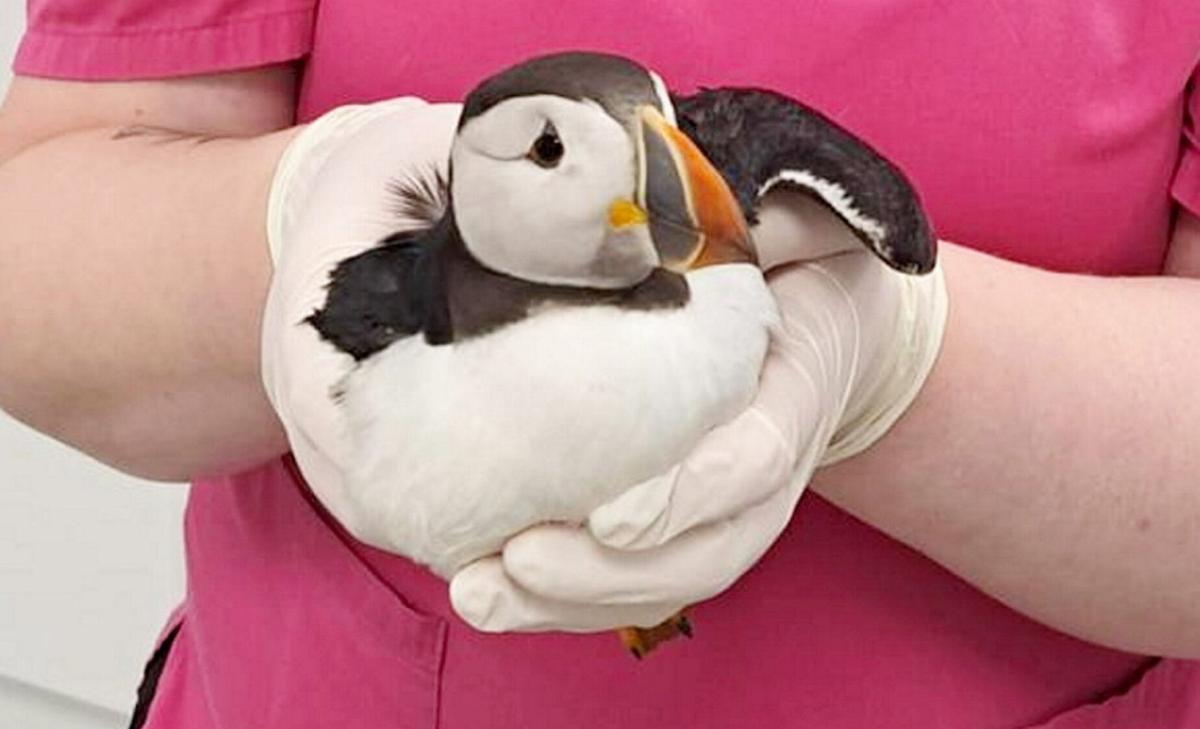
Puffins, with their brightly coloured beaks and endearing appearance, are iconic seabirds often associated with remote islands and coastal cliffs. So, Puffin Blown 110 Miles inland from the Pembrokeshire coast — it sparked both concern and amazement.
The bird, later named Oona, had somehow been blown far from her natural marine habitat and ended up in a suburban garden, weak and disoriented. What followed was a remarkable journey of rescue, rehabilitation, and hope, led by a dedicated team of local veterinarians and wildlife specialists.
Oona’s story is more than just about a lost puffin; it’s a glimpse into the fragile balance seabirds maintain in the wild, the challenges of rescue work, and the collaborative efforts between veterinary clinics and wildlife centres that can mean the difference between survival and tragedy.
From her arrival at Vets for Pets in Hereford to her current care at RSPCA West Hatch Wildlife Centre, Oona’s journey showcases compassion, expertise, and a strong will to return a puffin to her rightful place — the wild coast.
Puffin Blown 110 Miles
It was a day like any other in Hereford when a local woman found something extraordinary in her garden — a puffin, disoriented and very far from home. Puffins are rarely seen inland, especially so far from their typical nesting grounds on Skomer and Skokholm islands off the Welsh coast.
Initially sceptical, the staff at Vets for Pets Hereford didn’t believe the caller who claimed to have found a puffin. “We were very sceptical, didn’t believe it,” said practice manager Elliot Goodwin. But when the woman arrived and they opened the box, the team realised this was no mistake — they were indeed looking at a puffin.
Read : World’s Shortest Flight Which Took Only 1.5 Minutes to Reach Destination
Oona, as she would later be named after a character from the animated children’s series Puffin Rock, was in a poor state. Underweight and weak, the puffin clearly needed urgent attention. How she came to be blown 110 miles inland remains uncertain, but strong coastal winds during storms could easily have carried her far from her colony, leaving her lost and unable to navigate her way back.
Read : Top Ten Best Cruise Routes in the World
Seabirds like puffins are not built for prolonged periods on land, especially in unfamiliar environments. Being alone was another troubling sign; puffins usually fly and nest in small groups. Her solitary presence was a red flag indicating she might be in distress or separated from her colony. Fortunately, she found her way into caring hands.
Challenges of Puffin Rehabilitation
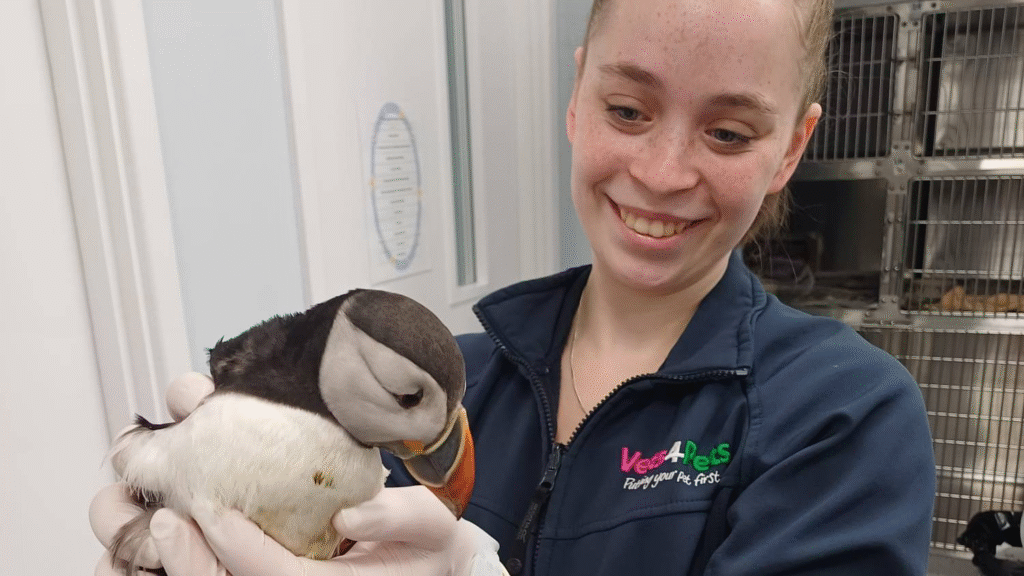
The team at Vets for Pets Hereford, led by Mr. Goodwin, quickly got to work on nursing Oona back to health. At first, they relied on tube feeding to provide her with the nutrition she desperately needed. With help from animal nutritionist Becky Bridges, they developed a specialised feeding regimen that transitioned from formula to fresh fish. But feeding was only the beginning of Oona’s recovery.
A significant concern arose with the waterproofing of her feathers — a critical aspect of survival for any seabird. Puffins rely on their waterproof feathers to stay buoyant and dry while swimming and diving for fish. In captivity, maintaining this waterproofing is notoriously difficult. Even the simple act of Oona wiping her beak after eating fish led to oils damaging her feather condition.
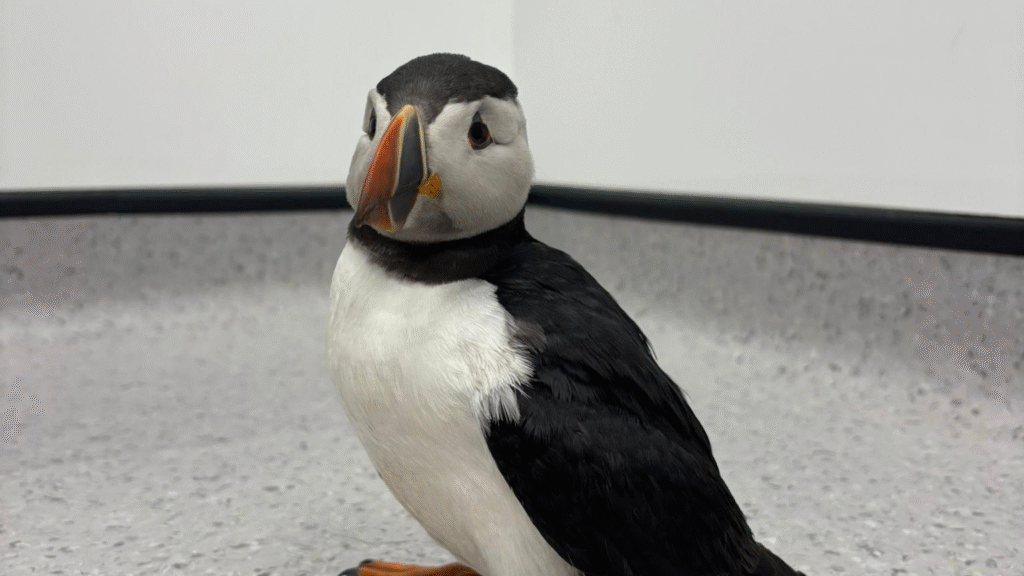
“Even if we’re keeping her completely clean, when we were starting to feed her on real food, fish and fish oils… she would flick the food around and wipe her beak on herself. That then meant her feather quality started to deteriorate,” Goodwin explained.
Though they considered giving her a bath in soapy water to help clean the feathers, their clinic lacked the swimming facilities needed to evaluate whether her waterproofing would return. Seabirds need space to swim, preen, and condition their feathers naturally. This is essential not only to test the integrity of their plumage but also to rebuild strength and behaviours necessary for a return to the wild.
Recognising these limitations, the veterinary team coordinated a transfer. On Wednesday, Mr. Goodwin personally drove Oona to the RSPCA West Hatch Wildlife Centre, a specialist facility equipped to provide the next phase of care and rehabilitation. The centre’s staff welcomed Oona and acknowledged the extraordinary effort made by the Hereford team. “Huge thank you to the whole team at ‘Vets for Pets Hereford’ for your care towards this beautiful bird! An amazing example of what vets and local wildlife organisations can achieve,” said the RSPCA.
The Hope of Release
Oona’s future is now in the hands of specialists at RSPCA West Hatch. While her journey from the coast to Hereford was dramatic, the journey back to the wild requires careful consideration and monitoring. One of the primary signs the team is watching for is the restoration of her waterproofing. If beads of water form on her feathers and roll off without soaking in, it’s a clear indicator that her plumage is ready for the rigours of the sea. She must also demonstrate buoyancy in water and put on a bit more weight.
“You have to be led by the animal in this sort of situation,” Mr. Goodwin said, noting that while timelines can vary, he remains optimistic. “I’m still hopeful that it will be quite a quick turnaround and we’re maybe talking days to weeks, rather than weeks to months.”
The potential release site, once she’s ready, is likely to be somewhere along the Pembrokeshire coast, close to her suspected point of origin on Skomer or Skokholm islands. These locations are vital breeding and nesting grounds for puffins and home to some of the UK’s most significant puffin populations. Returning her to this familiar environment offers the best chance for survival and reintegration.
Oona’s case is a powerful reminder of the unpredictable threats faced by wildlife, particularly in a world increasingly influenced by climate change and extreme weather. Unusual inland sightings of seabirds may become more common as storm patterns shift, and natural behaviours are disrupted. It underscores the importance of being aware and responsive when unusual wildlife appears in unfamiliar places.
But beyond the environmental concerns, Oona’s story highlights the extraordinary capacity for kindness and collaboration. From the woman who found her to the veterinarians who nursed her, and the wildlife centre now overseeing her recovery, Oona has been surrounded by dedication and compassion. Each person involved has contributed to the hope that one day soon, she will return to the sea, stronger and wiser for her journey.
In the meantime, her fans — both in Hereford and across social media where her story has spread — await updates. Oona, the puffin who was never meant to be found in a garden, may soon fly again over the waves of the Pembrokeshire coast, a symbol of resilience, care, and the wonder of wildlife.