
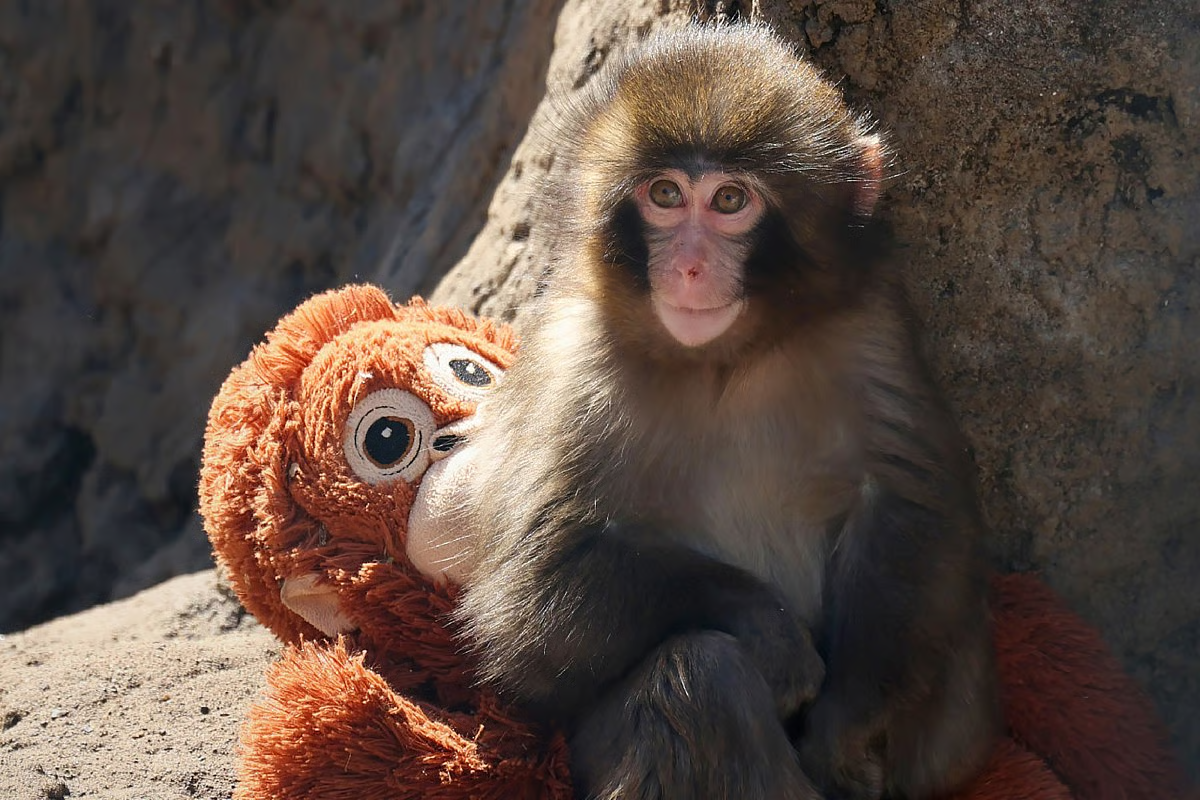
The story of Punch, a baby Japanese macaque who captured global attention, has taken a heartwarming new turn that continues to fascinate animal lovers and internet users alike. Once known for clinging tightly to a plush toy for emotional comfort, Punch has now formed a close bond with a fellow macaque named Momo-chan. Their interactions—filled with playful moments, cuddles, and what many viewers interpret as affectionate gestures—have sparked widespread discussion online.
What began as a tale of survival and emotional dependence has gradually evolved into a narrative about companionship, adaptation, and the complex social world of primates. Punch’s journey is particularly compelling because it reflects both vulnerability and resilience. After being rejected by his mother shortly after birth, he relied heavily on a stuffed toy, often referred to as Ora-mama, which served as a surrogate source of comfort.
This unusual attachment quickly went viral, resonating with audiences who saw in Punch a reflection of emotional needs that transcend species. Now, with Momo-chan entering his life, the story has shifted from one of isolation to one of connection, offering new insight into how animals cope, heal, and build relationships.
From Isolation to Emotional Recovery
Punch’s early life was marked by a lack of maternal care, a situation that can significantly impact the development of social behavior in primates. In many species, including macaques, early bonding with the mother plays a crucial role in shaping emotional stability and social skills. Without this foundational relationship, young animals often struggle to integrate into group dynamics, showing signs of anxiety, withdrawal, or unusual attachment behaviors.
This context makes Punch’s reliance on a plush toy particularly meaningful. The toy was not merely an object of play but a substitute for the warmth, security, and familiarity typically provided by a mother. Observers noted how he clung to it constantly, using it as a coping mechanism during stressful situations. Such behavior aligns with known patterns in both animals and humans, where surrogate objects can provide emotional regulation in the absence of primary caregivers.
Over time, however, Punch began to show signs of adaptation. With careful management and exposure to other macaques, he gradually started learning social cues and group interactions. This process was neither immediate nor easy. Reports of him being bullied or corrected by dominant individuals highlight the challenges he faced in finding his place within the social hierarchy. Yet, these interactions are a natural part of primate society, where individuals must navigate complex relationships to establish acceptance.
The introduction of Momo-chan marked a significant turning point. Unlike the earlier encounters that may have been stressful or corrective, this relationship appears to be mutually engaging and positive. The shift suggests that Punch has begun to overcome his early setbacks, developing the ability to form meaningful bonds beyond his reliance on inanimate comfort.
The Bond Between Punch and Momo-chan
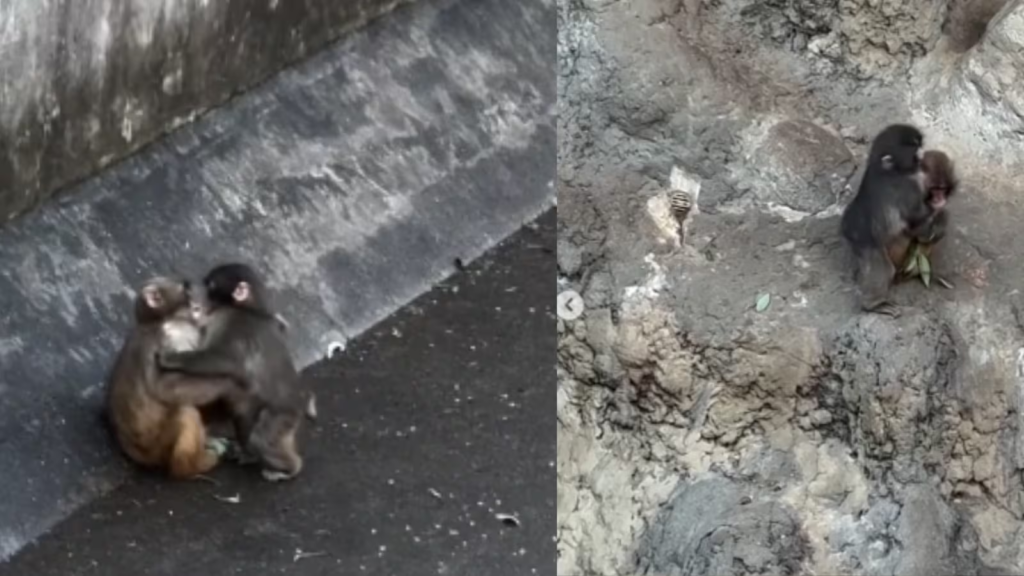
The interactions between Punch and Momo-chan have quickly become the focal point of his story, drawing millions of viewers who interpret their behavior through a human lens. Videos show the pair spending extended periods together, engaging in play, resting side by side, and even exchanging gestures that resemble kisses. These moments have led many to describe Momo-chan as Punch’s “girlfriend,” a label that, while anthropomorphic, reflects the perceived closeness of their bond.
Read : 66-Year-Old David Darke Dies Days After Being Punched Outside The Crown Inn Pub
From a behavioral perspective, such interactions are not uncommon among young macaques. Social grooming, physical proximity, and playful engagement are essential components of bonding within primate groups. These behaviors help establish trust, reduce tension, and strengthen social ties. In Punch’s case, the consistency and warmth of these interactions indicate a developing companionship that goes beyond casual association.
🚨WHOLESOME: baby Punch was seen nuzzling and kissing with his new female companion (reoprtedly his actual "girlfriend" now). pic.twitter.com/i9ufGuFoLm pic.twitter.com/rBXiQ6Ymlw
— postman 🪩 (@postman002) March 16, 2026
Momo-chan’s slightly older age may also play a role in the dynamic. Older juveniles often exhibit more confidence and social awareness, which can help guide younger or less experienced individuals. This could explain why Punch appears comfortable and engaged in her presence, benefiting from her stability while continuing to build his own social skills.
Importantly, this relationship does not replace the significance of Punch’s earlier attachment to his plush toy. Instead, it represents an evolution. While Ora-mama symbolized survival and emotional coping during a period of vulnerability, Momo-chan represents growth, adaptation, and the ability to connect with others in a more natural and reciprocal way. The coexistence of these two forms of attachment highlights the layered nature of emotional development, even in non-human animals.
Internet Reactions and the Human Lens
As with many animal stories that gain traction online, Punch and Momo-chan’s relationship has sparked a wide range of reactions from viewers. Social media users have responded with humor, admiration, and emotional investment, often projecting human relationship dynamics onto the pair. Comments joking about Punch finding a partner before many humans or suggesting that Momo-chan is drawn to his “fame” illustrate how audiences interpret animal behavior through familiar social frameworks.
This tendency to anthropomorphize animals is not new, but it plays a significant role in the popularity of such stories. By attributing human-like qualities to Punch and Momo-chan, viewers are able to connect more deeply with their experiences, seeing reflections of love, companionship, and personal growth. While this can sometimes oversimplify the complexities of animal behavior, it also fosters empathy and interest in wildlife.
At the same time, the story has prompted more thoughtful discussions about animal welfare and emotional needs. Punch’s early struggles and gradual integration into social life highlight the importance of proper care, environment, and social exposure for captive animals. His journey serves as a reminder that animals, particularly social species like macaques, require more than just physical sustenance—they need interaction, stimulation, and opportunities to form bonds.
The viral nature of the videos also underscores the power of digital platforms in shaping public perception. A single narrative, when presented in an engaging and emotionally resonant way, can reach millions of people and influence how they think about animals and their experiences. In Punch’s case, the combination of vulnerability, resilience, and eventual companionship has created a story arc that feels both compelling and relatable.
Ultimately, the fascination with Punch and Momo-chan reflects a broader human desire to find connection and meaning in the natural world. Their story resonates not just because it is cute or entertaining, but because it touches on universal themes of loneliness, healing, and the search for companionship.