

In a world where creative and impactful advocacy methods are often the most memorable, one man’s journey through the heart of Yorkshire over Easter stands as an extraordinary testament to the lengths people will go to for a cause they believe in.
Matt Trevelyan, a former puppet maker, took his passion for craft and environmental activism to new heights when he walked 53 miles over two days dressed in a giant curlew costume to raise awareness about the bird’s declining population.
With a mix of art, determination, and an urgent plea for conservation, Matt Trevelyan’s journey exemplifies the unique ways in which people can mobilize attention for causes they care about.
A Walk for a Cause
Matt Trevelyan’s walk was not a simple Easter hike but a purpose-driven pilgrimage to highlight the plight of the Eurasian curlew, Europe’s largest wading bird. Trevelyan, who has a deep understanding of the challenges faced by species on the brink of extinction, chose this unusual mode of protest to draw attention to the curlew’s diminishing numbers.
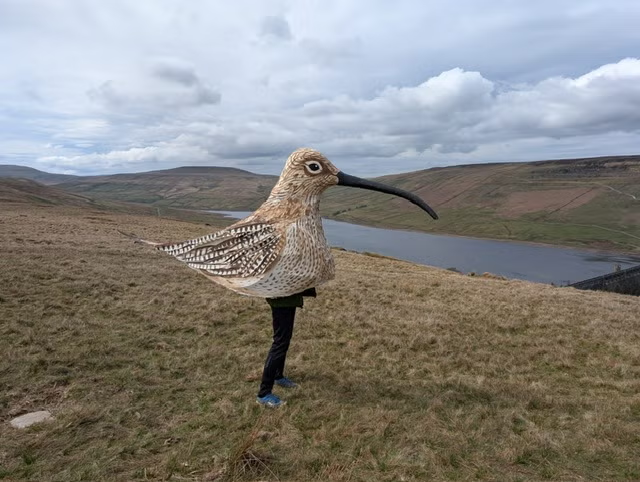
Wearing a 10-foot-long costume, he set out on a two-day trek through Nidderdale, a picturesque region in Yorkshire, to underscore the dire situation of the curlew population.
The Eurasian curlew, easily recognized by its long legs, distinctive down-curved bill, and brown upperparts, has been added to the UK’s Red List, which designates species of the highest conservation concern. These birds, once abundant across the UK, have seen their numbers decline dramatically, and now face serious threats from habitat loss, climate change, and predation.
Read : World’s First Case of Bird Flu in Sheep Detected in Yorkshire
In 2015, the curlew’s plight became a matter of urgent concern when it was officially listed as at risk of extinction. With an estimated population of just a few thousand breeding pairs in the UK, the curlew has become an iconic symbol of the battle for conservation.
The Making of the Curlew Costume
An essential part of Matt Trevelyan’s initiative was his personal touch in crafting the curlew costume. Known for his background as a puppet maker, Trevelyan was no stranger to the intricacies of creating large, life-like representations.
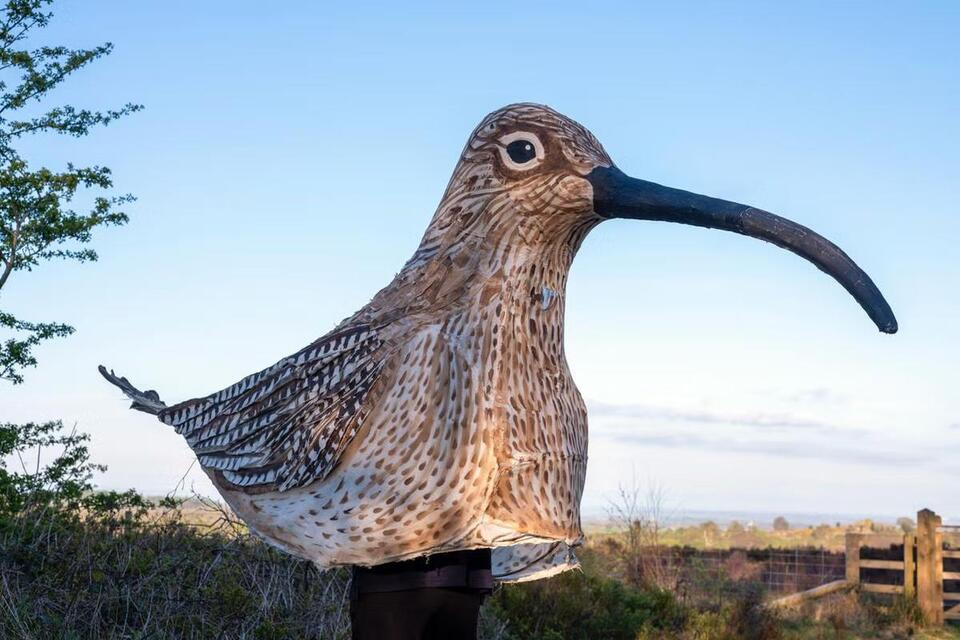
His experience with puppets, particularly the giant puppets he had previously created, gave him a unique set of skills that he channeled into designing the curlew outfit. Made from lightweight polystyrene and bamboo, the costume allowed him to cover the extensive distance without sacrificing mobility, despite its size.
Read : Bird Watching Helps Students Reduce Stress and Improves Mental Health
The costume, measuring an impressive 10 feet in length, accurately mirrored the curlew’s elegant form and distinctive features. The realistic portrayal of the bird was not only visually striking but also served as an embodiment of the curlew’s struggle, transforming Trevelyan’s walk into a moving symbol of the species’ fight for survival.
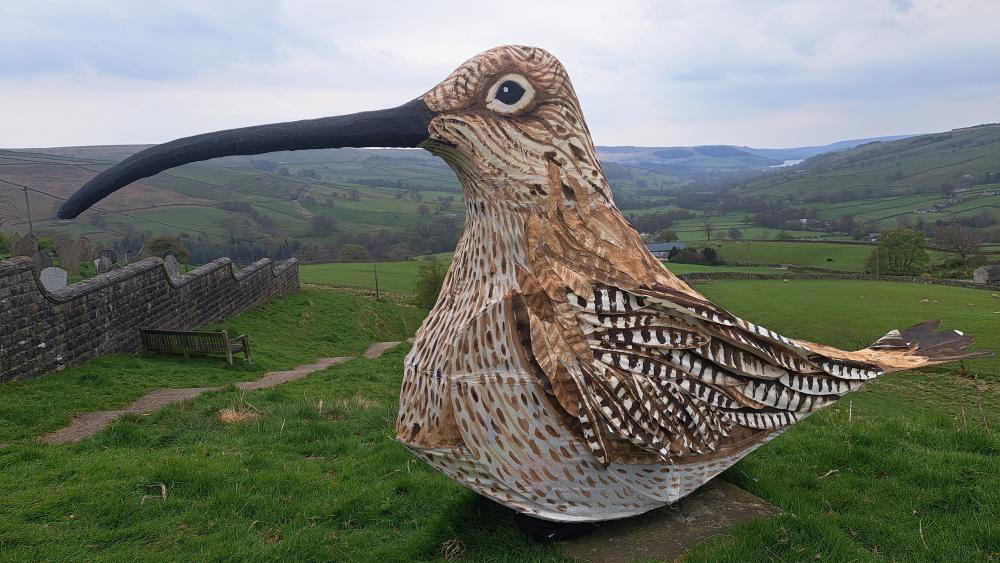
Although the costume was designed to be lightweight, it was still a demanding garment to wear for such a long distance, and Trevelyan himself admitted that the trek was “hard work.” Nonetheless, the importance of the mission kept him focused and determined.
As he navigated the hilly terrain of Nidderdale, a place that once served as a stronghold for curlews, the costume also served as a reminder of what was at stake. The landscape, with its rolling hills and deep valleys, was the perfect backdrop for Trevelyan’s dramatic statement.
The sight of a man walking through this rugged terrain in the shape of a curlew likely stopped many passersby in their tracks, prompting them to think more deeply about the issues at play.
Challenges Faced by the Curlew
Matt Trevelyan’s walk was part of a broader campaign to raise awareness about the curlew’s critical status, and his concerns about the bird’s survival are rooted in real, tangible issues.
The curlew population in the UK and other parts of Europe has been decimated due to a combination of habitat loss, agricultural practices, climate change, and predation. Areas like Nidderdale, once teeming with curlews, are now seeing a dramatic decline in numbers.
One of the major factors contributing to the curlew’s plight is the changing management of farmland. Traditionally, farmers in regions like Nidderdale practiced forms of agriculture that allowed curlews to thrive.
However, as farming practices have shifted to more intensive methods, curlews have been left with fewer safe places to nest and rear their young. Matt Trevelyan himself pointed to changes in how farmers manage their land for silage production, which often results in nests being destroyed or disturbed during the breeding season.
Predation is another pressing issue. The curlew’s eggs and chicks are vulnerable to attack from predators such as foxes, crows, and even smaller animals that have learned to exploit the bird’s nesting grounds. These predators have contributed significantly to the decrease in curlew numbers, as fewer chicks are making it to adulthood.
Even with all these challenges, Matt Trevelyan remains hopeful. He believes that if curlews are able to fledge just one chick every two years, the population could stabilize. Unfortunately, that is not currently happening, and urgent action is needed to turn the tide.
The Role of Conservation Efforts
The plight of the curlew is not one that has gone unnoticed by conservation groups, and their efforts are becoming more coordinated and visible. On the same day that Matt Trevelyan completed his 53-mile trek, the Royal Society for the Protection of Birds (RSPB) released an action plan aimed at saving the UK’s curlew population. The plan calls for immediate intervention, urging government agencies and stakeholders to support efforts to protect these birds from further decline.
According to Trevelyan, the key to securing the curlew’s future lies in engaging both local communities and policymakers. Through his position as a farming officer for Nidderdale National Landscape, he has worked closely with farmers to encourage practices that are more conducive to curlew conservation, such as delaying cuts to grassland until after the birds have had a chance to breed. These types of initiatives are crucial to preventing further damage to curlew habitats.
At the government level, organizations like the Department for Environment, Food and Rural Affairs (Defra) have acknowledged the urgent need to protect biodiversity across Britain.
A spokesperson for Defra emphasized the importance of putting nature “on the path to recovery” and the need for immediate action to address the environmental degradation that is contributing to the loss of species like the curlew.
The curlew’s struggle has also drawn attention to broader environmental issues such as habitat loss, pollution, and the effects of climate change. The bird is not only a symbol of the challenges faced by wading species but also a reminder of the delicate balance that exists within ecosystems. As one of the UK’s most iconic bird species, the curlew’s decline is a warning that the health of our natural world is in jeopardy.
The Future of the Curlew
Matt Trevelyan’s walk, while a personal and creative statement, serves a much larger purpose: it brings much-needed attention to the curlew’s struggle and highlights the critical need for conservation efforts. By raising awareness and advocating for action, he hopes to spark a renewed interest in preserving this once-abundant species.
As World Curlew Day continues to be observed each year, initiatives like Matt Trevelyan serve as a beacon of hope for the future of the species. His walk may have been a symbolic gesture, but it speaks volumes about the power of individual action to inspire change.
With continued efforts from conservationists, farmers, and government agencies, there is hope that the curlew, and many other species facing similar threats, can be saved from the brink of extinction.
Matt Trevelyan’s giant curlew costume will no doubt remain in the memories of those who witnessed his journey, but more importantly, it will remind everyone that every nest, every chick, and every egg matters. The curlew’s future is in our hands, and it is actions like these that can make a difference in the battle for biodiversity.