
As geopolitical tensions continue to rise between Russia and the West, Russian President Vladimir Putin has intensified global focus by launching an extensive exercise of the country’s nuclear forces.
This large-scale operation, which includes intercontinental ballistic missile (ICBM) launches and submarine exercises, is aimed at showcasing Russia’s preparedness and its strategic nuclear response capabilities.
Amid an environment of heightened security concerns and political volatility, these drills underscore the importance Putin places on Russia’s nuclear deterrent as a means of safeguarding national security.
Russia’s Strategic Nuclear Exercises and Capabilities
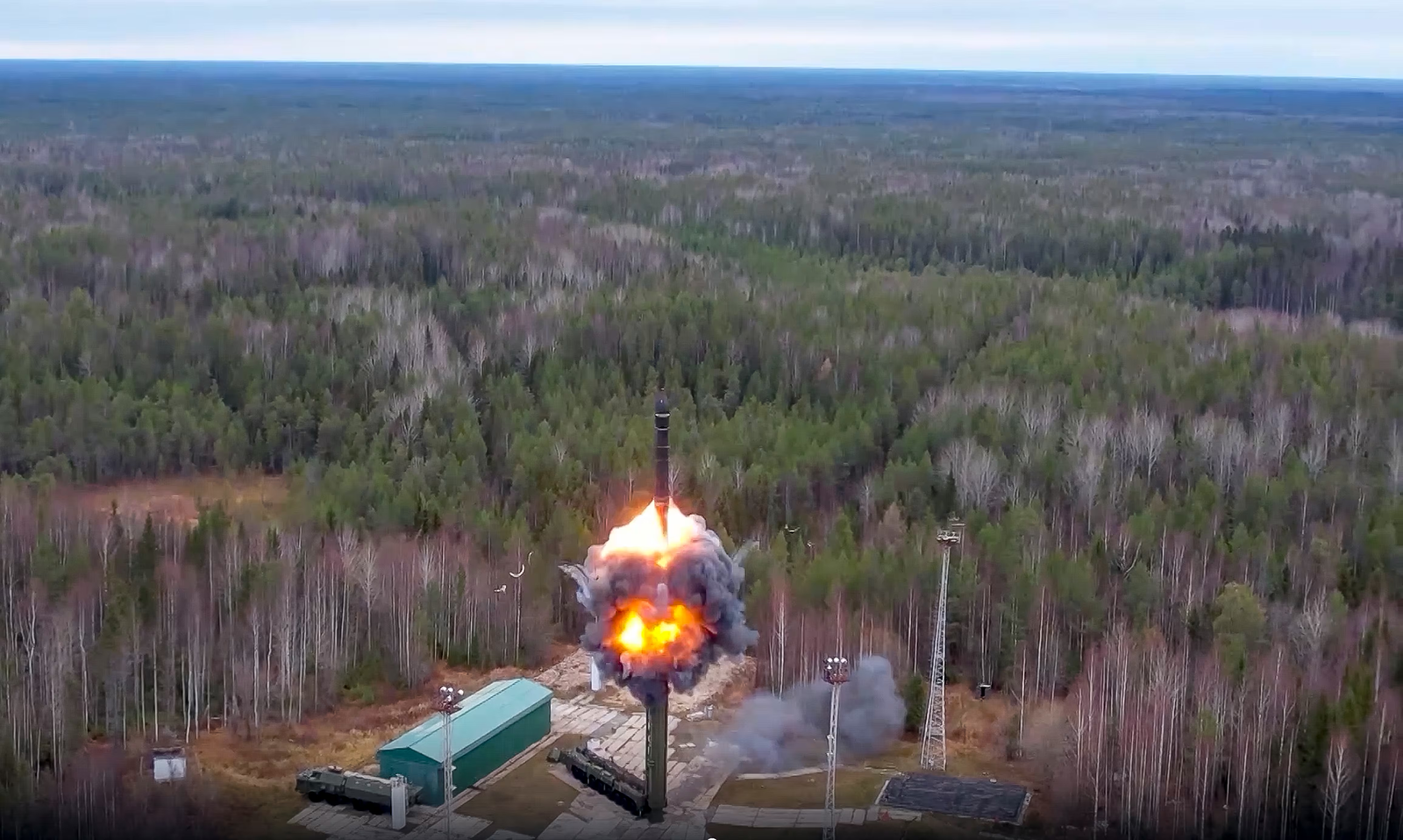
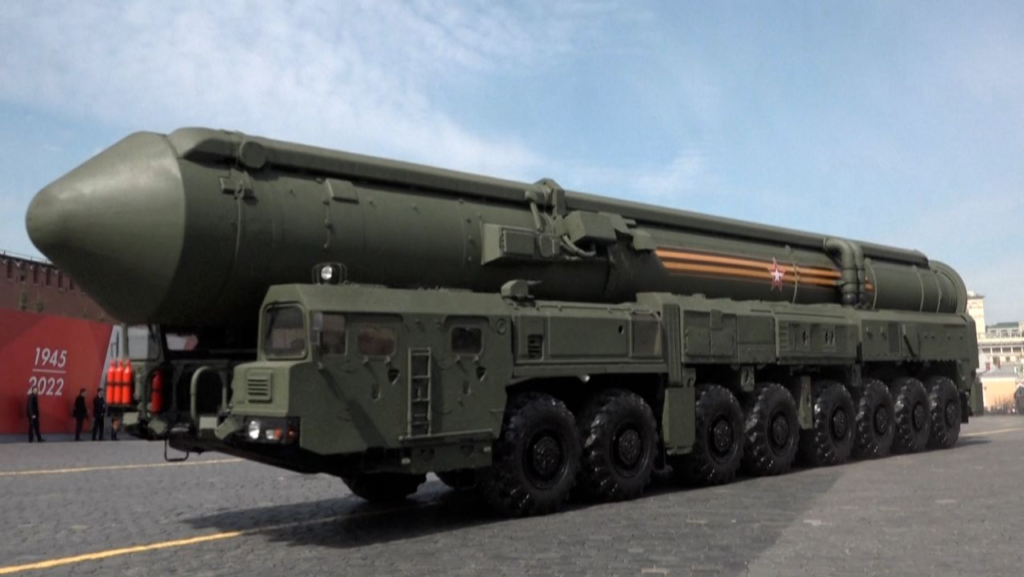
On Tuesday, Putin initiated a series of nuclear force exercises that simulated the response of Russian leadership in the event of a nuclear attack. The Defense Ministry indicated that this massive drill included test-firing a Yars ICBM from the Plesetsk launch site to the Kura test range in Kamchatka, involving an array of advanced military assets.
Also, nuclear-capable submarines stationed in the Barents Sea and the Sea of Okhotsk carried out strategic missile launches, underscoring Russia’s capacity to mobilize from both land and sea in the event of nuclear escalation.
Read : North Korea Sent Troops to Join Russia’s War in Ukraine: NATO
Long-range cruise missiles were deployed from Tu-95 strategic bombers, which collectively represent the three-pronged nuclear triad approach Russia relies upon for defense.
Defense Minister Andrei Belousov explained that the exercises are aimed at “practicing the launch of a massive nuclear strike in retaliation for an enemy strike.” This simulation of offensive capability emphasizes Russia’s preparedness to respond to an attack with a full-scale nuclear response, illustrating the Kremlin’s ability to counter nuclear threats rapidly and effectively.
These exercises also serve as a demonstration to the world of Russia’s current nuclear strength. Putin, who has long emphasized nuclear deterrence as a foundational element of Russia’s security policy, described the drills as a necessary step to protect the country’s sovereignty in a time of rising threats.
🇷🇺RUSSIA TESTS NUKES…
— Mario Nawfal (@MarioNawfal) October 29, 2024
Russia successfully launch-tested its nuclear missile that could allegedly reach Los Angeles in 30 minutes… Paris in 10 minutes.
2024 just keeps getting better…
pic.twitter.com/Gk8o9QlRRV
As he noted, “Considering the growing geopolitical tensions and new threats, it is vital for us to maintain modern strategic forces that are always combat-ready.”
Revised Nuclear Doctrine and its Implications
This series of exercises is part of a broader shift in Russia’s nuclear doctrine. Last month, Putin announced adjustments to Russia’s nuclear policy, which now allow for a nuclear response to conventional attacks if Russia perceives them as an existential threat.
This revision appears largely directed at countering Western support for Ukraine, as NATO allies continue to supply Ukraine with advanced weaponry, particularly longer-range systems capable of targeting areas deep within Russian territory.
Putin’s revised nuclear doctrine further intensifies Russia’s deterrent stance by indicating that any conventional attack supported by a nuclear state will be treated as an act of joint aggression.
This is aimed at dissuading NATO allies, especially the U.S., from deepening their involvement in the ongoing conflict. According to the new policy, a conventional attack involving a non-nuclear state, but with support from a nuclear ally, would trigger a direct response.
Additionally, Russia’s policy has left room for nuclear action in the event of a large-scale aerial attack, blurring the line between conventional and nuclear thresholds. By creating this ambiguity, Putin aims to deter any military actions from NATO that could risk direct confrontation with Russia.
Such vagueness can serve as a critical bargaining tool by instilling uncertainty in potential aggressors about what actions might trigger a Russian nuclear response.
The Strategic Message to the West and Potential Global Implications
Putin’s recent nuclear exercises send a clear message to Western powers. Russia views its nuclear arsenal not only as a defense tool but also as a strategic deterrent in the face of growing Western involvement in Ukraine.
With his statement that “nuclear weapons are the ultimate, extreme measure of ensuring security,” Putin underscores his resolve to use every available resource to maintain Russia’s stance against perceived threats.
Russia’s posturing is intended to remind NATO and its allies of the severe risks associated with further military escalation, especially actions that would be seen as crossing into Russian territory or compromising its defense infrastructure.
The exercises also serve to reassure the Russian public of the government’s commitment to national defense and its readiness to address any conceivable threat. This messaging is likely designed to strengthen internal support and project an image of strength, especially as Western sanctions and economic pressures continue to mount against Russia.
Furthermore, Russia’s ongoing partnership with Belarus, where some of its tactical nuclear weapons are stationed, adds another layer to its strategic defenses, expanding its influence and military reach within Eastern Europe.
Globally, these exercises reinforce the need for heightened caution and dialogue between nuclear-armed states. As tensions grow in multiple regions worldwide, this increase in nuclear preparedness by Russia signals a critical moment for the international community to reassess arms control agreements and diplomatic channels.
The recent breakdown of arms treaties between Russia and the U.S. raises concerns about the escalation of nuclear arms capabilities and the potential for misinterpretations that could lead to catastrophic outcomes.
Consequently, these drills highlight the pressing need for renewed negotiations on nuclear non-proliferation, aimed at fostering transparency and reducing the risks associated with accidental or intentional nuclear exchanges.
Putin’s decision to conduct extensive nuclear exercises highlights Russia’s current approach to securing its geopolitical interests amid rising tension with the West. By showcasing a highly orchestrated demonstration of Russia’s nuclear forces, Putin sends a message that Russia remains a formidable power with robust, modernized nuclear capabilities.
His statements reinforce the narrative that Russia’s nuclear arsenal is a “reliable guarantor” of national sovereignty, underscoring its role as a last line of defense.
The revised nuclear doctrine adds a new layer of complexity to global security dynamics, especially concerning NATO’s involvement in Ukraine.
This doctrine, which includes conditions for nuclear retaliation even in response to conventional attacks, adds ambiguity that could serve as a powerful deterrent. However, it also raises the stakes, signaling a potential shift in the threshold for nuclear engagement.
As global leaders navigate these tense and uncertain times, Russia’s display of nuclear readiness serves as a reminder of the high stakes involved in international conflict. Putin’s maneuvers may push the West to reconsider its approach to supporting Ukraine, as the risk of nuclear engagement looms in the background.
These developments underscore the urgent need for diplomatic solutions to prevent any miscalculation that could lead to a nuclear standoff, maintaining global peace in an increasingly complex and polarized world.