
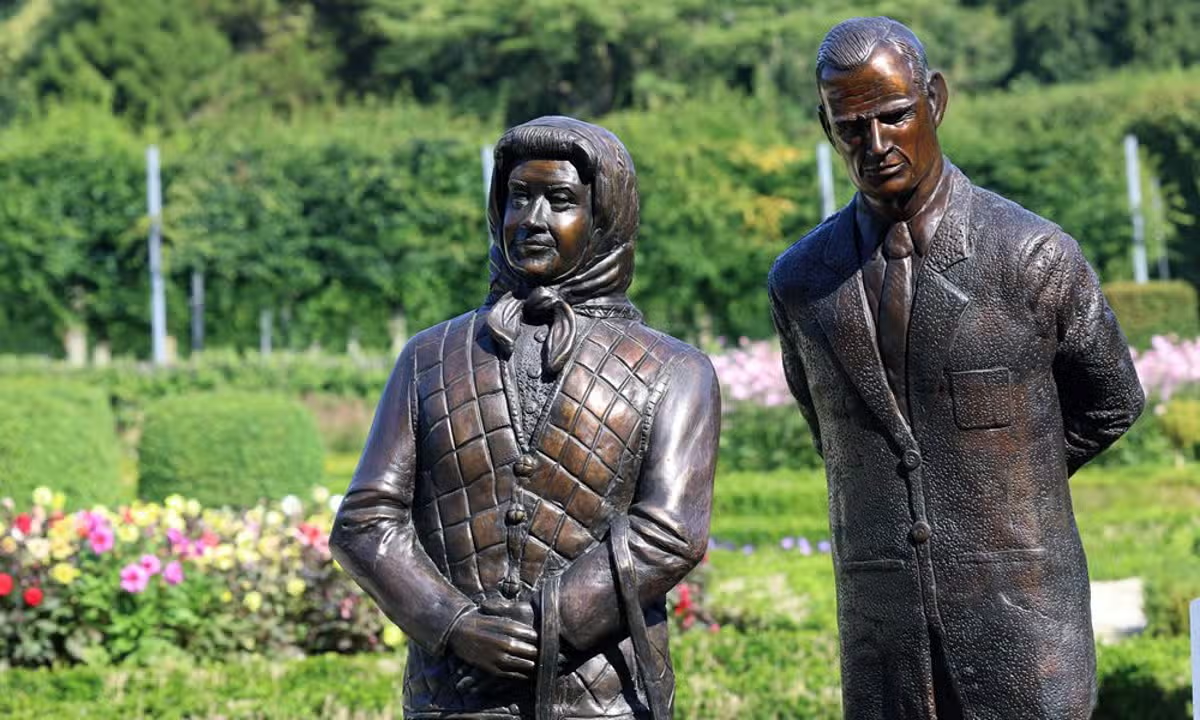
Queen Elizabeth II statue, recently unveiled in Northern Ireland, has stirred significant controversy on social media. This bronze tribute, located in Antrim Castle Gardens, was meant to honor the late monarch.
However, instead of receiving praise, the Queen Elizabeth II statue has faced widespread criticism for its lack of resemblance to Her Majesty.
The statue, which was commissioned by the local council, includes a depiction of Queen Elizabeth II with her beloved corgis. Yet, many feel that the likeness is far from accurate and that the statue fails to capture the Queen’s grace and dignity.
The Unveiling and Initial Reactions
📷👑This is the statue to commemorate Queen Elizabeth II in Antrim Castle Gardens.
— Cool FM News (@newsoncool) September 12, 2024
The sculpture of the Queen and the late Prince Phillip was created by north Belfast artist Anto Brennan.
It has been receiving a mixed reaction on social media. pic.twitter.com/Y8eSyWKLS9
The Queen Elizabeth II statue was sculpted by local artist Anto Brennan and placed beside an earlier statue of Prince Philip in Antrim Castle Gardens.
This garden has historical significance, and many hoped the new statue would serve as a fitting tribute to one of the most beloved monarchs in British history. Unfortunately, it has sparked a social media uproar, with netizens expressing strong opinions about the artwork.
Criticism of the Queen Elizabeth II statue quickly spread across various social media platforms. Many users voiced their displeasure with its appearance, particularly pointing out that it bears little resemblance to the Queen. One of the most frequent criticisms is that the statue looks “awful” and is “an insult” to her memory.
“Why can’t anyone hire a sculptor that can actually make a likeness?!” commented one outraged user, while others demanded the statue be taken down and redone. The general consensus among critics is that the statue falls short of paying proper tribute to Queen Elizabeth II.
The Artist’s Intentions and Public Response
Anto Brennan, the artist behind the Queen Elizabeth II statue, is known for his work in Northern Ireland, and his design was intended to capture the Queen in a moment of calm, surrounded by her corgis, who were famously close to her throughout her reign.
However, despite Brennan’s intentions, the public has not been kind in their reactions. “Take it away. It’s blooming awful,” one Facebook user remarked, highlighting the widespread disappointment.
Criticism extends beyond just the Queen Elizabeth II statue itself. Some have also commented negatively on the earlier statue of Prince Philip, suggesting that both statues fail to capture the essence of the royal couple. Calls for both statues to be “removed & melted down” have been echoed on various platforms, demonstrating the deep dissatisfaction with the tribute.
The backlash has raised questions about public monuments and their role in honoring significant historical figures. While statues are often meant to serve as timeless tributes, the Queen Elizabeth II statue highlights the delicate balance between artistic interpretation and public expectation.
Many feel that the current statue does not live up to the dignity and grandeur associated with the late monarch, leading to intense debate about whether it should remain in its current form.
Queen Elizabeth II’s Legacy and the Emotional Impact of Her Passing
Queen Elizabeth II passed away on September 8, 2022, at the age of 96. Her death followed the loss of her beloved husband, Prince Philip, who had passed away the year before at the age of 99. The royal couple had been married for over 70 years, and their bond was deeply cherished by the public.
It has been widely speculated that the Queen was deeply affected by Philip’s passing, with some suggesting she passed away from a “broken heart.” While the official cause of her death has not been revealed, many believe the emotional toll of losing her life partner contributed to her decline.
The Queen had carefully planned for her and Prince Philip’s final resting place, ensuring they would be reunited in death. After a private ceremony, their coffins were moved to King George VI’s Memorial Chapel. It was the Queen’s wish that her and Philip’s remains rest together, symbolizing their enduring bond.
This emotional context makes the backlash against the Queen Elizabeth II statue even more poignant. The statue was meant to honor her memory and legacy, but instead, it has sparked a sense of disappointment among those who admired her.
For many, the Queen’s passing marked the end of an era, and her memory is held in the highest regard. The statue’s failure to capture her likeness is seen as not just an artistic misstep but as a slight to her legacy.
The unveiling of the Queen Elizabeth II statue has brought forward important discussions about how we commemorate influential figures. While the intention behind the statue may have been noble, its execution has left many feeling it falls short of honoring the Queen’s memory.
Public monuments are meant to be lasting tributes that capture the essence of the individuals they commemorate. In the case of the Queen Elizabeth II statue, the overwhelming public response suggests that it does not meet this standard.
As the backlash continues, there are growing calls for the statue to be removed or redesigned. Whether or not this will happen remains to be seen, but the debate underscores the importance of carefully considering how we choose to remember and honor historical figures.
Queen Elizabeth II’s legacy is one of duty, service, and grace, and any tribute to her should reflect these qualities. The current statue, as many have pointed out, does not.
In the meantime, discussions about the statue and its place in Antrim Castle Gardens continue to circulate on social media. Many hope that the public’s feedback will lead to a reconsideration of the statue’s design, ensuring that future tributes to the Queen are more in line with her lasting legacy.