
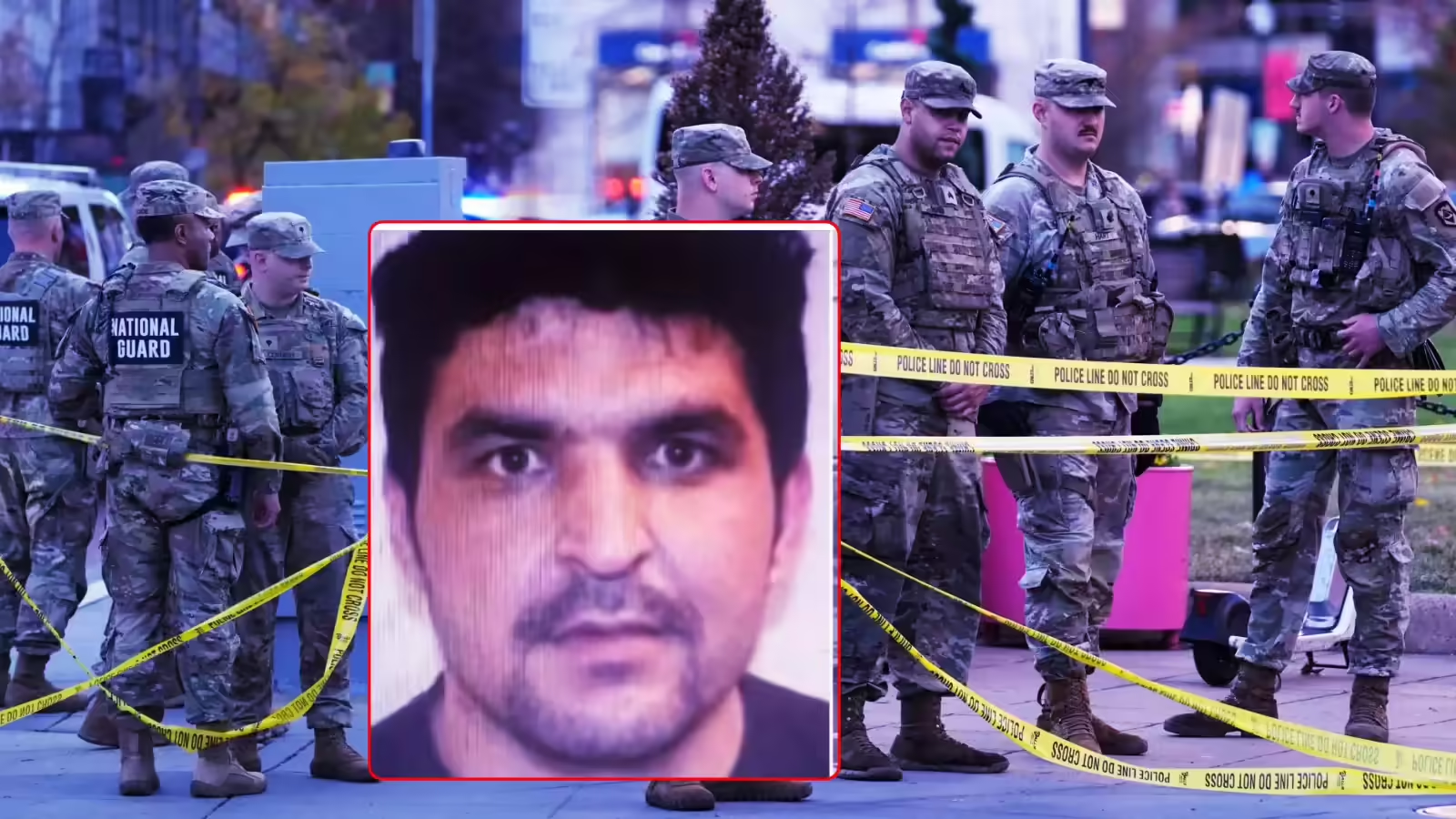
The shooting of two West Virginia National Guard members in broad daylight near the White House has raised urgent questions about security, migration, and the complex legacies of America’s withdrawal from Afghanistan. The attacker, identified as 29-year-old Rahmanullah Lakanwal, entered the United States under Operation Allies Welcome after serving in an elite Afghan military unit closely aligned with U.S. forces.
His violent assault in one of the most heavily policed parts of Washington, DC, has stunned officials, triggered a federal-level investigation, and intensified scrutiny of the Afghan resettlement program. The unfolding case has also highlighted troubling indications—reported by sources within the Taliban government—that former members of U.S.-backed Afghan special units have been grappling with psychological instability, sometimes resulting in harm to themselves or others.
As investigators work to establish a motive, the incident has reignited political debate over security measures and the long-term status of National Guard deployments across major American cities.
Background of the Suspect and His Arrival in the United States
Rahmanullah Lakanwal’s path to the United States began during the chaotic final days of America’s 20-year military presence in Afghanistan. According to reports, he served in the “01 Unit” during the former Afghan Republic, a highly specialized force established, trained, and equipped by U.S. intelligence agencies to conduct counterterrorism operations.
Many individuals in these units had worked side by side with American troops, gaining access to classified operations and extensive combat experience. Following the collapse of the Afghan government in 2021, the U.S. created Operation Allies Welcome, an initiative designed to evacuate and resettle tens of thousands of Afghans who were considered at risk of retaliation by the Taliban due to their ties to the former U.S.-backed administration.
Rahmanullah Lakanwal arrived in the U.S. as part of this program and was resettled in Bellingham, Washington. Approximately 76,000 Afghans were brought into the country under this initiative, many of whom had served as soldiers, translators, interpreters, and government employees. While advocates have argued that the program offered essential protection for individuals who had directly assisted American forces, critics—primarily among Republican lawmakers—have repeatedly questioned the rigor of the vetting process.
They have claimed that the rapid evacuation and admissions procedures created vulnerabilities that could allow security risks to slip through. In the years since the withdrawal, members of specialized Afghan units such as the one Rahmanullah Lakanwal belonged to have reportedly faced psychological hardships linked to displacement, trauma, or the abrupt loss of their military identity.
Taliban government sources have suggested that individuals from these units exhibit higher rates of mental health struggles, including incidents of suicide and violence against others. While these assertions cannot yet be independently verified within the context of Rahmanullah Lakanwal’s case, they have added a layer of complexity to public understanding of the events that unfolded in Washington.
BREAKING: 2 West Virginia National Guard members were fatally shot in #DC Suspect Rahmanullah Lakanwal, 29, in custody.
— Eyes on the Globe (@eyes_globe) November 27, 2025
A third Guardsman reportedly stopped the attacker with only a pocket knife.
Gov. Morrisey: They “died serving their country.”#Washington Afghan White House pic.twitter.com/06MW12ycT8
Authorities have not disclosed whether Rahmanullah Lakanwal had any prior criminal history in the United States, nor have they provided details about his employment or personal life in Washington state. The FBI, which has taken over the investigation, is treating the case as a potential act of terrorism but has yet to release any findings that conclusively point to ideological motives. Officials have confirmed that Rahmanullah Lakanwal acted alone and that no evidence has surfaced to indicate an organized plot involving other individuals or groups.
The Shooting Near the White House
The attack occurred on a weekday afternoon near the Farragut West Metro Station, an area that typically sees high pedestrian traffic due to its proximity to government offices, businesses, and tourist sites. At approximately 2:15 p.m. local time, Rahmanullah Lakanwal reportedly waited before rounding a corner where two National Guard members were patrolling. According to law enforcement sources cited by major media outlets, he then opened fire at close range.
The first victim, a female soldier, was struck in the chest and subsequently in the head. Rahmanullah Lakanwal then turned his weapon on the second guard, firing multiple rounds. A third guard assigned nearby rushed toward the scene and managed to stop the attacker, who was later found to have been shot four times during the confrontation. Emergency responders transported the suspect to a hospital, where he was taken into custody while receiving treatment.
The two National Guard members who were shot were immediately taken to a nearby hospital. Authorities have reported that both remain in critical condition. Their identities have not been released to the public. Early statements from Washington Mayor Muriel Bowser described the incident as a “targeted shooting,” although officials have not publicly commented on whether the guards were singled out due to their uniform, their identity, or their role in ongoing federal operations.
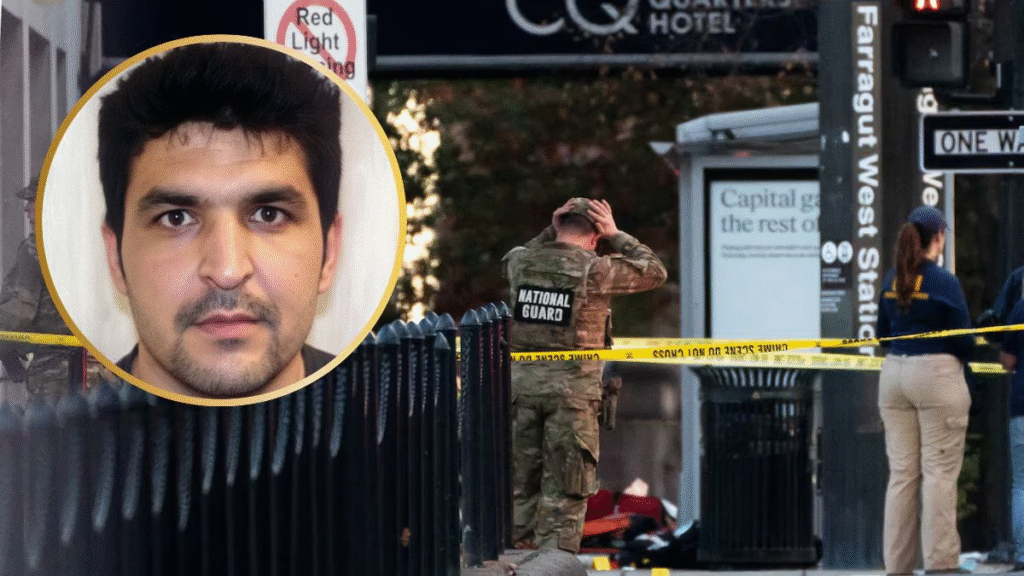
The attack occurred within the broader context of an ongoing public-safety deployment ordered by the Trump administration, which has stationed thousands of National Guard troops in Washington, DC. These personnel were initially sent in response to elevated crime rates and security concerns, and the mission has since expanded to several other U.S. cities. At the time of the shooting, roughly 2,400 National Guard members were deployed across DC—958 from the local National Guard and around 1,300 from eight other states. Their deployment has been extended through the summer of 2026.
Despite the presence of armed National Guard patrols, the shooting has raised questions about the unpredictability of violent acts carried out by individuals acting alone. The rapid response by nearby personnel prevented further casualties, but investigators have emphasized the importance of understanding how and why the attack occurred in such a secure area.
Political and Security Reactions to the Attack
Responses to the shooting have been swift and politically charged. Washington Mayor Muriel Bowser’s early remarks framed the incident as an intentional act, and federal leaders have since reinforced the seriousness of the attack. Secretary of War Pete Hegseth announced that an additional 500 troops would be deployed to Washington, a move that underscores growing concerns about security threats in the capital. The expansion of troop presence continues a broader trend of militarized public-safety strategies that has become a defining feature of recent federal policy.
FBI Director Kash Patel stated that the assault would be prosecuted at the federal level, emphasizing that the victims—National Guard personnel operating under federal orders—qualify as federal law enforcement officers for the purpose of legal proceedings. Patel’s announcement reflects the gravity with which the FBI is approaching the case, especially given that NBC and The Washington Post have reported that the bureau is examining the incident as a potential act of terrorism.
Read : Trump Blasts White House Rose Garden Worker for Damaging Stone in Controversial Redesign
Political reactions have also reignited longstanding debates surrounding Operation Allies Welcome. Supporters of the program stress that tens of thousands of Afghan allies were essential partners to U.S. forces and faced immediate danger after the Taliban takeover. They argue that one violent incident should not overshadow the contributions of these individuals or the moral obligation the U.S. holds toward them.

Critics, however, have pointed to the shooting as further evidence that the vetting process—already criticized by some oversight bodies—was insufficiently thorough during the 2021 evacuation. At the center of the controversy is the question of how to balance humanitarian commitments with national security considerations. The program was designed under emergency conditions, with limited time for background checks and biometric verification.
Government watchdogs have since raised concerns about gaps in documentation and the difficulty of verifying identities or service records during the evacuation. The renewed scrutiny following the shooting suggests that federal agencies may face pressure to revise, reassess, or more aggressively audit the program’s admissions protocols.
The ongoing presence of National Guard forces in Washington has been another focal point of public debate. Advocates of the deployment argue that it has contributed to stabilizing neighborhoods struggling with violent crime, while critics contend that relying on out-of-state military personnel risks blurring the boundaries between civilian policing and military operations. Civil liberties groups have also warned that prolonged military presence in urban areas may have long-term implications for the balance of authority between local and federal jurisdictions.
The attack near the White House has now added a new dimension to these discussions. Supporters of the deployment may point to the rapid response by the third National Guard member as evidence of the mission’s effectiveness in preventing further harm. Opponents, however, may argue that increasing militarization will not necessarily prevent individual acts of violence carried out without warning, and that long-term solutions to public safety must focus on broader systemic issues rather than expanded troop presence.
As the investigation continues, authorities are working to determine the motive behind Rahmanullah Lakanwal’s actions, assess his background in greater detail, and evaluate whether warning signs were present before the attack. The incident has touched on sensitive political issues, ranging from immigration oversight to military strategy, while also underscoring the human impact on those directly involved. The National Guard members injured in the attack remain hospitalized in critical condition, and federal investigators are expected to release further findings as the case develops.
Magnificent beat I would like to apprentice while you amend your site how can i subscribe for a blog web site The account helped me a acceptable deal I had been a little bit acquainted of this your broadcast offered bright clear idea
Tried out 6m88bet last night. It’s pretty slick. Easy to navigate and I actually won a few bucks. I’ll be back! Come and join me in the fun on 6m88bet