
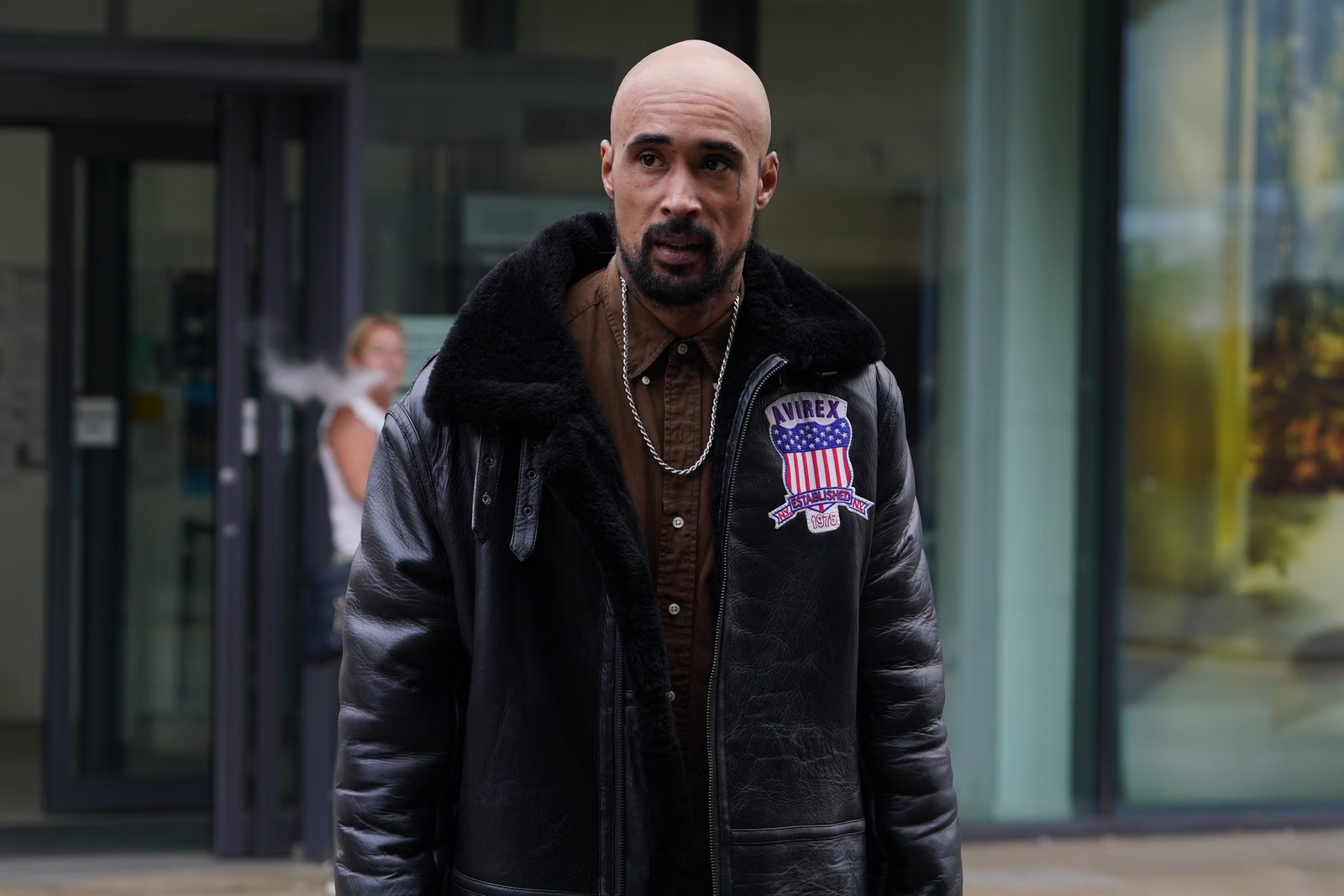
The trial of aspiring rapper Ashley Warren at Chelmsford Crown Court has brought renewed scrutiny to the ownership of XL bully dogs, the responsibilities placed on owners under the law, and the circumstances in which a fatal animal attack can arise. Jurors have heard harrowing details of the death of Esther Martin, a 68-year-old woman who was left in charge of multiple dogs at Warren’s home in Jaywick, Essex, while he travelled to London.
The prosecution has framed the case as an avoidable tragedy, arguing that a combination of poor judgment, disregard for legal requirements, and a fundamental imbalance between the victim and the animals created conditions that were destined to end in catastrophe. At the centre of the case are two adult XL bully dogs, Beauty and Bear, along with eight puppies of the same breed. The court has been told that Ashley Warren left Ms Martin, who had known mobility issues and little experience handling dogs, to care for all ten animals.
Within hours, she was brutally attacked. Jurors were shown footage capturing the sounds of barking, screams, and the chaos that unfolded inside the property, evidence that prosecutors say illustrates both the ferocity of the dogs and the helplessness of those inside the house. The case has also drawn attention because it occurred just days after new legislation came into force making it a criminal offence to own an XL bully in England and Wales without an exemption certificate.
The Events Leading to Esther Martin’s Death
According to the prosecution, the fatal attack took place on 3 February 2024, two days after the government’s ban on XL bullies became enforceable. Despite widespread media coverage of the new law, Ashley Warren had not applied for exemption certificates for any of the dogs in his care. Jurors heard that he left Ms Martin in charge so that he could travel to London to film a music video, a decision prosecutors described as reckless given her physical limitations and lack of training.
Ms Martin, who was approximately 5ft 3in tall, was said to have had mobility problems and “little to no experience” of being left alone with dogs for an extended period, let alone animals of this size and strength. The prosecution argued that Ashley Warren nevertheless expected her to control two adult XL bullies and eight puppies, animals described as powerful, unpredictable, and minimally trained.
Within hours of her arrival at the property, Ms Martin sustained what were described in court as “dozens and dozens” of injuries. Among them were catastrophic wounds, including a bite that tore through the tissue of her arm and caused complete fracturing of the bone. A child was also present in the house at the time of the attack, a fact that has added to the gravity of the case.
Read : Rapper Ricky Hampton and Girlfriend Halle Buckingham Arrested in Texas on Multiple Drug Charges
Footage from the residential street was played to jurors, capturing the sounds of the dogs barking and the screams of both the victim and the child. Police officers who attended the scene later described the dogs as being in a “frenzied state”. The prosecutor told the court that the animals were so aggressive that officers and emergency services could not safely enter the property until police deployed tasers.
Read : First Human Head Transplant Surgery Could Be Just 8 Years Away
The prosecution’s case is that the circumstances amounted to a “tragedy waiting to happen”. They argue that the imbalance between Ms Martin, an older woman with physical limitations, and the sheer power of the XL bullies created an inherently dangerous situation. Officers at the scene reportedly believed they were at risk of death or serious injury if they attempted to enter the house without first neutralising the dogs, underscoring the level of danger posed at the time.
The XL Bully Ban and Warren’s Awareness of the Law
A significant aspect of the trial concerns Warren’s awareness of the legal status of XL bullies at the time of the attack. The government’s decision to ban the breed had been widely reported in the months leading up to February 2024, and the prosecution has argued that Ashley Warren was well aware of the change in the law. Jurors heard that police had visited the property around 11 days before the fatal attack in connection with an unrelated matter. During that visit, a video recording captured Warren discussing the legislation with an officer.
In the footage played to the court, Ashley Warren was heard remarking that “it’s a shame about the laws” and claiming that “my boy’s got papers already”. Prosecutors told jurors that if this was intended to suggest that the dogs had exemption certificates, it was untrue. No applications for certificates had been made for any of the ten dogs, the court was told. Warren was also heard expressing frustration at what he described as public perception of the breed, telling the officer that it was “mad to me” because, in his view, the dogs were extremely friendly and only attacked when provoked.

One of the most striking moments highlighted by the prosecution was Ashley Warren’s comparison of XL bullies to smaller breeds. In the same footage, he told the officer that poodles were “more aggressive”, a comment that has since been widely reported and discussed. Prosecutors have used this statement to illustrate what they say was Warren’s dismissive attitude towards the risks posed by his own dogs and his failure to recognise their potential for serious harm.
Further evidence suggested that Ashley Warren had misled others about his compliance with the law. On 1 January 2024, he reportedly told his landlord, Barry Gordon, that police were aware he kept XL bullies and that he had applied for a licence. The court heard that this was untrue. Prosecutors argue that these statements demonstrate a pattern of minimising or concealing the reality of his situation, rather than taking steps to ensure that the dogs were lawfully and safely kept.
Charges, Defence Arguments, and Broader Implications
Ashley Warren faces serious charges arising from the events of 3 February 2024. He has pleaded not guilty to being the owner of a dog named Bear, which caused injury resulting in death while dangerously out of control in a private place. He has also denied being a person in charge of a dog named Beauty, which caused injury resulting in death while dangerously out of control.
Read : Rapper Daniel Hernandez Arrested for Violating Supervised Release with Assault and Drug Possession
According to the prosecution, Warren accepts that he owned Bear and was in charge of Beauty, which belonged to his girlfriend, and that both dogs were dangerously out of control in his home. His defence rests on the argument that he reasonably believed Ms Martin was a “fit and proper person” to be in charge of the dogs while he was away.

In addition to the dog-related charges, Warren also denies an offence of possessing a bladed article without good reason or lawful authority at Clacton railway station on the same day. He accepts that he had a knife but maintains that it was a prop intended for use in a music video he had been filming in London. This aspect of the case, while separate from the fatal attack, has added another layer to the proceedings and to the portrayal of the defendant’s actions on that day.
The trial has broader implications beyond the fate of one defendant. It has reignited debate about the XL bully ban, enforcement of dangerous dog legislation, and the responsibilities of owners when keeping powerful breeds. Prosecutors have emphasised that the law is not solely about ownership but also about control, suitability of caretakers, and an honest assessment of risk. By leaving a vulnerable individual in charge of multiple large dogs, they argue, Warren failed in those responsibilities.
For the jury, the task will be to determine whether Warren’s belief in Ms Martin’s suitability was reasonable, and whether his actions meet the legal threshold for criminal liability under the Dangerous Dogs Act as amended by the new regulations. The evidence presented so far paints a picture of a household where legal obligations were ignored, risks were underestimated, and a fatal outcome followed swiftly.
As the trial continues, it stands as a stark reminder of the consequences that can arise when powerful animals are kept without proper safeguards and when legal changes are treated with indifference. The death of Esther Martin has already become a focal point in discussions about public safety, breed-specific legislation, and the balance between personal freedom and responsibility. Whatever the verdict, the case is likely to influence how such laws are perceived and enforced in the future.
Wohh precisely what I was searching for, thanks for putting up.