
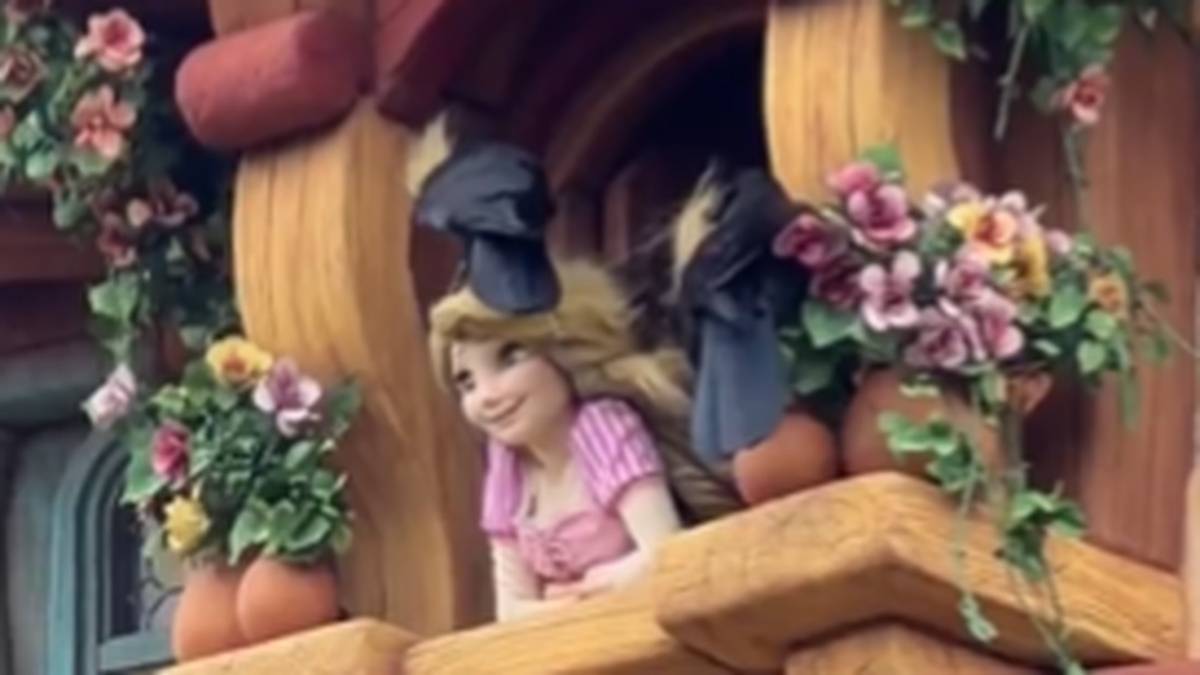
A routine day of enchantment at Tokyo DisneySea took an unexpected turn when a scene meant to evoke wonder and nostalgia instead left visitors stunned. During the Lantern Festival-themed boat ride, an animatronic figure of Rapunzel—one of the most beloved characters in modern fairy tales—became the unlikely target of local wildlife. What unfolded was a bizarre and unscripted moment that disrupted the illusion of fantasy, as two crows swooped in and began tugging at the character’s long golden hair.
For a theme park built on precision, storytelling, and immersive detail, the incident stood out as a striking example of how reality can intrude even in the most carefully curated environments. Witnesses described the moment as both shocking and surreal. The animatronic Rapunzel, positioned in a tower window and designed to sing and interact with passing guests, was mid-performance when the birds descended.
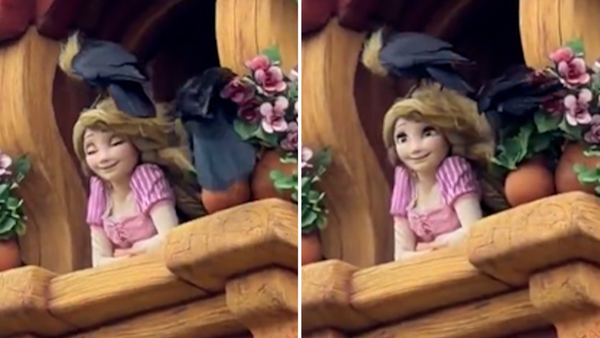
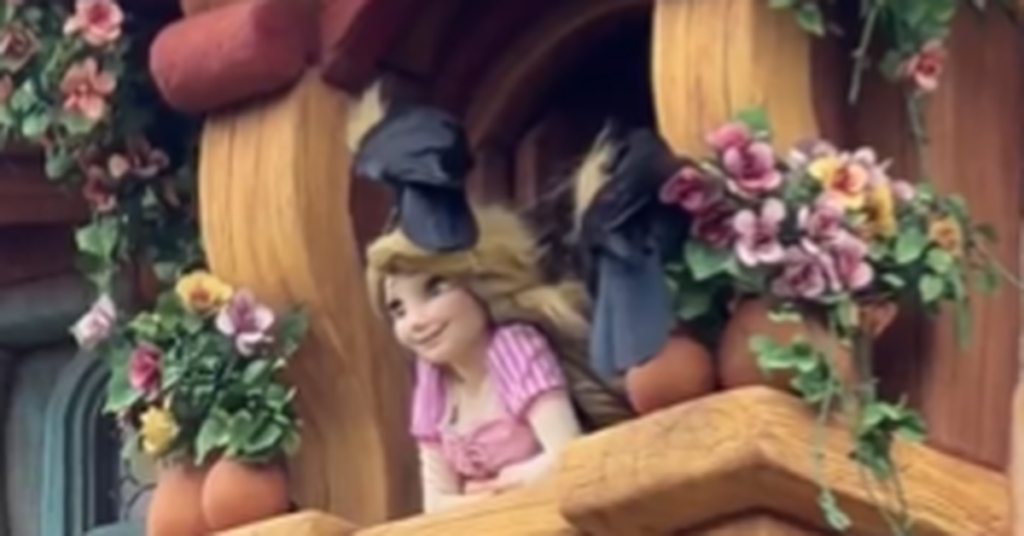
As the ride continued, the crows appeared undeterred by the moving boats or the presence of crowds, gripping strands of the synthetic hair and pulling at them as if gathering nesting material. Guests could be heard shouting in surprise, unsure whether what they were seeing was part of the show or an unexpected malfunction. The illusion quickly broke, replaced by a mix of disbelief, amusement, and concern.
A Fairytale Interrupted by Nature
The Lantern Festival ride is designed to transport visitors into a serene, glowing world inspired by Rapunzel’s story, complete with floating lights, gentle music, and carefully choreographed animatronic performances. The sudden intrusion of crows disrupted this carefully maintained atmosphere. Instead of focusing on the romantic imagery and storytelling, guests found themselves watching a real-time struggle between a static figure and opportunistic birds. The juxtaposition was striking—fantasy meeting nature in a way that no Imagineer could have planned.
Observers noted that the crows seemed particularly interested in Rapunzel’s hair, which is crafted to look soft, flowing, and lifelike. From a distance, the material may have appeared suitable for nesting, especially during a time when birds are actively gathering resources. The realism that Disney prides itself on may have inadvertently contributed to the problem, as the animatronic’s hair became indistinguishable from something useful in the natural environment.
Reactions from guests varied widely. Some were genuinely alarmed, worried about potential damage to the ride or the safety implications of wildlife interacting with park attractions. Others found humor in the situation, likening it to an unscripted twist on the original story. The scene quickly gained traction online, with videos capturing the moment spreading across social media platforms. Comments ranged from playful jokes about the birds “stealing Rapunzel’s powers” to observations about how even the most magical settings are not immune to the unpredictability of nature.
😅Disney’s having a rough week: two crows flew to the top of Rapunzel’s tower at Tokyo DisneySea in Japan and started ripping out her hair. pic.twitter.com/iM94JSmhkL
— NEXTA (@nexta_tv) April 1, 2026
The incident also highlighted the challenges of maintaining outdoor attractions in environments where wildlife is present. Unlike indoor rides, open-air setups are inherently exposed to external factors, from weather conditions to animals. While parks often implement measures to deter interference, no system is entirely foolproof. In this case, the crows’ persistence demonstrated how quickly a controlled setting can become unpredictable.
A Week of Unusual Animatronic Incidents
The Rapunzel episode was not an isolated occurrence but part of a broader string of unusual incidents involving animatronics across Disney parks that week. Just days earlier, another beloved character, Olaf from the Frozen franchise, experienced a malfunction that quickly went viral. During a public appearance, the small animatronic figure was performing as expected—moving, gesturing, and engaging with the crowd—before suddenly freezing mid-action.
Read : Japan Releases AI-Generated Video Showing What Will Happen in Tokyo if Mount Fuji Erupts
What followed added an unexpected layer of comedy to the situation. After a brief pause, the figure toppled backward in full view of the audience, prompting gasps and laughter. The moment became even more memorable when Olaf’s carrot nose detached and fell to the ground, completing the sequence in a way that many viewers later described as unintentionally perfect comedic timing. A staff member quickly stepped in to attend to the fallen character, but by then, the footage had already begun circulating widely online.
Visitors who witnessed the Olaf incident firsthand shared mixed reactions. Some expressed disappointment, especially those who had waited in long queues for the experience, while others appreciated the humor and uniqueness of the moment. The clip’s viral spread turned it into a meme, with viewers highlighting the absurdity and timing of the collapse. Reports suggested that the animatronic was relatively new, adding to the speculation about whether the malfunction was due to technical issues or early operational challenges.
Together, these incidents created a narrative that caught the attention of fans and observers alike. While each event had its own circumstances—one involving wildlife interference and the other a mechanical failure—the combination led to broader discussions about reliability, maintenance, and the complexities of running highly detailed attractions. For a brand synonymous with seamless experiences, such moments stand out precisely because they are so rare.
Balancing Realism and Reliability in Theme Park Design
The events involving Rapunzel and Olaf bring into focus a key tension in modern theme park design: the pursuit of realism versus the need for durability and control. Animatronics are engineered to mimic lifelike movements and appearances, enhancing immersion and emotional connection for guests. However, the more realistic these figures become, the more they may interact with their environment in unintended ways.
Read : Japanese YouTuber Airi Sato Stabbed While Livestreaming in Tokyo Street
In the case of Rapunzel, the lifelike quality of her hair likely contributed to the crows’ interest. Materials designed to look natural can sometimes attract actual animals, especially in outdoor settings. This raises questions about how designers can maintain visual authenticity while minimizing the risk of interference. Possible solutions might include the use of alternative materials, subtle deterrents, or design adjustments that reduce the likelihood of attracting wildlife without compromising the overall aesthetic.
For mechanical issues like Olaf’s collapse, the challenge lies in ensuring reliability without sacrificing complexity. Animatronics involve intricate systems of motors, sensors, and programming, all of which must function in harmony. Even minor faults can lead to noticeable disruptions, particularly in live performance settings where timing and continuity are crucial. Regular maintenance, testing, and rapid response protocols are essential components of managing these systems effectively.
Despite these challenges, such incidents also reveal an unexpected dimension of theme park experiences. Moments of imperfection—whether caused by nature or technology—can become memorable in their own right. Guests often share these stories as unique highlights of their visit, adding a layer of unpredictability that contrasts with the otherwise controlled environment. While not part of the intended design, these occurrences can contribute to the broader narrative of a park, reinforcing the idea that even in places built on fantasy, real-world variables remain at play.
In response to the Rapunzel incident, reports indicated that the animatronic was temporarily removed for inspection and likely repairs. This step underscores the importance of swift action in maintaining both safety and the quality of the guest experience. It also suggests that adjustments may be made to prevent similar occurrences in the future, whether through design changes or additional protective measures.
As theme parks continue to evolve, integrating advanced technology and increasingly realistic elements, the balance between immersion and resilience will remain a central consideration. The incidents involving Rapunzel and Olaf serve as reminders that even the most carefully crafted environments are not entirely insulated from the unexpected. They highlight the ongoing need for innovation, adaptability, and a willingness to address challenges as they arise, ensuring that the magic endures even when reality briefly steals the spotlight.