

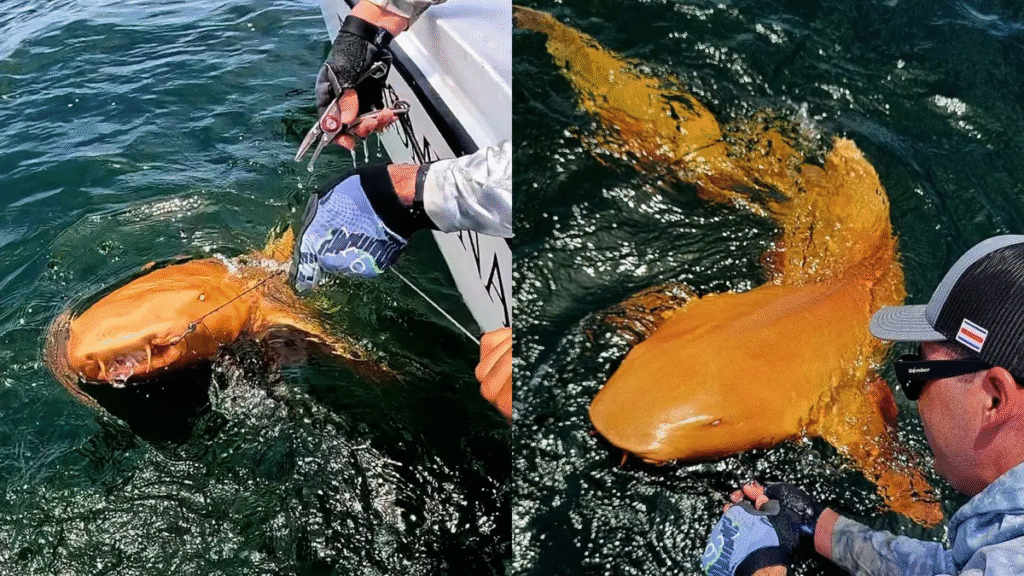
In an extraordinary find that has captivated marine biologists and nature enthusiasts alike, a rare bright orange nurse shark with striking white eyes was discovered off the coast of Costa Rica. This unprecedented sighting, which occurred during a sport fishing trip near Tortuguero National Park, marks the first documented case of a nurse shark exhibiting both xanthism and albinism in the Caribbean. The discovery not only highlights the incredible diversity of marine life but also raises intriguing questions about the genetic and environmental factors influencing such rare pigmentation anomalies.
A Striking Discovery in Caribbean Waters
The remarkable Orange Nurse Shark, measuring approximately six and a half feet in length, was caught at a depth of 37 meters near Tortuguero National Park, a biodiverse region known for its rich marine ecosystems. Unlike the typical brown or greyish hue of nurse sharks, which allows them to blend seamlessly with the ocean floor, this individual displayed an intense yellow-orange coloration that made it stand out dramatically against its surroundings.
Adding to its uniqueness were its ghostly white eyes, which lacked visible irises, a feature that immediately caught the attention of the anglers and later the scientific community. The shark was reeled in by a fisherman named Juan Pablo during a sport fishing expedition organized by the Parismina Domus Dei tour company.
After a brief examination and documentation, the shark was released back into the wild in good condition, allowing it to continue its life in the Caribbean waters. Photos and videos of the vibrant creature quickly spread across social media platforms, sparking widespread fascination and prompting researchers to delve deeper into the causes of its unusual appearance.
Read : Shark Bites Rachel Smith’s Ring Finger While Paddling at Rose Hall Beach
The bright orange coloration is attributed to a rare genetic condition known as xanthism, or xanthochromism, which results in an excess of yellow or golden pigments due to a lack of red pigmentation. This condition is exceptionally rare in marine species, particularly among cartilaginous fish such as sharks, rays, and skates.
Read : Horrifying Video Shows Seawater Turning Red as Shark Attacks Four People at South Padre Island in US
What makes this discovery even more extraordinary is the shark’s simultaneous display of albinism, evidenced by its white eyes, a combination referred to as albino-xanthochromism. This dual condition has never before been documented in a nurse shark or any cartilaginous fish in the Caribbean, making this a groundbreaking moment in marine biology.
Scientific Significance and Survival Implications
Nurse sharks (Ginglymostoma cirratum) are typically benthic predators, spending much of their time resting on or near the seafloor, often around reefs and rocky areas. Their characteristic brown or greyish skin provides effective camouflage, helping them avoid predators and ambush prey such as small fish, mollusks, and crustaceans. The bright orange hue and white eyes of this individual, however, would theoretically make it far more visible to both predators and prey, potentially compromising its ability to survive in the wild.
Yet, the size of the shark—approximately two meters long—suggests it had reached adulthood, indicating that its unusual pigmentation did not significantly hinder its survival. This challenges long-held assumptions among researchers that conditions like xanthism and albinism, which increase visibility, inherently reduce an animal’s chances of survival. The fact that this shark thrived to adulthood despite its conspicuous appearance suggests a remarkable adaptability, prompting scientists to reconsider the survival dynamics of animals with rare pigmentation disorders.

The discovery has sparked significant interest in the genetic makeup of nurse shark populations in the Caribbean. Xanthism is primarily caused by a genetic mutation that disrupts normal pigment production, but environmental factors such as diet, inbreeding, or even stressors like elevated water temperatures could also play a role in its expression.
The white eyes, indicative of albinism, suggest a reduction in melanin, the pigment responsible for darker colors in skin and eyes. The combination of these two conditions in a single individual is extraordinarily rare and requires the simultaneous interruption of multiple pigment pathways, a phenomenon that scientists are eager to study further.
Researchers from the Federal University of Rio Grande, who analyzed the find, emphasized that this is the first recorded instance of xanthism in a cartilaginous fish in the Caribbean. Their findings, published in a scientific journal, call for further investigation into the genetic diversity and environmental conditions of nurse shark populations in the region.
Questions remain about whether this shark represents an isolated case or if it could signal an emerging genetic trend within the local population. Understanding these factors could provide critical insights into the adaptability of marine species in the face of changing environmental conditions.
Implications for Marine Conservation and Future Research
The discovery of this unique nurse shark underscores the importance of continued research and conservation efforts in marine ecosystems like those surrounding Tortuguero National Park. Nurse sharks, while not currently considered endangered, face threats from overfishing, habitat degradation, and climate change, which can impact their populations and the broader marine food web. The presence of such a rare individual highlights the genetic diversity within these populations, which is a key factor in their resilience to environmental changes.
This find also serves as a reminder of the need to protect critical habitats like the Caribbean’s coral reefs and seagrass beds, which nurse sharks rely on for feeding and resting. Their unique buccal pump, which allows them to breathe without constant swimming, makes them particularly suited to these environments, where they can remain stationary while drawing water over their gills. However, the bright coloration of this individual could make it more vulnerable to human-related threats, such as accidental capture or targeted fishing, emphasizing the need for responsible fishing practices and marine protected areas.
The orange nurse shark’s discovery has also sparked broader conversations about biodiversity and the role of genetic anomalies in shaping our understanding of marine life. Similar cases of pigmentation disorders, such as the pink manta ray known as Inspector Clouseau or the albino gorilla Snowflake, have drawn global attention to the beauty and complexity of genetic diversity. These rare individuals serve as natural ambassadors for conservation, reminding us of the wonders that lie beneath the ocean’s surface and the importance of preserving them for future generations.
Moving forward, scientists are calling for more comprehensive studies to explore the genetic and environmental factors behind this shark’s unique coloration. Advances in genetic sequencing could help determine whether the mutation responsible for its xanthism and albinism is present in other individuals within the population.
Additionally, research into the environmental conditions of the northern Caribbean, such as water temperature, salinity, and food availability, could shed light on how these factors influence pigmentation in marine species. Such studies could have far-reaching implications, not only for nurse sharks but for other cartilaginous fish that share similar genetic and ecological traits.
The anglers who caught this remarkable shark played a crucial role in its documentation, highlighting the value of citizen science in marine research. By releasing the shark unharmed and sharing their findings with researchers, they contributed to a growing body of knowledge about the Caribbean’s marine biodiversity. This collaborative approach between local communities, tour operators, and scientists is essential for monitoring rare phenomena and ensuring that discoveries like this one are preserved for study rather than exploitation.
In conclusion, the discovery of a bright orange nurse shark with white eyes off the coast of Costa Rica is a landmark event in marine biology. It challenges existing assumptions about survival in the wild, raises important questions about genetic diversity, and underscores the need for continued conservation efforts.
As researchers delve deeper into the causes and implications of this rare find, it serves as a vivid reminder of the ocean’s vast mysteries and the importance of protecting its inhabitants. The vibrant shark, with its golden hue and ghostly eyes, is not just a scientific curiosity but a symbol of the resilience and wonder of marine life, urging us to explore, understand, and preserve the delicate ecosystems that make such discoveries possible.