
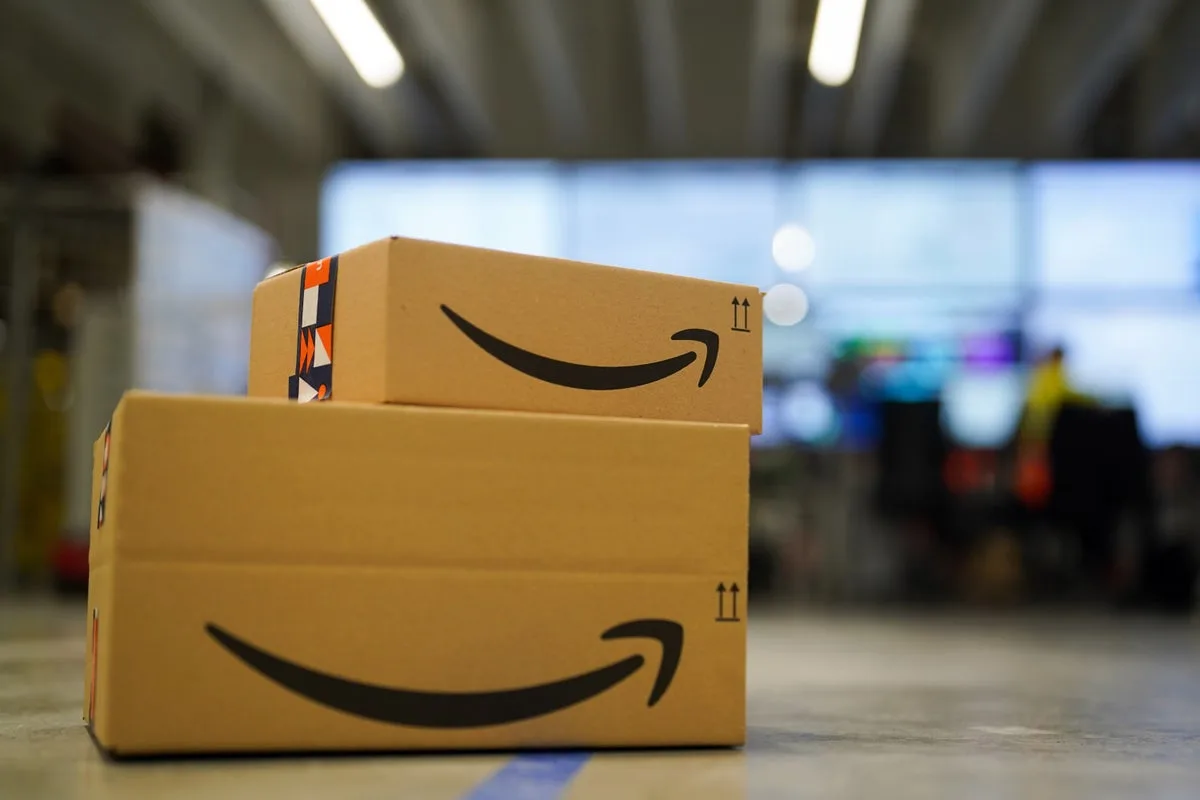
In a bizarre twist raising immediate alarms about election integrity, a resident of Newburgh, Maine, unpacked her Amazon delivery this week to find not the coffee, rice, and paper plates she ordered, but Receives 250 Blank State Election Ballots stuffed inside. The discovery, reported on October 3, 2025, comes just days before mail-in voting begins for the November statewide referendum on tightening absentee ballot rules. Maine Secretary of State Shenna Bellows has launched a full investigation, emphasizing that secure elections remain her top priority.
As the state grapples with this apparent breach in the chain of custody, questions swirl about how official ballots ended up in a private commercial shipment, potentially undermining public trust at a critical juncture. The incident highlights vulnerabilities in ballot distribution even as Maine boasts one of the nation’s highest voter turnout rates, often exceeding 70%. With mail-in ballots set to be mailed out starting October 8, 2025, for the referendum—formally Question 1 on the ballot—this mishap could not have occurred at a more inopportune time.
Officials have confirmed the ballots are authentic, printed for the upcoming vote on election reforms that include voter ID requirements and curbs on absentee voting access. The woman, who spoke on condition of anonymity to local authorities, promptly turned the materials over to the Newburgh town office, which forwarded them to state investigators. No arrests have been made, and the source of the tampering remains under scrutiny.
Receives 250 Blank State Election Ballots in Amazon Delivery
The sequence of events unfolded routinely for the anonymous Newburgh resident until she sliced open her Amazon package on October 3. Expecting everyday household staples—grounds for her morning brew, a bag of rice for meals, and disposable plates for convenience—she instead pulled out stacks of pristine, unmarked ballots. Each sheet bore the official markings of Maine’s election division, intended for the November 4, 2025, referendum. The total count: exactly 250, bundled tightly as if prepared for legitimate distribution.
The package itself showed signs of interference. Upon arrival at her rural home in Penobscot County, the box appeared hastily resealed with clear tape over what looked like prior openings. No trace of her actual order was inside, leading her to contact Amazon customer service immediately. A replacement shipment of the missing items arrived the next day, but the ballots demanded urgent attention. “I just froze when I saw them,” the woman later recounted to investigators, according to a statement released by the Secretary of State’s office. “These aren’t toys or junk mail—they’re votes.”
Newburgh, a small town of about 1,500 residents nestled along the Penobscot River, relies on a modest town office for election duties. The clerk there verified the ballots’ authenticity within hours and secured them in a locked safe before transferring custody to state law enforcement. Preliminary examinations confirmed no markings or alterations on the sheets, ruling out immediate fraud attempts. However, the sheer volume—enough to sway a close local race—underscored the gravity. In a state where absentee ballots account for over 50% of votes in recent elections, such a leak represents a direct threat to the process.
Local officials in Newburgh described the day as chaotic. The town clerk, reached briefly before declining further comment, coordinated with the Maine State Police to transport the materials to Augusta under escort. By evening, the ballots were cataloged in the Secretary of State’s secure facility, where forensic analysis began. Experts noted that blank ballots like these are printed in limited batches by authorized vendors and distributed only through county clerks or the central elections board. Their diversion into a commercial supply chain points to either internal mishandling or external sabotage, though no evidence yet favors one over the other.
WTF. A woman in Maine received 250 state election ballots packaged inside her Amazon delivery of food and toys.
— Christi Johnston (@ChristiJoh48218) October 1, 2025
This needs to be investigated IMMEDIATELY @libsoftiktok pic.twitter.com/DGsBIwOaiK
This is not the first oddity in Maine’s electoral logistics this cycle. Earlier reports from August flagged minor discrepancies in ballot printing delays due to paper shortages, but nothing approached this scale. The timing amplifies concerns: with early voting sites opening October 14 and mail-ins hitting doorsteps soon after, any disruption could cascade into widespread confusion.
Official Investigations and Swift Responses
Maine’s election apparatus sprang into action with uncharacteristic speed. Secretary of State Shenna Bellows, a Democrat serving since 2021, announced the probe within hours of the report. “Safe and secure elections are my top priority,” Bellows stated in a prepared release. “As soon as we became aware of allegations of ballots being received outside of the appropriate chain of custody, I immediately initiated an investigation through my Secretary of State’s law enforcement division. Law enforcement is working diligently to determine who is responsible, and they will be held accountable. We will not stop until we have answers.”
The investigation falls under Bellows’ dedicated law enforcement unit, a specialized team of eight officers trained in election crimes. Their mandate includes tracing the ballots’ path from the printer—a contracted firm in southern Maine—to the point of diversion. Digital manifests from the U.S. Postal Service and UPS, often used for bulk election mail, are being subpoenaed. Amazon, meanwhile, has pledged full cooperation. A company spokesperson clarified: “We’re cooperating with the law enforcement agencies investigating this incident. Based on our initial findings, it appears that this package was tampered with outside of our fulfillment and delivery network, and not by an Amazon employee or partner.”
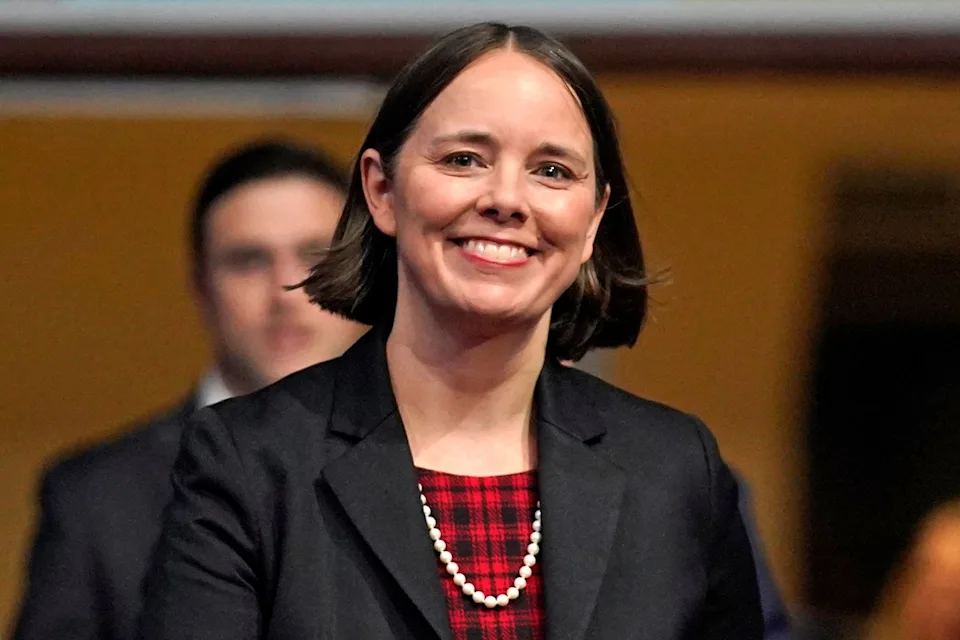
Political reactions poured in swiftly, crossing party lines in urgency if not tone. Republicans in the state legislature, already advocating for the referendum’s reforms, seized on the event as Exhibit A for lax safeguards. House Republican Leader Billy Bob Faulkingham demanded federal intervention, writing to U.S. Attorney General Pam Bondi and FBI Director Kash Patel: “The discovery of hundreds of authentic state ballots in a private Amazon delivery is beyond alarming. At a time when Maine people are being asked to weigh in on whether to adopt the same commonsense Voter ID standards used in 36 other states, this shocking breach exposes how vulnerable our elections really are. When ballots appear in household shipments of rice and toys, trust is shattered. Mainers deserve answers, accountability, and immediate action.”
Alex Titcomb, a leading proponent of the “Yes on Question 1″ campaign, echoed the call: “This is a stunning breach of election security that no free state can tolerate. Mainers deserve to know how many other ballots are unaccounted for, who is responsible, and whether our elections have already been compromised. This is an appalling breakdown in the chain of custody that makes it impossible for Mainers to have confidence in the integrity of our elections.”
Democrats, while supportive of the probe, urged restraint against politicizing the incident. Governor Janet Mills, who opposes the referendum, reiterated her administration’s commitment to accessible voting. In a statement from her office, Mills noted: “Maine’s elections have long been a model of fairness and participation. This isolated event, while troubling, will be thoroughly addressed without undermining that legacy.” No additional ballots have been reported missing statewide, per a midday update from the elections division.
As of October 4, the probe remains active, with interviews underway for Amazon warehouse staff in nearby Bangor and the printing vendor in Saco. Federal involvement hinges on evidence of interstate tampering, but state officials expect preliminary findings within 72 hours.
Implications for Maine’s Referendum and Election Security
The ballot blunder casts a long shadow over Question 1, the November referendum poised to reshape absentee voting in Maine. The measure asks: “Do you want to change Maine election laws to eliminate two days of absentee voting, prohibit requests for absentee ballots by phone or family members, require photo ID for absentee voting, limit drop boxes, and end automatic absentee ballot applications?” Proponents argue it aligns Maine with 36 other states mandating voter ID, closing loopholes exploited in past controversies. Opponents, including the League of Women Voters and Mills, decry it as suppression targeting elderly, rural, and low-income voters who rely on mail-ins.
Maine’s absentee system, expanded during the pandemic, drove record turnout in 2020 and 2022. Over 400,000 absentee ballots were cast in the last gubernatorial race, comprising 55% of total votes. The referendum’s passage could slash that flexibility, requiring in-person ID verification—a hurdle in a state where 40% of residents live rurally. This incident, occurring amid heated debate, risks tipping undecided voters toward “Yes,” perceiving current rules as insecure.
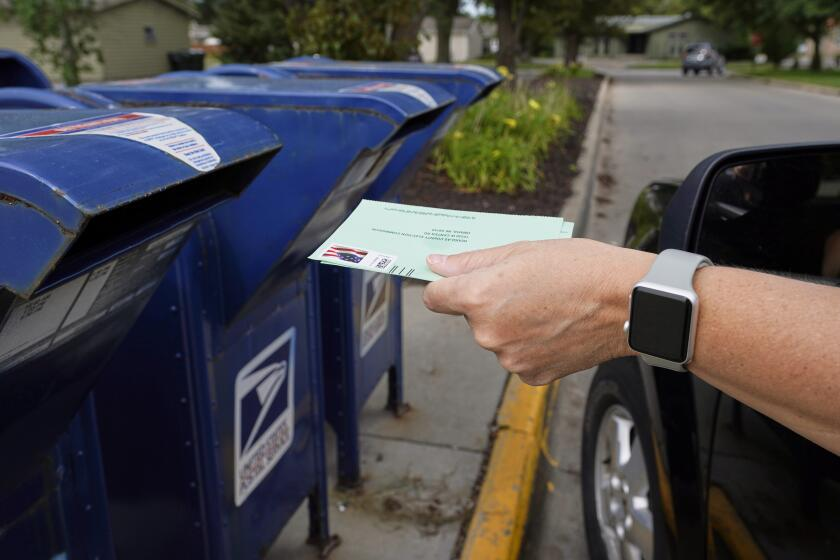
Election security experts view the event through a broader lens. “Chain-of-custody breaches like this are rare but devastating,” said Dr. Elena Vasquez, a political science professor at the University of Maine. “In a low-trust environment, one anomaly fuels narratives of widespread fraud. Maine must audit its distribution protocols now.” Vasquez pointed to post-2020 reforms nationwide, including barcode tracking on ballots, which Maine partially adopted but not universally.
The fallout extends to public confidence. A quick poll by the Portland Press Herald on October 4 showed 62% of respondents now favor stricter ID rules, up from 48% pre-incident. Advocacy groups on both sides ramped up ads: “Yes” campaigns highlight the Amazon anomaly in spots warning of “ballots gone wild,” while “No” forces counter with messages on “fearmongering over a fluke.”
Long-term, this could prompt legislative tweaks beyond the referendum. Bellows’ office has floated enhanced RFID tagging for future print runs and third-party audits of vendors. Nationally, it echoes concerns in swing states like Pennsylvania, where similar mail-in glitches drew scrutiny in 2024.
For now, Maine voters proceed with caution. The Secretary of State urges reporting any suspicious deliveries to 1-800-264-5474. As mail-ins launch next week, the state reaffirms its resilience: one errant box won’t derail democracy, but it demands vigilance. With 1.4 million registered voters eyeing the ballot, restoring faith starts with transparency—and accountability for those 250 wayward sheets.