
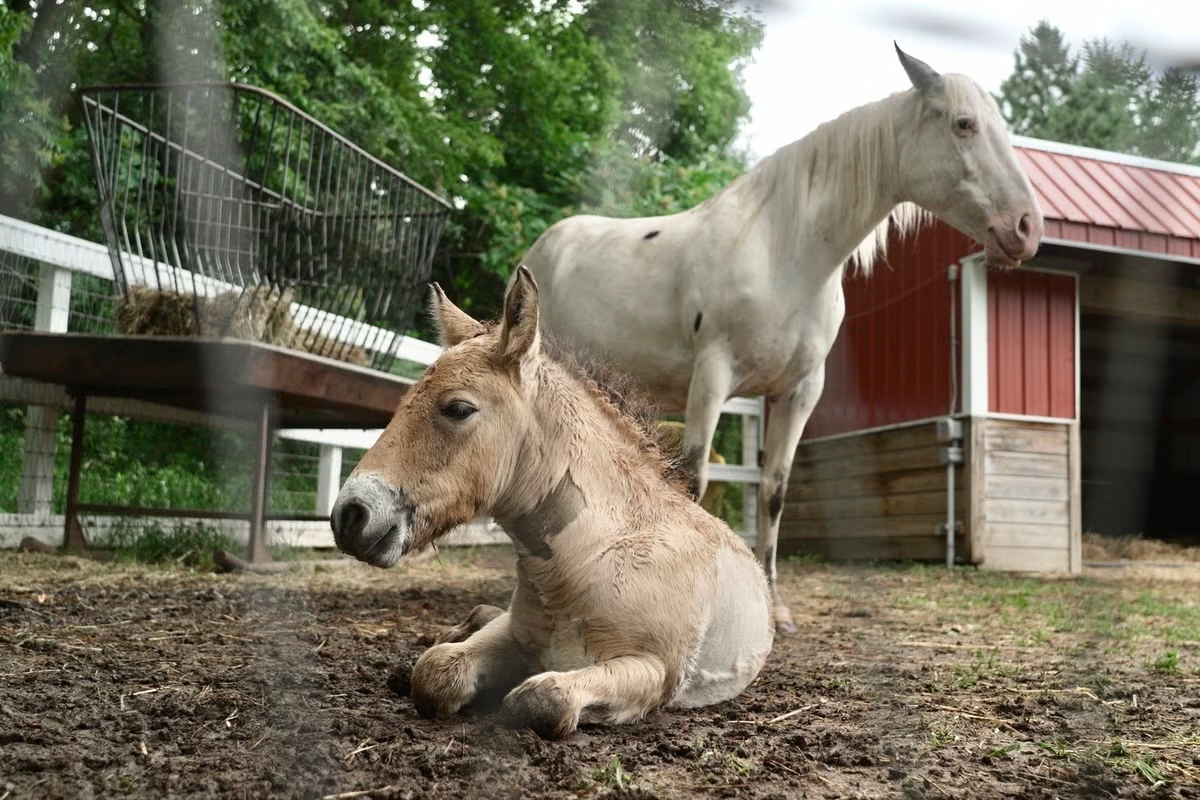
In a quiet corner of the Minnesota Zoo, an extraordinary tale of survival and maternal love has unfolded. Marat, a critically endangered Przewalski’s horse foal, was given a second chance at life through an act of unexpected compassion. Rejected by biological mother shortly after birth, his life seemed destined for tragedy. Yet, thanks to a grieving domestic pony named Alice, Marat’s story turned into one of resilience, recovery, and rare interspecies bonding that experts are calling a remarkable breakthrough in wildlife care.
A Fragile Beginning and a Brave Fight for Life
The early days of Marat’s life were marked by hardship. Born nearly two months ago at the Minnesota Zoo, he entered the world carrying the legacy of his rare and ancient species—Przewalski’s horse, the last truly wild horse left on the planet. Once declared extinct in the wild during the 1960s, Przewalski’s horses had been surviving only in zoos.
Over the past few decades, efforts have been made to reintroduce them to the steppes of Mongolia, China, Russia, and Ukraine. With fewer than 2,000 alive today, each foal is not just a birth, but a beacon of hope for the future of the species. Marat, whose name fittingly means “one who is brave,” began his life already in distress. Soon after his birth, zookeepers noticed he was struggling to stand properly.
Dr. Annie Rivas, the zoo’s director of animal health, later confirmed he had been born with limb issues that affected his ability to keep up with his mother and the rest of the herd. Because he couldn’t move well, he spent much of his time lying on the ground, leaving him vulnerable to infections. Eventually, he developed bacterial sepsis and pneumonia, life-threatening conditions for any newborn, let alone one from a fragile gene pool.
Despite the odds, Marat’s fighting spirit prevailed. Thanks to the University of Minnesota’s equine intensive care unit, he received emergency treatment and began a slow recovery. The medical team stabilized him with antibiotics, IV fluids, and round-the-clock monitoring. Yet, even as he regained his strength, another blow was waiting for him—rejection from his mother, Nady.
Read : ‘Cutthroat Cowboys’ Arrested for Riding Horses Through Walmart in Baker
This kind of rejection is not uncommon among first-time wild horse mothers, especially after a medical separation. The bond between mare and foal is typically established quickly after birth, and a disruption during those critical hours can often sever that connection. Nady did not recognize him as her own and refused to accept him back.
Read : UK’s King’s Guard Horse Bites Tourist After She Touches It for Photo
Zookeepers faced a painful dilemma: they could either attempt to hand-rear him, risking developmental issues due to the lack of proper socialization, or find an alternative surrogate—something rarely attempted with wild species like the Przewalski’s horse.
An Unexpected Bond Between Species
Enter Alice, a domestic Pony of the Americas residing at the zoo. Alice was still mourning the loss of her own foal when zookeepers introduced her to Marat. The outcome was far from certain. Inter-species surrogacy, especially involving a wild foal like Marat, is virtually unheard of. Yet Alice’s instincts kicked in. She accepted Marat immediately—nudging him gently, allowing him to nurse, and offering the warmth and protection he so desperately needed.
“It was really kind of a perfect fairy-tale ending. … They just bonded like that,” said Dr. Rivas.
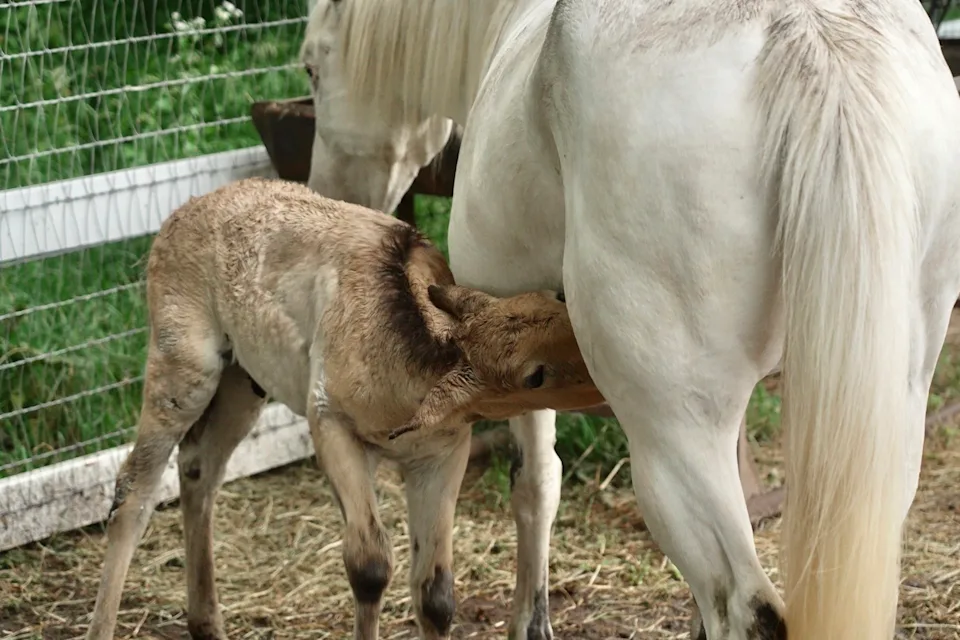
Veterinarians and caregivers at the zoo were astonished by the rapid bond that formed. This wasn’t just a maternal substitution—it was emotional healing for both animals. Alice found a purpose again, and Marat found the care and nurturing that gave him a real shot at survival. Experts say this is one of the first documented cases of successful interspecies surrogacy involving a Przewalski’s horse, and it opens the door for more innovative care approaches in conservation programs.
For weeks, Alice and Marat remained inseparable. She tolerated his playful behavior and provided boundaries, teaching him the manners and signals that foals learn from their mothers. Marat, meanwhile, flourished physically and emotionally. From a weak, grounded foal to an energetic youngster, he began to reveal a budding personality—feisty, strong-willed, and unmistakably wild.
Learning to Be Wild: Preparing for the Next Chapter
While the bond with Alice gave Marat a second chance, the road ahead remains complex. Przewalski’s horses are distinct from domesticated breeds in both behavior and build. They are stockier, with erect manes and no forelock, and their wild instincts are deeply ingrained. As the only truly wild horse species to never be domesticated, integrating Marat back into a Przewalski’s herd poses challenges.
“Being one of the true wild horses left in the world, behaviorally, they are a little bit different,” said Kurt Heizmann, the zoo’s director of animal care.
Zoo officials aim to transition Marat gradually into the adult Przewalski’s herd once he is strong enough. Social hierarchies in wild horse groups are intricate and often aggressive, especially among stallions. However, Marat’s upbringing with Alice has provided a stable foundation. Alice is subtly preparing him for herd life, allowing controlled interactions with other horses and helping him learn social cues.
“He is definitely a wild horse,” Dr. Rivas said. “One, he is a stallion, so he’s already got a big personality from that. But he is also a little more wild than you would expect a domestic horse foal to be at this point in his life.”
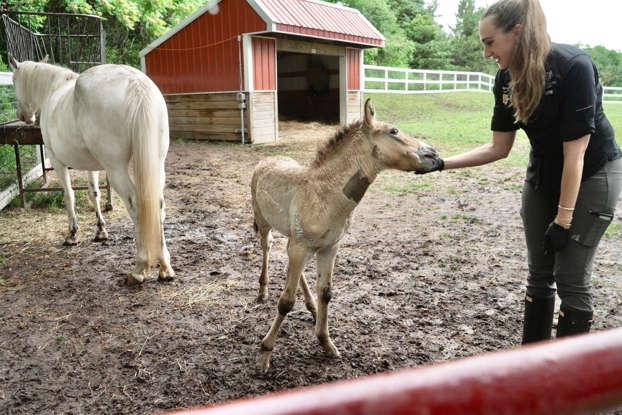
Indeed, Marat has already started asserting his dominance—kicking, snorting, and testing boundaries with his human caregivers. These traits, though challenging in a zoo setting, are promising indicators of his potential to thrive in a wild or semi-wild environment. The team hopes to complete his integration into the Przewalski’s herd before he grows too old to be accepted by other stallions.
In the coming months, Marat’s progress will be closely monitored. The zoo plans to use his story to raise awareness about the plight of endangered species and the innovative methods used in modern conservation. With each playful kick and gallop, Marat embodies the resilience of his species, the nurturing power of maternal instinct—even when it comes from another species—and the commitment of a team that refused to give up.
As he matures, Marat may one day contribute to the global breeding program for Przewalski’s horses. If his health continues to improve and his social integration is successful, he could become a sire, passing on his genes to ensure that his kind does not vanish from the Earth again.
For now, though, he is still a foal—brave, wild, and deeply loved by a surrogate mother who lost her own but chose to love another. Their story, rooted in grief and adversity, has blossomed into one of hope and healing. It reminds us that even in the wildest of creatures, and the most unlikely of circumstances, love can bridge the gaps we never imagined possible.