
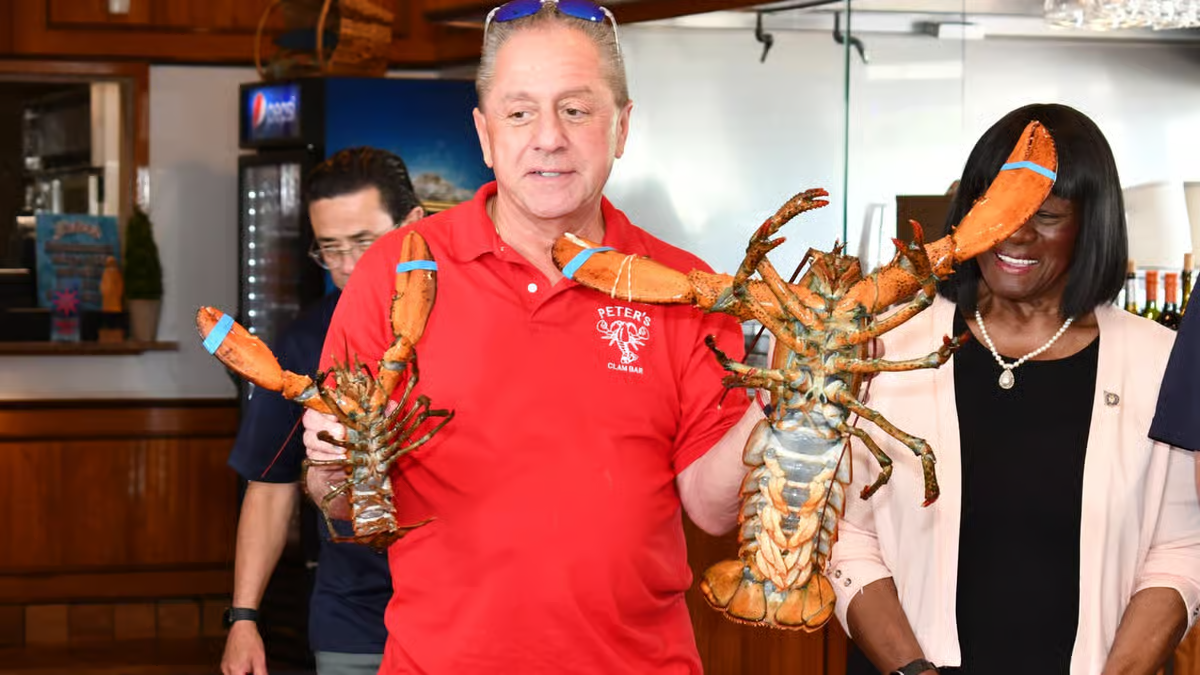
In a heartwarming celebration of life, tradition, and environmental consciousness, a New York seafood restaurant recently made headlines by returning an astonishingly old lobster named Lorenzo to the sea. The event, which coincided with both National Lobster Day and Father’s Day, was not just a simple act of animal release—it was a symbolic gesture that resonated with compassion, respect for nature, and a unique sense of community.
Lorenzo, a 21-pound and estimated to be 110-Year-Old Lobster, was released back into the open waters by Peter’s Clam Bar, a popular eatery in Hempstead, Long Island. This special act is not only a celebration of a crustacean’s long life but also an inspiring moment of ethical decision-making in the seafood industry.
Lorenzo was no ordinary lobster. For years, he had lived inside the tank at Peter’s Clam Bar, becoming a local attraction and an informal mascot for the establishment. Customers would come in not just to enjoy fresh seafood, but also to catch a glimpse of the gentle giant whose massive claws and wise, ancient eyes hinted at more than a century of underwater existence.
The story of Lorenzo’s return to the wild is not just the tale of one lobster—it is a reflection of human compassion, a deeper understanding of marine life, and a commitment to letting nature reclaim what is hers.
Lorenzo’s Long Life and Unexpected Residency
Estimated to be 110-Year-Old Lobster—is remarkable in itself. Most lobsters in the wild never reach such an advanced age due to environmental hazards, predators, and fishing activities. But Lorenzo defied the odds, and his survival over more than a century is a testimony to both resilience and luck. While the exact date of his capture isn’t publicized, it’s clear that at some point he found himself inside the tanks of Peter’s Clam Bar, where he remained for years.
Butch Yamali, the owner of Peter’s Clam Bar, revealed that Lorenzo had become a silent fixture of the restaurant. “Lorenzo just kind of slipped through the cracks and ended up in our tank for years,” he said in an interview. Over time, Lorenzo grew in size, character, and popularity. Tourists and regular patrons alike became enamored with the lobster, taking photos and admiring his unique presence. He wasn’t just an animal on display; he was an integral part of the restaurant’s charm and personality.
Read : Cuba: A Journey Through the Jewel of the Caribbean
Still, as time passed and Lorenzo aged even further, questions arose about what should become of him. Yamali found himself at a crossroads—keep Lorenzo confined, risk his health in captivity, or set him free where he might live out the rest of his life in his natural habitat. The decision was not easy, but the sentiment of Lorenzo having become “like a pet” made it clear: he deserved freedom.
A Celebration of Life and Ethics:
The idea to release Lorenzo came in conjunction with National Lobster Day and Father’s Day, two events that carry themes of appreciation, celebration, and reflection. Yamali, moved by the symbolism and sentiment of the occasion, saw it as the perfect opportunity to give Lorenzo a second chance. “Some of these lobsters just don’t live that long, and this one did. So we figured what better way to celebrate Father’s Day than by freeing Lorenzo,” he said.
Read : Woman Charged $615 for Live Lobster at Canton Lane Chinese Restaurant
The release of Lorenzo was not a quiet event. Joined by Hempstead Town Supervisor Don Clavin and Nassau County Legislator John Ferretti, the team at Peter’s Clam Bar orchestrated a ceremonial “pardon” for Lorenzo, echoing the traditions of holiday turkey pardons often seen in the United States. The ceremony took place at Atlantic Beach Reef, a location chosen for its suitable marine environment and safety for reintroduced wildlife.
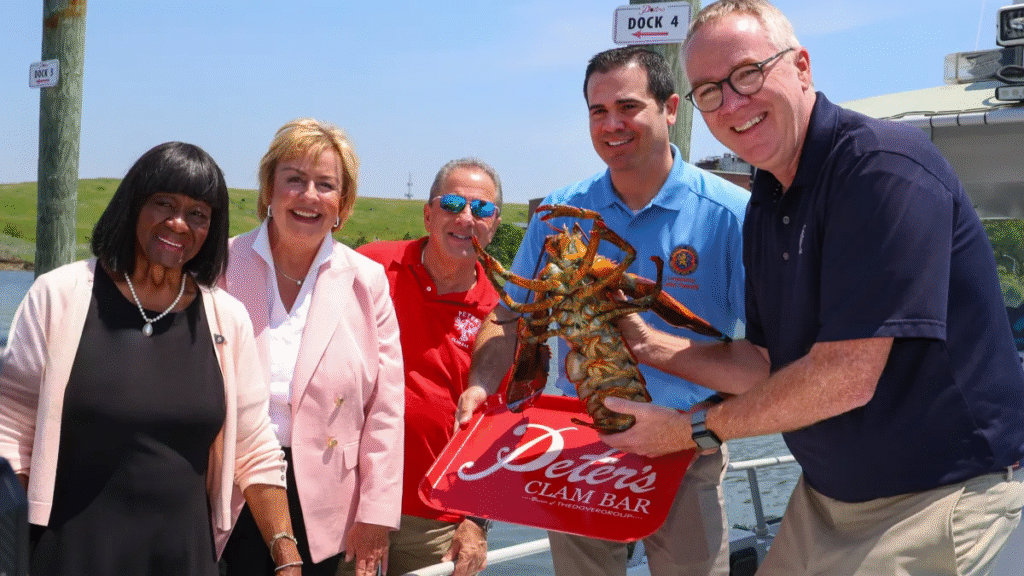
The event was well-received by the public and even shared on social media, where Peter’s Clam Bar posted a lighthearted message stating that Lorenzo is now “clawing his way to freedom and soaking up the salty breeze (instead of butter).” The act of releasing Lorenzo wasn’t just good public relations—it was a moral decision, one that touched the hearts of animal lovers and seafood enthusiasts alike. It showed that even in a business where animals are often commodities, there is room for kindness, for empathy, and for doing the right thing.
The decision not to sell Lorenzo, even though his weight and age could have fetched a high price, speaks volumes about Yamali’s character and the culture he cultivates in his restaurant. “He’s gonna be missed,” Yamali admitted, “but I think it’s better like this. If he passed away here, it wouldn’t be a good thing, and I couldn’t have the heart to sell him.”
A Message to the Industry and the Public:
Lorenzo’s journey—from the depths of the sea to a tank in a restaurant and finally back to the wild—has touched a chord far beyond Long Island. It shines a light on the larger conversation surrounding seafood ethics, the role of animals in human entertainment, and the environmental responsibilities of businesses in the food industry.
While it’s not uncommon for lobsters to be kept in tanks for display or sale, very few are ever returned to their natural habitat, especially when they grow to such impressive size and age.
Peter’s Clam Bar, through this act, has created a model that others can learn from. It’s a reminder that businesses can make humane decisions without compromising their identity or success. In fact, such stories often endear them even more to their patrons. People love good food, but they also value integrity and heart, and this restaurant has shown both.
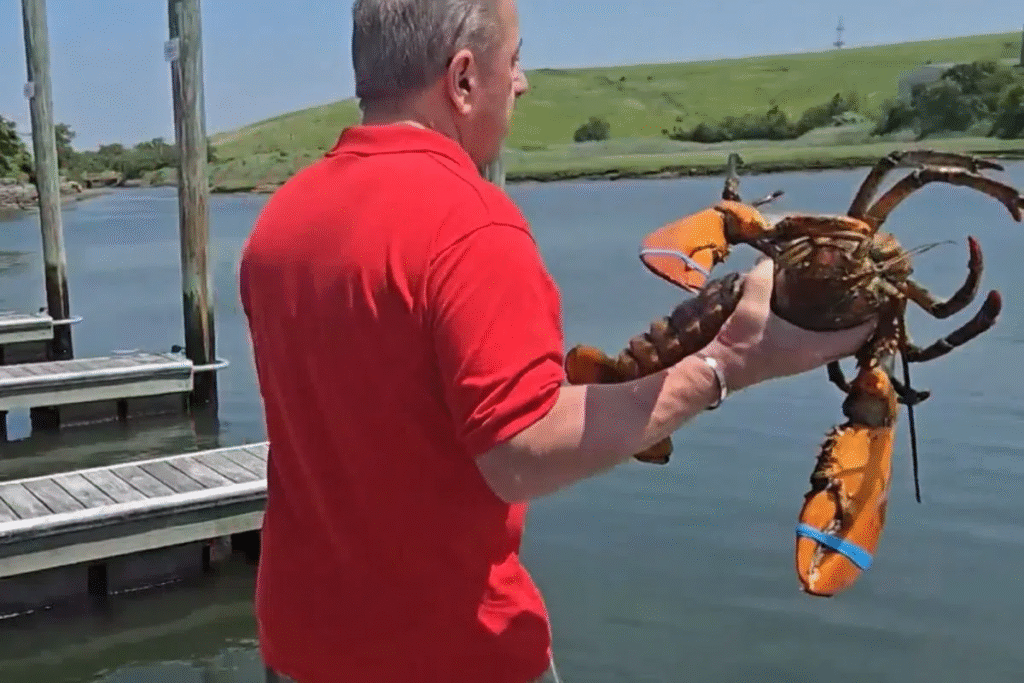
Beyond business ethics, Lorenzo’s story can also serve as an educational moment for the public. It teaches respect for marine life, awareness of the long lifespans some sea creatures can reach, and a broader appreciation of the unseen world beneath the waves. When a lobster lives to be 110 years old, it carries with it a century of ocean history, changes in marine ecosystems, and survival through countless threats. To honor such a life by allowing it to continue is not just kind—it’s just.
There is also a subtle but important environmental lesson here. Releasing Lorenzo back into the sea is an act of giving back to nature, a small but meaningful way to offset human impact on marine biodiversity. While it’s just one lobster, the symbolism behind the act can inspire broader conversations about sustainability and conservation in the seafood industry.
In the end, Lorenzo’s release is more than a feel-good story—it’s a cultural moment that underscores the possibility of coexistence between commerce and compassion. It proves that every creature, no matter how small or how large, has a story worth telling and a life worth respecting. Whether Lorenzo will thrive in the Atlantic once again is unknown, but the gesture itself has already made waves—figuratively and literally.
Peter’s Clam Bar may have lost a mascot, but the world has gained a symbol of hope, longevity, and ethical awareness. Lorenzo is now back where he belongs, deep in the sea, navigating the dark currents and ancient coral of the Atlantic Ocean. His story, however, will continue to inspire those on land for years to come.