
Florida’s Everglades, one of the most ecologically rich wetlands in the United States, has long battled an invasive threat that slithers through its swamps and marshes—Burmese pythons. These formidable predators, which can grow up to 20 feet in length, have decimated local wildlife populations, causing immense ecological imbalance.
Now, in a bid to outsmart this elusive adversary, scientists in Florida are employing an unlikely ally: remote-controlled robot rabbits. These lifelike decoys, built to mimic marsh rabbits in appearance, heat, and scent, are the latest high-tech tool deployed in the fight against invasive pythons.
The Rise of the Burmese Python Threat
The Burmese python’s presence in Florida dates back to the 1970s, a consequence of the exotic pet trade. Many were either intentionally released or escaped captivity, eventually establishing a breeding population in the Everglades. These snakes have since thrived in the wetland environment, encountering few natural predators and finding abundant prey.
As a result, the Everglades have witnessed a catastrophic decline in native species. Mammals such as raccoons, opossums, and bobcats have seen their populations drop by over 90% in certain areas, while marsh rabbits, an important food source for native predators like the Florida panther, have all but disappeared.
The challenge in controlling the python population lies in their secretive nature. These snakes are masters of camouflage, silent and nocturnal, making them extremely difficult to track. They often remain hidden in thick vegetation or submerged in water, eluding human detection.
Traditional removal methods, such as trapping or manual hunting, have only managed to put a dent in their numbers. Despite large-scale efforts like the Florida Python Challenge, which rewards hunters with cash prizes for capturing and euthanizing pythons, the reptiles continue to flourish.
Read : Kingdom of Wonder: Experiencing the Best of Cambodia’s Heritage
This persistent problem has driven scientists and wildlife officials to think creatively. Enter the remote-controlled robot rabbits—a solution that may sound absurd at first, but one that shows promise in turning the tide in favor of native wildlife.
The Technology Behind the Robot Rabbits
The development of these innovative decoys is the result of collaboration between scientists from the South Florida Water Management District and the University of Florida. The idea is simple but clever: build a rabbit that looks and behaves enough like the real thing to lure pythons out of hiding, making them easier targets for removal teams.
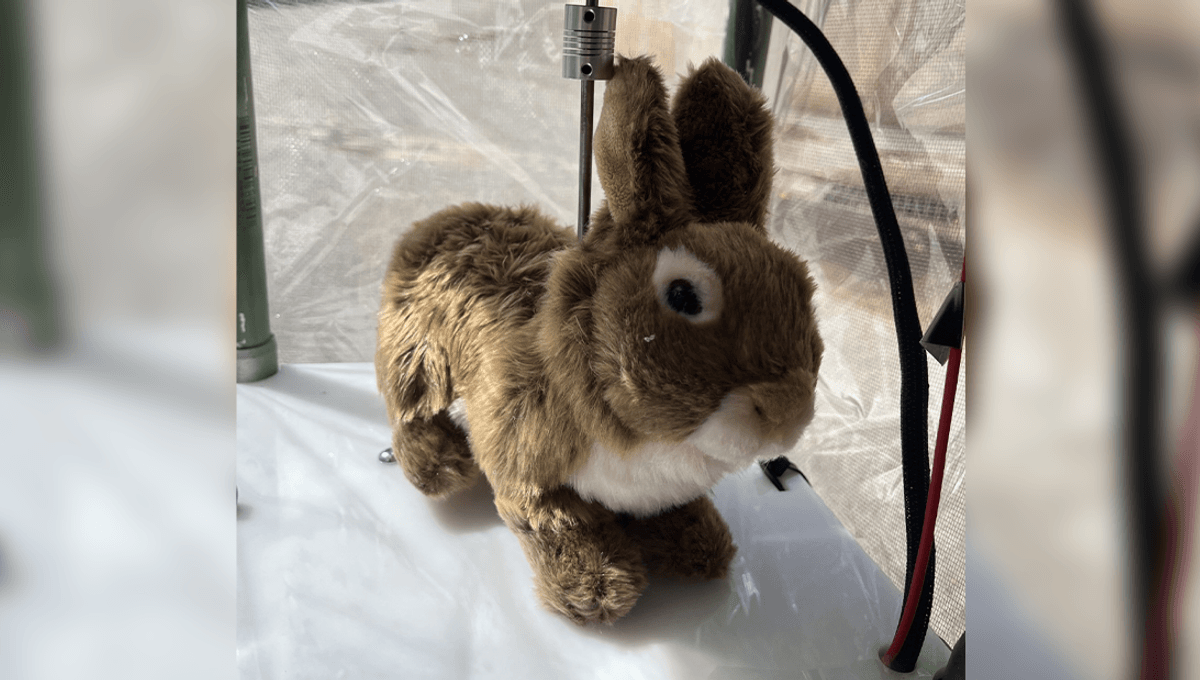
The project repurposed 40 stuffed toy rabbits, carefully modified with internal components designed to mimic key biological traits. These robotic decoys are solar-powered, allowing them to function sustainably in the sun-drenched wetlands. Inside, the stuffing was removed and replaced with waterproof electronics capable of withstanding Florida’s humid and rainy environment.
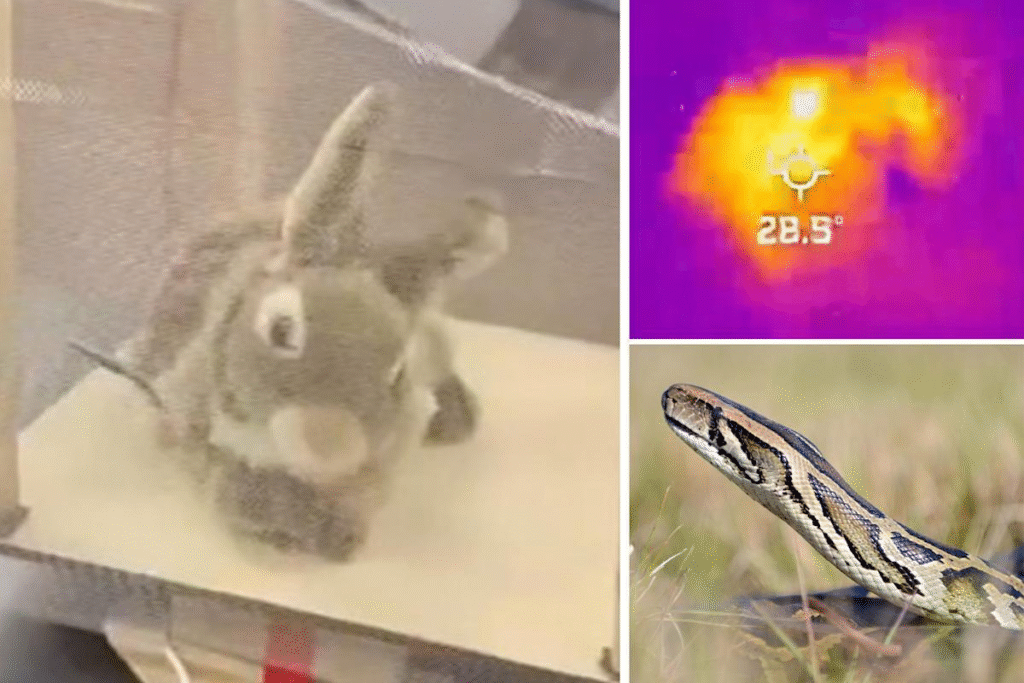
Crucially, the robot rabbits emit a heat signature and scent that resembles that of a real marsh rabbit. This feature is essential, as pythons rely heavily on thermal detection and olfactory cues when hunting. The decoys also contain integrated cameras, allowing scientists to monitor the area and detect the presence of nearby snakes. When a python approaches or attacks the decoy, the system alerts wildlife officials, who can then dispatch trained personnel to the location.
The robotic rabbits are more than just bait—they are high-tech surveillance tools. By gathering data on python movements and behaviors, they also help researchers better understand the patterns and habits of these elusive predators. According to Robert McCleery, a professor of wildlife ecology and conservation at the University of Florida, the goal is not only to detect and remove pythons but also to deepen scientific insight into how the species operates within the Everglades ecosystem.
“Working in the Everglades for 10 years, you get tired of documenting the problem. You want to address it,” McCleery stated, emphasizing the importance of taking active steps toward ecological restoration.
A Broader Effort to Save the Everglades
The use of robotic rabbits is part of Florida’s broader Python Elimination Program, a multi-agency initiative aimed at controlling the spread of Burmese pythons through both scientific research and public engagement. This program employs professional python hunters, conducts public awareness campaigns, and supports experimental strategies like the robotic decoy project.
The Florida Python Challenge, held annually, has become one of the program’s most visible components. Participants from across the country are invited to track and humanely euthanize pythons in the Everglades, with monetary rewards of up to $10,000. While this event generates media attention and community involvement, officials recognize that even the most successful hunts remove only a fraction of the python population.
Hence, technological innovations like the robot rabbits are vital. They represent a shift toward proactive, precision-based approaches that harness modern tools in wildlife conservation. The hope is that these decoys will act as sentinels in the swamp—quietly luring and locating hidden predators for efficient removal.

Each python that is caught and euthanized, officials say, represents a meaningful victory. “Every python that is removed and eliminated is making a difference to protect the Everglades and South Florida’s diverse and native wildlife,” the South Florida Water Management District noted. “Invasive pythons are one of the most destructive and harmful species in America’s Everglades.”
The ecological impact of the pythons cannot be overstated. Their domination of the food web disrupts natural predator-prey relationships and places native predators like the Florida panther, red-shouldered hawks, and bobcats at risk of starvation. With less prey available, the survival and reproductive success of these native species diminish, compounding the long-term environmental damage.
There’s also concern that Burmese pythons could eventually spread beyond the Everglades. If left unchecked, they may move northward through Florida and potentially into neighboring states, where suitable habitats exist. Early intervention and sustained removal efforts are essential to preventing such a scenario.
Beyond the Everglades, the use of remote-controlled animal decoys may inspire similar conservation tactics in other regions facing invasive species challenges. Whether it’s using scent-lured robotic rodents for snake control or drone surveillance for detecting invasive fish, the integration of technology in environmental protection is gaining traction.
This creative response to a complex problem demonstrates the potential for innovation when agencies, scientists, and engineers come together for a common cause. The robotic rabbits may not eliminate all pythons from the Everglades, but they mark an important step forward in a long-term campaign to restore balance to one of America’s most unique and fragile ecosystems.