
A Memphis sandwich shop has become the center of a national conversation about civil liberties, policing, and the boundaries of authority after a tense encounter between its owner and National Guard troops was captured on video and widely shared online. Da Sammich Spot, a small, locally owned restaurant in Memphis, Tennessee, drew widespread attention after footage showed dozens of National Guard members positioned outside the business while the owner, Rob Brown, questioned their presence and asked them to leave.
The standoff, which lasted roughly half an hour, ended without arrests, but its broader implications have continued to reverberate across social media, news outlets, and political discussions. At the heart of the controversy is Brown’s assertion that, as a business owner, he has the right to determine who is welcome on his property and under what conditions.
Following the incident, Brown stated publicly that he would not serve National Guard members if they attempted to patronize his restaurant, framing his position as a response to what he described as intimidation and a disregard for his rights. The episode unfolded against a backdrop of heightened national scrutiny of law enforcement, immigration enforcement agencies, and the expanded visibility of uniformed personnel in civilian spaces.
The Viral Standoff Outside a Memphis Sandwich Shop
The incident occurred on a Sunday evening when Brown arrived at Da Sammich Spot and noticed a National Guard vehicle parked directly in front of his entrance. According to Brown, he approached the situation as a business owner concerned about access to his shop and the impact of a military presence on his customers. Video recorded by bystanders shows Brown questioning why the troops were there and repeatedly asking them to move away from his storefront.
Within moments, additional National Guard members were visible outside the shop, standing their ground as Brown continued to press for an explanation. Footage of the encounter quickly circulated online, drawing millions of views and prompting strong reactions. In the video, National Guard members remain largely silent, while Brown voices frustration and confusion about their presence. At no point in the recording do the troops attempt to enter the restaurant, nor is there evidence that any of them requested service.
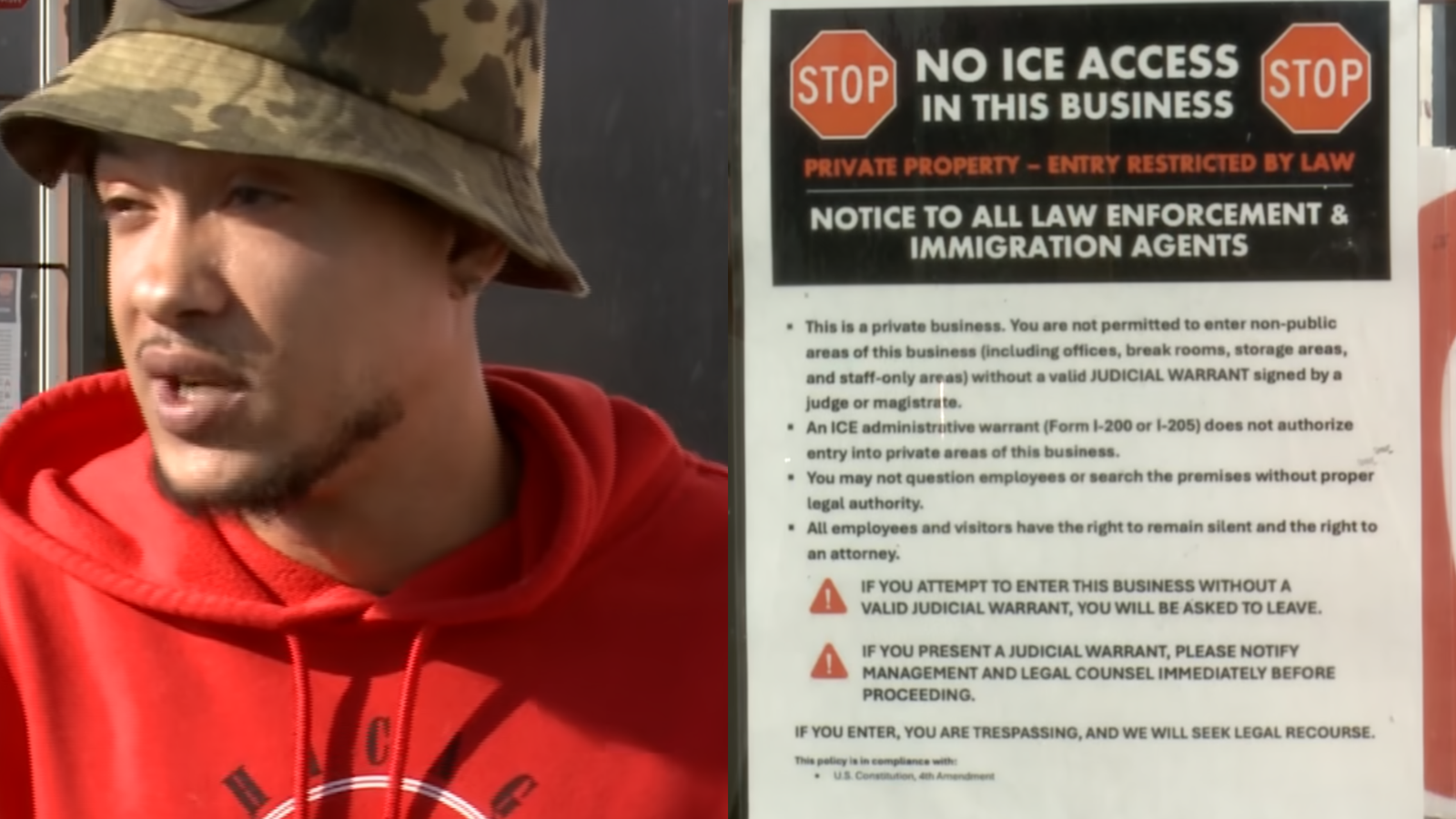
Brown later clarified that none of the National Guard members were denied food during the incident itself, as no such request was made. However, he emphasized that, given the circumstances, he would refuse service if they attempted to patronize the shop in the future. A sign posted on the door of Da Sammich Spot added another layer to the controversy.
The sign states that law enforcement agents, including Immigration and Customs Enforcement officers, are not permitted on the property without a warrant. While such notices have appeared at businesses in other parts of the country, their presence has become increasingly contentious amid national debates over immigration enforcement and police authority. Brown described the sign as a declaration of his rights and an effort to make clear the conditions under which law enforcement could enter his business.
Read : 72-Year-Old Norfolk Realty Owner Judy Boone Shot Multiple Times in Her Ocean View Home
Local activist Hunter Demster, who filmed part of the standoff, described the scene as an attempt at intimidation. He argued that the refusal of uniformed personnel to comply with a business owner’s request to leave private property sent a troubling message about whose rights are respected in public spaces. In his view, the presence of both the National Guard and Memphis Police Department officers reinforced a sense of imbalance, with authorities appearing to protect their own rather than engage with the concerns of an ordinary citizen.
Read : Akshata Murty Trolled for Wearing £395 Dress at Rishi Sunak’s Resignation Speech
After approximately 30 minutes, the National Guard members and local police departed without incident. No explanation was immediately provided for why the troops had been stationed outside the restaurant in the first place, and officials did not announce any investigation or disciplinary action related to the encounter. Requests for comment were sent to the Memphis Police Department and the U.S. Department of Justice, but no definitive account of the Guard’s purpose at that location was offered in the immediate aftermath.
Rob Brown’s Response and Claims of Rights Violations
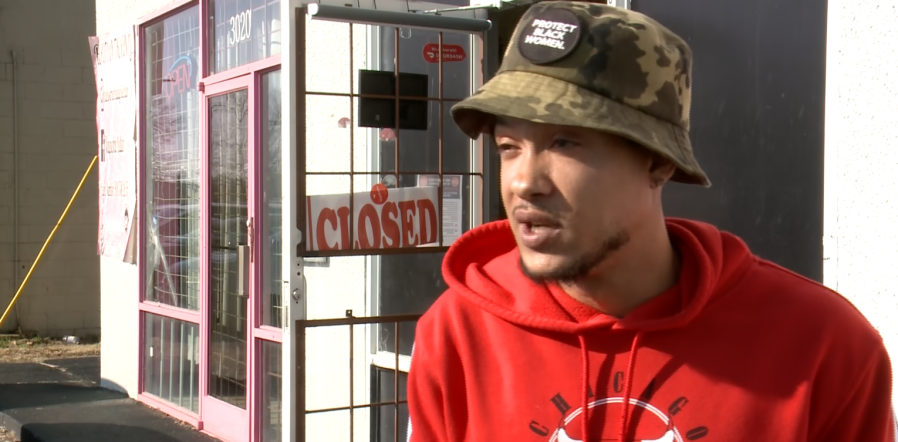
In interviews following the viral spread of the footage, Rob Brown framed the incident as emblematic of broader issues faced by Black business owners in Memphis and other American cities. He stated that the experience triggered symptoms he associated with post-traumatic stress, arguing that no one should have to endure such distress simply to have their rights acknowledged. For Brown, the presence of heavily uniformed personnel outside his business, combined with their refusal to leave when asked, crossed a line from routine security activity into what he perceived as intimidation.
Brown has been explicit in asserting that his actions were grounded in property rights and personal autonomy. As the owner of a private business, he contends that he is entitled to ask anyone to leave his premises, provided there is no legal obligation requiring their presence. His statement that he would not serve National Guard members if they attempted to order food was framed not as discrimination based on personal characteristics, but as a refusal rooted in their conduct during the standoff.
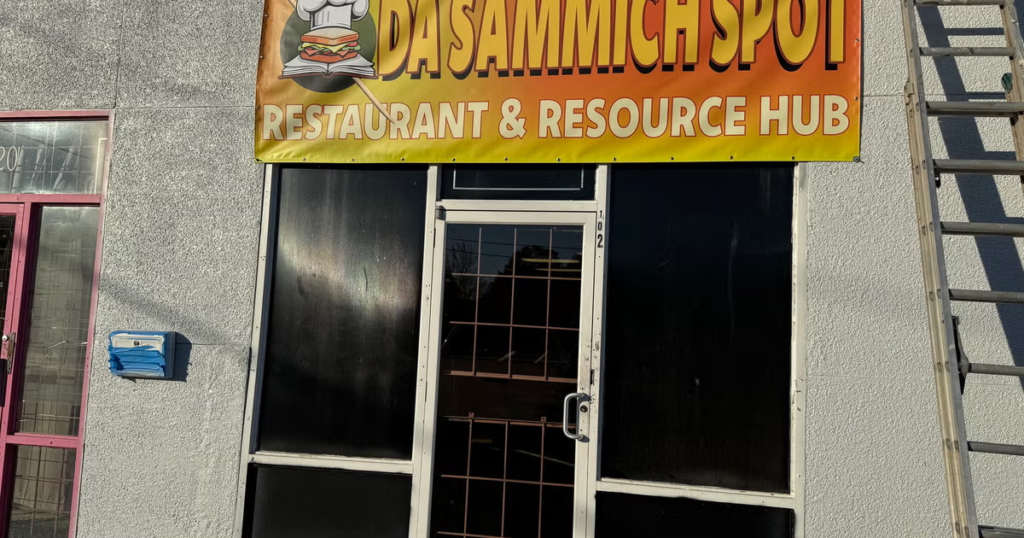
On the restaurant’s Facebook page, Brown described Da Sammich Spot as the only business that had successfully compelled National Guard troops to leave after what he characterized as an intimidating presence. While acknowledging that some might view this outcome as a victory, he emphasized that the process itself was deeply troubling. He argued that having to confront armed, uniformed personnel in order to assert basic rights should not be normalized, and that the emotional toll of such encounters is often overlooked.
Brown also linked the incident to his lived experience as a Black man in Memphis, suggesting that the response he received might have been different under other circumstances. His comments resonated with many supporters online, who viewed the episode through the lens of racial justice and historical mistrust between Black communities and law enforcement or military authorities. Others, however, questioned whether the National Guard’s presence necessarily constituted wrongdoing, noting the lack of clear information about why the troops were there in the first place.
The absence of an official explanation has left room for speculation, fueling debates about transparency and accountability. Without clarity on whether the Guard was engaged in routine patrols, a specific operation, or an unrelated logistical matter, observers have been left to interpret the incident largely through the lens of the video footage and Brown’s account.
Broader Context and National Reactions
The Memphis standoff did not occur in isolation. It unfolded at a time when similar confrontations involving businesses and federal or state authorities have been drawing national attention. Around the same period, a hotel in Lakeville, Minnesota, made headlines after refusing to rent rooms to Department of Homeland Security employees once their identities were revealed. That decision prompted swift backlash, leading Hilton, the parent brand, to issue an apology and announce steps to remove the hotel from its reservation systems, citing violations of company policy.
Read : Boutique Owner Pamela Brooke Schronce Arrested After Allegedly Scamming Customers
These incidents have been widely discussed as part of a broader pushback by private businesses against the visible presence of law enforcement and immigration authorities in commercial spaces. Supporters argue that such actions represent legitimate exercises of property rights and moral agency, while critics contend that denying service to government personnel undermines public safety and the rule of law.
The political climate has further intensified these debates. The White House has recently directed an influx of Department of Homeland Security resources to Minneapolis, reportedly involving up to 2,000 agents as part of a crackdown on migrants. This has coincided with renewed rhetoric from President Donald Trump and his allies targeting large Somali-American communities, including disputed allegations of widespread fraud at daycare centers run by Somali-Americans. Against this backdrop, encounters like the one at Da Sammich Spot are often interpreted as symbolic flashpoints in a much larger national struggle over immigration, race, and state power.
Public reaction to Brown’s stance has been sharply divided. Many social media users praised him for standing his ground, viewing his refusal to serve the National Guard as an act of resistance against perceived overreach. Others accused him of politicizing a situation that may have had a benign explanation, arguing that members of the National Guard are often deployed for a range of non-confrontational duties and should not be automatically treated as adversaries.
Legal experts have also weighed in, noting that while business owners generally have the right to refuse service, those rights are not unlimited and can vary depending on jurisdiction and circumstances. The distinction between refusing service based on conduct versus protected characteristics has been central to these discussions, as has the question of whether uniformed personnel have any special status when performing official duties.
As of now, the Memphis incident remains unresolved in terms of official explanation or policy response. What is clear is that a brief standoff outside a sandwich shop has tapped into deep-seated anxieties about authority, accountability, and the everyday realities of power in American cities. For Rob Brown, the episode has become a defining moment for his business and his public identity. For the wider public, it has served as another reminder of how quickly local disputes can escalate into national conversations in an era of viral video and heightened political tension.
Trying to sign up for something? vipphregister.com might be the place. Registration process was easy enough, so far so good. vipphregister
Just tried ph987a, and honestly, it’s pretty slick. Easy to navigate and some decent options. Worth checking out, for sure! Learn more at ph987a
Been messing around with onebet88 lately. Gotta say, the interface is smoother than I expected. Give it a shot if you’re looking for something new! Check this: onebet88
Yohohogame is a fun little distraction. Nothing too serious, but good for killing some time. Definitely worth a peek. Here’s the link: yohohogame