
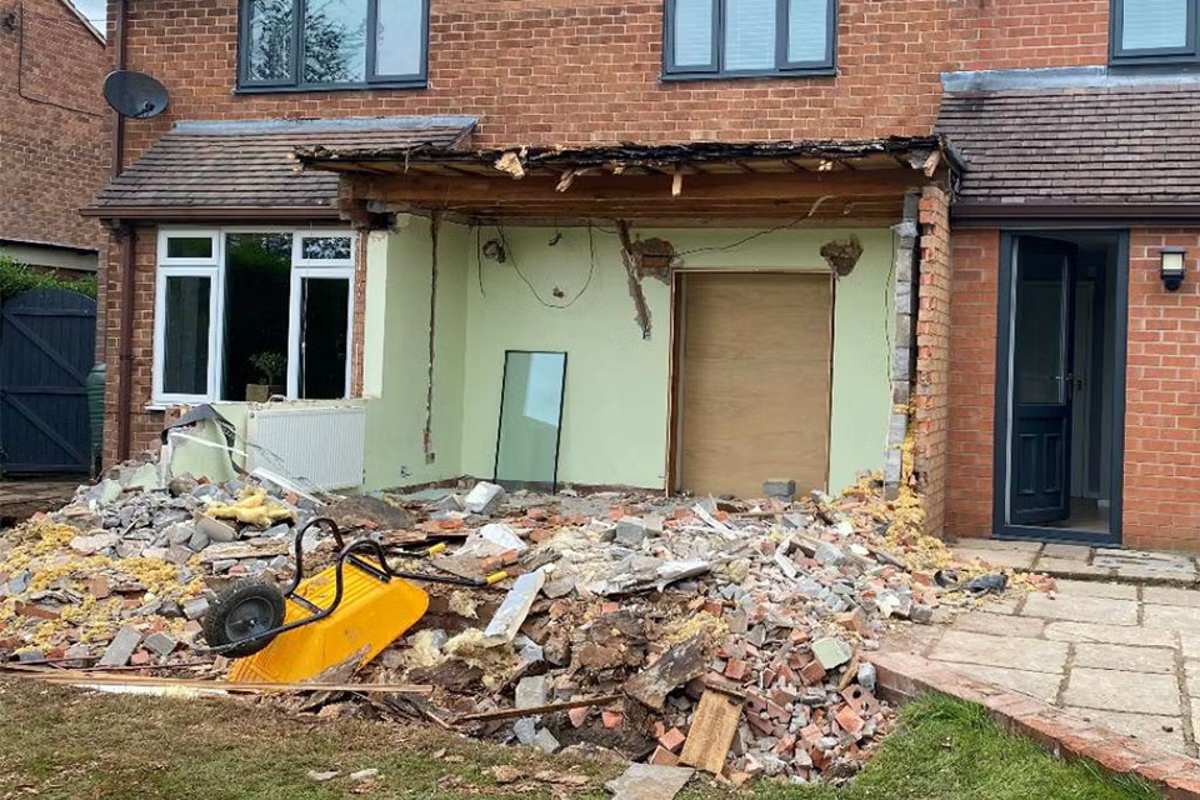
A rogue builder has been handed a suspended jail sentence after deceiving a homeowner out of thousands of pounds, leaving her house in a devastated state. Gary Roberts, a tradesman from Cheshire, was found guilty of fraudulent activities after taking payments for work he never completed. His company, GR Developments 1 Ltd, went into liquidation, leaving the victim to deal with the extensive damage to her property.
Despite taking over £17,000 from the victim, Roberts failed to complete the promised extension and left the site in complete disarray. The case has drawn significant attention, highlighting the risks of dealing with unscrupulous builders and the importance of strict regulations to prevent such misconduct.
A Devastated Home and a Betrayed Customer
The victim, who had initially entrusted Gary Roberts with her home renovation, was left in dire straits when he failed to deliver on his promises. The ordeal began in May 2021 when Roberts signed a contract to build an extension to the rear of her house.
The homeowner promptly paid a £10,000 deposit, followed by an additional £7,000 in June. However, instead of completing the job, Roberts left the site in ruins, demolishing the kitchen and exposing the rear of the house to the elements.
Roberts’ company not only abandoned the project but also left a massive amount of rubble in the homeowner’s garden, turning what was meant to be a home improvement into a nightmare.
The victim, who had hoped for a modernized extension, was instead left with an incomplete and uninhabitable space. She was forced to hire other builders in April 2022 to finish the work, incurring additional expenses on top of the money she had already lost to Roberts.
Read : 16-Year-Old TikToker Joshua Blackledge Died at His Home in Newport
The emotional and financial toll on the homeowner was immense. Having placed her trust in what she believed was a professional builder, she faced months of stress and uncertainty.
Read : Top 10 Impossibly Unaffordable Cities in the World in 2024: Hong Kong Tops the List
Her house remained exposed to harsh weather conditions, making her living situation extremely difficult. The impact of such fraudulent activities extends far beyond financial loss, often leaving victims feeling helpless and betrayed.
Fraudulent Actions and the Insolvency Investigation
As Gary Roberts continued to receive payments from his victim, he was simultaneously being advised to place his company into liquidation due to financial difficulties.
Despite knowing that GR Developments 1 Ltd was insolvent, he continued accepting money, even using company funds to pay himself over £11,000 between May and July 2021. These actions ultimately led to a formal investigation by the Insolvency Service.
The case against Gary Roberts was built on his deliberate deception. Investigators found that he knowingly signed a contract with his customer despite being aware of his company’s financial instability. His misconduct not only led to financial harm but also left a homeowner in a desperate situation with a half-demolished house.
During the legal proceedings, David Snasdell, Chief Investigator at the Insolvency Service, emphasized the severity of Roberts’ actions. He stated that the builder had left his victim in a state of “utter desperation” after wrecking her home.
Snasdell highlighted the importance of protecting the public from such rogue traders and assured that fraudulent behavior leading to financial harm would not go unpunished.
In court, Gary Roberts pleaded guilty to fraudulently removing property in anticipation of the winding-up of a company, violating section 206 of the Insolvency Act 1986.
On Monday, Chester Magistrates’ Court sentenced him to six months in prison, which was suspended for two years. Additionally, he was ordered to complete 20 days of community rehabilitation activity, pay £1,000 in costs, and a £154 surcharge.
While his prison sentence was suspended, Gary Roberts faced further consequences for his misconduct. He was banned from acting as a company director for ten years, ensuring that he would not be able to exploit other customers through similar fraudulent business practices. His disqualification, which lasts until February 2034, serves as a warning to other dishonest tradesmen who attempt to deceive their customers.
Lessons from the Case: Avoiding Rogue Traders
The case of Gary Roberts serves as a stark reminder of the dangers of dealing with dishonest builders. Homeowners who are looking to renovate or extend their properties must exercise extreme caution when choosing contractors. There are several crucial steps that individuals can take to protect themselves from falling victim to fraudulent builders.
Firstly, verifying a builder’s credentials and reputation before signing a contract is essential. Checking reviews, seeking recommendations, and ensuring the builder is registered with official trade bodies can provide some level of security. Reliable professionals will have a history of satisfied customers and will not hesitate to provide references from previous projects.
Secondly, homeowners should avoid making large upfront payments. While deposits are often necessary, paying substantial amounts before any work has been completed carries significant risk. Staggered payments, linked to progress milestones, can help ensure that work is being carried out as agreed.

Another important step is to get a detailed written contract that outlines the scope of the work, costs, and expected completion dates. A legally binding agreement can serve as protection in case of disputes and may be helpful in legal proceedings should the builder fail to deliver as promised.
Additionally, homeowners should be cautious of builders who are unwilling to provide clear documentation or who pressure them into making quick financial decisions. Transparency and professionalism are key indicators of a trustworthy tradesperson.
The Insolvency Service’s involvement in cases like this demonstrates the importance of reporting fraudulent activities. Victims of rogue traders should not hesitate to seek legal advice and report misconduct to relevant authorities. Swift action can prevent further financial harm and hold dishonest individuals accountable for their actions.
While Gary Roberts has faced legal consequences, his victim endured significant distress and financial loss. The justice system’s response to this case highlights the need for stricter regulations and better consumer protection measures.
By taking proactive steps, homeowners can safeguard themselves against similar scams and ensure that they hire reputable professionals for their projects.
The case of Gary Roberts is a cautionary tale that underscores the devastating impact of rogue traders. While legal action has been taken, the damage he inflicted on his victim serves as a reminder of the importance of due diligence when hiring builders. With increased awareness and stricter enforcement, the public can be better protected from fraudulent practices in the construction industry.